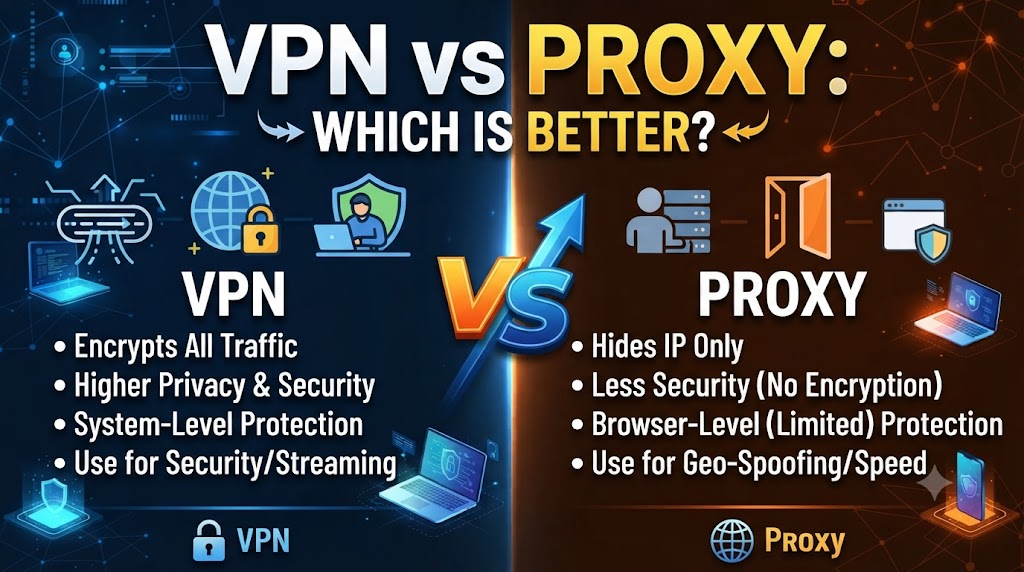
VPN vs Proxy VPNs and proxy servers can both act as intermediaries between your device and the internet, but they work differently and provide different levels of protection. A VPN (Virtual Private Network) creates an encrypted connection between your device and a VPN server, while a proxy generally forwards traffic through another server without providing the same device-wide encryption. The right choice depends on what you need. A VPN can be useful when you want broader traffic protection and privacy on untrusted networks, while a proxy can be useful for…
Read MoreDay: September 26, 2026
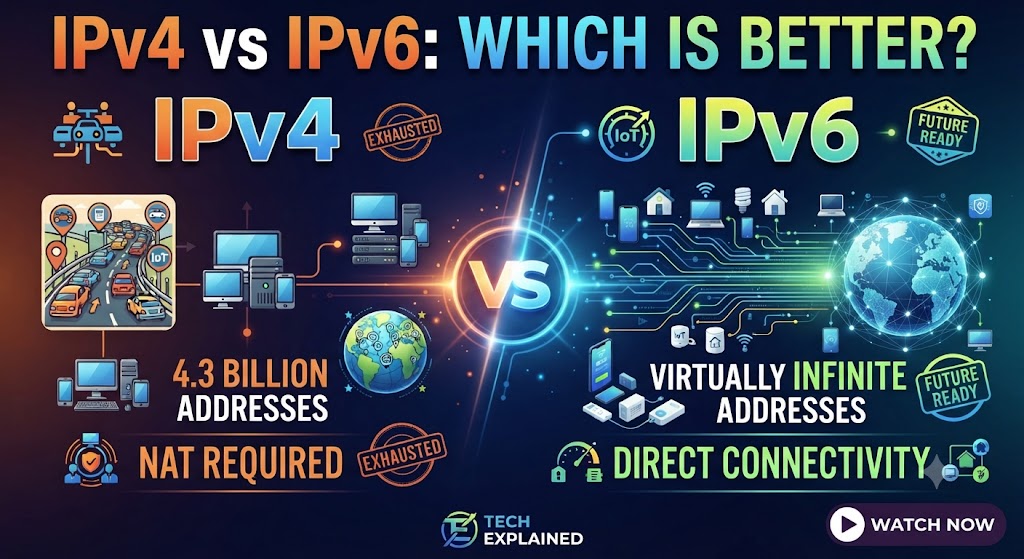
IPv4 vs IPv6: Which Is Better?
IPv4 vs IPv6 IPv4 and IPv6 are two versions of the Internet Protocol used to identify devices and deliver data across networks. IPv4 is the older and still widely used version, while IPv6 was developed to provide a much larger address space and support the continued growth of internet-connected devices. The biggest difference is the number of available IP addresses. IPv4 uses 32-bit addresses, providing about 4.3 billion possible addresses, while IPv6 uses 128-bit addresses, providing an extremely large address space. IPv6 also introduces changes to address configuration and network…
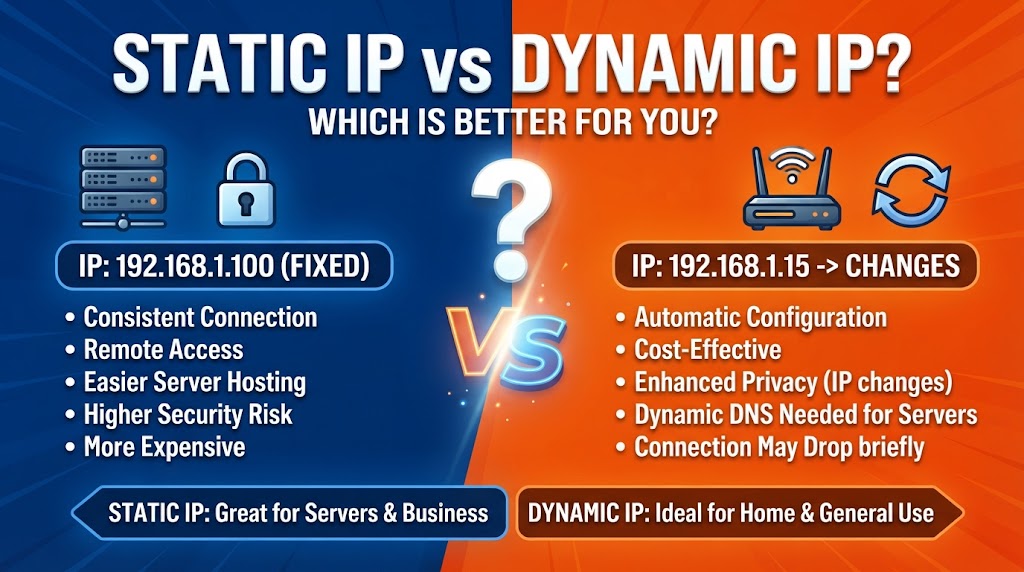
Read MoreStatic IP vs Dynamic IP: Which Is Better?
Static IP vs Dynamic IP Static IP and Dynamic IP are two common ways of assigning IP addresses to devices on a network. A static IP address remains assigned to a device until it is manually changed, while a dynamic IP address is assigned automatically and may change over time. Both approaches are useful for different networking situations. Static IP addresses can be helpful when a device needs a consistent address, such as a server, network printer, or CCTV system. Dynamic IP addresses are easier to manage and are commonly…
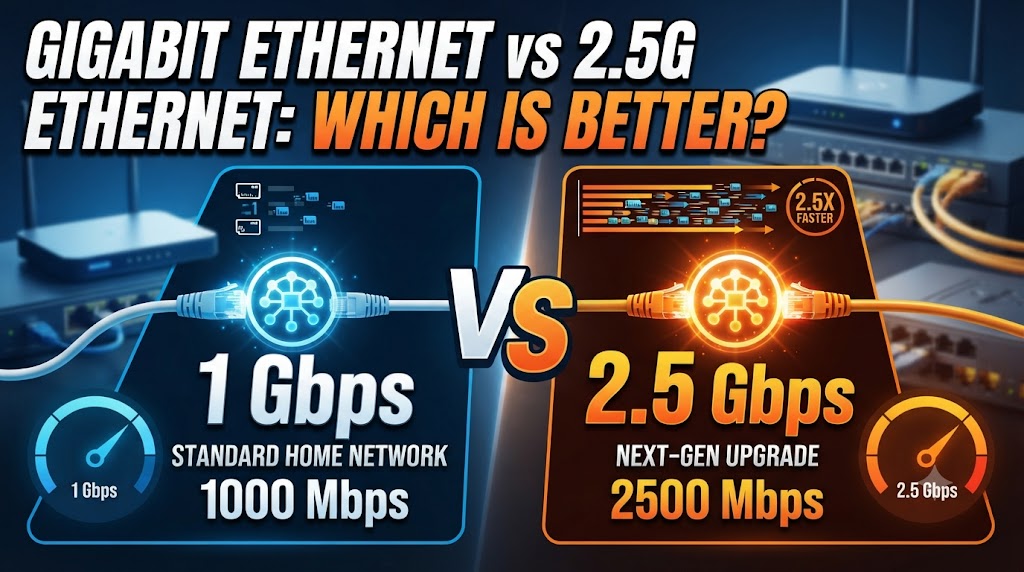
Read MoreGigabit Ethernet vs 2.5G Ethernet: Which Is Better?
Gigabit Ethernet vs 2.5G Ethernet Gigabit Ethernet and 2.5G Ethernet are both wired networking technologies designed to provide fast network connections. Gigabit Ethernet supports speeds of up to 1 Gbps, while 2.5G Ethernet can provide speeds of up to 2.5 Gbps. This makes 2.5G Ethernet capable of delivering up to 2.5 times the link speed of Gigabit Ethernet. For everyday internet browsing and standard home networking, Gigabit Ethernet can be sufficient. However, 2.5G Ethernet can be useful when you have a high-speed internet connection, a fast NAS, multiple users transferring…
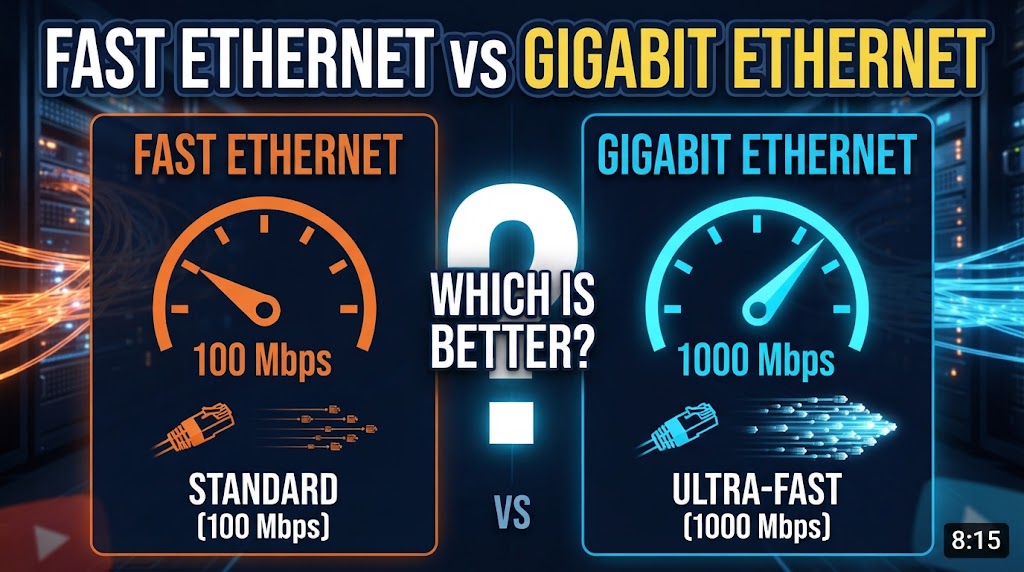
Read MoreFast Ethernet vs Gigabit Ethernet: Which Is Better?
Fast Ethernet vs Gigabit Ethernet Fast Ethernet and Gigabit Ethernet are both wired networking technologies used to connect computers, routers, switches, cameras, and other network devices. The main difference is their maximum network speed. Fast Ethernet typically supports speeds up to 100 Mbps, while Gigabit Ethernet can reach up to 1 Gbps, which is ten times faster. For basic internet browsing and simple networking, Fast Ethernet can still work. However, Gigabit Ethernet offers much higher bandwidth for file transfers, high-speed internet connections, video streaming, CCTV systems, and modern home or…
Read More