Wi-Fi Smart Plug vs Bluetooth Smart Plug
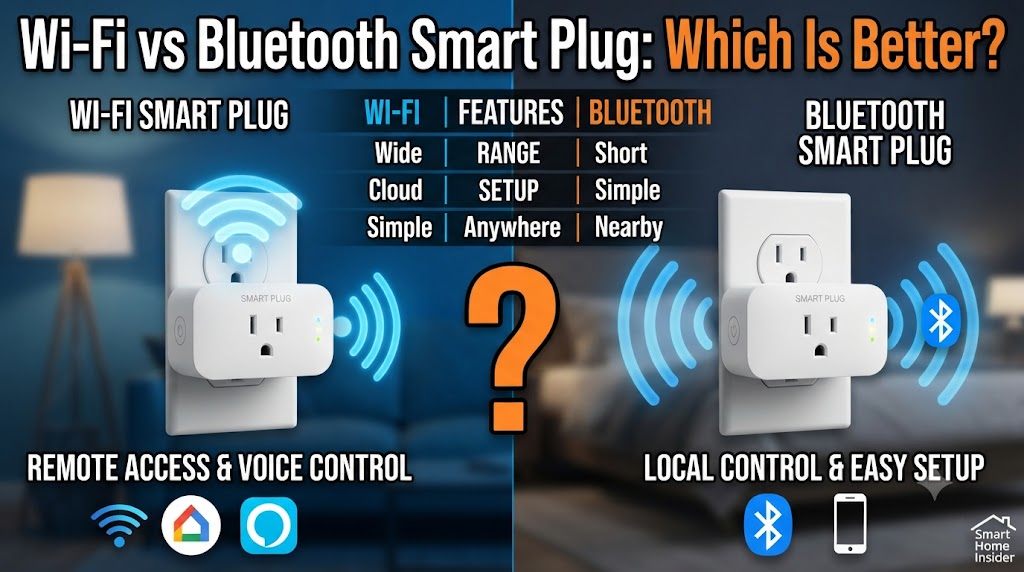
A Wi-Fi smart plug and a Bluetooth smart plug can both make ordinary electrical devices easier to control. They allow users to operate connected appliances through compatible apps and, depending on the model, may support scheduling, automation, and voice control. The main difference is how they communicate with your phone or smart-home system. Wi-Fi smart plugs connect through a Wi-Fi network, while Bluetooth smart plugs use Bluetooth for local communication. This difference affects remote access, range, setup, and how each plug fits into a smart-home environment.
A Wi-Fi smart plug is generally more suitable when you want to control a device while you are away from home. A Bluetooth smart plug can be useful when you mainly need nearby control without relying on a Wi-Fi connection. However, actual features vary between models, and some smart plugs support more than one connection method. Therefore, the better option depends on how and where you plan to use the smart plug.
Quick Comparison Table
| Feature | Wi-Fi Smart Plug | Bluetooth Smart Plug |
|---|---|---|
| Connection | Wi-Fi | Bluetooth |
| Remote control | Usually available | Usually limited to nearby control |
| Internet required for remote access | Generally yes | Generally no |
| Setup | May require Wi-Fi and app setup | Usually simple nearby pairing |
| Range | Usually wider through Wi-Fi network | Usually shorter |
| Scheduling | Usually available | Available on some models |
| Voice control | Common on compatible models | Depends on model/ecosystem |
| Smart-home integration | Usually broader | Depends on ecosystem |
| Best for | Remote and connected control | Simple local control |
Connection and Setup
A Wi-Fi smart plug connects to your home’s Wi-Fi network and normally requires an app for setup. Once configured, it can communicate with compatible smart-home services through the network.
A Bluetooth smart plug pairs directly with a compatible nearby device. Its setup can be simpler because it does not necessarily require connection to a home Wi-Fi network.
What this means: If you want a straightforward local connection, Bluetooth can be simpler. If you want network-based smart control, Wi-Fi is more suitable.
Winner: Depends on your needs
Remote Control
One of the biggest advantages of a Wi-Fi smart plug is remote access. When the plug and its services support remote control, you can operate it through the internet even when you are away from home.
Bluetooth smart plugs generally depend on Bluetooth range for direct control. Some models may offer additional remote features through another compatible hub or ecosystem.
What this means: For controlling appliances when you are away from home, Wi-Fi is generally the better choice.
Winner: Wi-Fi Smart Plug
Range
Wi-Fi smart plugs communicate through the home’s Wi-Fi network. Their practical coverage therefore depends on the quality and coverage of that network.
Bluetooth has a more limited direct wireless range. Walls and other physical obstacles can also affect the connection.
What this means: For larger homes or situations where you need control from farther away, a Wi-Fi smart plug is usually more practical.
Winner: Wi-Fi Smart Plug
Internet Dependence
A Wi-Fi smart plug is designed around a network connection, and remote features generally depend on internet access and the manufacturer’s service.
Bluetooth smart plugs can provide local control without an internet connection, depending on the model and app.
What this means: If your priority is local control without depending on internet access, Bluetooth can have an advantage.
Winner: Bluetooth Smart Plug
Scheduling and Automation
Many Wi-Fi smart plugs support schedules, timers, routines, and smart-home automation. They can be useful for automatically controlling lights, chargers, appliances, and other compatible devices.
Bluetooth smart plugs may also support schedules or automation, but the available features depend more heavily on the specific model and ecosystem.
What this means: Wi-Fi usually offers a more flexible choice for a connected smart-home setup.
Winner: Wi-Fi Smart Plug
Voice Control and Smart-Home Integration
Wi-Fi smart plugs commonly support popular smart-home platforms when the specific model is compatible with them. This can allow voice commands and integration with other connected devices.
Bluetooth smart plugs can also support smart-home ecosystems, but compatibility and available functions vary by product.
What this means: If you are building a larger connected smart home, Wi-Fi generally offers more flexibility.
Winner: Wi-Fi Smart Plug
Power and Everyday Use
Both types of smart plugs can be used to control compatible electrical devices, but the plug’s electrical rating and supported appliance type are important considerations.
A smart plug should always be used within the manufacturer’s stated electrical limits. High-power appliances require particular attention to the plug’s rated load and compatibility.
What this means: Connection type is not the only factor. Always check the electrical specifications before connecting an appliance.
Winner: Tie
Wi-Fi Smart Plug vs Bluetooth Smart Plug: Which Is Better?
Choose a Wi-Fi Smart Plug If:
- You want remote control while away from home.
- You want broader smart-home integration.
- You want schedules and automation.
- You want to connect the plug to a home Wi-Fi network.
- You plan to use several smart devices together.
Choose a Bluetooth Smart Plug If:
- You mainly need nearby control.
- You want a simple local connection.
- You do not want to depend on home Wi-Fi for basic control.
- You have a smaller or simpler smart-home setup.
- The specific Bluetooth model provides the features you need.
Final Verdict
For most users who want a connected smart-home setup, a Wi-Fi smart plug is the more versatile option because it can offer remote access, wider network coverage, and broader automation possibilities.
A Bluetooth smart plug is better when simple local control is the main requirement and internet-based remote access is not important.
So, Wi-Fi is the better overall choice for a connected smart home, while Bluetooth can be the better choice for simple nearby control.
Conclusion
The choice between a Wi-Fi Smart Plug vs Bluetooth Smart Plug depends mainly on how you want to control your devices. Wi-Fi is generally better for remote access, automation, and connected smart-home use. Bluetooth is useful for simple local control with less dependence on a home Wi-Fi network. Before buying, check the plug’s electrical rating, supported ecosystem, range, and required connection method.
Primary Focus Keyphrase: Wi-Fi Smart Plug vs Bluetooth Smart Plug
SEO Title: Wi-Fi Smart Plug vs Bluetooth Smart Plug: Which Is Better?
Meta Description: Wi-Fi Smart Plug vs Bluetooth Smart Plug comparison covering range, remote control, setup, automation, voice control, and smart-home use.
URL Slug: wifi-smart-plug-vs-bluetooth-smart-plug
Disclaimer
Smart plug features, compatibility, supported platforms, electrical ratings, and prices can vary between models and may change over time. Always check the latest manufacturer specifications and electrical requirements before purchasing or using a smart plug.