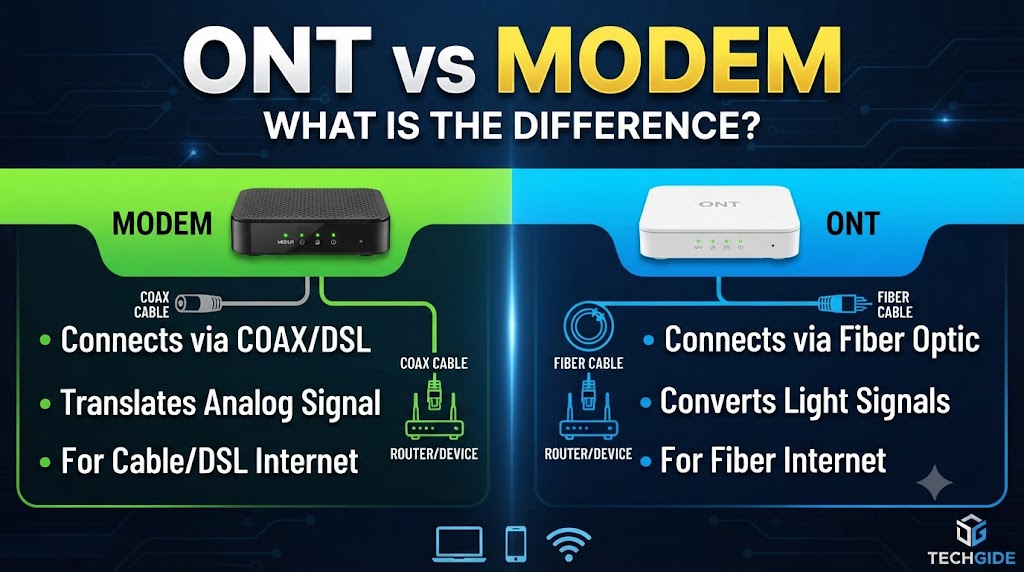
ONT vs Modem Introduction An ONT and a modem are both networking devices used to connect users to internet services, but they are designed for different types of connections. An ONT (Optical Network Terminal) is commonly used with fiber-optic internet to convert optical signals from the fiber network into electrical Ethernet signals. A traditional modem, depending on the type, converts signals used by technologies such as cable or DSL into a form that networking equipment can use. The main difference between an ONT and a modem is the access technology…
Read MoreDay: September 27, 2026
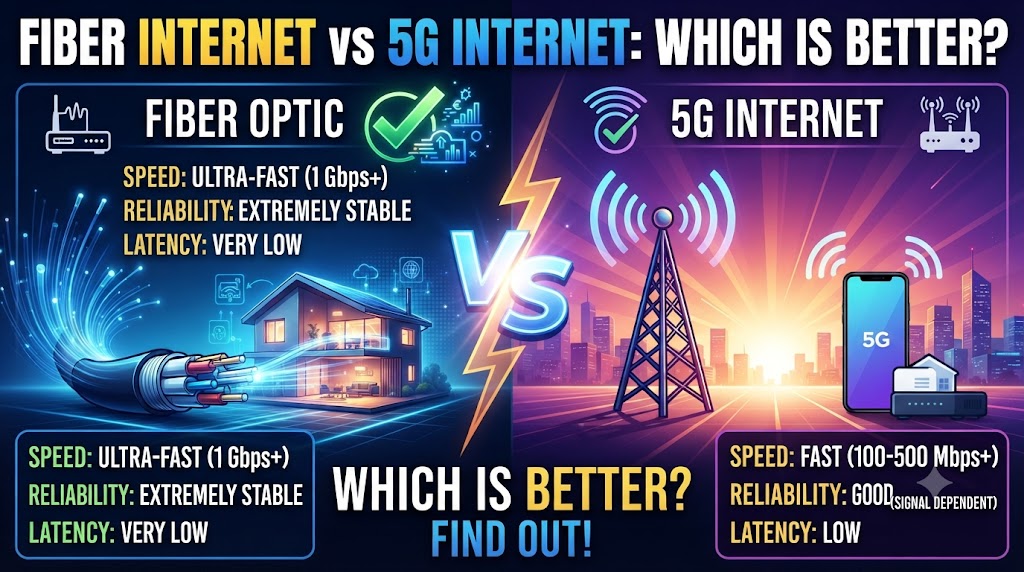
Fiber Internet vs 5G Internet: Which Is Better?
Fiber Internet vs 5G Internet Introduction Fiber Internet and 5G Internet are two modern ways to access high-speed internet, but they use very different technologies. Fiber Internet sends data through fiber-optic cables, while 5G Internet uses fifth-generation cellular wireless networks. Both can provide fast internet, but their real-world performance depends on the service provider, network infrastructure, location, congestion, and the equipment being used. The biggest difference is the connection between your home and the service provider. Fiber uses a physical cable, while 5G Internet connects wirelessly to a nearby 5G…
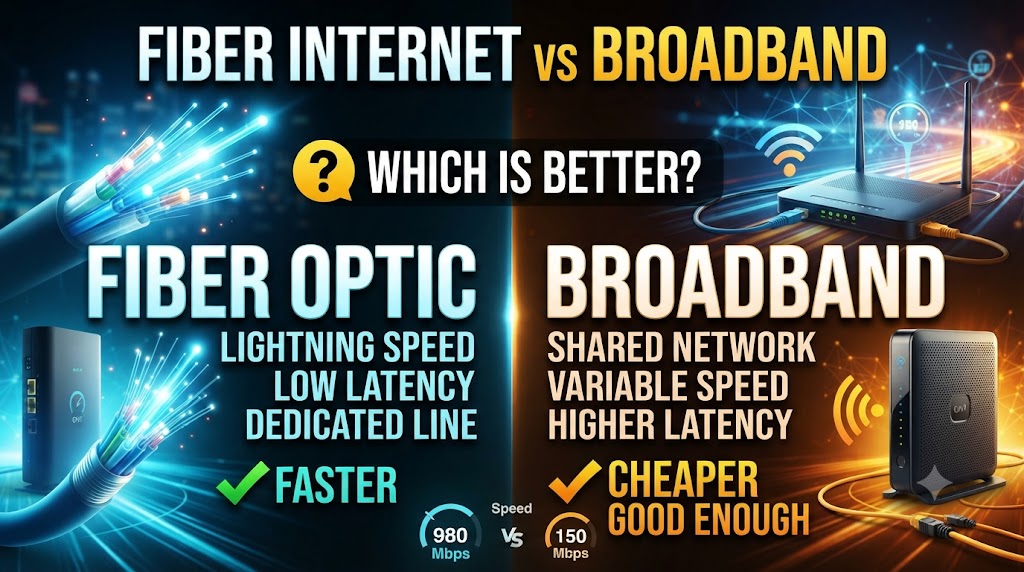
Read MoreFiber Internet vs Broadband: Which Is Better?
Fiber Internet vs Broadband Introduction Fiber Internet and Broadband are both used to provide internet access, but the terms do not describe exactly the same thing. Fiber Internet uses fiber-optic cables to transmit data using light, while “broadband” is a broader term for high-speed internet access that can be delivered through different technologies, including cable, DSL, fiber, fixed wireless, and other connections. This makes the comparison slightly different from comparing two completely separate technologies. For many users, the important differences are connection technology, speed, latency, reliability, upload performance, and availability.…
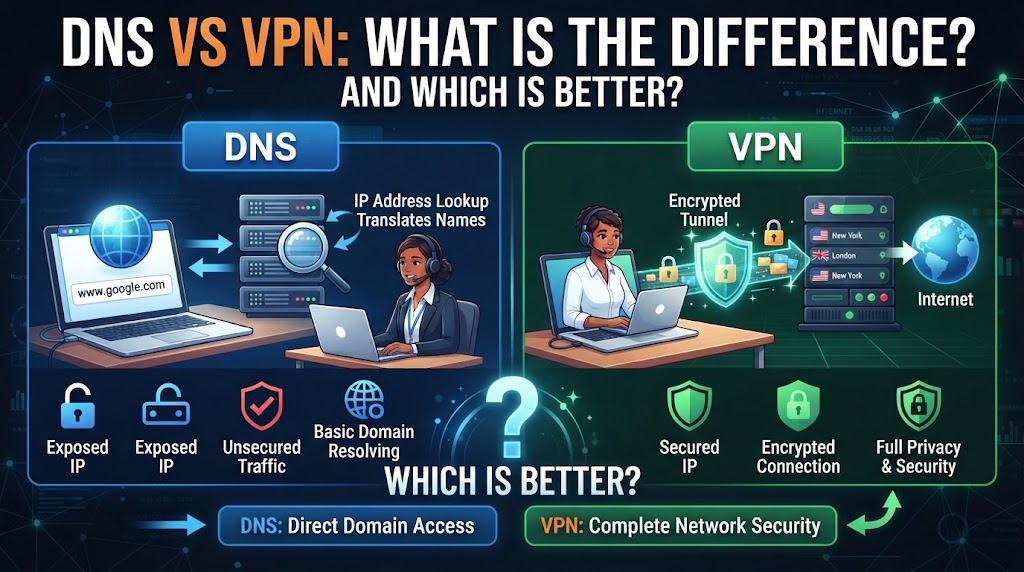
Read MoreDNS vs VPN: What Is the Difference and Which Is Better?
DNS vs VPN Introduction DNS and VPN are both important networking technologies, but they perform very different jobs. DNS, or Domain Name System, translates website names such as example.com into IP addresses that computers can use to connect to servers. A VPN, or Virtual Private Network, creates an encrypted connection between your device and a VPN server, helping protect network traffic from local network observers and changing the apparent internet location of your connection. Because DNS and VPN solve different problems, they should not normally be treated as direct alternatives.…
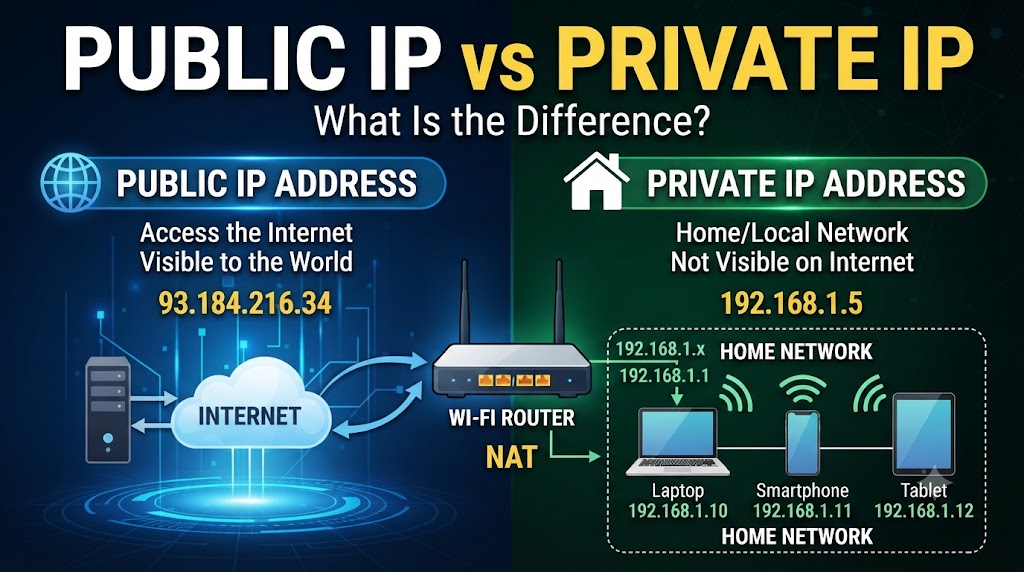
Read MorePublic IP vs Private IP: What Is the Difference?
Public IP vs Private IP Introduction A Public IP and a Private IP are both used to identify devices or networks, but they work in different ways. A Public IP is used to identify a network or device on the internet, while a Private IP is used within a local network such as a home, office, or school. Understanding the difference between Public IP and Private IP can help you better understand how devices connect to the internet and communicate with each other. The main difference is where each IP…
Read More