Solar Water Pump vs Electric Water Pump: Which Is Better?
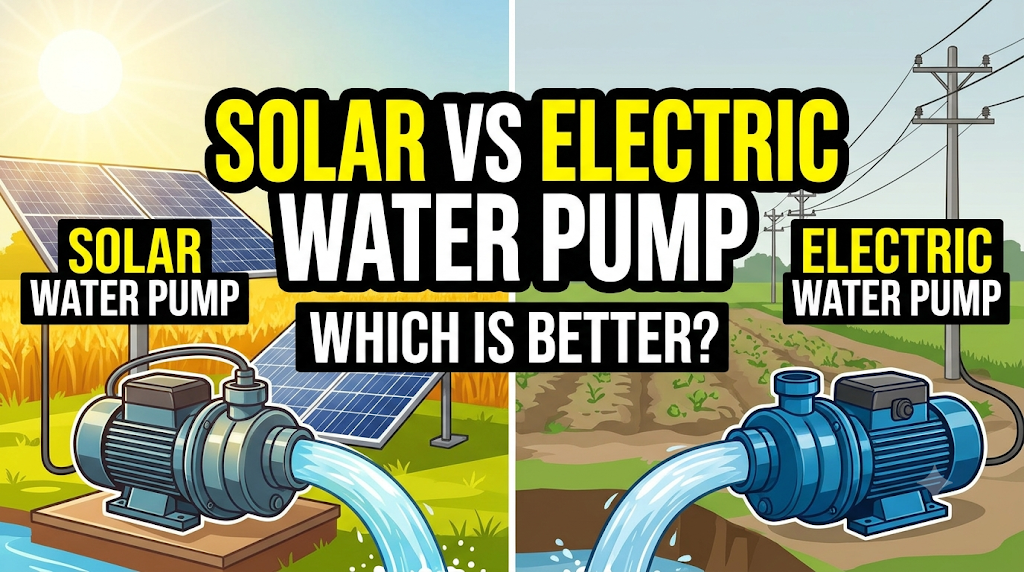
Solar water pump vs electric water pump comparison showing solar-powered agricultural pumping and conventional electric water pumping.

Solar Water Pump vs Electric Water Pump Introduction Water pumps are widely used in homes, agriculture, gardens and commercial applications to move water from one location to another. Two common options are solar water pumps and electric water pumps. Both systems can supply water for irrigation, household use and other requirements, but they differ in their power sources, operating costs, installation requirements and dependence on electricity. A solar water pump uses electricity generated by solar panels, while a conventional electric water pump generally operates using electricity supplied by the utility…

Read More

Grid-Tied Solar with Battery vs Without Battery: Which Is Better?

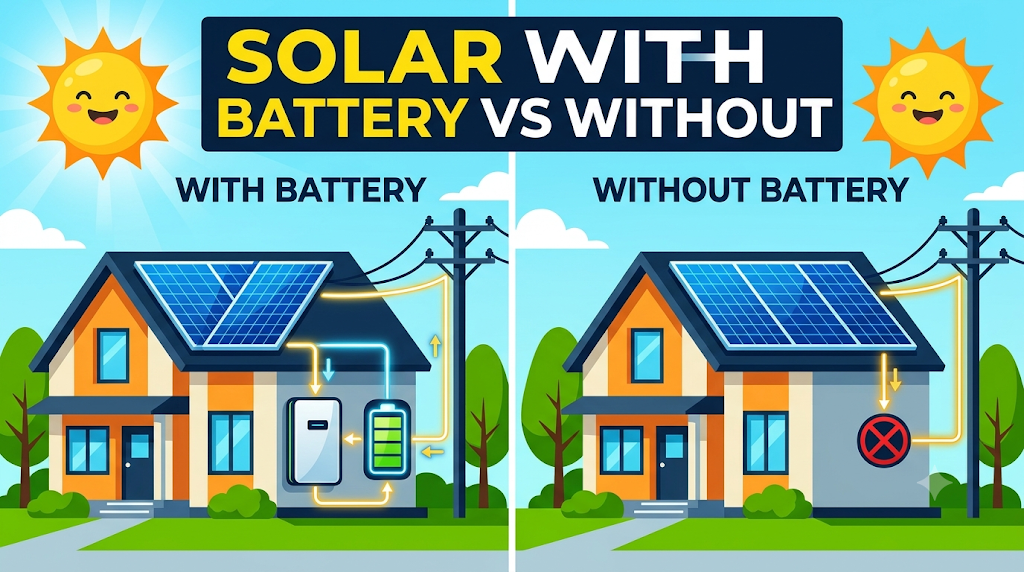
Grid-tied solar with battery vs without battery comparison showing rooftop solar panels and battery storage.

Article 49 of 50 Grid-Tied Solar with Battery vs Without Battery Introduction Grid-tied solar systems allow homes and businesses to generate electricity from solar panels while remaining connected to the utility electricity grid. However, homeowners can choose between a grid-tied solar system with battery storage and one without a battery. Both systems use solar energy to reduce electricity purchases from the grid, but they differ in backup capability, installation cost, energy storage and electricity usage after sunset. Understanding these differences helps homeowners select a solar configuration that matches their electricity…

Read More

Solar Panel Cleaning Robot vs Manual Cleaning: Which Is Better?

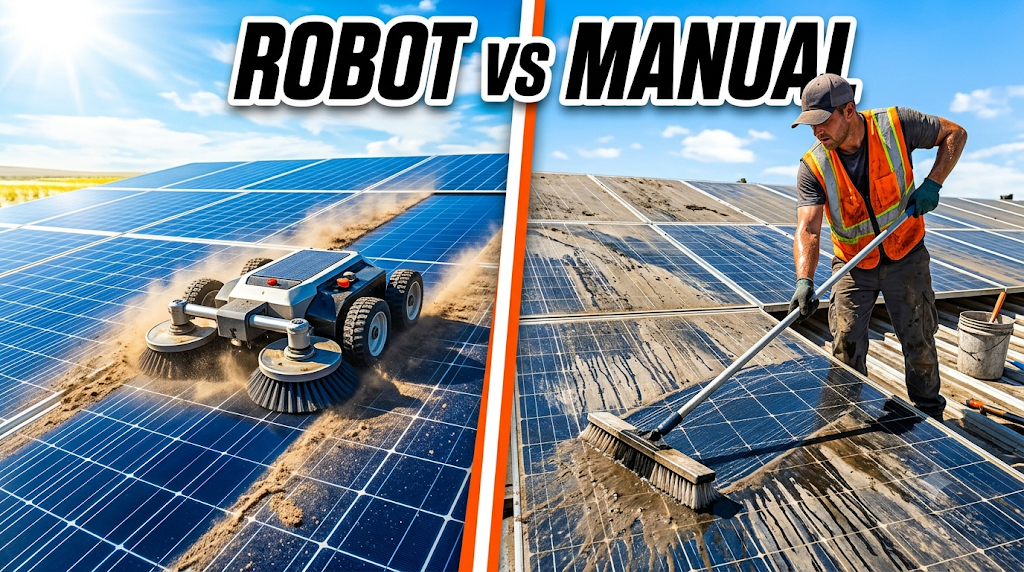
Solar panel cleaning robot vs manual cleaning comparison showing automated and traditional solar panel cleaning methods.

Solar Panel Cleaning Robot vs Manual Cleaning Introduction Solar panel cleaning is important because dust, dirt, bird droppings, pollen and other deposits can reduce the amount of sunlight reaching photovoltaic cells. Regular cleaning helps maintain the performance of a solar power system, especially in areas with dry weather, construction dust or agricultural activity. Two common cleaning methods are solar panel cleaning robots and manual cleaning. Both methods remove dirt from panel surfaces, but they differ in equipment cost, labour requirements, cleaning control, maintenance and suitability for different installations. A solar…

Read More

3 kW vs 5 kW Solar System: Which Is Better for Home?

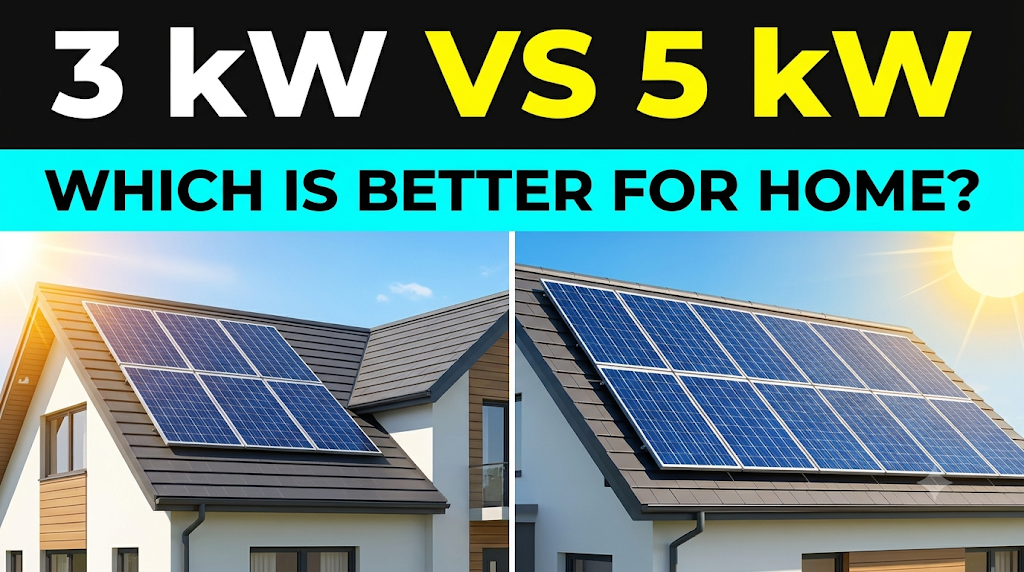
3 kW vs 5 kW solar system comparison showing residential rooftop solar panel installations

3 kW vs 5 kW Solar System Introduction Choosing between a 3 kW and a 5 kW solar system depends on household electricity consumption, available rooftop space, installation budget and the number of electrical appliances used daily. Both systems can reduce dependence on grid electricity by generating power from sunlight. However, their electricity generation capacities are different. A 3 kW solar system is generally suitable for households with moderate electricity consumption, while a 5 kW solar system is better suited to homes with higher electricity requirements, multiple air conditioners and…

Read More

1 kW vs 3 kW Solar System: Which Is Better for Home?

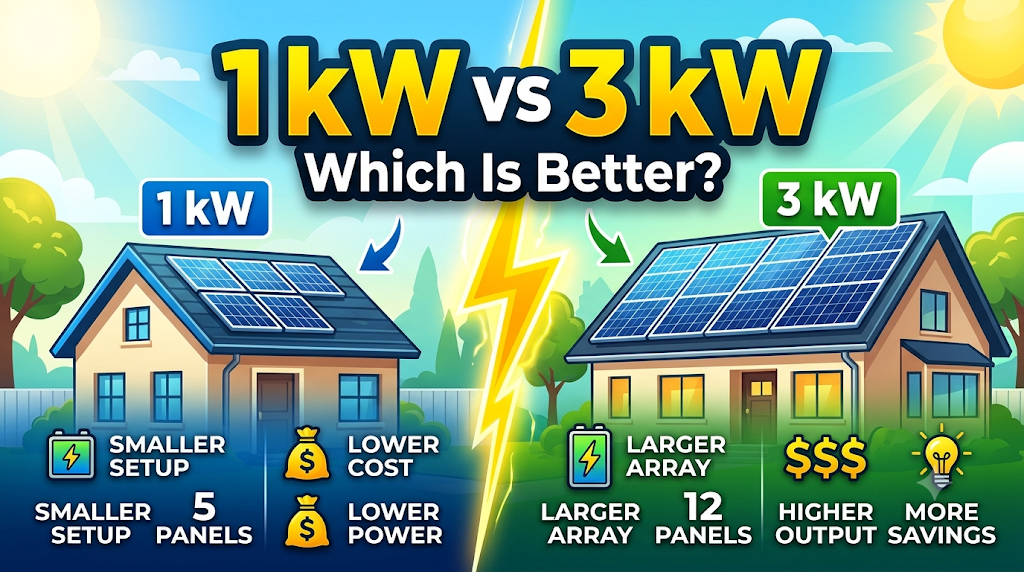
1 kW vs 3 kW solar system comparison showing rooftop solar panels for home electricity generation

1 kW vs 3 kW Solar System Introduction Choosing between a 1 kW and a 3 kW solar system depends on household electricity consumption, available rooftop space, budget and the number of appliances used daily. Both systems generate electricity from sunlight and can help reduce dependence on grid electricity. However, their electricity generation capacity is different. A 1 kW solar system is generally suitable for homes with low electricity consumption and fewer appliances, while a 3 kW solar system can support higher electricity requirements when properly designed and connected. A…

Read More

Single-Phase vs Three-Phase Solar System: Which Is Better?

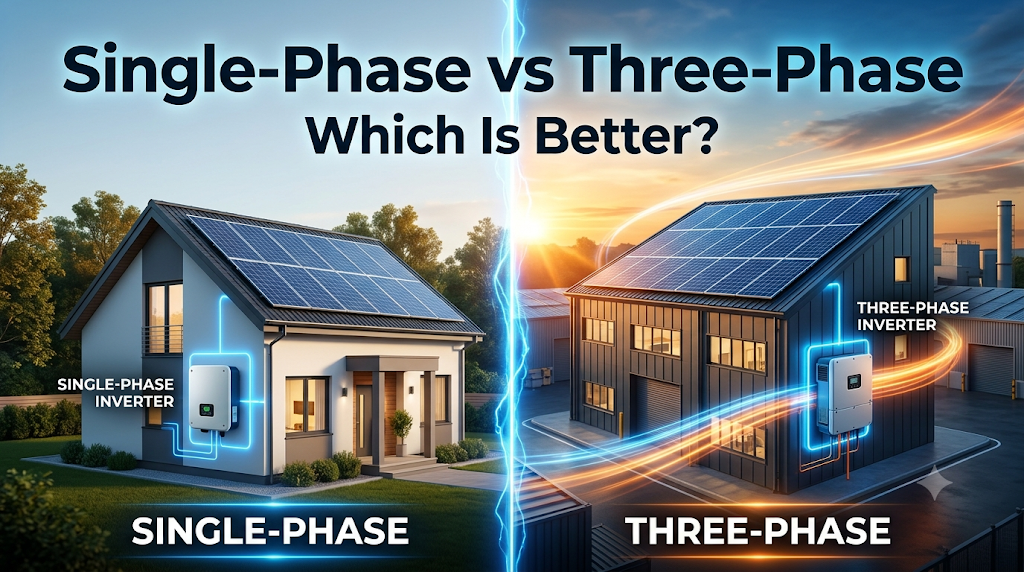
Single-phase vs three-phase solar system comparison showing different solar inverter and electrical connections

Single-Phase vs Three-Phase Solar System Introduction Choosing between a single-phase and a three-phase solar system is an important decision when installing rooftop solar panels for a home or business. Both systems convert solar energy into electricity, but they differ in how electrical power is distributed and supplied to connected appliances. A single-phase solar system is commonly used in homes with standard single-phase electricity connections, while a three-phase solar system is designed for installations with three-phase electricity connections. The right choice depends on the existing electrical supply, connected load, inverter compatibility…

Read More

Automatic Voltage Stabilizer vs Manual Voltage Stabilizer: Which Is Better?

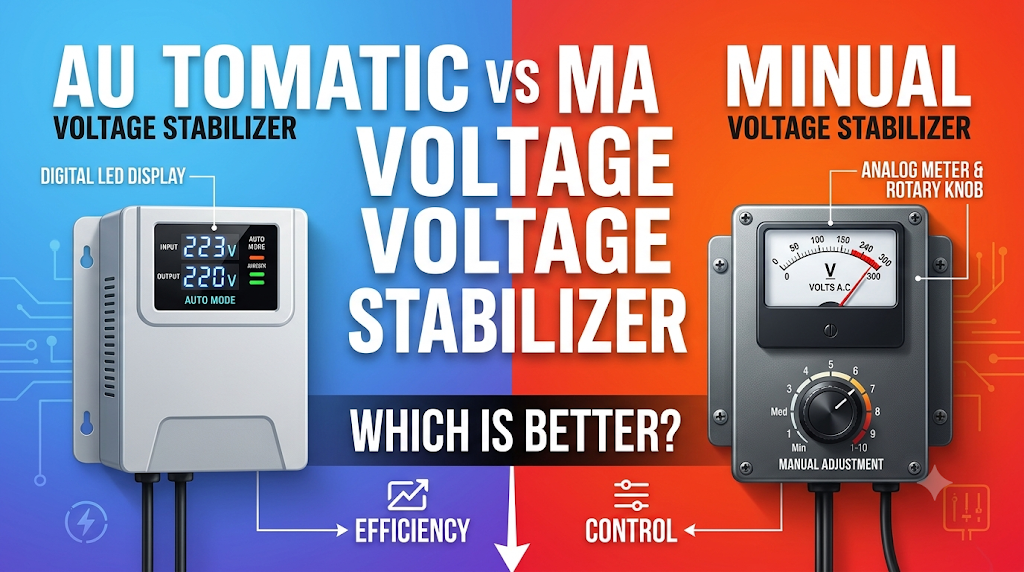
Automatic voltage stabilizer vs manual voltage stabilizer comparison showing automatic and manual voltage regulation

Automatic Voltage Stabilizer vs Manual Voltage Stabilizer Introduction An automatic voltage stabilizer and a manual voltage stabilizer are designed to regulate electrical voltage and help protect connected equipment from voltage fluctuations. However, they differ in how voltage adjustments are made. An automatic voltage stabilizer detects changes in input voltage and adjusts its output without requiring regular human intervention. A manual voltage stabilizer, on the other hand, requires the user or an operator to adjust the voltage settings when necessary. Both types can be useful, but their suitability depends on the…

Read More

Servo Stabilizer vs Static Voltage Stabilizer: Which Is Better?

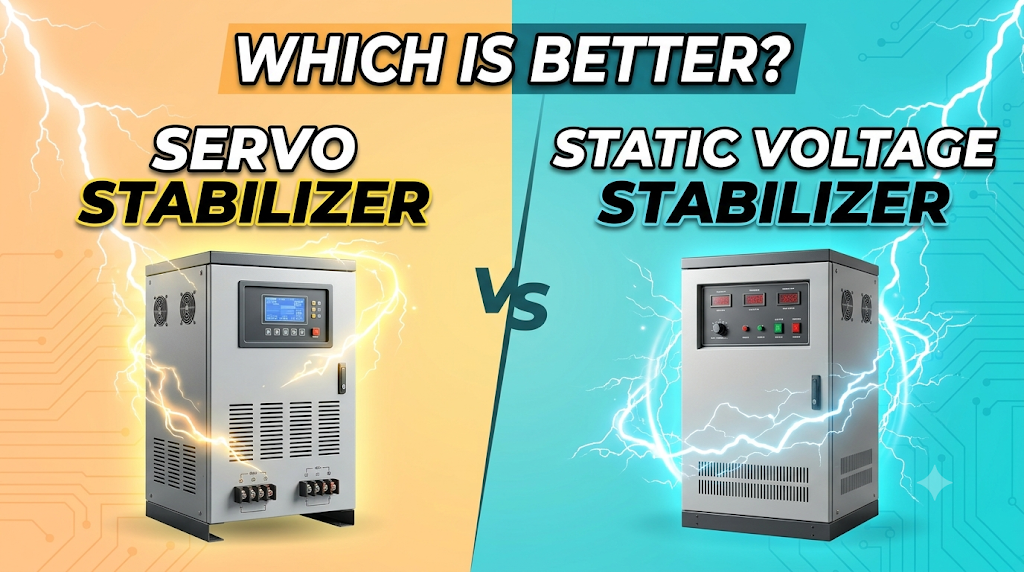
Servo stabilizer vs static voltage stabilizer comparison showing their working technologies

Servo Stabilizer vs Static Voltage Stabilizer Introduction A servo voltage stabilizer and a static voltage stabilizer are designed to protect electrical equipment from voltage fluctuations by maintaining a more consistent output voltage. Both can be used in homes, offices, commercial buildings and industrial installations, but they use different technologies to regulate electricity. A servo stabilizer relies on a motor-driven mechanism, whereas a static stabilizer uses electronic power components to make voltage corrections. Understanding these differences is important when choosing a stabilizer for equipment that requires a reliable and stable power…

Read More

Online UPS vs Line-Interactive UPS: Which Is Better?

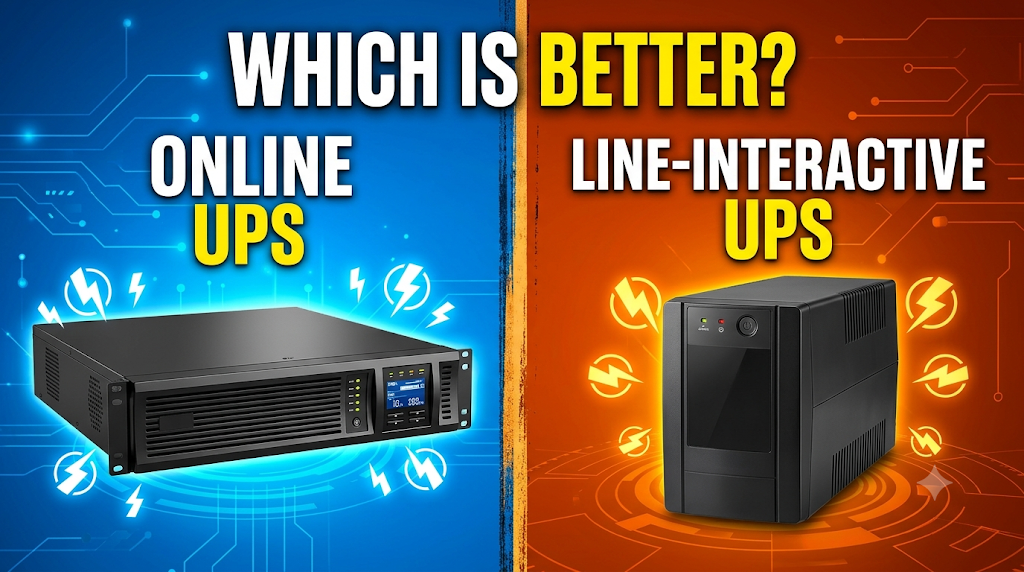
Online UPS vs line-interactive UPS comparison showing two types of uninterruptible power supply systems.

Online UPS vs Line-Interactive UPS Introduction Online UPS and line-interactive UPS are two popular types of Uninterruptible Power Supply (UPS) systems used to protect computers, servers, networking equipment and other electronic devices from power interruptions. Both provide battery backup during power cuts, but their working principles and levels of electrical protection are different. A line-interactive UPS uses Automatic Voltage Regulation (AVR) to correct certain voltage fluctuations and switches to battery power when the input supply goes outside its acceptable range. An online UPS uses double-conversion technology to continuously supply power…

Read More

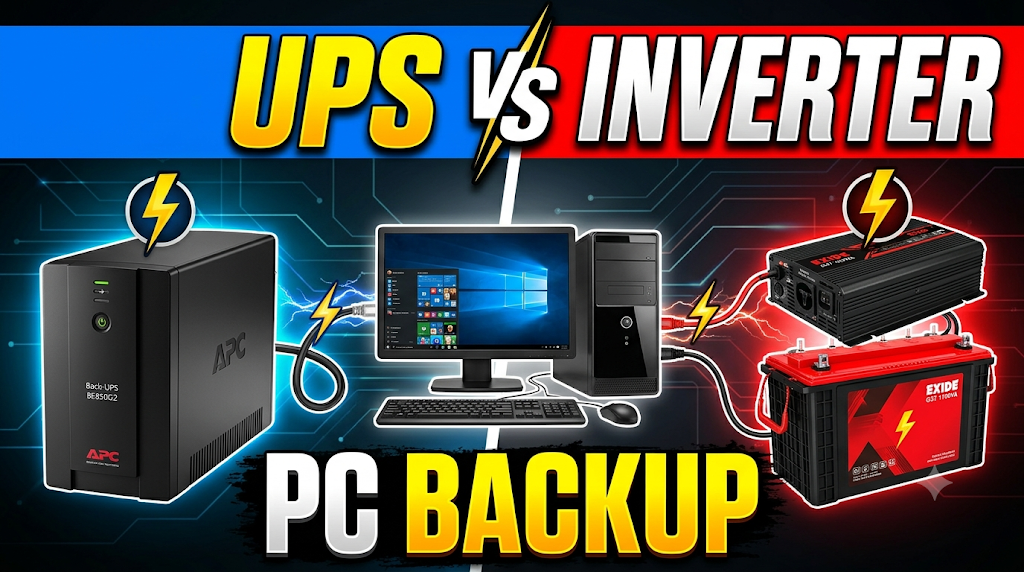
UPS vs Inverter for Computer Backup: Which Is Better?

UPS vs inverter for computer backup comparison showing a desktop UPS and home inverter.

UPS vs Inverter for Computer Backup Introduction A UPS and a home inverter are both used to provide electricity during power cuts, but they are designed for different backup requirements. A UPS (Uninterruptible Power Supply) provides quick power backup to connected electronic devices when the main electricity supply fails. A home inverter generally supplies backup electricity to multiple household appliances, including computers, fans, lights and televisions. Although both systems can operate a computer, their switching time, power protection, battery capacity and backup duration are different. Choosing the right option is…

Read More