Solar Water Pump vs Electric Water Pump
Introduction
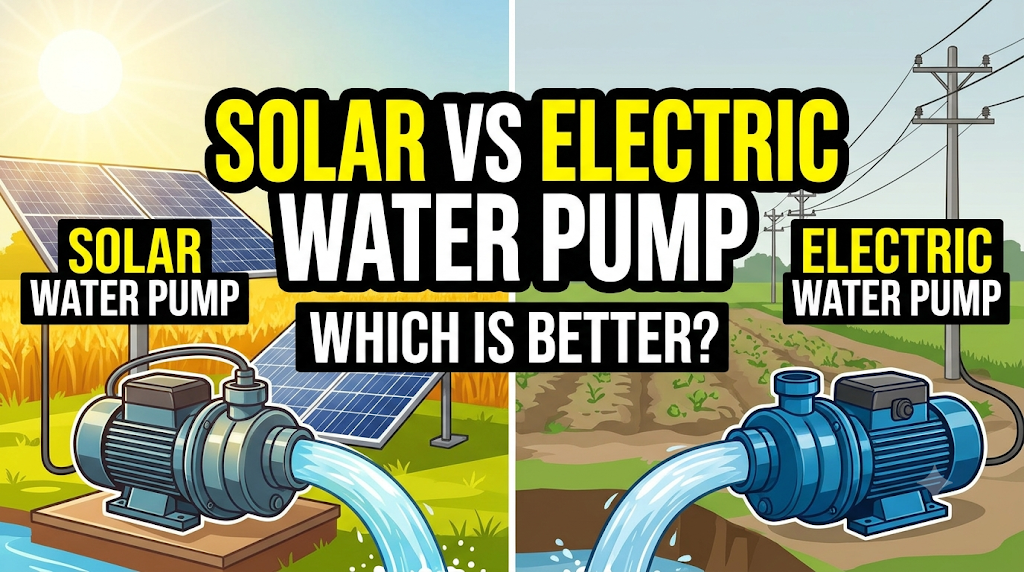
Water pumps are widely used in homes, agriculture, gardens and commercial applications to move water from one location to another. Two common options are solar water pumps and electric water pumps. Both systems can supply water for irrigation, household use and other requirements, but they differ in their power sources, operating costs, installation requirements and dependence on electricity. A solar water pump uses electricity generated by solar panels, while a conventional electric water pump generally operates using electricity supplied by the utility grid.
Choosing between these two pumping systems depends on water requirements, available sunlight, electricity supply, installation budget and long-term operating expenses. Solar water pumps can be particularly useful in agricultural areas where grid electricity is unreliable or expensive. Conventional electric pumps can be more practical where a reliable electricity connection is already available and pumping is required at different times of the day. Understanding their differences helps users select a suitable pumping solution.
Quick Comparison Table
| Feature | Solar Water Pump | Electric Water Pump |
|---|---|---|
| Power source | Solar panels | Grid electricity |
| Initial cost | Generally higher | Generally lower |
| Running cost | Low during sunlight operation | Depends on electricity tariff |
| Electricity dependency | Low during solar operation | High |
| Sunlight requirement | Yes | No |
| Night-time operation | Requires storage or another power source | Yes, if grid supply is available |
| Battery requirement | Not always required | Not normally required |
| Maintenance | Pump and solar equipment | Mainly pump and electrical equipment |
| Environmental impact | Low operational emissions | Depends on electricity generation |
| Installation | Requires panels and controller/inverter | Requires electrical connection |
| Best suited for | Remote areas and daytime irrigation | Homes and locations with reliable electricity |
1. Working Method and Power Source
Solar Water Pump
CLARO Energy – Decentralised Renewable Energy Solutions
A solar water pump uses electricity generated by photovoltaic solar panels to operate a water pump. The panels convert sunlight into electrical energy, which is supplied to the pump through a suitable controller or inverter, depending on the pump type.
During sunny conditions, the system can pump water for irrigation, livestock and other applications. Some installations also include water storage tanks so that water pumped during the daytime can be used later.
Electric Water Pump
An electric water pump operates using electricity supplied through a grid connection. Electricity powers the motor, which drives the pumping mechanism to move water through pipes.
Unlike a solar pump, a conventional electric pump does not depend on sunlight. It can operate during the day or night whenever electricity is available and the pump is properly installed.
2. Initial Installation Cost
A solar water pumping system generally requires solar panels, a suitable pump, a controller, mounting structures, cables and protective equipment. These additional components can make its initial installation more expensive than a conventional electric water pump.
An electric water pump usually requires a motor pump, electrical wiring, protection equipment and a suitable electricity connection. If the property already has an electrical connection, the installation cost can be comparatively low.
Winner: Electric Water Pump. It generally has a lower initial installation cost.
3. Running Cost and Electricity Bills
A solar water pump uses electricity generated from sunlight, so it can operate without purchasing grid electricity during suitable solar conditions. Its regular operating expenses are generally limited to maintenance and occasional component replacement.
An electric water pump consumes grid electricity whenever it operates. Its running cost depends on motor power, operating hours, pump efficiency and the local electricity tariff.
Winner: Solar Water Pump. It can significantly reduce electricity expenses over time, especially where pumping requirements are high.
4. Performance During Cloudy and Rainy Weather
A solar water pump depends on sunlight for electricity generation. Cloudy weather, heavy rain, fog and shading can reduce solar generation and pumping performance.
An electric water pump does not depend on sunlight. It can operate at its normal rated performance whenever the electricity supply is available and voltage conditions are suitable.
Winner: Electric Water Pump. It offers more predictable operation regardless of weather conditions.
5. Night-Time Operation
A standard solar water pump without battery storage generally cannot operate at night because its solar panels do not generate electricity without sunlight. However, users can store water in a tank during the day for later use.
An electric water pump can operate during the night whenever grid electricity is available. This is useful for households and agricultural applications requiring water at specific times.
Winner: Electric Water Pump. It offers more convenient night-time pumping.
6. Maintenance Requirements
A solar water pumping system requires cleaning of solar panels, inspection of electrical connections, controller maintenance and regular pump servicing. Dust accumulation on panels can reduce electricity generation.
An electric water pump mainly requires inspection of the motor, pump, electrical connections, bearings and other mechanical components. Its maintenance depends on water quality and operating conditions.
Winner: Electric Water Pump. It generally has fewer system components to maintain.
7. Installation Requirements
A solar water pump requires a suitable location for solar panels where sufficient sunlight is available. The installation also needs mounting structures, cables, a controller and proper electrical protection.
An electric water pump requires an appropriate electrical connection, suitable wiring and protection equipment. It can be installed in locations where reliable grid electricity is accessible.
Winner: Electric Water Pump. Its installation is generally simpler when an electricity connection is already available.
8. Environmental Impact
A solar water pump generates electricity from sunlight and does not produce direct operational emissions while pumping water. It can reduce dependence on electricity generated from fossil fuels.
An electric water pump uses grid electricity, whose environmental impact depends on the energy sources used to generate that electricity.
Winner: Solar Water Pump. It generally has a lower operational carbon footprint when compared with grid electricity generated partly from fossil fuels.
9. Reliability and Electricity Availability
A solar water pump can operate independently of the utility grid during suitable sunlight conditions. This makes it useful in remote agricultural areas where electricity connections are unavailable or unreliable.
An electric water pump depends on the availability of grid electricity. Power cuts and voltage fluctuations can interrupt pumping unless suitable backup and protection arrangements are installed.
Winner: Solar Water Pump. It is particularly useful in locations with unreliable grid electricity.
10. Suitability for Agriculture and Irrigation
Solar water pumps are useful for agricultural irrigation, especially when water is needed during daylight hours. Farmers can pump water into storage tanks and use it later according to irrigation requirements.
Electric water pumps are suitable for farms with reliable electricity connections and irrigation schedules that require pumping at different times, including at night.
Winner: Depends. Solar pumps are attractive for daytime irrigation and remote farms, while electric pumps offer more flexible operating hours where grid supply is dependable.
11. Long-Term Value
A solar water pump generally requires a higher initial investment, but it can reduce electricity expenses over its operating life. Solar panels also require relatively little routine maintenance when installed and maintained correctly.
An electric water pump generally costs less initially, but its electricity consumption creates recurring expenses. Its long-term cost depends on pumping hours, electricity prices and pump efficiency.
Winner: Solar Water Pump. It can provide better long-term financial value where electricity expenses are high and sufficient sunlight is available. However, the actual payback depends on installation cost and usage.
Overall Advantages and Disadvantages
| Solar Water Pump | Electric Water Pump |
|---|---|
| Uses renewable solar energy | Uses grid electricity |
| Low regular energy expenses | Recurring electricity expenses |
| Useful in remote locations | Requires electricity connection |
| Reduces grid dependency | Can operate at night |
| Environmentally friendly operation | Performance independent of sunlight |
| Higher initial investment | Generally lower initial investment |
| Depends on sunlight | Depends on grid availability |
| Requires solar panel maintenance | Simpler overall installation |
Which Is Better: Solar Water Pump or Electric Water Pump?
Best choice depends on requirements
A solar water pump is generally better for agricultural irrigation, remote locations and users who want to reduce electricity expenses. It is particularly useful when sufficient sunlight is available and water can be stored for later use.
An electric water pump is generally better for homes, commercial buildings and farms that already have reliable electricity connections. It provides flexible pumping hours without depending on sunlight.
Final Verdict:
- For lower running costs: Solar Water Pump.
- For lower initial investment: Electric Water Pump.
- For agricultural irrigation: Solar Water Pump.
- For night-time operation: Electric Water Pump.
- For remote locations: Solar Water Pump.
- For cloudy and rainy conditions: Electric Water Pump.
- For reducing electricity bills: Solar Water Pump.
There is no universal winner. Before purchasing either system, compare pump capacity, water discharge, total pumping head, installation cost and electricity requirements. A correctly sized pump is more important than simply choosing solar or electric power.
Frequently Asked Questions (FAQs)
1. Is a solar water pump better than an electric water pump?
A solar water pump is generally better for reducing electricity expenses and operating in remote locations. An electric water pump is more suitable when reliable electricity and flexible operating hours are important.
2. Can a solar water pump work at night?
A standard solar water pump without battery storage cannot normally operate at night. However, water can be stored in a tank during the daytime for later use. Battery or hybrid systems can also provide night-time operation.
3. Does a solar water pump require batteries?
No. Most standalone solar water pumping systems can operate directly from solar panels through a suitable controller without batteries. Water storage tanks can provide water availability after sunset.
4. How much electricity does an electric water pump consume?
Electricity consumption depends on the motor’s power rating, operating hours and efficiency. Larger pumps and longer operating hours generally result in higher electricity consumption.
5. Can a solar water pump work during cloudy weather?
Yes, it may continue operating when sufficient solar energy is available, but its pumping capacity can decrease. Heavy cloud cover can reduce water output considerably.
6. Which water pump is better for farmers?
A solar water pump can be a good choice for farmers who have sufficient sunlight, suitable water sources and daytime irrigation requirements. An electric pump may be more convenient where grid electricity is reliable.
7. Does a solar water pump need regular maintenance?
Yes. Solar panels should be cleaned periodically, and the pump, controller, wiring and electrical protection equipment should be inspected according to manufacturer recommendations.
8. Can a solar water pump replace an existing electric water pump?
Yes, if the solar system is correctly designed for the required water discharge, pumping head, motor capacity and daily water requirements. The existing pump may need to be replaced or adapted for solar operation.
Disclaimer
This article is for general informational and comparison purposes only. Solar and electric water pump performance, installation costs, water discharge and operating expenses depend on pump capacity, groundwater level, total pumping head, sunlight availability and local electricity tariffs. Consult a qualified pump installer before selecting a system.