Single-Phase vs Three-Phase Solar System
Introduction
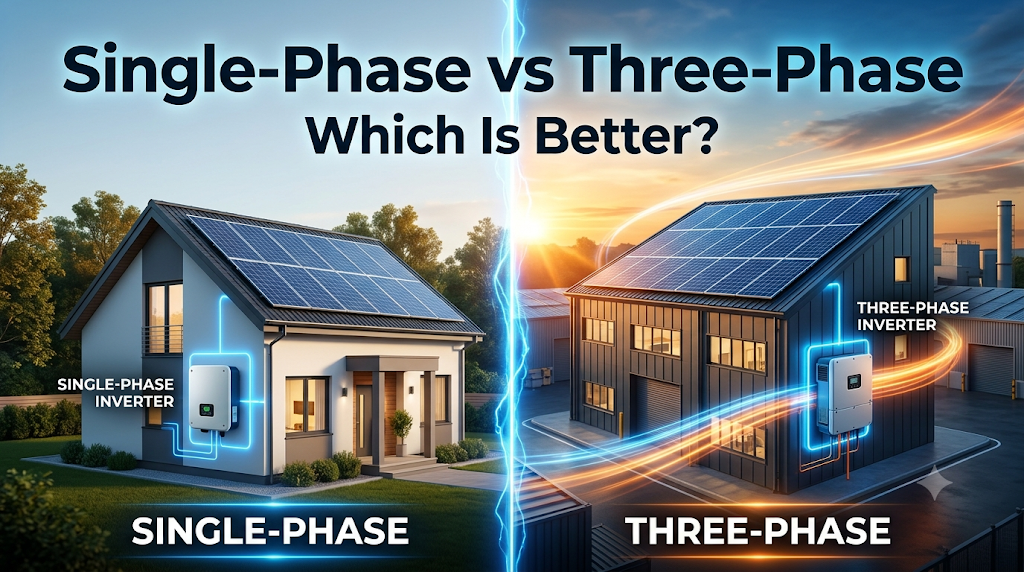
Choosing between a single-phase and a three-phase solar system is an important decision when installing rooftop solar panels for a home or business. Both systems convert solar energy into electricity, but they differ in how electrical power is distributed and supplied to connected appliances. A single-phase solar system is commonly used in homes with standard single-phase electricity connections, while a three-phase solar system is designed for installations with three-phase electricity connections. The right choice depends on the existing electrical supply, connected load, inverter compatibility and electricity consumption requirements.
A single-phase solar system can be sufficient for smaller residential installations with moderate electricity requirements. A three-phase solar system is generally more suitable for larger homes, commercial buildings and installations with higher electrical loads distributed across three phases. However, installing a three-phase solar system does not automatically increase solar panel generation. The actual electricity production depends mainly on panel capacity, sunlight, inverter performance and installation conditions. Understanding these differences helps homeowners select a suitable solar system.
Quick Comparison Table
| Feature | Single-Phase Solar System | Three-Phase Solar System |
|---|---|---|
| Electrical Supply | Single-phase | Three-phase |
| Power Distribution | One phase and neutral | Three phases and neutral |
| Inverter Type | Single-phase inverter | Three-phase inverter |
| Installation | Generally simpler | Comparatively more complex |
| Suitable Property | Small and medium homes | Large homes and commercial buildings |
| Electrical Load | Lower or moderate loads | Higher and distributed loads |
| Solar Generation | Depends on system capacity | Depends on system capacity |
| Load Distribution | Single phase | Across three phases |
| Inverter Cost | Generally lower | Generally higher |
| Wiring | Simpler | More complex |
| Expansion | Depends on inverter and connection limits | Depends on inverter and connection limits |
| Best For | Standard residential applications | Larger residential and commercial applications |
1. Working Principle
Single-Phase Solar System
A single-phase solar system uses solar panels to generate DC electricity. A solar inverter converts this electricity into AC electricity suitable for a single-phase electrical connection.
The generated electricity can be used by household appliances, while excess electricity may be exported to the grid if the system has an approved grid-connected arrangement.
This setup is commonly used in residential properties with a single-phase electricity supply.
Three-Phase Solar System
A three-phase solar system also generates DC electricity through solar panels. However, its three-phase inverter converts the DC electricity into AC electricity distributed across three electrical phases.
This arrangement is suitable for properties with three-phase electricity connections and electrical loads distributed across multiple phases.
Three-phase solar systems are commonly used in larger homes, commercial buildings and industrial installations.
2. Electricity Distribution
A single-phase solar system supplies electricity through one phase and a neutral connection. It is suitable for installations where the electrical load is connected to a single phase.
A three-phase solar system distributes electrical power across three phases. This helps manage larger electrical loads and supports equipment designed for three-phase electricity.
Winner: Three-Phase Solar System for properties with larger electrical loads distributed across multiple phases.
3. Solar Power Generation
A common misconception is that a three-phase solar system automatically generates more electricity than a single-phase system.
In reality, solar generation mainly depends on the installed panel capacity, sunlight exposure, orientation, shading and inverter performance.
For example, a properly designed 3 kW single-phase solar system and a properly designed 3 kW three-phase solar system can have similar energy-generation potential under comparable conditions.
Verdict: Tie. Neither system automatically produces more electricity simply because of its phase configuration.
4. Installation Requirements
A single-phase solar system generally has simpler electrical wiring and installation requirements. It can be a suitable option for homes that already have a single-phase connection.
A three-phase solar system requires a compatible three-phase electricity connection, suitable inverter and appropriate electrical protection and wiring.
Its installation may involve additional electrical work, depending on the existing property infrastructure.
Winner: Single-Phase Solar System for simpler residential installations.
5. Inverter Cost
Single-phase solar inverters are generally less expensive than comparable three-phase inverters, although prices depend on capacity, brand, technology and features.
Three-phase inverters can cost more because they are designed to supply balanced AC power across three phases.
The overall system cost also depends on solar panels, mounting structures, wiring, protection equipment and installation charges.
Winner: Single-Phase Solar System for generally lower inverter costs.
6. Load Capacity
Single-phase solar systems are commonly suitable for homes with moderate electrical requirements. Their practical capacity depends on the inverter rating and the electricity distribution connection permitted by the local utility.
Three-phase solar systems are better suited to installations with larger electrical requirements and equipment that operates on three-phase power.
For example, certain industrial motors, commercial machinery and larger electrical installations require three-phase electricity.
Winner: Three-Phase Solar System for larger electrical installations requiring three-phase power.
7. Heavy Appliances and Air Conditioners
A single-phase solar system can operate suitable household air conditioners, refrigerators, pumps and other appliances connected to a single-phase supply.
A three-phase solar system is useful in larger properties where electrical loads are distributed across multiple phases. It can also support compatible three-phase equipment.
However, the inverter must be correctly sized, and the appliance starting current and electrical requirements must be considered.
Verdict: Depends. The better system depends on the appliances, their electrical connections and the total load.
8. Grid Connection and Net Metering
Both single-phase and three-phase solar systems can support grid-connected operation and net metering where permitted by the local electricity distribution company.
However, approval requirements, permitted solar capacity, inverter specifications and export limits may differ according to the electricity connection and applicable regulations.
A three-phase connection may be required or preferred for larger solar installations.
Before purchasing a system, homeowners should check the applicable requirements with their electricity distribution company.
Verdict: Depends. Grid connection approval and metering rules determine which configuration is suitable.
9. Maintenance and Reliability
Both systems require similar basic solar maintenance, including cleaning panels when necessary, checking electrical connections and monitoring inverter performance.
Single-phase systems generally have simpler electrical arrangements, which may make troubleshooting easier.
Three-phase systems have more complex electrical distribution arrangements, but a properly designed system can provide reliable operation.
Maintenance requirements depend more on component quality, installation and operating conditions than on the number of phases.
Verdict: Tie. Both can provide reliable operation with proper installation and maintenance.
10. Which Solar System Is Better for Home Use?
For a small or medium-sized home with a single-phase electricity connection and moderate electricity consumption, a single-phase solar system is generally a practical and economical choice.
For a large home with a three-phase electricity connection, multiple air conditioners, heavy electrical appliances or higher electricity consumption, a three-phase solar system may be more suitable.
For example, a home with several air conditioners, water pumps, geysers and other high-power appliances may benefit from three-phase electricity distribution if its electrical requirements justify it.
However, homeowners should not select a three-phase solar system simply because it sounds more powerful. The existing electricity connection, sanctioned load, solar capacity and local utility approval should guide the decision.
Advantages and Disadvantages
Single-Phase Solar System
Advantages
- Generally lower inverter cost.
- Simpler electrical installation.
- Suitable for many residential properties.
- Compatible with standard single-phase connections.
- Generally easier electrical troubleshooting.
- Suitable for smaller and medium-sized solar installations.
Disadvantages
- Not suitable for directly supplying three-phase equipment.
- Limited by the capacity of the single-phase connection and inverter.
- Less suitable for properties with large three-phase loads.
- Load distribution is limited to one phase.
Three-Phase Solar System
Advantages
- Suitable for larger electrical installations.
- Distributes power across three phases.
- Supports compatible three-phase appliances and machinery.
- Suitable for many commercial and industrial applications.
- Can accommodate larger solar installations where utility rules permit.
Disadvantages
- Generally higher inverter cost.
- More complex electrical installation.
- Requires a compatible three-phase electricity connection.
- Electrical design and protection arrangements require careful planning.
- May be unnecessary for smaller homes.
Frequently Asked Questions (FAQs)
1. What is the main difference between single-phase and three-phase solar systems?
A single-phase solar system supplies AC electricity through one phase, while a three-phase solar system distributes AC electricity across three phases using a compatible inverter.
2. Which solar system is better for a normal home?
A single-phase solar system is generally suitable for a normal home with a single-phase electricity connection and moderate electrical requirements.
3. Does a three-phase solar system generate more electricity?
No. Solar electricity generation mainly depends on panel capacity, sunlight, orientation, shading and inverter performance, not simply on whether the system is single-phase or three-phase.
4. Can a single-phase solar system run multiple air conditioners?
Yes, provided the inverter, electricity connection and solar system are correctly sized for the electrical load. The appliances must also be compatible with the single-phase supply.
5. Is a three-phase solar system more expensive?
Three-phase solar inverters generally cost more than comparable single-phase models. However, the overall system price depends on capacity, components and installation requirements.
6. Can I install a three-phase solar system in a single-phase home?
A standard three-phase solar inverter requires a compatible three-phase connection. A suitable electricity connection upgrade and utility approval may be necessary.
7. Which system is better for a large house?
A three-phase solar system may be more suitable for a large house with a three-phase electricity connection, higher electrical loads and compatible appliances.
8. Can both systems use net metering?
Yes, both can support net metering where permitted by local electricity distribution rules and subject to the applicable connection, capacity and approval requirements.
Conclusion
A single-phase solar system is generally a better choice for smaller and medium-sized homes with standard single-phase electricity connections. It offers simpler installation and generally lower inverter costs. A three-phase solar system is more suitable for larger homes, commercial properties and installations with substantial electrical loads distributed across three phases. Both systems can provide similar solar generation when their panel capacities and operating conditions are comparable. Before making a decision, check your electricity connection, sanctioned load, inverter compatibility and local utility requirements.
Disclaimer
Solar system capacity, inverter specifications, installation costs, electricity generation and net metering rules vary by manufacturer, location and electricity distribution company. Always verify current technical specifications, government subsidy eligibility and local utility requirements before purchasing or installing a solar system. Consult a qualified solar installer for system sizing and electrical connection requirements.