VIT vs SRM for Computer Science
Introduction
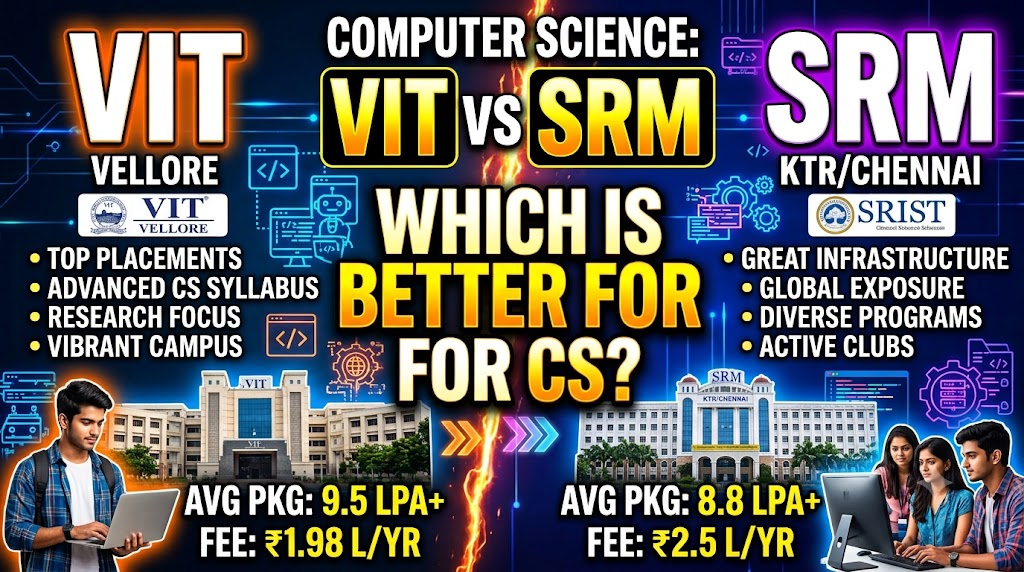
Vellore Institute of Technology (VIT) and SRM Institute of Science and Technology (SRMIST) are private institutions in India known for engineering and technology education. Students comparing VIT vs SRM for Computer Science should look beyond institutional reputation and examine the specific campus, Computer Science and Engineering (CSE) curriculum, programming opportunities, fees, internships and placement outcomes. Both institutions offer pathways into computing careers, but the student experience can vary by campus, programme and specialisation. The better choice depends on a student’s academic preparation, financial budget and intended career in software development or another technology field.
Computer Science students need a combination of theoretical knowledge and practical skills. Programming, data structures, algorithms, operating systems, databases, computer networks and software engineering are important areas to investigate when comparing degree programmes. Students should also examine electives, coding practice, project work, faculty support and access to technical activities. VIT and SRM may differ in their admission processes, campus arrangements and programme costs. Reviewing current official information and comparable CSE-specific placement data can help applicants make a more informed decision instead of relying on general claims.
Quick Comparison Table
| Comparison Factor | VIT | SRMIST |
|---|---|---|
| Institution type | Private institution | Private deemed-to-be university |
| Main comparison campuses | Vellore and other VIT campuses, depending on programme | Kattankulathur and other SRM campuses, depending on programme |
| Computer Science courses | Verify the specific campus and programme | Verify the specific campus and programme |
| Admission process | Current VITEEE and programme-specific rules where applicable | Current SRMJEEE and programme-specific rules where applicable |
| Specialisations | Depend on campus and current course offering | Depend on campus and current course offering |
| Fees | Vary by programme, campus and fee category | Vary by programme, campus and fee category |
| Practical learning | Compare labs, projects and coding opportunities | Compare labs, projects and coding opportunities |
| Placements | Review campus- and CSE-specific data | Review campus- and CSE-specific data |
| Campus experience | Varies by campus and programme | Varies by campus and programme |
| Best choice | Students whose preferred VIT programme meets their goals | Students whose preferred SRM programme meets their goals |
1. Computer Science Curriculum
VIT
Students considering VIT should examine the current CSE curriculum for their intended campus. Important subjects to check include programming, data structures, algorithms, operating systems, database management, computer networks and software engineering.
Students should also investigate the electives and specialised pathways available in areas such as artificial intelligence, cybersecurity, cloud computing or data science. The exact options may differ by campus and academic year, so applicants should check the official programme documents.
SRMIST
SRMIST students should review the curriculum for the specific CSE degree and campus they plan to join. Alongside core computing subjects, examine the available electives, laboratory courses, project requirements and opportunities to study emerging technologies.
Applicants should confirm whether a preferred specialisation is part of the degree structure, an elective pathway or a separate programme.
Which is better for the curriculum?
Neither institution can be declared the winner without comparing the exact programmes. Choose the curriculum that provides a strong foundation in computer science and relevant options for your intended career.
2. Admission Process and Eligibility
VIT
VIT’s engineering admission process includes VITEEE for applicable B.Tech programmes, subject to the current admission rules. Applicants should verify eligibility, qualifying examination requirements, application deadlines, counselling procedures and the fee category applicable to their allotted seat.
Admission to one programme or campus should not be assumed to guarantee admission to another.
SRMIST
SRMIST uses its own admission procedures for engineering programmes, including SRMJEEE where applicable under the current rules. Students should check the latest eligibility criteria, examination requirements, counselling process, deadlines and campus-specific information.
Applicants should confirm the rules for their exact course rather than relying on outdated admission information.
Which is better for admission?
The answer depends on your Class 12 subjects and marks, entrance examination performance, eligibility and budget. Compare both admission processes and understand the fee implications before selecting preferences.
3. Fees and Total Cost
VIT
The total cost of studying CSE at VIT depends on the campus, programme, applicable fee category and accommodation arrangements. Expenses may include tuition, hostel charges, meals, transport, examination fees where applicable and personal costs.
Students should check the official fee schedule and confirm the total amount payable for their allotted programme and fee category.
SRMIST
At SRMIST, costs depend on the selected campus and programme, applicable tuition fees, accommodation and other expenses. Students should review the current fee structure, hostel charges and any additional compulsory payments.
Scholarships or financial assistance should be considered only after checking the current eligibility and renewal conditions.
Which is more affordable?
Neither institution is universally cheaper for every student. Compare the full cost of the degree at the specific campus and fee category available to you, including accommodation and other living expenses.
4. Programming Practice and Technical Skills
VIT
Computer Science students should investigate how much practical programming is included in the course and how projects are assessed. Coding assignments, laboratory sessions, algorithm practice and software development projects can help students build skills that are useful beyond examinations.
Students can also ask about technical clubs, coding competitions, hackathons and other opportunities available on their chosen campus.
SRMIST
At SRMIST, prospective students should similarly examine programming laboratories, project requirements, technical activities and opportunities to work collaboratively on software problems.
Students interested in competitive programming or software engineering should investigate whether the campus offers suitable clubs, events and mentoring opportunities.
Which is better for coding?
There is no universal winner based on university name alone. Your development will depend on curriculum quality, consistent practice, project experience and how actively you use the opportunities available.
5. Faculty and Research Opportunities
VIT
Students should review the faculty and academic resources associated with the specific CSE programme. Research projects, technical electives and faculty-guided work may be relevant for students interested in postgraduate study or specialised technology fields.
Check the actual opportunities available to undergraduate students rather than assuming every research activity is open to all.
SRMIST
SRMIST applicants should examine faculty expertise, project supervision, research facilities and the availability of relevant technical electives. Students considering postgraduate education can also investigate the department’s research areas and academic pathways.
Which is better for academic support?
A reliable comparison requires current information about the specific departments and campuses. Consider faculty access, project guidance, research opportunities and the academic support students can obtain.
6. Internships and Industry Exposure
VIT
Internships can help CSE students apply programming and engineering knowledge in professional environments. Applicants should check internship support, industry projects, technical workshops and opportunities to interact with employers.
Ask whether internships are compulsory, how students obtain them and what career guidance is available.
SRMIST
Students at SRMIST should investigate the internship process, industry-related projects, technical events and career preparation services offered by their chosen programme.
The availability of internships and employer interactions can vary, and students may need to compete for opportunities or secure some placements independently.
Which is better for industry exposure?
Compare the actual internship structure and the relevance of available opportunities to your preferred career. General statements about industry connections do not establish which programme is better.
7. Placements and Career Opportunities
VIT
CSE graduates may pursue software development, application engineering, testing, data-related roles, systems engineering and other technology careers. Outcomes depend on technical skills, academic performance, internships, communication and employer requirements.
Before enrolling, review VIT’s latest placement information for the relevant campus and CSE programme. Check the reporting year, eligible student population, number placed, salary measures and types of roles offered.
SRMIST
SRMIST CSE graduates can also pursue software engineering and other computing-related careers. Students should review current campus-specific placement reports and determine whether the published figures apply to their degree and graduating cohort.
University-wide figures may include multiple campuses, programmes and degree levels, so they should not be treated as a direct measure of CSE outcomes at one campus.
Which is better for placements?
Neither institution should be declared the winner without comparable CSE-specific placement data. Compare placement rates, salary measures, job roles, reporting periods and the number of eligible students covered. No university can guarantee an individual job or salary.
8. Campus Facilities and Student Life
VIT
VIT’s campuses may differ in facilities, location and academic offerings. Students should inspect the laboratories, libraries, accommodation, transport arrangements and student activities at the campus where they would actually study.
Hostel availability, campus rules and living expenses should be confirmed before accepting admission.
SRMIST
SRMIST also has multiple campuses, and facilities can vary between them. Applicants should investigate the computing laboratories, library resources, accommodation, campus transport and student activities available at their intended location.
A comparison between VIT Vellore and SRM Kattankulathur, for example, should use information about those two specific campuses rather than combining information from other locations.
Which has a better campus?
Campus preference is subjective. Compare the actual location, facilities, accommodation and daily living arrangements that matter to you.
9. Which Should You Choose for Computer Science?
Choose VIT if:
- The specific VIT campus offers the CSE programme and curriculum you want.
- Its admission and fee arrangements fit your academic profile and budget.
- You find suitable programming, project and technical learning opportunities.
- Its current campus-specific placement information matches your expectations.
Choose SRMIST if:
- The specific SRM campus offers a suitable CSE programme or specialisation.
- Its curriculum and practical learning arrangements match your goals.
- The total tuition and living expenses are manageable.
- Its current placement and internship information supports your career plans.
Before deciding, compare the latest official admission rules, fee schedules, curricula and campus-specific CSE placement reports. Also consider your entrance examination results and the actual programme offered to you.
Conclusion
VIT vs SRM for Computer Science does not have one universal winner. Both institutions offer routes into technology education, but the better choice depends on the campus, CSE curriculum, programming opportunities, total fees and reliable placement outcomes. Students should compare the same degree level and campus-specific data rather than relying on general university rankings or promotional claims. Choose the programme that provides the strongest fit for your technical interests, learning needs and budget.
Disclaimer
Admission requirements, entrance examination rules, programme availability, fees, scholarships and placement outcomes may change by academic year and campus. Verify the latest official information directly with VIT and SRMIST before applying.