Bagged vs Bagless Vacuum Cleaner
Introduction
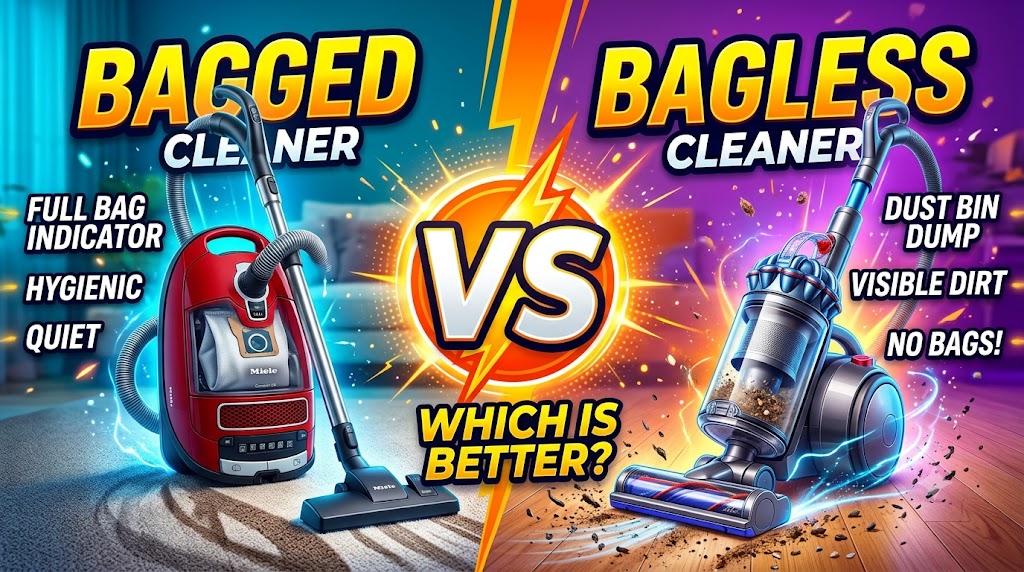
Choosing between a bagged and a bagless vacuum cleaner depends on your cleaning needs, budget, dust-handling preferences, and maintenance requirements. A bagged vacuum cleaner collects dirt and dust inside a replaceable bag, while a bagless vacuum cleaner stores the collected debris in a reusable dust container. Both types can clean floors, carpets, and other suitable surfaces, but they differ in how you empty them, how often you buy replacement supplies, and how you manage collected dust. Understanding these differences can help you choose a vacuum cleaner that fits your household.
A bagged vacuum cleaner can be a practical choice for people who prefer disposing of collected dust in a sealed bag, which may reduce direct contact with debris during emptying. A bagless vacuum cleaner avoids the need to purchase disposable bags and allows you to see when the dust container needs emptying. However, emptying a bagless model can release dust into the air, and its filters and container may require regular cleaning. Neither type is automatically better for every household, so it is important to compare filtration, maintenance, running costs, capacity, and ease of use.
Quick Comparison Table
| Feature | Bagged Vacuum Cleaner | Bagless Vacuum Cleaner |
|---|---|---|
| Dust collection | Disposable or replaceable bag | Reusable dust container |
| Dust disposal | Remove and discard the bag | Empty the container |
| Replacement bags | Required | Not required |
| Emptying dust | Often less direct contact with dust | Can expose the user to collected dust |
| Filtration | Depends on bag and filter design | Depends on filter and container design |
| Maintenance | Bag replacement and filter care | Container emptying and filter cleaning |
| Ongoing costs | Replacement bags may add costs | No disposable bag costs |
| Dust capacity | Depends on bag size | Depends on container size |
| Visibility of collected dirt | Usually hidden inside the bag | Usually visible in the container |
| Best suited for | People prioritizing contained dust disposal | People wanting to avoid replacement bags |
1. Dust Collection and Disposal
Bagged Vacuum Cleaner
A bagged vacuum cleaner collects dust, hair, and debris inside a bag fitted within the appliance. When the bag becomes full, you remove it and replace it with a new one.
Many bagged models allow the bag to be removed and discarded with relatively little direct contact with the collected dirt. Some bags also close or seal during removal, depending on the design.
Bagless Vacuum Cleaner
A bagless vacuum cleaner collects debris in a removable container. You empty the container into a rubbish bin and reinstall it for the next cleaning session.
This design makes the collected dirt visible, but emptying the container can release dust into the surrounding air, particularly if it is overfilled or handled carelessly.
Which is better? A bagged vacuum cleaner is generally preferable if you want more contained dust disposal. A bagless model is convenient if you prefer an emptyable container.
2. Filtration and Dust Control
Bagged Vacuum Cleaner
The bag itself may provide an additional layer of filtration, depending on its material and construction. Some models combine specialised bags with high-efficiency filters to capture fine particles.
However, filtration performance varies considerably. A bagged vacuum cleaner is not automatically a high-filtration appliance simply because it uses a bag.
Bagless Vacuum Cleaner
A bagless vacuum cleaner relies on its separation system and filters to capture dust while allowing air to pass through. Some models offer advanced filtration, including HEPA filters.
Filter quality, maintenance, and the appliance’s overall sealing all affect how well particles are retained.
Which is better? Neither design automatically filters better. Compare the filtration specifications and whole-machine dust containment of the specific models.
3. Maintenance Requirements
Bagged Vacuum Cleaner
The main routine task is replacing the bag when it becomes full. Depending on the model, filters may also need cleaning or replacement.
Because the dust is contained in the bag, there is generally less need to wash a dust container after every few uses.
Bagless Vacuum Cleaner
A bagless model requires regular dustbin emptying. Its container may need washing if permitted by the manufacturer, while filters often require periodic cleaning or replacement.
Neglecting filter maintenance can reduce airflow and cleaning performance.
Which is better? A bagged model may require less direct dustbin cleaning, while a bagless model avoids replacement bags but may need more hands-on container maintenance.
4. Running Costs
Bagged Vacuum Cleaner
Bagged models require compatible replacement bags. The long-term cost depends on the bag price, capacity, availability, and how often you vacuum.
Some models use proprietary bags, which may limit your purchasing options.
Bagless Vacuum Cleaner
Bagless models do not require disposable collection bags, which can reduce recurring supply costs. However, filters and other replaceable components may still need to be purchased.
Which is better? A bagless vacuum cleaner may cost less to operate over time if replacement bags would otherwise be expensive. Compare the costs of bags, filters, and maintenance before deciding.
5. Ease of Use
Bagged Vacuum Cleaner
When the bag is full, you remove it and install a replacement. This is straightforward, but you need to keep compatible bags available.
Some bagged models have indicators that show when the bag needs replacing.
Bagless Vacuum Cleaner
A bagless vacuum cleaner lets you empty the container and continue using the appliance without buying another bag. However, the container must be removed and emptied correctly.
The ease of emptying depends on its release mechanism, shape, and capacity.
Which is better? Bagless models avoid shopping for replacement bags, while bagged models can simplify disposal by keeping dirt inside a removable bag.
6. Performance as the Dust Container Fills
Bagged Vacuum Cleaner
As a bag fills, airflow and suction performance may change depending on the bag design and the vacuum cleaner’s maintenance system. Replacing the bag when indicated helps maintain effective operation.
Bagless Vacuum Cleaner
A bagless vacuum cleaner can also lose airflow as its container fills or its filters become clogged. Regular emptying and filter cleaning help maintain performance.
Which is better? Neither type guarantees stronger suction as it fills. Compare real-world performance, airflow design, and maintenance requirements.
7. Capacity and Cleaning Frequency
Bagged Vacuum Cleaner
A larger bag can hold more debris before replacement, depending on the model and the material being collected. This can be convenient in larger homes or households that produce a lot of dust and hair.
Bagless Vacuum Cleaner
Bagless dust containers vary in size. A larger container can reduce how often you need to empty it, while compact models may require frequent emptying.
Which is better? The best choice depends on the capacity of the specific appliance and how much dirt your household generates.
8. Hygiene and Allergy Considerations
Bagged Vacuum Cleaner
A well-designed bagged vacuum cleaner can help limit direct contact with dust during disposal. This may be helpful for people who prefer not to handle collected debris.
However, the level of protection depends on the bag’s closure, filtration system, and appliance sealing.
Bagless Vacuum Cleaner
A bagless vacuum cleaner may expose the user to dust when the container is emptied. Emptying it carefully outdoors, where practical, and following the manufacturer’s cleaning instructions may help reduce exposure.
Models with well-designed filtration and dustbin systems can still provide effective dust control during normal use.
Which is better? A sealed bagged model is often preferable for people who want to minimise contact with collected dust. Anyone with significant dust allergies should compare filtration and disposal design rather than relying on the bagged or bagless label alone.
9. Environmental Considerations
Bagged Vacuum Cleaner
Disposable bags create waste and require replacement materials. The overall environmental impact depends on the bag material, manufacturing, transportation, and frequency of replacement.
Bagless Vacuum Cleaner
A bagless vacuum cleaner avoids disposable collection bags, but it still uses electricity and may require replacement filters or other parts. Cleaning its reusable container also consumes some water if washing is permitted.
Which is better? Bagless models avoid disposable bag waste, but the overall environmental impact depends on the appliance’s lifespan, efficiency, and replacement parts.
10. Price and Overall Value
Bagged Vacuum Cleaner
The purchase price varies by model, suction performance, filtration, capacity, and included features. Replacement bags add an ongoing expense.
Bagless Vacuum Cleaner
Bagless models also vary in price. They avoid disposable bag purchases, but the cost of filters, repairs, and other components should be considered.
Which is better? Neither design is always cheaper. Compare the purchase price and expected maintenance costs over the appliance’s useful life.
11. Which Vacuum Cleaner Is Better for Different Buyers?
| Your Requirement | Better Choice | Reason |
|---|---|---|
| Less direct contact with collected dust | Bagged Vacuum Cleaner | The bag contains debris during disposal |
| No disposable bag purchases | Bagless Vacuum Cleaner | Uses a reusable dust container |
| Lower ongoing bag costs | Bagless Vacuum Cleaner | Does not require replacement bags |
| Simpler dust disposal | Bagged Vacuum Cleaner | A removable bag can contain collected dirt |
| Seeing when the container is full | Bagless Vacuum Cleaner | Collected debris is usually visible |
| Fewer dustbin-cleaning tasks | Bagged Vacuum Cleaner | The bag is removed instead of emptying a reusable bin |
| Allergy-conscious cleaning | Depends on the model; often bagged | Filtration and dust containment are the key factors |
| Larger cleaning capacity | Depends on the model | Bag and container sizes vary |
| Lower long-term cost | Depends on usage | Compare bags, filters, and maintenance |
| Best overall value | Depends on your priorities | Consider purchase price, hygiene, and maintenance |
Conclusion
A bagged vacuum cleaner is generally the better choice if you prefer contained dust disposal and want to minimise direct contact with collected dirt. It can also be convenient for people who would rather replace a bag than regularly empty and clean a dust container.
A bagless vacuum cleaner is a practical choice if you want to avoid buying disposable bags and prefer a reusable dust container. However, it requires regular emptying and appropriate filter maintenance.
Before buying, compare filtration, capacity, suction performance, replacement-part costs, maintenance, and warranty. Choose a bagged model for convenient, contained dust disposal or a bagless model to avoid disposable bags. The quality of the specific vacuum cleaner matters more than the collection design alone.
FAQs
1. What is the main difference between bagged and bagless vacuum cleaners?
A bagged vacuum cleaner stores dirt in a replaceable bag, while a bagless vacuum cleaner collects dirt in a reusable container that you empty after use.
2. Which vacuum cleaner is better for allergies?
A well-sealed bagged vacuum cleaner can reduce direct exposure to collected dust during disposal. However, filtration efficiency and the appliance’s overall sealing are also important.
3. Is a bagless vacuum cleaner cheaper to maintain?
It can be cheaper because it does not require disposable bags. However, filters and other components may still need replacement, and the container requires regular cleaning.
4. Do bagged vacuum cleaners have stronger suction?
Not necessarily. Suction performance depends on the motor, airflow design, filtration, condition of the bag, and maintenance.
5. How often should I replace a vacuum cleaner bag?
Replace it according to the manufacturer’s instructions and the bag-full indicator, if available. Avoid allowing it to become excessively full.
6. How often should I empty a bagless vacuum cleaner?
Empty it when the container reaches the manufacturer’s recommended fill level, or earlier if needed to maintain airflow and cleaning performance.
7. Are bagless vacuum cleaners more environmentally friendly?
They avoid disposable collection bags, but filters and other parts may still need replacement. Overall environmental impact depends on product lifespan, energy use, and maintenance.
8. Which vacuum cleaner should I buy for home use?
Choose a bagged model if contained dust disposal is your priority. Choose a bagless model if you prefer a reusable dust container and want to avoid buying replacement bags.
Disclaimer
Vacuum cleaner prices, filtration performance, capacity, suction, and warranty terms vary by brand and model. Actual results depend on the floor type, dust levels, maintenance, and usage. Check the manufacturer’s specifications and replacement-part availability before purchasing.