Online School vs Homeschooling
Introduction
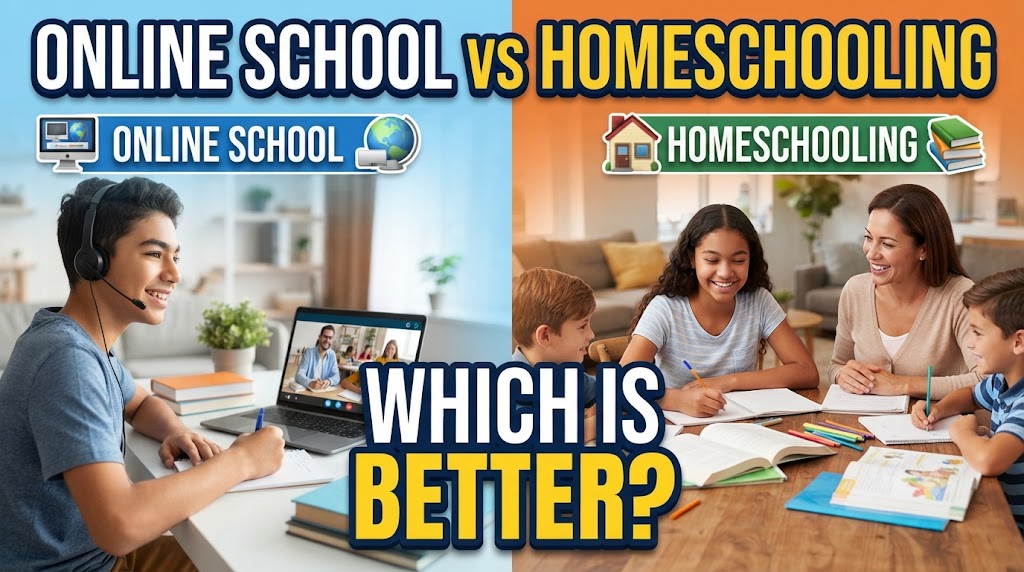
Online school and homeschooling are two alternatives to traditional classroom education, but they work in different ways. Online schools generally provide a structured curriculum through digital platforms, with lessons, assignments, assessments, and teacher support. Homeschooling gives parents or guardians greater responsibility for planning and managing a child’s education, although families may also use tutors, online courses, textbooks, and educational programmes. Both approaches can offer flexibility, but their effectiveness depends on the child’s learning needs, the family’s resources, and the quality of instruction.
Choosing between online school and homeschooling requires more than comparing convenience. Parents should consider academic progress, social interaction, daily routines, teaching responsibilities, and future educational opportunities. Online school may suit families who want an organised programme with scheduled lessons and teacher guidance. Homeschooling may be more suitable for families who want greater control over subjects, pace, and teaching methods. In India, parents should also check applicable education requirements, recognised qualifications, and examination eligibility before selecting either pathway.
Quick Comparison Table
| Feature | Online School | Homeschooling |
|---|---|---|
| Curriculum | Usually provided by the school or programme | Planned by parents or chosen from educational resources |
| Teaching | Online teachers deliver lessons | Parents, tutors, and learning resources provide instruction |
| Daily schedule | Often structured; flexibility varies | Usually more flexible |
| Teacher support | Provided according to the programme | Depends on the family’s arrangements |
| Parental involvement | Varies by age and programme | Generally higher |
| Learning pace | Depends on the school model | Can be highly personalised |
| Assessments | School assignments, tests, and examinations | Chosen or organised by the family, depending on the pathway |
| Social interaction | Virtual interaction and possible school activities | Requires deliberate opportunities for group interaction |
| Costs | Tuition, devices, internet, and other fees may apply | Costs depend on materials, tutors, activities, and examinations |
| Best suited for | Families wanting structured remote education | Families wanting greater control over education |
1. Online School vs Homeschooling: Learning Structure
Online School
An online school typically follows an organised curriculum and provides learning materials through a digital platform. Students may attend live lessons, watch recorded classes, submit assignments, and take tests.
This structure can help families monitor academic progress without having to design the entire curriculum themselves. However, the degree of teacher interaction and flexibility varies between programmes.
Homeschooling
In homeschooling, parents or guardians take primary responsibility for organising the child’s education. They may select textbooks, plan lessons, use educational websites, hire tutors, or follow a structured curriculum.
Families can adjust the learning plan according to the child’s progress and interests. However, they must ensure that the chosen approach provides sufficient subject coverage and prepares the child for relevant examinations or future study.
Verdict: Online school is generally more suitable for families wanting a ready-made educational structure, while homeschooling offers greater control over the curriculum.
2. Online School vs Homeschooling: Teacher Support
Online School
Online schools usually provide access to teachers through live lessons, digital communication, assignments, or scheduled consultations. Students can receive feedback according to the school’s support arrangements.
A well-managed programme can help parents understand the child’s progress without requiring them to teach every subject themselves.
Homeschooling
Homeschooling parents may teach subjects directly or arrange help from tutors and specialist instructors. This allows families to choose educators who match the child’s learning needs.
However, parents need to assess whether they have the time and subject knowledge required. Hiring tutors can help, but it may increase costs.
Verdict: Online school generally provides a more defined teacher-support system, while homeschooling depends on the family’s teaching arrangements.
3. Online School vs Homeschooling: Flexibility and Learning Pace
Online School
Online schools may follow fixed live-class schedules, self-paced lessons, or a combination of both. Recorded lessons can allow students to revisit difficult concepts and revise before tests.
Although some flexibility is available, students may still need to follow attendance rules and assignment deadlines.
Homeschooling
Homeschooling allows families to adapt study hours, teaching methods, and lesson pace to the child’s needs. A student who understands a topic quickly can move forward, while a student who needs more time can revise it.
However, flexibility works best when families maintain clear goals and consistent routines. Without planning, students may miss important topics or develop gaps in their learning.
Verdict: Homeschooling usually offers greater flexibility, provided parents can organise learning effectively.
4. Online School vs Homeschooling: Social Development
Online School
Students may interact with classmates during live lessons, group projects, online discussions, and virtual activities. Some programmes also offer optional in-person events.
However, daily face-to-face interaction may be limited compared with traditional school. Families should check whether the programme offers meaningful opportunities for collaboration.
Homeschooling
Homeschooled children can socialise through sports clubs, community groups, hobby classes, family networks, and group learning activities.
Parents need to arrange these opportunities deliberately. Homeschooling does not automatically lead to social isolation, but social development requires regular interaction with people of different ages and backgrounds.
Verdict: Neither option automatically provides better social development. Online school may offer organised peer interaction, while homeschooling families need to plan social activities.
5. Online School vs Homeschooling: Costs and Resources
Online School
Costs may include tuition, registration, digital devices, internet access, learning materials, and examination fees. Some programmes offer additional teacher support or activities at extra cost.
Parents should compare the full annual cost and verify what is included in the advertised fees.
Homeschooling
Homeschooling expenses depend on the family’s choices. Basic textbooks and free educational resources may keep costs relatively low, while tutors, paid courses, laboratory materials, and extracurricular activities can increase expenses.
Parents should also consider the time required to organise lessons and supervise progress.
Verdict: Homeschooling can be more affordable when families use low-cost resources and teach independently, but actual costs depend on the approach.
6. Online School vs Homeschooling: Academic Progress and Assessment
Online School
Online schools commonly provide assignments, quizzes, examinations, and progress reports. These tools can help parents identify areas where students need additional support.
The value of these assessments depends on their quality and how effectively teachers respond to learning difficulties.
Homeschooling
Homeschooling families can assess progress through written tests, projects, discussions, portfolios, and external examinations where available.
Parents need to monitor progress objectively and ensure the curriculum covers the knowledge required for the child’s next educational stage.
Verdict: Online school may offer more formal progress monitoring, while homeschooling allows families to customise assessment methods.
7. Online School vs Homeschooling: Future Education in India
Online School
Before enrolling, parents should verify the school’s recognition status, the board or qualification it offers, and the conditions under which students can take examinations.
A programme that provides online lessons is not necessarily authorised to issue a recognised school-leaving qualification.
Homeschooling
Families choosing homeschooling should plan how the child will obtain a qualification accepted by their intended college, university, or examination authority. Available routes and eligibility requirements depend on the relevant rules.
Parents should not assume that every homeschooling arrangement automatically meets the requirements for board examinations, JEE, NEET, or university admission.
Verdict: Online school may provide a clearer academic pathway when it offers a recognised qualification. Homeschooling families should verify their examination and qualification route early.
Advantages and Disadvantages
Online School
Advantages
- Provides an organised curriculum and learning schedule.
- Offers access to teachers and structured assessments.
- Reduces daily commuting.
- May provide recorded lessons for revision.
- Can suit families who want remote education with academic guidance.
Disadvantages
- Requires suitable devices and reliable internet.
- Live classes may limit scheduling flexibility.
- Face-to-face interaction may be limited.
- Tuition and technology costs can add up.
- Recognition and qualification arrangements must be checked carefully.
Homeschooling
Advantages
- Allows personalised learning pace and teaching methods.
- Gives families greater control over subjects and resources.
- Can accommodate travel and individual schedules.
- May be economical when using free or low-cost resources.
- Allows learning plans to reflect a child’s particular interests.
Disadvantages
- Requires considerable parental time and organisation.
- Access to specialist teaching may be limited without tutors.
- Parents must monitor curriculum coverage and progress.
- Social activities need deliberate planning.
- Examination eligibility and recognised qualifications require careful research.
Final Verdict: Online School vs Homeschooling
Online school is generally a better fit for families who want structured lessons, teacher support, and organised assessments without sending their child to a physical school. It can provide a clearer learning routine while allowing students to study remotely.
Homeschooling may be better for families who want personalised education and can consistently manage the child’s curriculum, teaching, assessment, and social activities. It offers considerable flexibility but also places greater responsibility on parents or guardians.
Before deciding, compare teaching support, total costs, the child’s learning style, opportunities for social interaction, and the route to recognised qualifications. In India, verify current education and examination requirements before making a long-term commitment.
Disclaimer
Education rules, school recognition, examination eligibility, and qualification requirements may change. Parents in India should verify the current requirements with the relevant education authorities, recognised boards, and examination bodies before choosing online schooling or homeschooling.