Homeschooling vs Regular School
Introduction
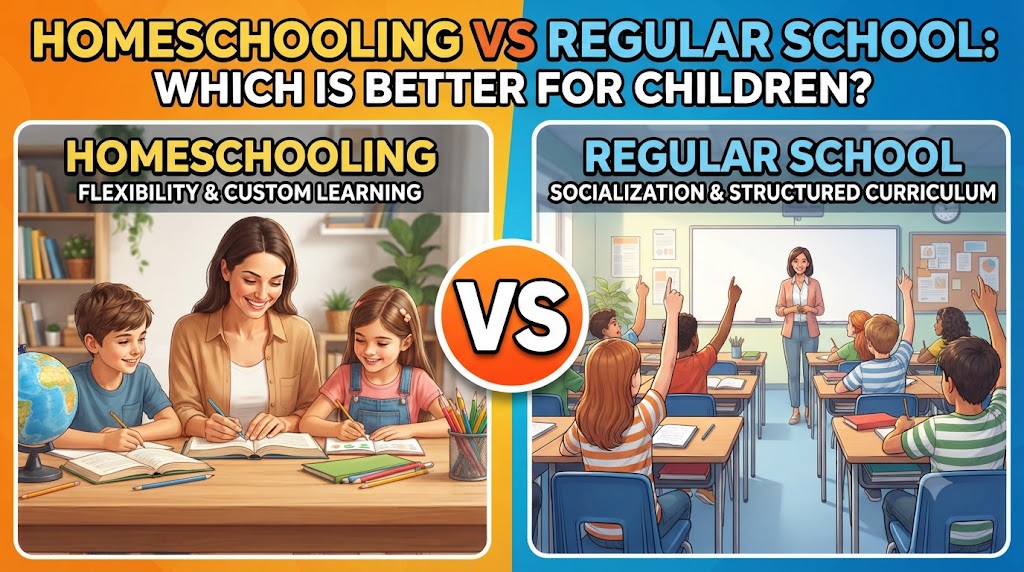
Choosing between homeschooling and regular school is an important decision that can shape a child’s academic experience, social development, and daily routine. Regular schools provide structured classroom teaching, interaction with classmates, and access to school facilities. Homeschooling allows parents or guardians to take greater responsibility for education, choose learning resources, and adapt lessons to a child’s pace. Both approaches can support learning when implemented effectively, but their suitability depends on the child’s age, individual needs, family circumstances, and access to educational resources.
Regular school is often a practical choice for families who want professional teachers, a consistent timetable, and daily opportunities for social interaction. Homeschooling may suit families who can dedicate sufficient time to teaching, supervision, and planning personalised lessons. However, parents should consider more than academic performance when making this decision. They must also think about extracurricular activities, assessment, recognised qualifications, and future educational opportunities. The best choice is the one that provides a child with a supportive learning environment and a reliable pathway to further education.
Quick Comparison Table
| Feature | Homeschooling | Regular School |
|---|---|---|
| Teaching responsibility | Mainly parents or appointed educators | School teachers |
| Curriculum | Selected or planned by the family | Prescribed or provided by the school |
| Learning pace | Highly adaptable | Usually follows the class schedule |
| Daily routine | Flexible | Generally structured |
| Social interaction | Arranged through activities and groups | Frequent interaction with classmates |
| Teacher access | Depends on parents and tutors | Direct access to school teachers |
| Facilities | Depends on family resources | May include libraries, labs, and sports facilities |
| Parental involvement | Generally high | Varies according to the child’s needs |
| Costs | Depends on materials, tutors, and activities | Depends on school fees, transport, and other expenses |
| Assessment | Organised by the family or examination provider | Regular school assessments and examinations |
| Best suited for | Families able to manage personalised education | Children who benefit from classroom learning and school structure |
1. Homeschooling vs Regular School: Learning Environment
Homeschooling
Homeschooling allows children to study at home under the guidance of parents, guardians, or tutors. Families can organise a dedicated study area and choose textbooks, online resources, practical activities, and educational projects.
This arrangement may reduce distractions for some children and allow more individual attention. However, parents need to create a suitable learning environment and ensure that children receive instruction across all required subjects.
Regular School
Regular schools provide classrooms, timetables, teacher-led lessons, and opportunities to learn alongside other students. Depending on the institution, children may also have access to libraries, laboratories, playgrounds, and extracurricular facilities.
The classroom environment helps establish a consistent daily routine, although class size, facilities, and teaching quality differ between schools.
Verdict: Regular school generally provides a more structured group-learning environment, while homeschooling offers greater control over the child’s surroundings.
2. Homeschooling vs Regular School: Teaching and Individual Attention
Homeschooling
Parents can adapt lessons to a child’s strengths, interests, and learning difficulties. If a child needs more time to understand a concept, the family can spend additional time on it before moving forward.
However, parents need the time, knowledge, and resources to teach effectively. Specialist tutors or external courses may be necessary for advanced subjects.
Regular School
Teachers provide subject instruction and can guide students through lessons, assignments, and examinations. Children can also learn by asking questions and discussing topics with classmates.
However, individual attention depends on class size, teacher availability, and the school’s teaching approach.
Verdict: Homeschooling can provide more personalised attention when managed well, while regular school provides access to professional teachers across different subjects.
3. Homeschooling vs Regular School: Social Development
Homeschooling
Homeschooled children can develop social skills through sports clubs, community activities, hobby classes, group lessons, and interactions with friends and relatives.
Parents must actively create opportunities for children to cooperate with peers, handle disagreements, and participate in group activities. Without these opportunities, social interaction may become limited.
Regular School
Regular schools provide frequent interaction with classmates and teachers. Group projects, games, classroom discussions, and extracurricular activities can help children develop communication, cooperation, and conflict-resolution skills.
However, social experiences depend on the school environment and the quality of relationships among students.
Verdict: Regular school generally provides more consistent daily peer interaction, while homeschooling families need to plan social opportunities deliberately.
4. Homeschooling vs Regular School: Flexibility and Daily Routine
Homeschooling
Families can adjust study hours, lesson length, and learning methods according to the child’s needs. This flexibility can be useful for families who travel frequently or children who benefit from a personalised schedule.
However, a flexible routine still needs clear learning goals, regular study time, and consistent assessment.
Regular School
Regular schools usually follow fixed timetables, attendance requirements, and academic calendars. This structure can help children develop habits related to punctuality, responsibility, and time management.
The schedule may be less convenient for families with unusual work hours or frequent travel.
Verdict: Homeschooling offers greater scheduling flexibility, while regular school provides a more established daily routine.
5. Homeschooling vs Regular School: Costs and Resources
Homeschooling
Homeschooling expenses may include textbooks, online courses, educational software, tutors, science materials, and extracurricular activities.
Families using free educational resources and teaching independently may keep costs relatively low. However, parents should also consider the time required to plan lessons and supervise learning.
Regular School
Regular schooling may involve tuition fees, uniforms, books, transport, meals, and activity charges. Government schools may be more affordable than many private schools, although costs and facilities vary.
Parents should compare the total annual expenses of both options rather than assuming that homeschooling is always cheaper.
Verdict: Homeschooling can be economical with low-cost resources, while regular school may provide access to teaching and facilities within its overall fee structure.
6. Homeschooling vs Regular School: Academic Progress and Discipline
Homeschooling
Parents can monitor a child’s progress closely and adjust lessons when difficulties arise. They can use quizzes, written assignments, projects, discussions, and external assessments to measure understanding.
However, families need an objective way to identify learning gaps and ensure the child covers the necessary curriculum.
Regular School
Schools generally provide a planned syllabus, regular assignments, examinations, and progress reports. Students also learn to meet deadlines and complete tasks within a shared schedule.
The effectiveness of this structure depends on teaching quality, student engagement, and appropriate support for individual needs.
Verdict: Regular school often provides a more formal assessment structure, while homeschooling allows more personalised monitoring and pacing.
7. Homeschooling vs Regular School: Future Education in India
Homeschooling
Parents who choose homeschooling should plan the child’s route to recognised qualifications and further education. They need to check the applicable examination options, eligibility conditions, and requirements of the intended university or career pathway.
Families should not assume that every homeschooling arrangement automatically qualifies a student for board examinations or entrance tests.
Regular School
Students attending recognised schools generally follow established academic pathways, including board examinations where applicable. Schools may also provide guidance on subject selection, applications, and entrance examinations.
Parents should still verify that the school and its qualifications meet the requirements for the child’s future plans.
Verdict: Regular school often provides a clearer conventional pathway to board examinations, while homeschooling requires families to plan and verify qualification routes carefully.
Advantages and Disadvantages
Homeschooling
Advantages
- Flexible learning schedules and pace.
- Greater ability to personalise lessons.
- More direct parental involvement.
- Freedom to choose suitable learning materials.
- Can accommodate family travel and individual learning needs.
Disadvantages
- Requires substantial parental time and planning.
- Access to specialist teaching may be limited.
- Social activities need deliberate organisation.
- Parents must monitor curriculum coverage and academic progress.
- Recognised qualification and examination arrangements require careful planning.
Regular School
Advantages
- Access to teachers across different subjects.
- Structured timetable and academic routine.
- Frequent interaction with classmates.
- Potential access to laboratories, libraries, sports, and clubs.
- Established assessment and qualification pathways at recognised schools.
Disadvantages
- Less flexibility in daily schedules.
- Individual attention may be limited in larger classes.
- School fees, transport, and other expenses can add up.
- The pace of classroom learning may not suit every child equally.
Final Verdict: Homeschooling vs Regular School
Regular school is generally a practical choice for children who benefit from professional teaching, structured routines, classroom activities, and regular interaction with classmates. It can provide an established educational pathway and access to facilities that may be difficult to recreate at home.
Homeschooling may be a better fit for families who can consistently manage teaching, assessments, learning resources, and social activities. It offers more flexibility and personalisation but requires significant responsibility from parents or guardians.
Before deciding, consider the child’s learning preferences, family schedule, budget, access to teachers, and opportunities for social development. In India, verify the relevant education requirements and recognised qualification routes before choosing homeschooling. Neither option is automatically best for every child.
Disclaimer
Education requirements, examination eligibility, school recognition, and qualification rules may change. Parents should consult the relevant education authorities, recognised boards, and examination bodies to verify current requirements before making long-term educational decisions.