Steam Iron vs Dry Iron
Introduction
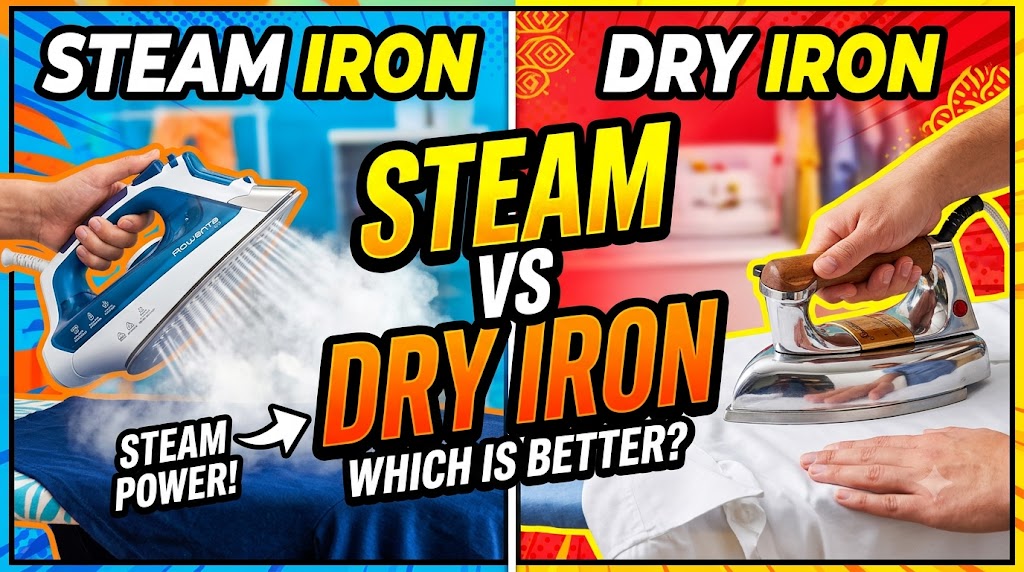
Choosing between a steam iron and a dry iron depends on your clothing materials, ironing habits, and the types of wrinkles you need to remove. A steam iron uses heated steam along with a heated soleplate to help smooth wrinkles, while a dry iron relies on heat and pressure without releasing steam. Both appliances can help keep clothes neat, but their performance and convenience differ depending on the fabric and the ironing task. Understanding these differences can help you choose an iron that suits your household needs.
A steam iron can be useful for everyday clothing, particularly when dealing with stubborn wrinkles in suitable fabrics. A dry iron offers simpler operation and may be sufficient for people who mainly iron lightweight garments or prefer an appliance without a water tank. However, neither type is automatically better for every fabric. Temperature settings, soleplate quality, heat distribution, and the manufacturer’s care instructions all affect the final result. Comparing these factors will help you choose the right iron without paying for features you may not need.
Quick Comparison Table
| Feature | Steam Iron | Dry Iron |
|---|---|---|
| Working method | Uses heat and steam | Uses heat without steam |
| Water tank | Usually included | Not required |
| Wrinkle removal | Steam can help loosen stubborn wrinkles | Relies on heat and pressure |
| Ease of use | May require water filling and maintenance | Generally simpler to operate |
| Fabric suitability | Suitable for many fabrics when correctly adjusted | Suitable for many fabrics when correctly adjusted |
| Delicate fabrics | Requires appropriate temperature and steam settings | Requires appropriate temperature settings |
| Maintenance | May require descaling and cleaning | Usually requires less maintenance |
| Weight | Often heavier because of the water tank | Often lighter, depending on the model |
| Electricity consumption | Depends on wattage and usage | Depends on wattage and usage |
| Price | Varies by features and brand | Varies by features and brand |
| Best suited for | Regular ironing and stubborn wrinkles | Simple ironing and basic household needs |
1. Wrinkle Removal
Steam Iron
A steam iron releases steam through openings in its soleplate. The moisture and heat can help relax fabric fibres, making wrinkles easier to smooth out.
This can be particularly useful for cotton shirts, linen garments, and other suitable fabrics that develop stubborn creases. The results depend on the steam output, soleplate temperature, and fabric type.
Dry Iron
A dry iron removes wrinkles through direct heat and pressure. It can work well for everyday garments that do not require additional moisture, particularly when the temperature is correctly adjusted.
However, stubborn creases may require more passes or careful adjustment of the ironing technique.
Which is better? A steam iron generally has an advantage when removing stubborn wrinkles from steam-compatible fabrics. A dry iron can be sufficient for lighter ironing tasks.
2. Ease of Use
Steam Iron
A steam iron provides additional functionality, but you must fill its water tank when needed. You may also need to adjust the steam settings according to the fabric and clean the appliance periodically.
Once you become familiar with its controls, it can be convenient for regular household ironing.
Dry Iron
A dry iron is generally straightforward to operate. You plug it in, select the appropriate temperature, allow it to heat up, and begin ironing.
Because it does not require a water tank, there is no need to manage water levels or steam settings.
Which is better? A dry iron is usually simpler to operate, while a steam iron offers greater flexibility for wrinkle removal.
3. Fabric Compatibility
Steam Iron
Steam can be helpful for many cotton and linen garments, but not every fabric should be exposed to steam or high heat. Some delicate materials require low temperatures, a pressing cloth, or specific ironing techniques.
Always check the garment’s care label before using steam.
Dry Iron
A dry iron can be suitable for a wide range of garments when its temperature is adjusted correctly. It may be convenient for fabrics that require dry pressing, but excessive heat can still damage delicate materials.
Which is better? Neither iron is universally safer for all fabrics. The correct temperature and the garment’s care instructions matter most.
4. Water Tank and Maintenance
Steam Iron
A steam iron contains a water tank and a system that heats water to produce steam. Depending on the model and water quality, mineral deposits may accumulate over time.
Some models include anti-calc systems, self-cleaning functions, or descaling instructions to help maintain performance.
Dry Iron
A dry iron does not need a water tank or steam-generation system. Its maintenance generally involves keeping the soleplate clean and following the manufacturer’s care instructions.
Which is better? A dry iron generally requires less maintenance because it does not generate steam. A steam iron needs additional care but offers more functionality.
5. Ironing Speed and Convenience
Steam Iron
Steam can help soften stubborn creases, potentially reducing the effort needed to smooth some garments. This can be helpful when ironing a large quantity of suitable clothing.
However, the actual time saved depends on the fabric, steam output, soleplate design, and ironing technique.
Dry Iron
A dry iron can handle everyday garments effectively, especially when they have relatively light wrinkles. More stubborn creases may require additional effort.
For occasional ironing, this may not be a significant disadvantage.
Which is better? A steam iron may be more convenient for large ironing loads and stubborn wrinkles, while a dry iron is practical for simpler tasks.
6. Electricity Consumption
Steam Iron
A steam iron uses electricity to heat its soleplate and generate steam. Its actual energy consumption depends on wattage, thermostat cycling, steam settings, and how long it is used.
Dry Iron
A dry iron uses electricity to heat its soleplate. Its energy consumption depends on its wattage, temperature setting, thermostat operation, and usage time.
A higher wattage does not automatically mean that one iron will consume more electricity for every ironing task, because heating time and operating patterns also matter.
Which is better? Neither type is automatically more energy-efficient. Compare the wattage and practical usage requirements of the specific models.
7. Price and Overall Value
Steam Iron
Steam irons are available in different price ranges. Models with higher steam output, better soleplates, anti-calc systems, and additional controls may cost more.
The additional features can be worthwhile if you regularly iron clothes with stubborn wrinkles.
Dry Iron
Dry irons can be an economical choice for basic household ironing. They may be particularly suitable for people who do not need steam functionality.
However, the final price still depends on the brand, construction, soleplate, and available temperature controls.
Which is better? A dry iron may offer better value for basic needs, while a steam iron may justify its cost for frequent ironing and more demanding tasks.
8. Safety and Handling
Steam Iron
A steam iron produces hot steam that can cause burns if directed towards the skin. Care is also necessary when filling the tank, handling the appliance, and placing it on a suitable surface.
Use the manufacturer’s recommended water type and follow its operating instructions.
Dry Iron
A dry iron also has a hot soleplate that can cause burns. It should be kept away from children and placed securely when not in use.
Both types should be unplugged after ironing and allowed to cool in a safe location.
Which is better? Both require careful handling. A steam iron has the additional consideration of hot steam, while both have hot surfaces.
9. Which Iron Is Better for Different Buyers?
| Your Requirement | Better Choice | Reason |
|---|---|---|
| Removing stubborn wrinkles | Steam Iron | Steam can help relax fabric fibres |
| Basic household ironing | Dry Iron | Simple operation without a water tank |
| Ironing large quantities of clothes | Steam Iron | Steam may reduce effort on suitable fabrics |
| Minimal maintenance | Dry Iron | No steam system to maintain |
| Occasional ironing | Dry Iron | May be sufficient for basic needs |
| Cotton and linen garments | Steam Iron | Steam can help with stubborn creases |
| Fabrics requiring dry pressing | Dry Iron, if permitted by the care label | No steam is released |
| Lowest purchase cost | Depends on the model | Prices vary by brand and features |
| Best overall value | Depends on your needs | Consider usage frequency and required features |
Conclusion
A steam iron is generally the better choice if you regularly iron clothes, deal with stubborn wrinkles, or want the added convenience of steam. A dry iron is a practical option if you prefer simple operation, want to avoid water-tank maintenance, and mainly handle everyday ironing.
Before purchasing, compare temperature controls, soleplate quality, wattage, weight, safety features, and warranty. Most importantly, follow the care instructions for your garments. Choose a steam iron for greater wrinkle-removal flexibility or a dry iron for straightforward, basic ironing.
FAQs
1. What is the main difference between a steam iron and a dry iron?
A steam iron uses heated steam and a soleplate to remove wrinkles, whereas a dry iron relies on the heat and pressure of its soleplate without releasing steam.
2. Is a steam iron better than a dry iron?
A steam iron can be better for stubborn wrinkles and frequent ironing. A dry iron may be more suitable for basic ironing and people who prefer simpler maintenance.
3. Can a dry iron remove wrinkles effectively?
Yes. A dry iron can remove many wrinkles when the correct temperature and ironing technique are used. Stubborn creases may require additional effort.
4. Which iron is better for cotton clothes?
A steam iron can be helpful for removing stubborn creases from cotton clothing. However, the appropriate temperature and steam settings depend on the garment’s care instructions.
5. Does a steam iron consume more electricity?
Not necessarily in every situation. Electricity consumption depends on wattage, heating time, thermostat operation, steam settings, and total usage.
6. Which iron requires less maintenance?
A dry iron generally requires less maintenance because it does not have a water tank or steam-generation system.
7. Can I use a steam iron without water?
Some steam irons can be used as dry irons when their steam function is switched off. Check the manufacturer’s instructions for your particular model.
8. Which iron should I buy for home use?
Choose a steam iron if you regularly iron clothes and want help with stubborn wrinkles. Choose a dry iron if your ironing needs are basic and you prefer straightforward operation.
Disclaimer
Iron features, prices, wattage, steam output, and warranty terms vary by brand and model. Fabric compatibility depends on the garment’s care label and the manufacturer’s instructions. Always use the appropriate temperature and follow the recommended operating and maintenance procedures.
Image SEO Fields
Image Alt Text
Steam Iron vs Dry Iron comparisonImage Title
Steam Iron vs Dry IronImage Caption
Compare steam irons and dry irons to choose the right option for your household.Image Description
A comparison of steam irons and dry irons covering wrinkle removal, ease of use, fabric compatibility, maintenance, electricity consumption, and buying considerations.WordPress Image Tags
Steam Iron vs Dry Iron, Steam Iron, Dry Iron, Iron Comparison, Home AppliancesArticle #34 is complete. Type Next for Article #35: Steam Iron vs Garment Steamer: Which Is Better?