Steam Iron vs Garment Steamer
Introduction
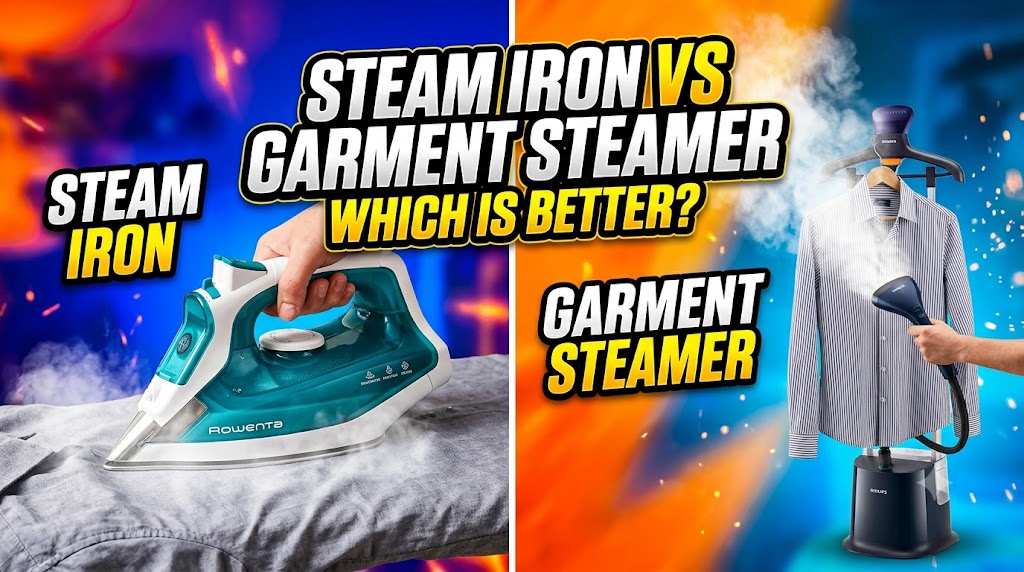
Choosing between a steam iron and a garment steamer depends on how you care for your clothes and the results you expect. A steam iron uses a heated soleplate and steam to smooth wrinkles by pressing against the fabric, while a garment steamer releases steam that relaxes wrinkles without requiring the same direct contact with a hot soleplate. Both appliances can help refresh clothing, but they work differently and suit different ironing needs. Understanding their differences can help you choose the right appliance for everyday clothes, formal wear, and delicate garments.
A steam iron is often suitable for people who want crisp collars, sharp creases, and a smooth finish on shirts and trousers. A garment steamer can be convenient for quickly refreshing hanging clothes, reducing wrinkles in suitable fabrics, and handling garments that are difficult to iron on a flat surface. However, a steamer may not produce the sharply pressed finish that an iron can achieve. The best option depends on your clothing collection, available storage space, frequency of use, and whether you prioritize a polished finish or convenient wrinkle removal.
Quick Comparison Table
| Feature | Steam Iron | Garment Steamer |
|---|---|---|
| Working method | Heated soleplate with optional steam | Steam released through a nozzle or head |
| Direct fabric contact | Yes, through the soleplate | Usually no hot soleplate pressing |
| Wrinkle removal | Effective for many stubborn wrinkles | Effective for many light and moderate wrinkles |
| Sharp creases | Better suited | Generally less suitable |
| Hanging clothes | Possible but less convenient | Particularly convenient |
| Delicate fabrics | Depends on fabric and settings | Often useful for suitable delicate fabrics |
| Water tank | Usually built in | Built in or separate, depending on type |
| Setup | Usually quick | Handheld models are quick; larger models may need setup |
| Portability | Usually compact | Handheld models are portable; standing models are bulkier |
| Maintenance | May require descaling | May require descaling and nozzle cleaning |
| Best suited for | Crisp, pressed clothing | Quick wrinkle removal and garment refreshing |
1. Wrinkle Removal Performance
Steam Iron
A steam iron combines heat, pressure, and steam to smooth fabric. Pressing the soleplate against a garment can help remove stubborn creases and create a neat finish.
It is particularly useful for shirts, trousers, cotton garments, and other fabrics that benefit from pressing at the correct temperature.
Garment Steamer
A garment steamer directs hot steam onto clothing, helping relax wrinkles without the need to press the garment against an ironing board.
It can be convenient for refreshing hanging shirts, dresses, jackets, and other suitable garments. However, results depend on the steam output, fabric thickness, and the severity of the wrinkles.
Which is better? A steam iron is generally better for stubborn creases and sharply pressed results. A garment steamer is convenient for everyday wrinkle removal.
2. Ease of Use
Steam Iron
Using a steam iron usually involves setting up an ironing board, selecting the correct temperature, and moving the iron over the fabric. This provides control over the finish but requires a suitable flat surface.
Garment Steamer
A garment steamer can often be used while clothes hang on a hanger. You move the steamer head along the garment, allowing steam to relax the fabric.
Handheld models are especially convenient for quick touch-ups, although larger standing models can take up more space.
Which is better? A garment steamer is often easier for quick touch-ups, while a steam iron is more suitable when you want precise pressing.
3. Fabric Compatibility
Steam Iron
A steam iron works well on many fabrics when the temperature and steam settings match the garment’s care instructions. Some materials need low heat, a pressing cloth, or dry ironing.
Incorrect temperature settings can scorch or damage clothing.
Garment Steamer
A garment steamer can be useful for suitable delicate garments because it does not require the same direct hot-soleplate pressure. However, not every fabric can safely withstand steam, and some materials may be damaged by moisture or heat.
Always check the garment’s care label before steaming.
Which is better? A garment steamer can be convenient for suitable delicate clothing, but neither appliance is safe for every fabric.
4. Finish and Appearance
Steam Iron
A steam iron is designed to press fabric against a flat surface. This makes it suitable for producing crisp collars, defined cuffs, sharp trouser creases, and a more structured appearance.
Garment Steamer
A garment steamer helps relax wrinkles and refresh clothing while it hangs. It generally produces a softer finish rather than the sharp, flat appearance associated with pressing.
Which is better? A steam iron is the better choice for formal clothing that needs crisp lines and a polished finish.
5. Speed and Convenience
Steam Iron
A steam iron may take a short time to heat up and usually works best with an ironing board. It can be efficient when ironing several garments that require a precise finish.
Garment Steamer
A handheld garment steamer is convenient for refreshing a garment before leaving home or smoothing light wrinkles after storage. Larger steamers may require more setup and heating time.
Which is better? A handheld garment steamer is often more convenient for quick touch-ups, while a steam iron can be more effective for a large batch of garments requiring careful pressing.
6. Water Tank and Continuous Use
Steam Iron
A steam iron typically has a built-in water tank. Tank capacity varies, and you may need to refill it during longer ironing sessions.
Some models also support dry ironing when the steam function is switched off.
Garment Steamer
Garment steamers have built-in or separate water tanks, depending on the design. Handheld models often have smaller tanks, while standing models may offer larger capacities for longer steaming sessions.
Which is better? Neither type is universally better. Compare tank capacity and expected operating time if you regularly handle many garments.
7. Portability and Storage
Steam Iron
Most steam irons are compact enough to store in a cupboard or drawer. However, using one typically requires an ironing board or another suitable flat surface.
Garment Steamer
Handheld garment steamers are easy to carry and can be useful when travelling. Standing steamers offer more capacity but generally require additional storage space.
Which is better? A handheld garment steamer is a practical option for travel and quick touch-ups. A steam iron is suitable for compact storage when you already have an ironing area.
8. Maintenance and Safety
Steam Iron
A steam iron may require descaling to prevent mineral deposits from affecting steam output. Its hot soleplate can cause burns, so it should be handled carefully and stored safely after use.
Garment Steamer
A garment steamer may also need descaling and cleaning according to the manufacturer’s instructions. Its steam can cause serious burns, even though it does not use the same pressing action as an iron.
Keep steam away from skin and follow the manufacturer’s operating instructions.
Which is better? Both need appropriate care. Neither should be considered risk-free simply because it uses steam or has a particular design.
9. Price and Overall Value
Steam Iron
Steam irons are available in a wide range of prices. Basic models may provide sufficient functionality for everyday household use, while more advanced models can include improved soleplates, higher steam output, and additional controls.
Garment Steamer
Garment steamers also vary in price. Handheld models can suit occasional use, while standing models may offer larger tanks and longer operating times.
Which is better? The better value depends on your needs. Compare price, durability, steam output, capacity, warranty, and how often you will use the appliance.
10. Which Appliance Is Better for Different Buyers?
| Your Requirement | Better Choice | Reason |
|---|---|---|
| Crisp shirts and collars | Steam Iron | Provides direct pressing |
| Sharp trouser creases | Steam Iron | Better suited to defined creases |
| Quick wrinkle removal | Garment Steamer | Can be used on hanging clothes |
| Refreshing dresses and jackets | Garment Steamer | Convenient for many suitable garments |
| Travel and portability | Handheld Garment Steamer | Convenient for touch-ups away from home |
| Large ironing loads | Depends on the task | Ironing board, steam output, and garment type matter |
| Delicate fabrics | Depends on the care label | Both require suitable settings and fabric compatibility |
| Minimal storage space | Depends on the model | Both compact irons and handheld steamers are available |
| Formal, sharply pressed clothing | Steam Iron | Better control over the pressed finish |
| Best overall value | Depends on your needs | Purchase price and actual usage matter |
Conclusion
A steam iron is generally the better choice if you want crisp shirts, sharp creases, and a polished finish on formal clothing. A garment steamer is often more convenient for refreshing hanging clothes, smoothing everyday wrinkles, and making quick touch-ups without setting up an ironing board.
Before purchasing, consider your clothing types, storage space, water tank capacity, heating time, safety features, and maintenance requirements. Always follow the garment’s care label and the manufacturer’s instructions.
Choose a steam iron for precise pressing or a garment steamer for convenient wrinkle removal on suitable clothing.
FAQs
1. What is the main difference between a steam iron and a garment steamer?
A steam iron uses a heated soleplate to press fabric, often with additional steam. A garment steamer directs steam onto clothing to relax wrinkles without conventional soleplate pressing.
2. Which is better for everyday clothes?
Both can work well. A steam iron is suitable for crisp, pressed clothing, while a garment steamer is convenient for removing wrinkles from hanging garments.
3. Can a garment steamer replace a steam iron?
A garment steamer can handle many everyday wrinkle-removal tasks, but it generally cannot produce the same sharp creases and pressed finish as an iron.
4. Is a garment steamer better for delicate clothes?
It can be useful for suitable delicate garments, but steam and heat can still damage some materials. Always check the care label.
5. Which appliance is better for travel?
A compact handheld garment steamer can be convenient for travel. However, check its size, weight, voltage compatibility, and water tank capacity before buying.
6. Does a garment steamer consume more electricity?
Not necessarily. Consumption depends on wattage, heating time, operating duration, and the specific model.
7. Can I use a garment steamer on hanging clothes?
Yes. Garment steamers are generally designed to steam clothing while it hangs, provided you follow the manufacturer’s instructions.
8. Which is better for formal shirts and trousers?
A steam iron is generally better because it can press collars, cuffs, and trouser creases into a sharper shape.
Disclaimer
Product prices, steam output, tank capacity, power consumption, and warranty terms may vary by brand and model. Fabric suitability depends on the garment’s care label and the manufacturer’s instructions. Always follow the recommended operating, cleaning, and safety procedures.