Storage Water Heater vs Tankless Water Heater
Introduction
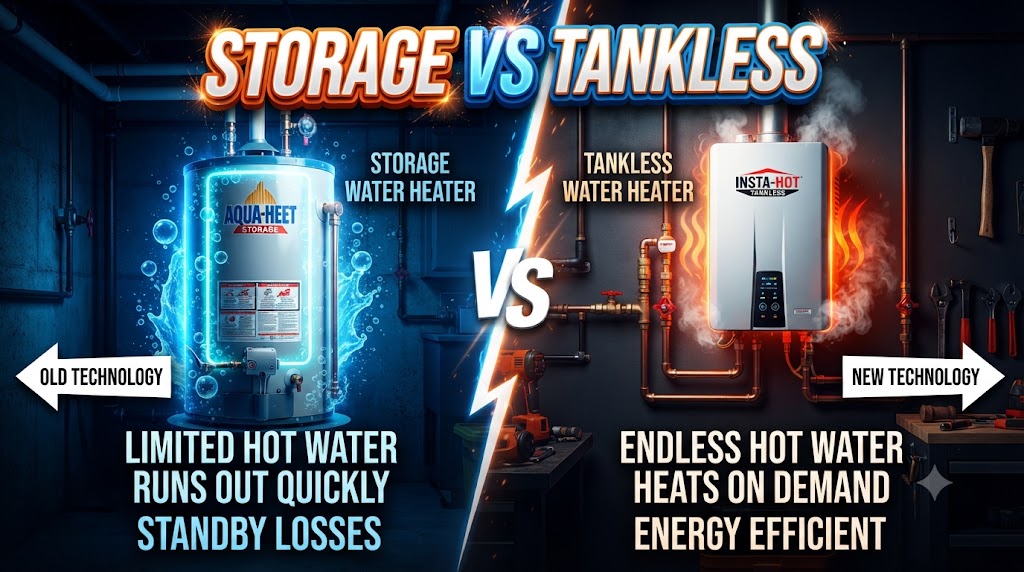
Choosing between a storage water heater and a tankless water heater depends on your household’s hot water requirements, available space, electricity or fuel supply, and daily usage. Both types are designed to provide hot water, but they work differently. A storage water heater heats water and keeps it in an insulated tank until needed, whereas a tankless water heater heats water when you turn on the hot water tap. Understanding these differences can help you choose a water heater that suits your home and daily routine.
Storage water heaters are commonly used in homes because they can store a supply of hot water for bathing, washing and other household activities. Tankless water heaters, also called instant water heaters, do not store hot water in a tank. Instead, they heat water as it flows through the unit. Although tankless models can save space and avoid keeping a large volume of water hot, their performance depends on heating capacity and water flow. Comparing their features will help you decide which option is more suitable.
Quick Comparison Table
| Feature | Storage Water Heater | Tankless Water Heater |
|---|---|---|
| Working principle | Heats and stores water in a tank | Heats water on demand |
| Water storage | Yes | No |
| Hot water availability | Limited by tank capacity | Continuous while within capacity |
| Initial waiting time | Requires heating time | Usually heats when the tap opens |
| Space requirement | Needs space for a tank | Generally compact |
| Energy use | Can lose heat while storing water | Avoids tank standby heat loss |
| Multiple taps | Depends on tank capacity and recovery | Depends on heating capacity and flow |
| Installation | Requires tank mounting and plumbing | Requires suitable plumbing and power or fuel |
| Maintenance | Tank and heating element may need maintenance | Heating components may need descaling |
| Best suited for | Regular household hot water storage | On-demand hot water needs |
1. Working Principle
Storage Water Heater
A storage water heater contains an insulated tank that holds a specific quantity of water. Its heating element heats the water inside the tank and maintains the temperature using a thermostat. When someone uses hot water, cold water enters the tank to replace the used water.
This system provides a ready supply of hot water, but once the stored hot water is used, you may need to wait for the heater to heat another batch.
Tankless Water Heater
A tankless water heater does not have a large storage tank. It uses an electric heating element or a gas burner to heat water as it flows through the unit.
Hot water is supplied when the tap is opened, provided the unit has sufficient heating capacity and water flow. There is no need to wait for a storage tank to heat a fresh batch of water.
Winner: Tankless Water Heater – It heats water on demand without requiring a storage tank.
2. Hot Water Availability
Storage Water Heater
A storage water heater provides hot water from its tank. Its availability depends on the tank capacity and how much hot water the household uses. If several people take showers one after another, the stored hot water may run out before the tank reheats.
For households with predictable hot water requirements, a suitably sized storage heater can provide a convenient supply.
Tankless Water Heater
A tankless water heater can provide hot water continuously as long as the demand remains within its heating capacity. It does not run out of stored hot water because it does not store water.
However, using several taps simultaneously may reduce the water temperature or flow rate if the heater cannot handle the combined demand.
Winner: Depends – Tankless is better for continuous demand within its capacity, while storage is useful when a ready supply is needed.
3. Energy Efficiency
Storage Water Heater
A storage water heater consumes electricity or fuel to heat water in its tank. Even when nobody uses hot water, some heat gradually escapes through the tank insulation. The heater may use additional energy to maintain the stored water temperature.
Modern insulated models can reduce this standby heat loss.
Tankless Water Heater
A tankless water heater heats water only when hot water is required. Since it does not maintain a tank of hot water, it avoids the standby heat loss associated with storage systems.
However, actual energy consumption depends on usage patterns, heating capacity, fuel type and the efficiency of the model.
Winner: Tankless Water Heater – It generally has an advantage because it avoids storage-related standby heat loss.
4. Installation and Space Requirements
Storage Water Heater
Storage water heaters require sufficient space to accommodate the tank. Larger-capacity models may need stronger wall support or a suitable floor installation, depending on their design.
They also require appropriate plumbing, electrical connections and safety arrangements.
Tankless Water Heater
Tankless water heaters are generally smaller because they do not contain a large water tank. Their compact design makes them suitable for bathrooms and other locations where space is limited.
However, installation requirements depend on the model. High-capacity electric or gas units may require special wiring, circuit capacity, ventilation or gas connections.
Winner: Tankless Water Heater – Its compact design generally makes installation easier in space-constrained locations.
5. Initial Cost and Long-Term Cost
Storage Water Heater
Storage water heaters are available in different capacities and price ranges. Their initial purchase cost depends on tank capacity, insulation quality, brand and additional features.
Over time, electricity consumption can increase because the heater may need to maintain the stored water temperature, even when hot water is not being used.
Tankless Water Heater
Tankless water heaters can have a higher initial purchase and installation cost, particularly when electrical or gas system upgrades are required.
However, avoiding standby heat loss may reduce energy consumption in households that use hot water regularly but not continuously.
Winner: Storage Water Heater – It can be a more economical initial purchase, although the total long-term cost depends on usage and installation.
6. Maintenance and Lifespan
Storage Water Heater
Storage water heaters need periodic maintenance. Depending on water quality and the model, sediment can accumulate inside the tank. The heating element, thermostat, anode rod and safety valve may also require inspection or replacement.
Regular maintenance helps maintain performance and protect the tank from corrosion.
Tankless Water Heater
Tankless water heaters generally have fewer large components associated with water storage. However, mineral deposits can accumulate inside their heat exchangers, especially in areas with hard water.
Periodic descaling and servicing may be necessary to maintain proper heating performance.
Winner: Depends – Both require maintenance. Water quality, installation and regular servicing influence their lifespan.
7. Performance During Multiple Uses
Storage Water Heater
A storage water heater can supply hot water to multiple users or outlets, depending on its tank capacity, plumbing arrangement and recovery rate.
However, heavy usage can empty the tank faster than the heater can reheat the incoming cold water. This may interrupt hot water availability.
Tankless Water Heater
A tankless water heater can supply multiple outlets only when its heating capacity supports the combined water flow.
If several showers or taps operate simultaneously, the unit may struggle to maintain the desired temperature and flow rate.
Winner: Depends – A properly sized system is important. Neither type automatically guarantees better performance with multiple outlets.
8. Space and Convenience
Storage Water Heater
Storage water heaters are available in different tank capacities. They provide convenient access to previously heated water, which can be useful when several household members need hot water at different times.
However, the tank occupies more space and may affect bathroom or utility-area arrangements.
Tankless Water Heater
Tankless water heaters are compact and can be installed close to the point of use, subject to the manufacturer’s installation requirements.
They are useful for homes where saving space is important. However, users may experience a short delay before hot water reaches the tap because water must travel through the plumbing.
Winner: Tankless Water Heater – Its compact size makes it a convenient choice for homes with limited installation space.
Advantages and Disadvantages
| Water Heater | Advantages | Disadvantages |
|---|---|---|
| Storage | Ready supply of hot water; suitable for regular household use; different tank capacities available | Requires more space; standby heat loss; stored hot water can run out |
| Tankless | Compact design; heats water on demand; avoids tank standby heat loss | Higher installation requirements in some homes; limited by heating capacity and flow rate |
Which One Should You Choose?
Choose a Storage Water Heater if:
- You want a ready supply of hot water.
- Your family uses hot water at predictable times.
- You prefer a conventional water heating system.
- You need a practical option with a potentially lower initial purchase cost.
Choose a Tankless Water Heater if:
- You have limited installation space.
- You prefer heating water only when required.
- Your household needs continuous hot water within the unit’s capacity.
- You want to avoid standby heat loss from a storage tank.
Final Verdict: Storage Water Heater vs Tankless Water Heater
Both storage and tankless water heaters can be suitable for residential use, but they serve different household requirements.
A storage water heater is a practical choice for families who prefer a ready supply of hot water and want a conventional system. A tankless water heater is more suitable for people who want a compact unit, on-demand heating and reduced standby heat loss.
Overall Winner: Tankless Water Heater for space-saving design and on-demand heating. However, a storage water heater may be the better option for households that prefer stored hot water and a lower initial purchase cost.
Frequently Asked Questions (FAQs)
1. Which is better, a storage water heater or a tankless water heater?
A tankless water heater is better for compact installation and on-demand heating. A storage water heater is better for households that prefer keeping a supply of hot water ready.
2. Does a tankless water heater provide unlimited hot water?
It can provide continuous hot water as long as the demand stays within its heating capacity and the required water flow conditions.
3. Does a storage water heater consume electricity when not in use?
It may consume electricity periodically to maintain the stored water temperature because some heat escapes from the tank.
4. Which water heater saves more electricity?
Tankless models generally avoid standby heat loss. However, actual electricity savings depend on usage patterns, model efficiency and installation.
5. Can a tankless water heater run two bathrooms simultaneously?
Yes, if its heating capacity and water flow rate are sufficient for both bathrooms. Smaller models may not handle simultaneous demand effectively.
6. Which water heater is better for a family?
A suitably sized storage heater can be convenient for families with predictable hot water requirements. A properly sized tankless model can also work well for families that need continuous hot water.
7. Which water heater requires more space?
A storage water heater requires more space because it has a tank. A tankless water heater is generally more compact.
Disclaimer
Water heater performance, energy consumption, installation requirements, maintenance needs and prices vary by model, capacity, water quality and household usage. Always check manufacturer specifications and consult a qualified installer before purchasing.