Electric Kettle vs Stovetop Kettle
Introduction
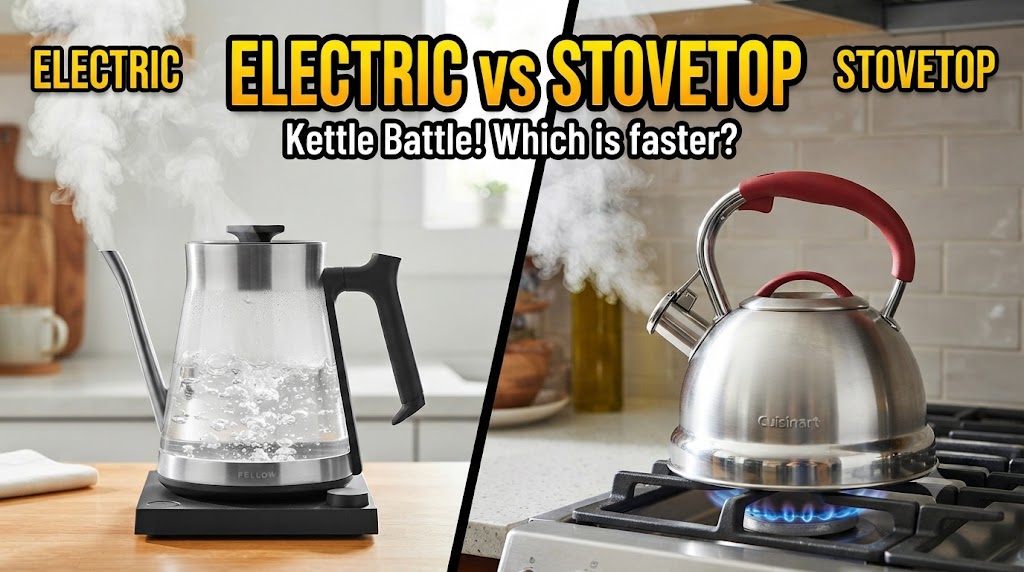
Choosing between an electric kettle and a stovetop kettle depends on your kitchen setup, daily hot water requirements, heating preferences and convenience. Both appliances are designed to boil water for tea, coffee, instant noodles and other household needs. However, they use different heating methods. An electric kettle uses an electric heating element to heat water, while a stovetop kettle is placed on a gas or compatible cooking stove. Understanding their differences can help you select the right kettle for your home.
Electric kettles are popular because they can heat water quickly and often include automatic shut-off and boil-dry protection. Stovetop kettles offer a more traditional approach and can work without a separate electrical connection. They are available in different materials, including stainless steel and other heat-resistant designs. Although both appliances perform the same basic function, their operating costs, safety features, portability and maintenance requirements can vary.
Quick Comparison Table
| Feature | Electric Kettle | Stovetop Kettle |
|---|---|---|
| Heating method | Electric heating element | Gas or compatible stove |
| Electricity requirement | Yes | Not directly |
| Heating speed | Generally fast | Depends on stove and kettle |
| Automatic shut-off | Available in many models | Usually not available |
| Temperature control | Available in selected models | Usually manual |
| Portability | Requires an electrical connection | Requires a compatible heat source |
| Safety | Often includes automatic protection | Requires manual supervision |
| Cleaning | Usually simple | Usually simple |
| Energy efficiency | Depends on model and usage | Depends on stove and heat transfer |
| Initial cost | Varies by capacity and features | Varies by material and design |
| Best suited for | Quick and convenient boiling | Traditional stove-based boiling |
1. Heating Method
Electric Kettle
An electric kettle uses an internal heating element to heat water. When connected to an electrical outlet and switched on, the element transfers heat directly to the water.
Many modern electric kettles have automatic shut-off systems that turn off the heating once the water reaches boiling temperature. Some advanced models also offer adjustable temperature settings.
Stovetop Kettle
A stovetop kettle is placed on a gas stove or another compatible cooking surface. Heat from the stove passes through the kettle’s base and heats the water inside.
It does not need a built-in electrical heating element. However, the kettle must be suitable for the particular stove being used.
Winner: Electric Kettle – Its integrated heating system offers more convenient operation.
2. Boiling Speed
Electric Kettle
Electric kettles are designed specifically for heating water. Their heating speed depends on wattage, water quantity, starting temperature and appliance design.
A high-wattage model can generally boil water quickly, making it convenient for preparing tea or coffee.
Stovetop Kettle
A stovetop kettle heats water using the flame or heat generated by a cooking surface. Its boiling time depends on the stove’s heat output, kettle material, base design and quantity of water.
A powerful gas burner and a well-designed kettle can also provide reasonably fast boiling.
Winner: Electric Kettle – It generally provides faster and more consistent water heating under comparable household conditions.
3. Energy Efficiency
Electric Kettle
Electric kettles transfer heat directly to the water through an internal heating element. Their efficiency depends on the appliance design, heating element and amount of water being boiled.
Boiling only the required quantity can help avoid unnecessary energy consumption.
Stovetop Kettle
A stovetop kettle receives heat from a gas burner or cooking surface. Some heat can escape around the sides of the kettle instead of transferring into the water.
Using a suitably sized burner and keeping the kettle covered can help reduce heat loss.
Winner: Electric Kettle – It generally offers efficient heat transfer when boiling water, although the overall energy cost depends on electricity and fuel prices.
4. Safety Features
Electric Kettle
Many electric kettles include useful safety features such as:
- Automatic shut-off after boiling.
- Boil-dry protection.
- Heat-resistant handles.
- Automatic temperature control in selected models.
These features reduce the need for continuous manual monitoring, although users should still follow the manufacturer’s safety instructions.
Stovetop Kettle
Stovetop kettles usually require manual supervision. The handle, body and spout can become hot during heating.
Some models have whistle mechanisms that alert users when water boils, but they do not automatically switch off the stove.
Winner: Electric Kettle – Automatic shut-off and boil-dry protection provide an advantage in everyday use.
5. Ease of Use
Electric Kettle
An electric kettle is simple to operate. You only need to add water, connect it to electricity and switch it on.
Many models have cordless serving designs with a separate power base, making pouring easier. Temperature-control models also allow users to heat water to specific temperatures.
Stovetop Kettle
A stovetop kettle requires a compatible stove and manual heating. You need to place it correctly on the burner and monitor the water while it heats.
Its operation is straightforward, but it generally requires more attention than an automatic electric kettle.
Winner: Electric Kettle – It offers easier operation and more automatic features.
6. Portability and Convenience
Electric Kettle
Electric kettles are convenient for homes, offices and other places with electrical outlets. Cordless models can be lifted from their bases for serving.
However, they cannot operate without a suitable electrical supply.
Stovetop Kettle
Stovetop kettles do not need a direct electrical connection. They can be used wherever a compatible gas stove or cooking surface is available.
However, carrying and using them requires access to a suitable heating source.
Winner: Depends – Electric kettles are convenient where electricity is available, while stovetop kettles are useful in kitchens with compatible cooking facilities.
7. Maintenance and Cleaning
Electric Kettle
Electric kettles generally require regular cleaning to remove mineral deposits and limescale from their interiors. The heating element and electrical base should be protected from improper cleaning or water exposure.
Some models have removable filters that can be cleaned separately.
Stovetop Kettle
Stovetop kettles also require cleaning to remove mineral deposits and stains. Their maintenance depends on the material and design.
They generally have fewer electrical components, but the exterior can develop stains or discoloration with regular heating.
Winner: Depends – Both are relatively easy to maintain when cleaned regularly.
8. Durability and Lifespan
Electric Kettle
The durability of an electric kettle depends on its heating element, thermostat, electrical connections, body material and overall construction.
Regular cleaning and correct operation can help maintain its performance. However, electrical components may eventually require repair or replacement.
Stovetop Kettle
A stovetop kettle has a comparatively simple construction because it does not contain an integrated electrical heating system.
Its durability depends on the quality of its material, handle, lid and base. Stainless steel models can provide long-term use when properly maintained.
Winner: Stovetop Kettle – Its simpler construction can offer an advantage in long-term durability, depending on material and build quality.
Advantages and Disadvantages
| Kettle Type | Advantages | Disadvantages |
|---|---|---|
| Electric Kettle | Convenient operation; automatic shut-off in many models; quick heating; temperature-control options | Requires electricity; electrical components may need replacement |
| Stovetop Kettle | No direct electrical connection; simple construction; works with compatible stoves | Requires manual supervision; no automatic shut-off in most models; depends on stove availability |
Which One Should You Choose?
Choose an Electric Kettle if:
- You want convenient and quick water boiling.
- You regularly prepare tea, coffee or instant beverages.
- You prefer automatic shut-off features.
- You want temperature-control options.
- You have a reliable electrical connection.
Choose a Stovetop Kettle if:
- You prefer traditional kitchen appliances.
- You want a kettle without electrical components.
- You regularly use a compatible gas or cooking stove.
- You prefer a simple construction.
- You want to use the kettle without a separate electrical connection.
Final Verdict: Electric Kettle vs Stovetop Kettle
Both electric and stovetop kettles are useful for boiling water, but their convenience and operating methods are different.
An electric kettle is a better choice for most modern households because it offers quick heating, convenient operation and automatic safety features. A stovetop kettle is suitable for people who prefer traditional appliances, simple construction and stove-based heating.
Overall Winner: Electric Kettle – It offers better everyday convenience, automatic operation and practical features. However, a stovetop kettle can be a suitable alternative when electricity is unavailable or a traditional heating method is preferred.
Frequently Asked Questions (FAQs)
1. Which is better, an electric kettle or a stovetop kettle?
An electric kettle is generally better for convenience, quick heating and automatic shut-off. A stovetop kettle is suitable for traditional stove-based heating.
2. Which kettle boils water faster?
Electric kettles generally boil water faster because they use dedicated heating elements. Actual speed depends on wattage, water quantity and heating conditions.
3. Does a stovetop kettle require electricity?
No. A stovetop kettle does not require direct electricity, but it needs a compatible gas stove or cooking surface.
4. Is an electric kettle safe for daily use?
Yes, when used according to the manufacturer’s instructions. Choose a model with automatic shut-off and boil-dry protection.
5. Which kettle consumes less energy?
Electric kettles generally transfer heat efficiently to water. However, overall energy consumption and running costs depend on the appliance and local electricity or fuel prices.
6. Can a stovetop kettle be used on an induction cooktop?
Only if the kettle has an induction-compatible base. Check the manufacturer’s specifications before using it.
7. Which kettle lasts longer?
A good-quality stovetop kettle may last longer because it has a simpler construction. However, lifespan depends on material quality, usage and maintenance.
Disclaimer
Kettle heating performance, energy consumption, safety features, materials and prices vary by model and manufacturer. Always check product specifications and follow the manufacturer’s instructions before use.