Residential Solar vs Commercial Solar
Introduction
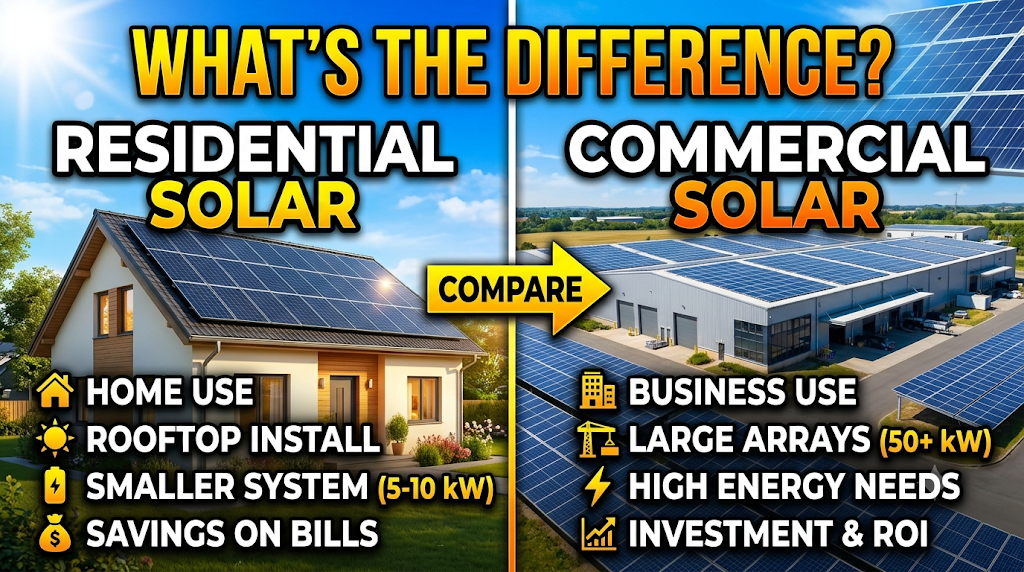
Residential solar and commercial solar systems both use solar panels to convert sunlight into electricity. However, they are designed for different types of electricity consumers. Residential solar is installed to meet the power requirements of homes, apartments and other domestic properties. Commercial solar is designed for businesses such as offices, shops, hotels, factories, hospitals and warehouses. The main differences are usually system capacity, electricity consumption patterns, installation requirements, project costs and applicable electricity regulations.
Although both systems use similar solar technologies, their planning and installation can be quite different. A home generally has a smaller and more predictable electricity demand, while a commercial property may consume much more power and operate during specific business hours. Commercial projects may also require more detailed electrical planning, depending on the building’s load and connection. The right option depends on the property’s electricity usage, available installation space, budget and local electricity rules.
Quick Comparison Table
| Feature | Residential Solar | Commercial Solar |
|---|---|---|
| Main purpose | Powering homes | Powering business premises |
| Typical users | Homeowners and residential societies | Shops, offices, factories, hotels and institutions |
| System capacity | Usually smaller | Often larger |
| Electricity demand | Household consumption | Business or industrial consumption |
| Installation location | Home rooftops or suitable ground areas | Commercial rooftops, parking structures or ground areas |
| Design requirements | Generally simpler | May require more detailed electrical planning |
| Initial investment | Usually lower | Can be considerably higher |
| Electricity usage pattern | Depends on household routines | Depends on business operating hours |
| Maintenance | Generally straightforward | May require a planned maintenance arrangement |
| Financial benefits | Lower household electricity bills | Lower business electricity expenses |
| Subsidy eligibility | May qualify under residential schemes | Residential subsidies generally do not apply |
| Best suited for | Homes and residential buildings | Businesses and commercial properties |
1. Purpose and Application
Residential Solar: Residential solar systems are installed to generate electricity for everyday household requirements. They can power lights, fans, televisions, refrigerators, air conditioners, water pumps and other home appliances.
Commercial Solar: Commercial solar systems are installed to support business operations. They can supply electricity to computers, lighting, air conditioning, machinery, refrigeration equipment, production facilities and other commercial loads.
Key difference: Residential solar focuses on household electricity consumption, whereas commercial solar supports business and institutional operations.
2. System Capacity
Residential Solar: Home solar installations generally have smaller capacities because household electricity requirements are usually lower than those of large commercial properties. The appropriate capacity depends on monthly consumption, sanctioned load, available space and local regulations.
Commercial Solar: Commercial installations can require substantially higher capacity because businesses may operate multiple electrical systems, machines and equipment simultaneously. However, the required capacity depends on actual consumption and the property’s electrical connection.
Key difference: Commercial solar systems are often larger, but neither category has one fixed capacity limit for every property.
3. Electricity Consumption Pattern
Residential Solar: Household electricity consumption varies throughout the day. Some homes use more electricity in the morning and evening, while others have significant daytime consumption due to air conditioners, work-from-home equipment and other appliances.
Commercial Solar: Many businesses consume a considerable amount of electricity during daytime working hours, when solar panels are generating power. Factories, offices and shops may therefore be able to use a significant portion of their solar electricity directly.
Key difference: The financial benefit depends on how closely electricity consumption matches solar generation, not simply on whether the system is residential or commercial.
4. Installation Requirements
Residential Solar: A residential installation usually involves checking roof space, sunlight exposure, roof condition, electrical wiring, inverter capacity and the household’s electricity connection.
Commercial Solar: Commercial installations may require additional planning for larger electrical loads, three-phase connections, distribution panels, structural requirements, protection systems and coordination with the electricity distribution company.
Key difference: Commercial projects can involve more complex engineering and approvals, depending on their size and design.
5. Installation Cost and Investment
Residential Solar: The total investment is generally lower because home systems usually have smaller capacities and simpler installation requirements. The final cost depends on panel technology, inverter type, mounting structure, batteries, installation work and location.
Commercial Solar: Commercial projects usually require a higher total investment because they may involve more panels, larger inverters, additional electrical equipment and more extensive installation work. However, the cost per unit of installed capacity can vary with project size and design.
Key difference: A commercial project may cost more overall, but the investment should be evaluated against its electricity consumption, expected savings and project lifetime.
6. Subsidy and Government Benefits
Residential Solar: Eligible residential consumers may receive government financial assistance under applicable rooftop solar programmes. In India, PM Surya Ghar is a residential rooftop solar scheme, subject to its current eligibility conditions and guidelines.
Commercial Solar: Commercial and industrial consumers should not assume that residential rooftop solar subsidies will apply to their installations. Their available benefits, if any, depend on applicable policies, state regulations and project arrangements.
Key difference: Residential and commercial consumers may have different subsidy eligibility. Always check the current official scheme conditions before calculating the project cost.
7. Electricity Tariffs and Billing
Residential Solar: Household solar savings depend on the applicable domestic electricity tariff and the permitted billing arrangement. Depending on state regulations, consumers may be able to use net metering, net billing or another approved arrangement.
Commercial Solar: Businesses may have different electricity tariffs, contract-demand conditions and billing structures. Some commercial consumers may also be affected by time-of-day tariffs or demand-related charges, depending on their connection and applicable regulations.
Key difference: The same amount of solar electricity may produce different financial savings for residential and commercial consumers because their electricity tariffs and billing rules can differ.
8. Maintenance and Monitoring
Residential Solar: Homeowners generally need to keep panels clean, check the inverter and monitor system performance. Maintenance requirements depend on the installation environment and equipment.
Commercial Solar: Larger installations may need a structured maintenance plan, regular performance monitoring, electrical inspections and coordination to avoid unnecessary disruption to business operations.
Key difference: Commercial systems may require more organised maintenance because of their size and importance to business operations.
9. Battery Storage Requirements
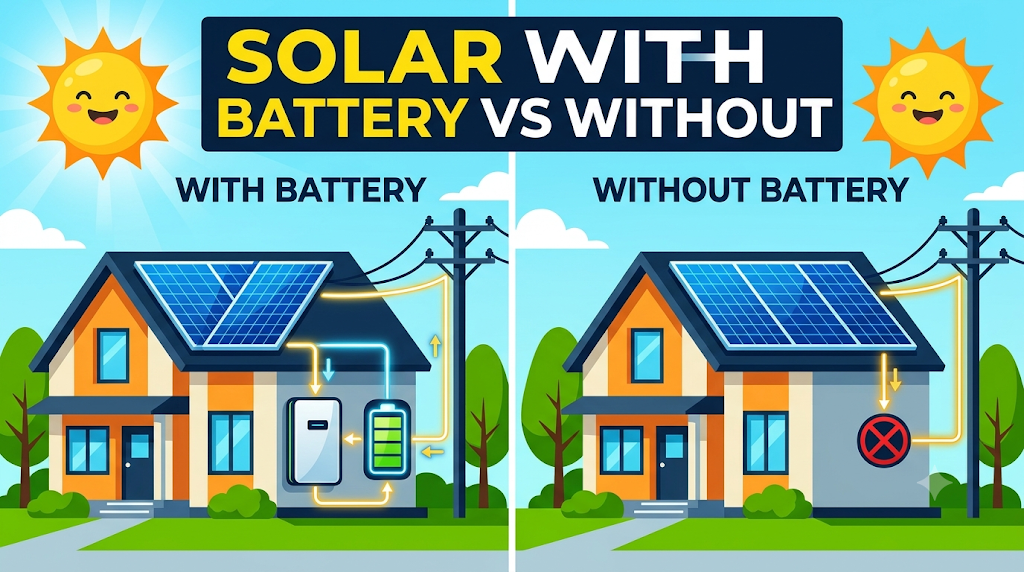
Residential Solar: Homeowners may choose battery storage when they want backup electricity during power cuts or need to use stored solar energy after sunset. A grid-connected system without batteries may be suitable when backup is not required and local rules permit it.
Commercial Solar: Businesses may use batteries to support critical equipment, manage electricity consumption or provide backup for selected operations. However, battery storage adds cost and should be evaluated against the business’s actual requirements.
Key difference: Batteries are optional in both categories. Their suitability depends on backup needs, electricity tariffs, operating hours and financial calculations.
10. Which One Is Better?
Residential solar is the appropriate choice for homeowners who want to reduce household electricity bills and generate their own electricity. Commercial solar is more suitable for businesses that want to reduce operating electricity expenses and support their energy requirements.
Neither system is universally better. The correct choice depends on the type of property, electricity consumption, installation capacity, available space, applicable tariffs and financial objectives.
Conclusion
Residential solar and commercial solar use similar photovoltaic technology, but they serve different electricity consumers. Residential systems are designed around household requirements, while commercial systems are planned according to business and institutional electricity demand.
Before installation, compare your electricity bills, available space, system capacity, equipment requirements and local regulations. A properly sized system with suitable financial planning is more important than simply choosing a residential or commercial label.
Frequently Asked Questions (FAQs)
1. What is the main difference between residential solar and commercial solar?
Residential solar is designed to supply electricity to homes, while commercial solar is designed for businesses, offices, factories, shops and other commercial properties.
2. Is commercial solar more expensive than residential solar?
Commercial solar projects generally have a higher total installation cost because they often require greater capacity and additional electrical equipment. Actual costs depend on the project design and size.
3. Can solar panels used for homes also be used for commercial buildings?
Yes. Solar panels based on similar photovoltaic technologies can be used in both residential and commercial installations. The system design, capacity and electrical equipment must match the property’s requirements.
4. Is government subsidy available for commercial solar in India?
Residential solar subsidy programmes should not be assumed to cover commercial installations. Businesses should check the latest central and state policies for any applicable benefits.
5. Does commercial solar generate more electricity than residential solar?
A commercial system may generate more total electricity when it has greater installed capacity and suitable sunlight conditions. Actual generation depends on system size, panel performance, location, shading and weather.
6. Can residential and commercial solar systems work without batteries?
Yes. Both can be designed as grid-connected systems without battery storage, subject to applicable technical and regulatory requirements. Batteries are generally added when backup or energy storage is needed.
Disclaimer
This article is intended for general informational and educational purposes. Solar system capacity, installation costs, electricity tariffs, subsidy eligibility, net metering rules and technical requirements may vary by location and change over time. Residential and commercial consumers should verify current government schemes, electricity regulations and technical requirements with the relevant authorities and qualified solar professionals before making an installation decision.