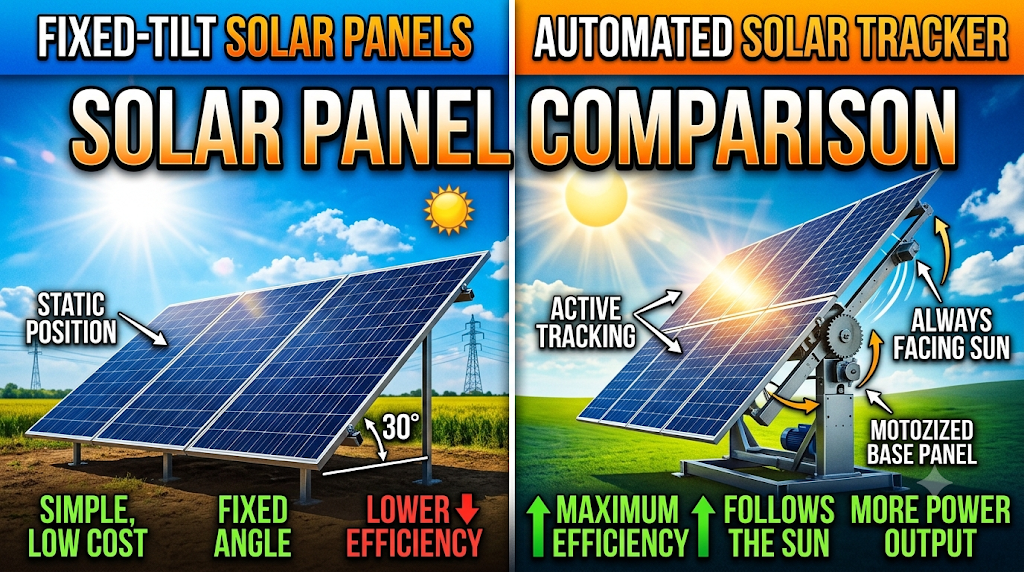
Fixed-Tilt vs Solar Tracking System Introduction Solar panel mounting systems play an important role in determining how much electricity a solar power plant can generate. Two commonly discussed options are fixed-tilt solar systems and solar tracking systems. Both are designed to position solar panels toward sunlight, but they work differently. A fixed-tilt system keeps panels at a predetermined angle, while a tracking system automatically changes the panel position to follow the sun throughout the day. Choosing between them depends on installation size, available land, budget, electricity requirements and maintenance expectations.…
Read MoreTag: Solar Energy Comparison
Fixed-Tilt vs Solar Tracking System: Which Is Better?
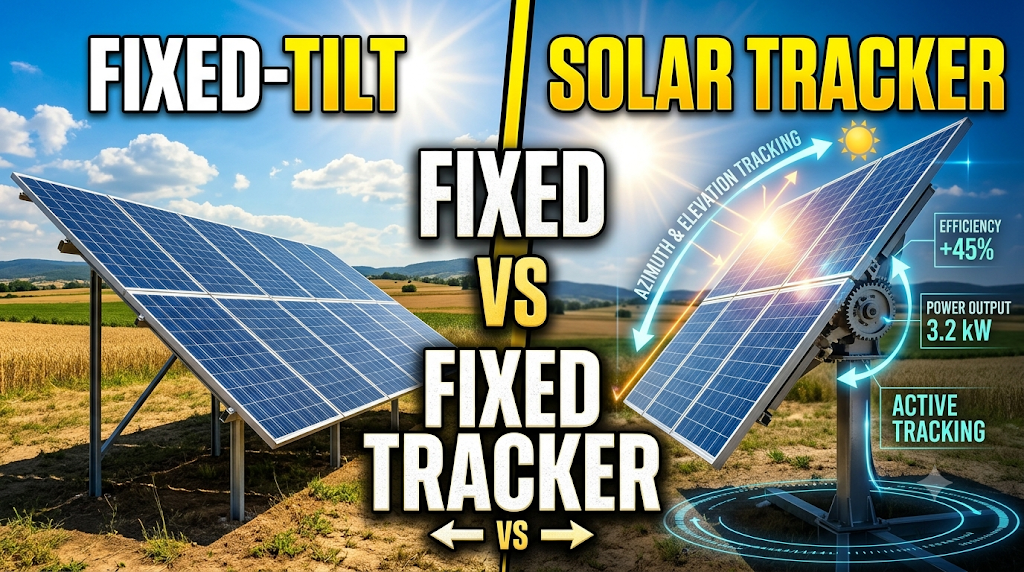
Fixed-Tilt vs Solar Tracking System Introduction Solar panel mounting systems play an important role in determining how much electricity a solar installation can generate. Two common options are fixed-tilt mounting systems and solar tracking systems. A fixed-tilt system keeps solar panels at a predetermined angle throughout the day, while a tracking system automatically changes the panel position to follow the sun. Both systems are designed to capture sunlight, but they differ in electricity generation, installation costs, maintenance requirements, and suitability for different locations. Choosing between fixed-tilt and solar tracking systems…
Read MoreResidential Solar vs Commercial Solar: What Is the Difference?
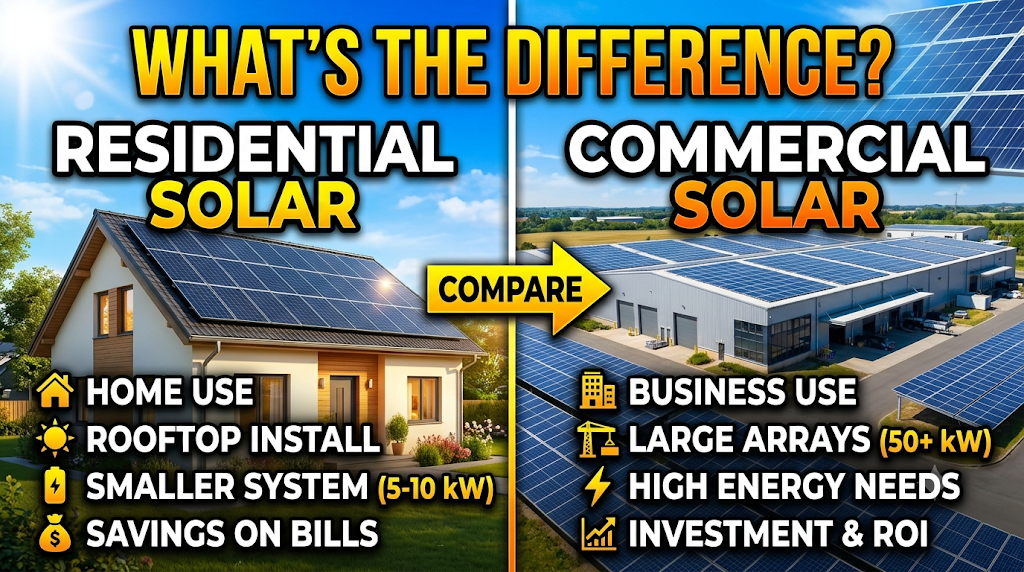
Residential Solar vs Commercial Solar Introduction Residential solar and commercial solar systems both use solar panels to convert sunlight into electricity. However, they are designed for different types of electricity consumers. Residential solar is installed to meet the power requirements of homes, apartments and other domestic properties. Commercial solar is designed for businesses such as offices, shops, hotels, factories, hospitals and warehouses. The main differences are usually system capacity, electricity consumption patterns, installation requirements, project costs and applicable electricity regulations. Although both systems use similar solar technologies, their planning and…
Read MoreSolar Battery Storage vs Net Metering: Which Is Better?
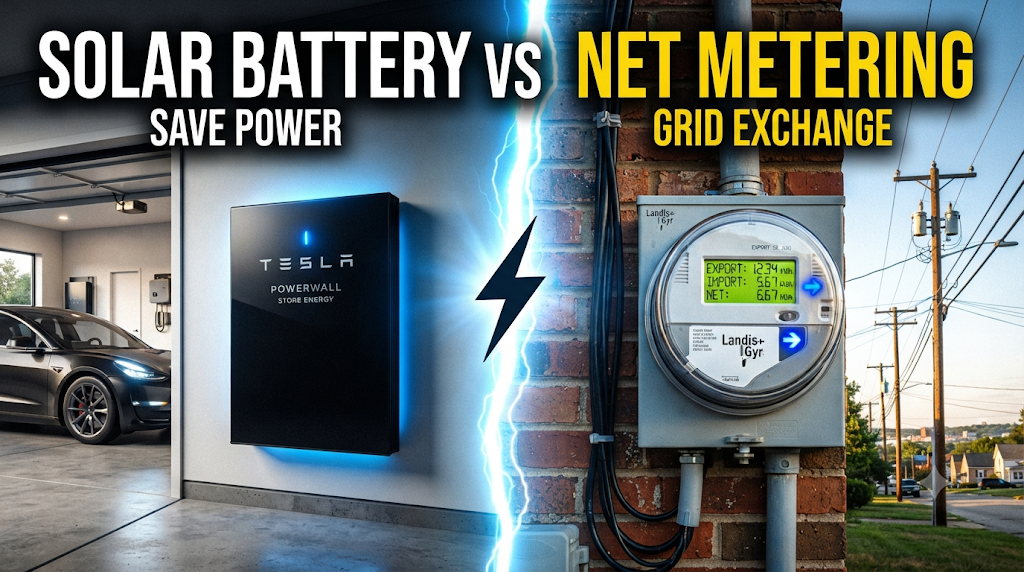
Solar Battery Storage vs Net Metering Introduction Solar battery storage and net metering are two different ways to make better use of electricity generated by rooftop solar panels. Battery storage allows homeowners to save surplus solar electricity in batteries and use it later, such as at night or during a power cut when the system supports backup operation. Net metering, on the other hand, allows a grid-connected solar system to export surplus electricity to the electricity grid and receive energy credits according to the applicable electricity regulations. Both approaches can…
Read MoreSolar Panels vs Solar Roof Tiles: Which Is Better?
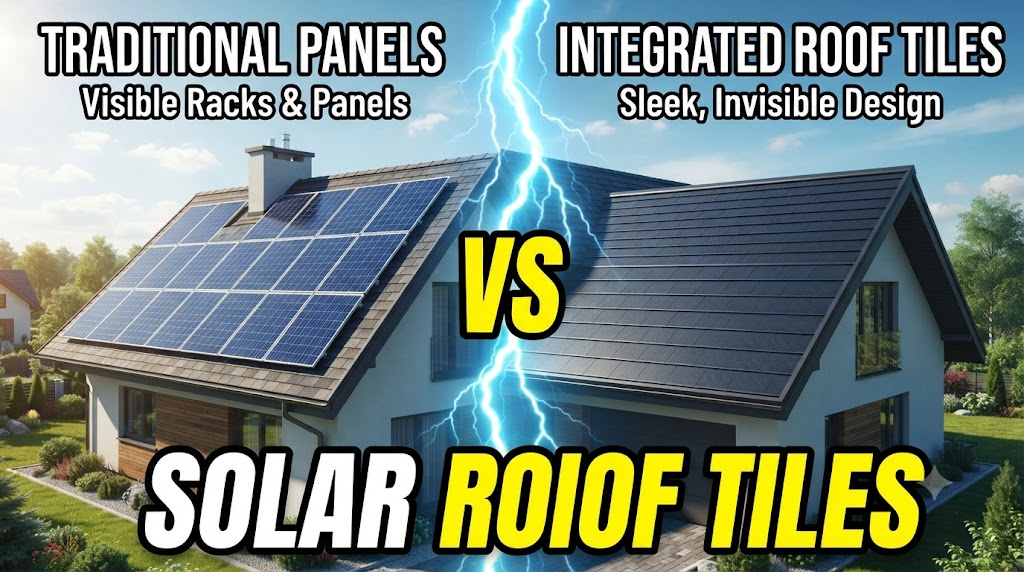
Solar Panels vs Solar Roof Tiles Introduction Solar energy is becoming a popular choice for homeowners who want to generate electricity from sunlight and reduce their dependence on conventional power sources. Two options available for residential properties are traditional solar panels and solar roof tiles. Both technologies convert sunlight into electricity, but their design, installation methods, appearance, energy output and overall costs are different. Traditional solar panels are installed on mounting structures above the existing roof, whereas solar roof tiles integrate electricity-generating cells into roof tiles or shingles. Choosing between…
Read MoreOff-Grid vs Hybrid Solar System: Which Is Better?
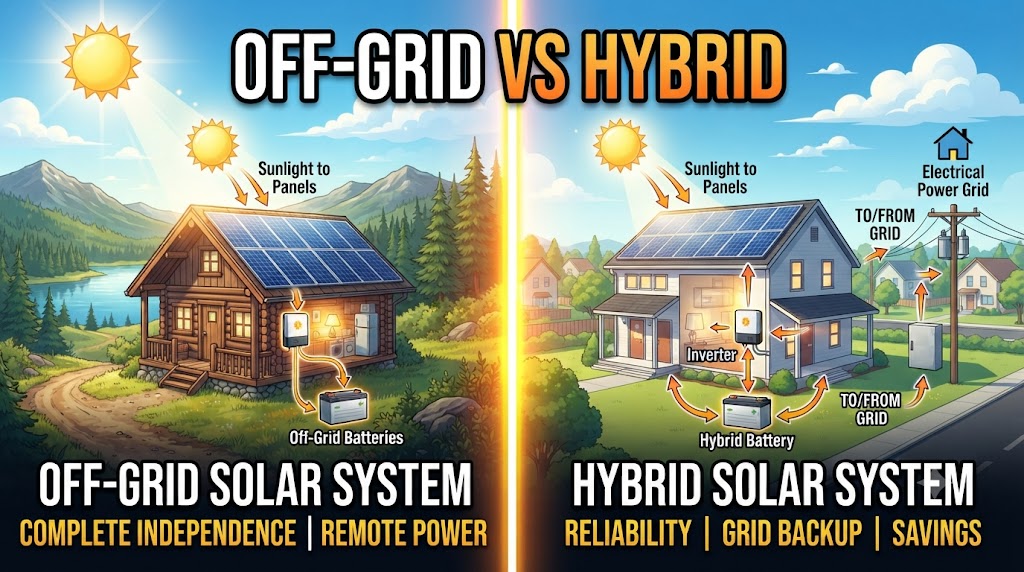
Off-Grid vs Hybrid Solar System Introduction Solar energy systems are becoming an important option for homes, farms and businesses looking to reduce their dependence on conventional electricity. However, choosing the right solar system is just as important as selecting good solar panels. Two popular options are off-grid and hybrid solar systems. Both can provide electricity using solar panels and battery storage, but they differ in their connection to the electricity grid, energy management, backup options and installation requirements. An off-grid solar system operates independently without depending on the electricity grid,…
Read More