Solar Panels vs Solar Roof Tiles
Introduction
Solar energy is becoming a popular choice for homeowners who want to generate electricity from sunlight and reduce their dependence on conventional power sources. Two options available for residential properties are traditional solar panels and solar roof tiles. Both technologies convert sunlight into electricity, but their design, installation methods, appearance, energy output and overall costs are different. Traditional solar panels are installed on mounting structures above the existing roof, whereas solar roof tiles integrate electricity-generating cells into roof tiles or shingles.
Choosing between solar panels and solar roof tiles depends on your roof design, available space, budget and personal preferences. Traditional solar panels are generally preferred for their cost-effectiveness and established installation options. Solar roof tiles, on the other hand, offer a more integrated appearance and can be attractive for new homes or properties undergoing roof replacement. Understanding their differences will help you select the right solar solution for your property.
Quick Comparison Table
| Feature | Solar Panels | Solar Roof Tiles |
|---|---|---|
| Design | Mounted above the roof | Integrated into roof covering |
| Appearance | Clearly visible | More discreet |
| Installation | Uses mounting structures | Replaces conventional roof tiles |
| Energy Efficiency | Generally higher per unit area | Generally lower per unit area |
| Initial Cost | Usually lower | Usually higher |
| Roof Replacement | Not normally required | Often suitable during roof replacement |
| Roof Space | Requires suitable mounting area | Can cover more roof surface |
| Maintenance | Relatively straightforward | Can be more complex |
| Repair | Individual panels can be replaced | Matching replacement tiles may be needed |
| Installation Time | Generally simpler | Can require more roofing work |
| Best For | Existing homes | New homes and roof renovations |
1. What Are Solar Panels?
Solar panels are electricity-generating modules made up of photovoltaic (PV) cells that convert sunlight into electrical energy. They are usually installed on rooftops using metal mounting structures and remain above the existing roof covering.
These systems are available in different technologies, including monocrystalline and polycrystalline panels. Solar panels can be connected to string inverters, microinverters or other compatible power conversion equipment, depending on the installation design. They are widely used in residential, commercial and industrial solar installations.
Advantages of Solar Panels
- Cost-Effective Installation: Traditional solar panels generally cost less than integrated solar roof tiles for comparable residential applications.
- Higher Efficiency: Conventional solar panels generally produce more electricity per square metre than solar roof tiles.
- Established Technology: They are widely available and supported by a large installation and service industry.
- Easy Maintenance: Their exposed mounting arrangement generally makes inspection and cleaning straightforward.
- Flexible Installation: Panels can be installed on different suitable roof types using compatible mounting systems.
- Easy Expansion: Additional panels may be installed if sufficient roof space and inverter capacity are available.
Disadvantages of Solar Panels
- Visible Appearance: Panels sit above the roof and may change the appearance of a building.
- Mounting Requirements: They require suitable mounting structures and secure roof attachments.
- Roof Space Limitations: The available installation area can limit the number of panels.
- Roof Maintenance Work: Panels and mounting equipment may need to be removed temporarily when major roof repairs are required.
- Wind Exposure: Mounting structures must be properly designed to handle local wind conditions.
2. What Are Solar Roof Tiles?
Solar roof tiles, also called solar shingles or solar slates, are roofing materials that contain photovoltaic technology to generate electricity. Instead of placing large solar modules above conventional roof tiles, these products integrate electricity-generating components into the roof covering itself.
Solar roof tiles are designed to perform two functions: protect the building from weather and generate solar electricity. They are particularly attractive for new construction projects and homes where the existing roof needs replacement. Their integrated appearance can make a solar installation less noticeable than conventional rooftop panels.
Advantages of Solar Roof Tiles
- Attractive Appearance: They provide a cleaner and more integrated roof design.
- Dual Function: They serve as roofing materials while also generating electricity.
- Suitable for New Homes: They can be incorporated into the original roof design during construction.
- Roof Integration: They can replace conventional roofing materials rather than simply sitting above them.
- Design Flexibility: Certain products can fit architectural designs where conventional panels may be less desirable.
- Potential Roof Coverage: Their smaller individual units can cover roof sections that may be difficult to accommodate with large conventional modules.
Disadvantages of Solar Roof Tiles
- Higher Initial Cost: Integrated solar roofing generally involves more specialised products and installation work.
- Lower Output Per Area: Many solar tile products generate less electricity per square metre than conventional solar panels.
- Complex Installation: Installation requires coordination between roofing and solar electrical work.
- Repair Challenges: Replacing damaged tiles may require matching products and specialised installation.
- Limited Product Availability: Available designs, manufacturers and installation support vary by location.
- Specialised Maintenance: Inspection and repair may require installers familiar with the particular roofing system.
3. Solar Panels vs Solar Roof Tiles: Key Differences
A. Design and Appearance
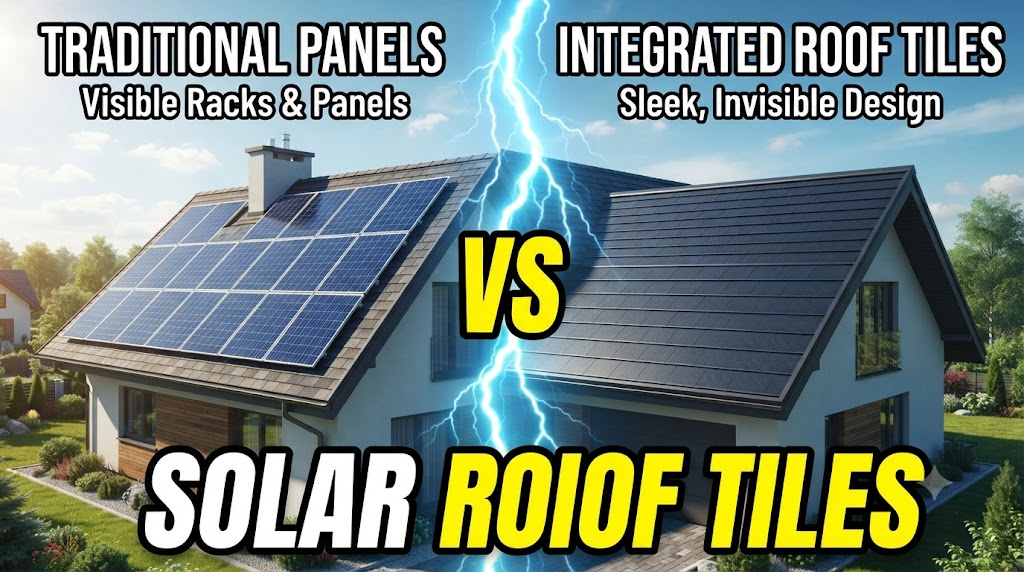
Traditional solar panels are mounted above the existing roof using metal rails or other mounting structures. They remain clearly visible and create a raised appearance.
Solar roof tiles are integrated into the roof covering and are designed to resemble conventional roofing materials. This gives the building a more uniform appearance.
Winner: Solar Roof Tiles for homeowners who prioritise roof aesthetics.
B. Energy Efficiency
Traditional solar panels generally offer higher electricity generation per square metre because they use larger photovoltaic modules with relatively high active cell coverage.
Solar roof tiles use smaller integrated generating units. Their output per unit area can be lower, although covering a larger portion of the roof may help compensate for this difference.
The actual performance depends on the product, efficiency rating, roof orientation, shading and installation conditions.
Winner: Solar Panels for higher electricity generation per unit area in typical installations.
C. Installation Cost
Traditional solar panels generally have a lower installation cost because their mounting systems and installation processes are widely established.
Solar roof tiles can involve additional roofing work, specialised components and more complex installation. Their cost may be more practical when a new roof is already being planned because conventional roofing materials may be replaced as part of the project.
Winner: Solar Panels for most installations on existing roofs.
D. Installation Process
Solar panels are installed on mounting structures attached to a suitable existing roof. This usually avoids replacing the entire roof covering.
Solar roof tiles are integrated into the roofing structure and may require removing existing roofing materials. Installation therefore involves both roofing and electrical work.
Winner: Solar Panels for simpler installation on an existing suitable roof.
E. Roof Space Utilisation
Traditional solar panels need suitable open roof sections where their mounting structures can be installed. Roof obstructions, windows, chimneys and irregular shapes can limit the usable area.
Solar roof tiles consist of smaller units that may cover a larger proportion of certain complicated roof designs. However, this does not automatically mean they will produce more electricity.
Winner: Solar Roof Tiles for certain complex roof layouts where conventional panels are difficult to position.
F. Maintenance and Repairs
Solar panels are generally easier to inspect because they are installed above the roof surface. Individual modules can usually be accessed and replaced without disturbing the main roofing material.
Solar roof tiles are part of the roof covering. Repairing a damaged section may involve removing surrounding tiles or sourcing compatible replacement units.
Winner: Solar Panels for straightforward maintenance and replacement.
G. Durability and Weather Protection
Solar panels are designed to withstand outdoor conditions, including rain, sunlight and wind when installed according to manufacturer requirements. The existing roof covering remains responsible for protecting the building.
Solar roof tiles are designed to combine electricity generation with roofing protection. Their weather resistance depends on the product design, installation quality, flashing and waterproofing details.
Winner: Depends on product quality, installation standards and warranty coverage.
H. Roof Replacement Requirements
Solar panels can usually be installed on an existing roof if its structure and condition are suitable. However, the roof should be inspected before installation because future roof repairs may require temporary panel removal.
Solar roof tiles are particularly suitable when constructing a new home or replacing an old roof. They can be incorporated directly into the new roofing design.
Winner: Solar Roof Tiles for projects involving new construction or planned roof replacement.
I. Product Availability and Installer Support
Traditional solar panels are widely available in many markets. Homeowners can generally find different brands, module capacities, inverters and installation services.
Solar roof tiles are more specialised. Their availability, product choices and experienced installation support can vary significantly depending on the region.
Winner: Solar Panels for wider availability and installer options in most markets.
4. Which Is Better for Different Users?
| User Requirement | Better Choice | Reason |
|---|---|---|
| Existing home with a suitable roof | Solar Panels | Can be installed without replacing the roof |
| New house construction | Solar Roof Tiles | Can be included in the original roof design |
| Lower installation budget | Solar Panels | Generally more cost-effective |
| Modern and integrated appearance | Solar Roof Tiles | Blends into the roof design |
| Higher electricity generation per area | Solar Panels | Generally higher module efficiency |
| Easy maintenance | Solar Panels | More accessible modules |
| Major roof renovation | Solar Roof Tiles | Can combine roofing and electricity generation |
| Wider product selection | Solar Panels | More established market availability |
5. Which One Should You Choose?
Choose traditional solar panels if you want an economical solar installation, higher electricity generation per roof area and easier maintenance. They are a practical choice for most existing homes with suitable rooftops. They also offer more flexibility when selecting panel capacity and compatible solar equipment.
Choose solar roof tiles if appearance is an important consideration and you are building a new house or planning a complete roof replacement. They provide a more integrated design and combine roofing materials with solar electricity generation. However, compare the total roofing and electrical installation cost before making a decision.
6. Final Verdict: Solar Panels vs Solar Roof Tiles
Both solar panels and solar roof tiles can generate electricity from sunlight, but they serve different installation and design requirements.
Overall Winner: Solar Panels for most homeowners.
Traditional solar panels are generally the better option because they offer a more economical installation, higher electricity generation per unit area, wider availability and easier maintenance.
However, solar roof tiles are a suitable alternative for homeowners who prioritise appearance and want solar technology integrated into a new or renovated roof.
Before choosing either option, compare the actual electricity output, total installation cost, product warranty, roof condition and availability of qualified installers.
Frequently Asked Questions (FAQs)
1. Are solar panels better than solar roof tiles?
For most existing homes, traditional solar panels are better because they generally cost less, produce more electricity per unit area and are easier to maintain.
2. Are solar roof tiles more expensive than solar panels?
Generally, yes. Solar roof tiles often require specialised roofing materials and more complex installation. However, the overall cost comparison can change when a complete roof replacement is already planned.
3. Do solar roof tiles generate electricity?
Yes. Solar roof tiles contain photovoltaic cells that convert sunlight into electrical energy, just like conventional solar panels.
4. Which produces more electricity, solar panels or solar roof tiles?
Traditional solar panels generally produce more electricity per square metre. Actual generation depends on the technology, efficiency, roof conditions and available installation area.
5. Can solar roof tiles replace normal roof tiles?
Yes. Solar roof tiles are designed to replace conventional roofing materials in the areas where they are installed. Matching non-solar roofing components may also be needed.
6. Can solar panels be installed on an existing roof?
Yes. Solar panels can generally be installed on an existing roof if its structure, condition, orientation and available space are suitable.
7. Do solar roof tiles require a separate solar panel installation?
No. The generating components are already integrated into the roofing products. However, they still require compatible electrical equipment, wiring and an inverter to supply usable electricity.
8. Which option is better for a new house?
Solar roof tiles can be attractive for new construction because they can be incorporated into the original roof design. Traditional solar panels may still offer better value depending on the budget and design requirements.
9. Are solar roof tiles waterproof?
They are designed to form part of a weather-resistant roofing system. However, proper installation, flashing, sealing and manufacturer specifications are essential for reliable roof protection.
10. Can solar roof tiles be repaired individually?
In many systems, individual damaged units can be replaced. However, the repair process and availability of matching replacement tiles depend on the manufacturer and product design.
Disclaimer
This comparison is intended for general educational purposes. Solar panel and solar roof tile performance, efficiency, installation costs, warranties and durability vary by manufacturer, product specifications, roof design, location and installation quality. Obtain product-specific technical information and quotations from qualified solar installers before making a purchasing decision.