Solar Battery Storage vs Net Metering
Introduction
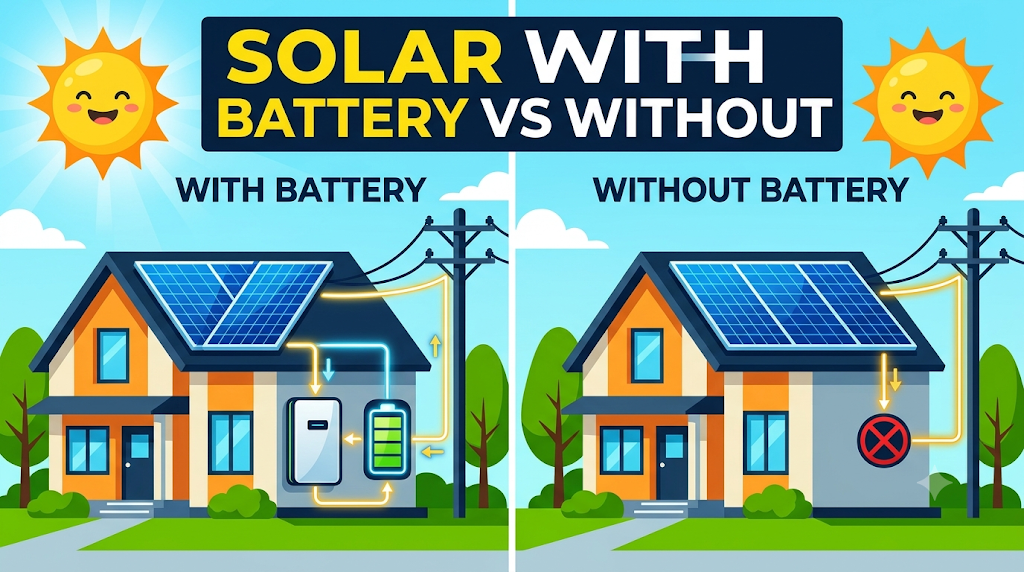
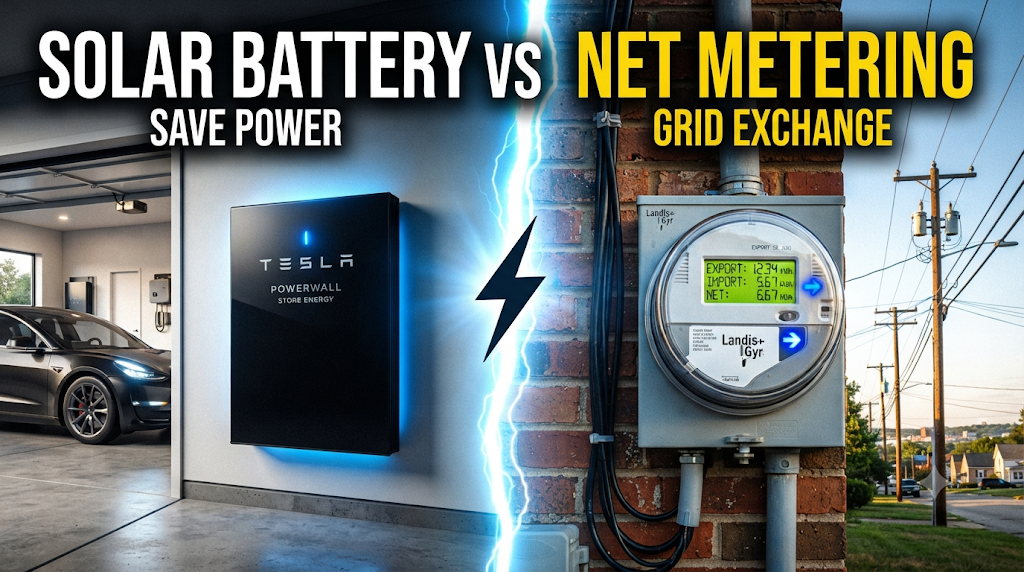
Solar battery storage and net metering are two different ways to make better use of electricity generated by rooftop solar panels. Battery storage allows homeowners to save surplus solar electricity in batteries and use it later, such as at night or during a power cut when the system supports backup operation. Net metering, on the other hand, allows a grid-connected solar system to export surplus electricity to the electricity grid and receive energy credits according to the applicable electricity regulations. Both approaches can help reduce electricity bills, but their working methods, costs and benefits are different.
Choosing between solar battery storage and net metering depends on your electricity consumption, power-cut frequency, installation budget and local electricity regulations. Battery storage can provide greater energy independence and backup capability, but it increases the installation cost. Net metering generally avoids the expense of purchasing a large battery because the electricity grid helps balance daytime generation and household consumption. In this comparison, we will examine both options to understand which is more suitable for residential solar systems.
Quick Comparison Table
| Feature | Solar Battery Storage | Net Metering |
|---|---|---|
| Main Purpose | Store surplus solar electricity | Export surplus electricity to the grid |
| Energy Storage | Physical battery | Electricity credits through the grid |
| Initial Cost | Higher | Generally lower |
| Electricity at Night | Uses stored battery energy | Draws electricity from the grid |
| Power-Cut Backup | Possible with suitable system | Generally unavailable |
| Maintenance | Battery maintenance may be required | No household battery maintenance |
| Battery Replacement | Required when battery reaches end of life | Not required |
| Energy Independence | Higher | Depends on grid availability |
| Installation Complexity | Higher | Generally simpler |
| Space Requirement | Requires battery installation space | No battery space required |
| Long-Term Cost | Includes battery replacement and maintenance | Depends on tariffs and settlement rules |
| Best Application | Backup and energy independence | Lower-cost grid-connected solar savings |
1. Initial Installation Cost
The initial investment is an important factor when choosing between battery storage and net metering.
Solar Battery Storage: A battery-based solar system requires additional equipment, including batteries, compatible inverters or charge controllers and suitable electrical protection. Lithium-ion batteries generally increase the installation cost more than conventional lead-acid batteries.
Net Metering: A grid-connected solar system with net metering generally does not require a separate battery bank. This reduces the initial investment because surplus electricity is exported to the grid through a compatible bidirectional meter.
Winner: Net Metering
Net metering is generally more affordable initially because it avoids the additional expense of battery storage.
2. Electricity Usage at Night
Solar panels generate electricity during daylight hours, so the method of supplying electricity at night is an important consideration.
Solar Battery Storage: Stored electricity can be used at night to operate household appliances. The available backup depends on battery capacity, usable energy and household consumption.
Net Metering: A net-metered household draws electricity from the grid when solar panels are not generating enough power. Exported electricity credits are adjusted according to the applicable billing and settlement rules.
Winner: Depends
Battery storage provides physical stored electricity, while net metering can reduce the cost of electricity consumed at night without requiring a household battery.
3. Backup During Power Cuts
Power backup is one of the biggest differences between these two solar arrangements.
Solar Battery Storage: A properly configured battery-based system can supply electricity during power cuts. The inverter must support backup operation and provide suitable isolation from the electricity grid.
Net Metering: A conventional grid-tied solar inverter generally shuts down during a grid outage for safety reasons. This means solar panels may not supply household electricity during a power cut, even when sunlight is available.
Winner: Solar Battery Storage
Battery storage is the better choice for households that need electricity backup during power cuts.
4. Maintenance Requirements
Maintenance affects the convenience and ongoing cost of a solar installation.
Solar Battery Storage: Battery systems require periodic inspection and monitoring. Flooded lead-acid batteries may need water-level checks, while modern lithium-ion batteries generally require minimal routine maintenance.
Net Metering: A conventional grid-connected solar system does not require household battery maintenance. However, solar panels, wiring, inverter equipment and electrical connections still need periodic inspection.
Winner: Net Metering
Net metering generally requires less maintenance because there is no separate household battery bank.
5. Energy Independence
Energy independence describes how much a household can rely on its own electricity generation and storage instead of the electricity grid.
Solar Battery Storage: Battery storage allows households to use their own generated electricity even after sunset. With appropriately sized storage and solar panels, dependence on grid electricity can be reduced.
Net Metering: Net-metered systems remain connected to the electricity grid. Households depend on the grid when solar generation is insufficient or unavailable.
Winner: Solar Battery Storage
Battery storage provides greater energy independence, particularly when combined with a suitable off-grid or hybrid system.
6. Long-Term Operating Cost
Long-term operating cost includes maintenance, equipment replacement, electricity bills and other system expenses.
Solar Battery Storage: Battery storage can reduce the amount of electricity purchased from the grid. However, batteries have a limited service life and eventually need replacement. Their long-term cost depends on battery chemistry, usage and replacement prices.
Net Metering: Net metering avoids battery replacement expenses. However, savings depend on electricity tariffs, export compensation, fixed charges and local settlement regulations.
Winner: Depends
Net metering generally has lower equipment replacement expenses, while battery storage can provide additional value where backup and self-consumption are important.
7. Installation Space
Available installation space can influence which solar arrangement is more practical.
Solar Battery Storage: Battery systems require additional space for battery installation, electrical protection and associated equipment. The space requirement depends on battery capacity and technology.
Net Metering: A conventional grid-connected net-metering system does not require a separate battery bank. This makes installation simpler when indoor or outdoor battery space is limited.
Winner: Net Metering
Net metering is generally better when available installation space is limited.
8. Electricity Bill Savings
Both options can reduce electricity expenses, but they achieve savings in different ways.
Solar Battery Storage: Batteries allow households to store surplus daytime solar electricity and use it later. This can reduce electricity purchases during evening and night hours, especially where export compensation is low compared with the retail electricity tariff.
Net Metering: Surplus electricity exported to the grid creates energy credits or financial compensation according to local regulations. These credits can offset electricity imported from the grid.
Winner: Depends
The better option depends on the difference between electricity import tariffs and export compensation, as well as household consumption patterns and battery costs.
9. System Efficiency and Energy Losses
Energy efficiency matters because some electricity is lost when energy is stored, converted and used later.
Solar Battery Storage: Electricity passes through charging, storage and discharging processes. These processes involve energy losses. Battery efficiency depends on chemistry, charging conditions, inverter design and operating temperature.
Net Metering: Surplus electricity is exported to the grid, while electricity is imported when required. This avoids the charging and discharging losses associated with a household battery, although grid and inverter conversion losses still exist.
Winner: Net Metering
Net metering generally avoids additional battery storage losses when surplus electricity can be exported and later offset under the applicable rules.
10. Suitability for Different Solar Systems
The type of solar installation determines which arrangement is more suitable.
Solar Battery Storage: Battery storage is suitable for off-grid systems and hybrid solar systems that support battery charging and backup operation. It is particularly useful where grid electricity is unreliable.
Net Metering: Net metering is generally suitable for grid-connected rooftop solar systems where the electricity grid is available and the local distribution company permits the arrangement.
Winner: Depends
Battery storage is more suitable for backup and off-grid applications, while net metering is generally better for reducing electricity bills through a grid-connected system.
Advantages and Disadvantages
Solar Battery Storage
Advantages:
- Stores surplus electricity generated by solar panels.
- Provides electricity after sunset.
- Can provide backup during power cuts.
- Reduces dependence on grid electricity.
- Supports off-grid and hybrid solar systems.
- Helps increase the use of self-generated solar electricity.
Disadvantages:
- Higher initial installation cost.
- Battery replacement may be necessary.
- Requires additional installation space.
- Battery charging and discharging involve energy losses.
- Requires compatible inverter and battery protection equipment.
- Battery lifespan depends on usage and operating conditions.
Net Metering
Advantages:
- Generally lower initial installation cost.
- No separate household battery bank required.
- Surplus electricity can be exported to the grid.
- Electricity credits can reduce imported electricity costs.
- No household battery replacement expenses.
- Generally simpler installation than battery-based systems.
Disadvantages:
- Depends on grid availability.
- Conventional grid-tied systems generally shut down during power cuts.
- Export compensation depends on local regulations.
- Electricity credits may be subject to settlement periods and rules.
- Does not provide physical electricity storage.
- Savings depend on consumption and electricity tariffs.
Which Option Is Better for Different Users?
The right choice depends on your household’s electricity requirements and local electricity regulations.
- For lower installation cost: Net metering is generally better.
- For power-cut backup: Solar battery storage is better.
- For electricity use at night: Both can help, but through different methods.
- For greater energy independence: Solar battery storage is better.
- For minimal battery maintenance: Net metering is better.
- For off-grid solar systems: Battery storage is necessary.
- For grid-connected homes with reliable electricity: Net metering is generally more economical.
- For homes with frequent power cuts: Battery storage is generally preferable.
Frequently Asked Questions (FAQs)
1. What is the main difference between solar battery storage and net metering?
Solar battery storage saves surplus electricity in a physical battery for later use. Net metering exports surplus electricity to the grid and provides energy credits or compensation according to local regulations.
2. Which is cheaper, solar battery storage or net metering?
Net metering is generally cheaper initially because it does not require a separate battery bank. Battery storage increases the installation cost because additional batteries and compatible equipment are needed.
3. Can net metering provide electricity during a power cut?
A conventional grid-tied solar system with net metering generally shuts down during a power cut for electrical safety. Backup requires a suitable hybrid or backup-enabled system with appropriate isolation and storage.
4. Is a solar battery necessary with net metering?
No. A conventional grid-connected net-metering system can operate without a battery. The grid receives surplus electricity and supplies electricity when solar generation is insufficient.
5. Which is better for saving electricity bills?
Net metering is generally economical when export credits are favourable and grid electricity is reliable. Battery storage may offer better savings when the retail electricity tariff is significantly higher than export compensation and battery costs are reasonable.
6. Can I use both solar battery storage and net metering?
Yes, certain hybrid solar systems can combine battery storage with grid connectivity and permitted export arrangements. The inverter, meter configuration and local electricity regulations must support this arrangement.
7. Is net metering available in Punjab, India?
Punjab permits rooftop solar arrangements under regulations issued by the Punjab State Electricity Regulatory Commission (PSERC). Available arrangements and capacity limits depend on the applicable regulations and consumer category. Homeowners should check current requirements with PSPCL or an authorised solar installer before installation.
Conclusion
Solar battery storage and net metering are two useful approaches to residential solar energy management, but they serve different purposes. Battery storage allows households to save surplus solar electricity for later use and provides backup when the system is properly configured. Net metering allows surplus electricity to be exported to the grid, helping reduce electricity bills without the additional expense of a household battery bank.
Overall Winner: Net Metering for Most Grid-Connected Homes
For households with reliable grid electricity and a primary goal of reducing installation costs and electricity bills, net metering is generally the more economical choice. However, solar battery storage is the better option for households that experience frequent power cuts, need backup electricity or want greater energy independence. The best decision depends on electricity tariffs, export compensation, battery costs and individual household requirements.
Disclaimer
Solar battery prices, installation costs, electricity tariffs, export compensation and net-metering regulations may vary depending on location, consumer category, system capacity and applicable electricity policies. Net-metering credits and settlement arrangements are subject to local electricity regulations and may change. Always check the latest requirements with your electricity distribution company and consult a qualified solar installer before selecting a system.