Solar Battery vs Home Inverter Battery
Introduction
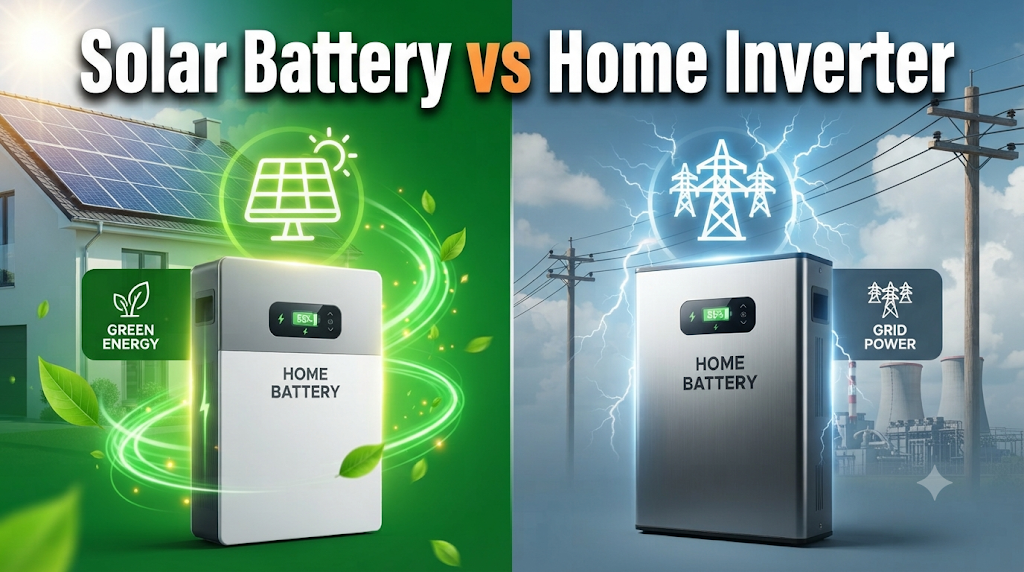
Batteries play an important role in providing electricity backup and storing energy for household use. However, solar batteries and home inverter batteries are designed with different usage requirements in mind. A solar battery is generally intended to store electricity generated by solar panels and support regular charging and discharging. A conventional home inverter battery is primarily designed to provide backup electricity during power cuts. Although both can store electrical energy, their charging requirements, cycle-life expectations, construction and suitability for daily solar use can differ.
Choosing between a solar battery and a home inverter battery depends on how you plan to use electricity at home. If you have a solar power system that charges and discharges a battery every day, a solar-rated battery may be more suitable. If you only need occasional backup during electricity interruptions, a conventional inverter battery may be sufficient. In this comparison, we will examine their differences to help you select the right battery for your household.
Quick Comparison Table
| Feature | Solar Battery | Home Inverter Battery |
|---|---|---|
| Main Purpose | Solar energy storage | Electricity backup |
| Charging Source | Solar panels or compatible grid charging | Mainly electricity grid |
| Usage Pattern | Regular cycling | Mainly occasional cycling |
| Deep Discharge | Designed for repeated cycling | Depends on battery design |
| Cycle Life | Generally higher for comparable designs | Depends on battery type and usage |
| Charging System | Solar charge controller or compatible inverter | Home inverter or UPS |
| Initial Cost | Depends on chemistry and capacity | Often lower for conventional models |
| Maintenance | Depends on battery chemistry | Depends on battery chemistry |
| Solar Compatibility | Designed for solar applications | Requires compatible charging equipment |
| Long-Term Solar Use | Generally more suitable | Depends on model specifications |
| Best Application | Daily solar storage | Occasional home backup |
1. Main Purpose
The main difference between these batteries is their intended application.
Solar Battery: A solar battery is designed to store electricity produced by solar panels for later use. It can supply electricity during the evening, at night or when solar generation is insufficient. Solar batteries are generally selected for regular energy-storage cycles.
Home Inverter Battery: A conventional home inverter battery is primarily designed to provide backup electricity during power cuts. It normally charges when grid electricity is available and supplies power when the grid fails.
Winner: Solar Battery
A solar battery is the better option when the main purpose is storing and using electricity generated by solar panels.
2. Charging Source
The charging source determines how electricity enters the battery.
Solar Battery: Solar batteries are designed to work with solar charging systems. Solar panels generate DC electricity, which is managed through a compatible solar charge controller or inverter before charging the battery. Some systems can also charge batteries from the electricity grid.
Home Inverter Battery: Conventional inverter batteries generally receive charging electricity from the grid through the home inverter. Certain inverter systems also support solar charging when connected to compatible solar panels and controllers.
Winner: Solar Battery
Solar batteries are specifically intended for solar energy storage, although compatible inverter batteries can also be charged using solar electricity.
3. Daily Charging and Discharging
A battery’s ability to handle regular charging and discharging is important for solar energy storage.
Solar Battery: Solar batteries are generally designed for repeated charging during the day and discharging when stored electricity is needed. Their specifications should support the expected daily cycling pattern.
Home Inverter Battery: Conventional inverter batteries are often designed around occasional power cuts rather than continuous daily cycling. Repeated deep discharge may reduce their lifespan if they are not designed for that usage.
Winner: Solar Battery
Solar-rated batteries are generally better suited to regular daily charging and discharging.
4. Battery Lifespan
Battery lifespan depends on chemistry, construction, temperature, charging conditions and depth of discharge.
Solar Battery: Solar batteries designed for daily cycling can provide a longer service life under regular solar use. Lithium-ion solar batteries, particularly LiFePO4 models, can offer several thousand cycles. Solar-rated lead-acid batteries are also available for repeated cycling.
Home Inverter Battery: Conventional inverter batteries may last several years when used mainly for occasional backup. However, frequent deep discharge can shorten their service life if the model is not designed for daily cycling.
Winner: Solar Battery
A properly selected solar-rated battery generally offers better suitability and service life for frequent solar cycling. However, chemistry and product specifications matter more than the name alone.
5. Deep Discharge Performance
Depth of discharge refers to the percentage of a battery’s rated capacity that has been used.
Solar Battery: Solar batteries are generally designed to handle repeated discharge cycles. Their recommended depth of discharge depends on the battery chemistry and manufacturer specifications.
Home Inverter Battery: Conventional inverter batteries may be designed for shallower or occasional discharge. Repeatedly using a large portion of their capacity can accelerate battery degradation.
Winner: Solar Battery
Solar-rated deep-cycle batteries are generally preferable for regular and deeper energy usage.
6. Charging Speed and Efficiency
Charging speed and efficiency affect how much solar electricity can be stored and how quickly it becomes available for use.
Solar Battery: Modern lithium-ion solar batteries generally offer high charging efficiency and can accept relatively high charging currents within their specified limits. Solar-rated lead-acid batteries also support solar charging, but their charging characteristics differ.
Home Inverter Battery: Conventional inverter batteries can charge efficiently when used with a compatible inverter. However, their charging profile may not be optimised for the variable electricity generation of a solar system.
Winner: Depends
The result depends on battery chemistry, charging current, inverter settings and the manufacturer’s specifications. A well-matched inverter battery can perform efficiently, while an unsuitable solar charging setup can waste energy or damage the battery.
7. Initial Purchase Cost
The initial purchase price is an important factor for households planning a solar installation.
Solar Battery: Solar batteries are available in different technologies, including lead-acid and lithium-ion. Their prices depend on usable capacity, cycle-life rating, chemistry, warranty and system requirements.
Home Inverter Battery: Conventional home inverter batteries are widely available in different capacities. Standard lead-acid models can have a relatively low initial purchase cost, making them attractive for basic electricity backup.
Winner: Home Inverter Battery
A conventional lead-acid inverter battery is generally more affordable initially than a comparable lithium solar storage system. However, the actual cost comparison depends on battery chemistry and usable capacity.
8. Maintenance Requirements
Maintenance depends on the battery technology rather than simply whether it is marketed as a solar or inverter battery.
Solar Battery: Modern lithium-ion solar batteries generally require minimal routine maintenance. Flooded lead-acid solar batteries require periodic electrolyte checks and distilled-water top-ups.
Home Inverter Battery: Flooded lead-acid inverter batteries also require periodic water-level checks and cleaning. Sealed and maintenance-free models generally require less routine attention.
Winner: Depends
Maintenance requirements depend on whether the battery uses lithium-ion, flooded lead-acid, AGM or gel technology.
9. Solar System Compatibility
Battery compatibility is important because an unsuitable battery or charging system can affect performance and service life.
Solar Battery: Solar batteries are designed to work with compatible solar inverters, hybrid inverters or charge controllers. Their voltage, charging limits and communication requirements must match the system.
Home Inverter Battery: Some home inverter batteries can be used with solar systems, provided the inverter or charge controller supports the battery’s charging requirements. However, a conventional battery is not automatically suitable for regular solar cycling.
Winner: Solar Battery
Solar batteries are generally the more straightforward choice for solar installations because they are designed for that application.
10. Long-Term Value
Long-term value considers purchase price, electricity storage, usable capacity, service life and replacement expenses.
Solar Battery: A solar-rated battery can provide better long-term value when electricity is stored and used every day. Its suitability for repeated cycling can help reduce premature replacement.
Home Inverter Battery: A conventional inverter battery can provide good value when power cuts are occasional and the battery is not regularly deeply discharged. Using an unsuitable model for daily solar cycling may increase replacement costs.
Winner: Solar Battery
For regular solar energy storage, a properly selected solar battery generally offers better long-term value.
Advantages and Disadvantages
Solar Battery
Advantages:
- Designed for solar energy storage.
- Suitable for regular charging and discharging.
- Solar-rated models support repeated cycling.
- Available in lead-acid and lithium-ion technologies.
- Can help increase the use of self-generated solar electricity.
- Suitable for off-grid and compatible hybrid systems.
- Can provide backup during power cuts when the system supports backup operation.
Disadvantages:
- Initial investment can be high, particularly for lithium-ion models.
- Requires compatible solar charging equipment.
- Battery sizing and system design need careful planning.
- Some lead-acid models require regular maintenance.
Home Inverter Battery
Advantages:
- Suitable for conventional household backup.
- Conventional lead-acid models generally have a lower initial cost.
- Widely available in different capacities.
- Compatible with many home inverter systems.
- Suitable for occasional power cuts.
- Maintenance-free models are available.
Disadvantages:
- Standard models may not be suitable for daily deep cycling.
- Frequent deep discharge can reduce service life.
- Not every inverter battery is compatible with solar charging.
- Some flooded models require regular maintenance.
- May offer lower long-term value when used continuously for solar storage.
Which Battery Is Better for Different Users?
The better choice depends on your electricity requirements and intended usage.
- For daily solar energy storage: Solar battery is generally better.
- For occasional power cuts: Home inverter battery can be sufficient.
- For frequent deep discharge: Solar-rated battery is preferable.
- For a lower initial investment: Conventional inverter battery is generally more affordable.
- For off-grid solar systems: Solar battery is the appropriate choice.
- For regular solar charging: Solar-rated battery is generally preferable.
- For basic home backup: Home inverter battery is a practical option.
- For long-term daily solar use: Solar-rated lithium-ion or deep-cycle battery is generally better.
Frequently Asked Questions (FAQs)
1. What is the difference between a solar battery and an inverter battery?
A solar battery is designed to store electricity generated by solar panels, often with regular daily cycling. A conventional inverter battery is mainly designed to provide backup electricity during power cuts.
2. Can I use a normal inverter battery with solar panels?
Yes, some conventional inverter batteries can be used with solar panels when connected to a compatible solar inverter or charge controller. However, the battery must be suitable for the expected charging and discharging pattern.
3. Which battery lasts longer, solar or inverter battery?
A solar-rated battery designed for frequent cycling can generally last longer in daily solar applications than a conventional standby inverter battery. Actual lifespan depends on battery chemistry, construction and operating conditions.
4. Is a lithium battery better for solar storage?
Lithium-ion batteries, particularly LiFePO4 models, are generally suitable for solar storage because of their high usable capacity, good efficiency and long cycle life. Their higher initial cost should also be considered.
5. Can a solar battery work with a normal home inverter?
Some solar batteries can work with compatible home inverters, but not every inverter supports every battery. Check the voltage, charging profile, BMS communication and manufacturer compatibility requirements.
6. Do solar batteries work during power cuts?
Yes, a properly configured solar battery system can provide backup during power cuts. However, the inverter must support backup operation and safely disconnect the home from the electricity grid when required. A standard grid-tied solar system may shut down during an outage.
7. Which battery is better for an off-grid solar system?
A solar-rated deep-cycle battery is generally better for an off-grid system because it needs to store energy during sunlight hours and supply electricity when solar generation is unavailable.
Conclusion
Solar batteries and home inverter batteries both store electricity, but their intended applications are different. Solar batteries are generally designed for regular energy storage and repeated charging and discharging. Conventional inverter batteries are primarily intended for backup during occasional power cuts. While some inverter batteries can also be used with solar panels, their specifications must support the required solar charging and cycling conditions.
Overall Winner: Solar Battery
For homeowners planning to install a solar power system and use stored electricity regularly, a solar-rated battery is generally the better choice. It offers better suitability for daily solar cycling and can provide stronger long-term value. However, a conventional home inverter battery remains a practical and affordable option for occasional electricity backup.
Disclaimer
Battery prices, lifespan, capacity, charging efficiency and performance may vary depending on the manufacturer, chemistry, model, usage pattern and installation conditions. Not every inverter battery is suitable for daily solar cycling, and not every solar battery is compatible with every inverter. Always check manufacturer specifications, warranty terms and system compatibility before purchasing or installing a battery. Consult a qualified solar installer or electrician for technical guidance.