Solar Panel Cleaning Robot vs Manual Cleaning
Introduction
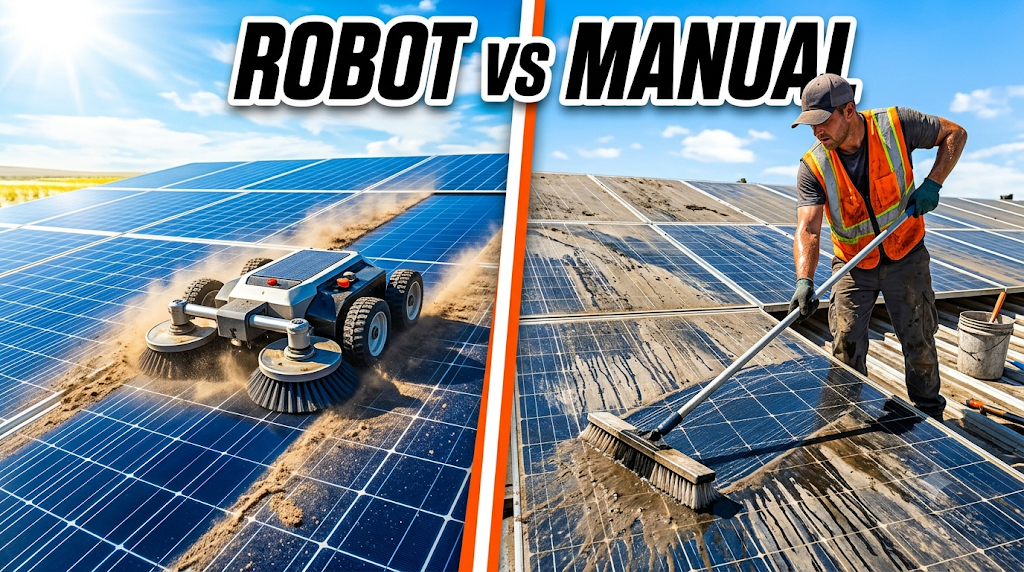
Solar panel cleaning is important because dust, dirt, bird droppings, pollen and other deposits can reduce the amount of sunlight reaching photovoltaic cells. Regular cleaning helps maintain the performance of a solar power system, especially in areas with dry weather, construction dust or agricultural activity. Two common cleaning methods are solar panel cleaning robots and manual cleaning. Both methods remove dirt from panel surfaces, but they differ in equipment cost, labour requirements, cleaning control, maintenance and suitability for different installations.
A solar panel cleaning robot uses automated equipment to clean panels with minimal human involvement. Depending on its design, it may use brushes, microfiber materials, water or dry-cleaning technology. Manual cleaning involves people using suitable brushes, soft cloths, water and other manufacturer-approved cleaning equipment. The better option depends on the size of the solar installation, cleaning frequency, available budget, panel arrangement and access to the rooftop or ground-mounted system.
Quick Comparison Table
| Feature | Cleaning Robot | Manual Cleaning |
|---|---|---|
| Cleaning method | Automated | Human-operated |
| Initial cost | Higher | Lower |
| Labour requirement | Lower during operation | Higher |
| Cleaning speed | Depends on robot design | Depends on workforce |
| Large solar installations | Often suitable | Requires more workers |
| Small home systems | May be unnecessary | Usually practical |
| Water requirement | Depends on model | Depends on method |
| Maintenance | Robot maintenance required | Basic equipment maintenance |
| Cleaning control | Depends on automation | Direct human control |
| Accessibility | Requires compatible panel layout | Requires safe physical access |
| Electricity requirement | Depends on model | Usually not required |
| Best suited for | Large installations | Small and medium installations |
1. Cleaning Technology and Working Method
Solar Panel Cleaning Robot
Ankara Güneş Paneli Temizliği: Enerji Verimini Artıran Profesyonel Temizlik Rehberi | DeltaWash Blog
A solar panel cleaning robot moves across solar panel surfaces and removes accumulated dust using its cleaning mechanism. Depending on the model, it may use rotating brushes, microfiber rollers, air cleaning or water-assisted cleaning.
Some advanced robots can operate automatically according to a programmed schedule, while others require an operator to start and supervise the cleaning process. Their performance depends on panel design, installation layout, robot movement and the type of dirt present.
Manual Cleaning
Solar Panel Cleaning Guide: When, How, and Is It Actually Worth It? | OhmSnap
Manual cleaning uses human effort and suitable cleaning tools to remove dirt from solar panels. A person can inspect the panel surface, identify stubborn deposits and clean specific areas that need additional attention.
This method offers direct control over the cleaning process. However, workers must follow the panel manufacturer’s cleaning instructions and use appropriate tools to avoid scratching glass or damaging electrical components.
2. Initial Cost
A solar panel cleaning robot requires an initial investment in the machine, accessories and sometimes additional charging or control equipment. More advanced robots with automatic navigation and monitoring features can cost considerably more.
Manual cleaning generally has a lower starting cost because it requires basic cleaning equipment, water where appropriate and labour. There is no need to purchase an expensive automated machine.
Winner: Manual Cleaning. It is generally more affordable for homeowners and smaller solar installations.
3. Labour Requirements
A cleaning robot can reduce the amount of physical labour required during repeated cleaning operations. This is particularly useful for large solar farms where hundreds or thousands of panels may need regular maintenance.
Manual cleaning requires workers to handle the cleaning process themselves. Large installations may need several workers, increasing labour requirements and coordination.
Winner: Solar Panel Cleaning Robot. It can reduce repetitive manual work, although supervision and maintenance may still be necessary.
4. Cleaning Speed and Efficiency
The cleaning speed of a robot depends on its movement, brush design, battery capacity, operating pattern and panel arrangement. A suitable robot can clean large, compatible solar arrays with less continuous human effort.
Manual cleaning speed depends on the number of workers, available equipment, panel accessibility and the amount of accumulated dirt. Workers can concentrate on particularly dirty areas, but cleaning a large installation may take considerable time.
Winner: Depends. Robots can be advantageous for repetitive cleaning across large arrays, while manual cleaning can be more practical for smaller installations and targeted cleaning.
5. Water Consumption
Some solar panel cleaning robots use dry-cleaning technology and require little or no water during normal operation. Other models use water-assisted brushes or cleaning systems.
Manual cleaning can require water, particularly when removing stubborn dirt or bird droppings. However, suitable dry-cleaning tools and manufacturer-approved methods can also reduce water consumption.
Winner: Depends. A dry-cleaning robot can be useful where water is limited, but not every robot operates without water.
6. Cleaning Quality and Control
Robots provide consistent cleaning movements when the panels and installation are compatible with their design. However, their ability to remove stubborn deposits depends on the cleaning mechanism and operating conditions.
Manual cleaning gives workers direct control over pressure, movement and the areas being cleaned. They can identify difficult stains and adjust their approach accordingly.
Winner: Manual Cleaning. It offers greater flexibility for detailed inspection and targeted cleaning, provided workers use safe and appropriate methods.
7. Maintenance and Operating Costs
A solar panel cleaning robot contains mechanical and electrical components that may require periodic maintenance. Brushes, wheels, batteries, sensors and other parts may need inspection, repair or replacement.
Manual cleaning equipment is generally simpler. Brushes, cloths, hoses and other basic tools may need occasional replacement, while labour remains an ongoing expense.
Winner: Depends. Manual cleaning generally has simpler equipment maintenance, while robots may reduce recurring labour requirements at large installations.
8. Safety and Accessibility
Cleaning solar panels on rooftops can involve working at height, slippery surfaces and electrical hazards. Manual cleaning requires trained workers, suitable fall protection and safe access arrangements.
Robots can reduce the need for workers to physically move across panel surfaces, but they do not eliminate all safety risks. Operators may still need to access the installation to position, retrieve or maintain the machine.
Winner: Solar Panel Cleaning Robot. It can reduce direct human exposure to repetitive cleaning work in suitable installations, but proper safety procedures remain essential.
9. Suitability for Different Solar Installations
A cleaning robot is generally more useful for large solar farms, industrial installations and commercial solar projects with compatible panel layouts. The investment can become more practical when cleaning is required frequently across a large area.
Manual cleaning is usually more suitable for residential rooftop systems, small commercial installations and solar setups with limited panel numbers. It avoids the expense of purchasing specialized automated equipment.
Winner: Depends. The installation size, layout, cleaning frequency and budget determine which method is more practical.
10. Long-Term Value
A solar panel cleaning robot may provide better long-term value for large installations where repeated cleaning creates substantial labour requirements. However, its purchase price, maintenance costs and compatibility must be considered.
Manual cleaning can offer better overall value for smaller systems because the equipment investment is low and specialized machinery is unnecessary.
Winner: Depends. Robots may be economical for large-scale operations, while manual cleaning is often more cost-effective for residential users.
11. Environmental Impact
Robotic cleaning can reduce water consumption when dry-cleaning technology is used. It can also reduce repeated vehicle or worker movement across large installations, depending on the operating arrangement.
Manual cleaning may consume more water and require additional labour, but its environmental impact depends on the cleaning method, water source and frequency.
Winner: Depends. Water-free robots have an advantage in water-scarce locations, while responsible manual cleaning can also be environmentally practical.
Overall Comparison: Advantages and Disadvantages
| Solar Panel Cleaning Robot | Manual Cleaning |
|---|---|
| Reduces repetitive labour | Low initial investment |
| Suitable for large solar farms | Practical for home systems |
| Can provide consistent cleaning | Offers direct human control |
| Some models operate without water | Simple cleaning equipment |
| Higher purchase cost | Higher labour requirement for large areas |
| Requires technical maintenance | Cleaning quality depends on workers |
| Requires compatible panel layouts | Difficult to scale for large installations |
Which Is Better: Solar Panel Cleaning Robot or Manual Cleaning?
Best choice depends on installation size
A solar panel cleaning robot is generally better for large solar farms, commercial installations and industrial projects where frequent cleaning is required. It can reduce repetitive labour, improve cleaning consistency and, with suitable dry-cleaning technology, reduce water consumption.
Manual cleaning is generally better for residential rooftop systems and smaller solar installations. It requires less initial investment, uses simple equipment and allows workers to inspect and clean specific areas directly.
Final Verdict:
- For large solar farms: Solar Panel Cleaning Robot.
- For residential solar systems: Manual Cleaning.
- For lower initial investment: Manual Cleaning.
- For reduced repetitive labour: Solar Panel Cleaning Robot.
- For water-scarce locations: Water-free Cleaning Robot.
There is no universal winner. The right choice depends on installation size, cleaning requirements, available budget and maintenance conditions.
Frequently Asked Questions (FAQs)
1. Is a solar panel cleaning robot better than manual cleaning?
For large solar installations, a cleaning robot can be more efficient and reduce repetitive labour. For smaller residential systems, manual cleaning is often more economical.
2. Do solar panel cleaning robots use water?
Some robots use water-assisted brushes, while others use dry-cleaning technology. Water consumption depends on the machine’s design.
3. Can a solar panel cleaning robot damage solar panels?
Yes, improper equipment, excessive pressure, unsuitable brushes or incorrect operation can damage panel surfaces. Always check the solar panel manufacturer’s cleaning recommendations and robot compatibility.
4. How often should solar panels be cleaned?
Cleaning frequency depends on local dust, rainfall, pollution, bird droppings and the effect of dirt on system performance. Regular inspection and performance monitoring can help determine when cleaning is necessary.
5. Is manual solar panel cleaning safe?
It can be safe when appropriate equipment and safety procedures are followed. Rooftop cleaning requires particular care because wet surfaces and working at height create risks.
6. Are solar panel cleaning robots suitable for home installations?
Some compact robots can be used on residential systems, but their purchase and operating costs may not be justified for a small number of panels.
7. Can solar panels be cleaned without water?
Yes. Certain robotic systems use dry brushes, microfiber materials or other dry-cleaning mechanisms. Their suitability depends on the type of dirt and the manufacturer’s recommendations.
Disclaimer
This article is for general informational and comparison purposes only. Solar panel cleaning requirements, equipment performance and operating costs may vary depending on the installation, location and manufacturer. Always follow the solar panel manufacturer’s cleaning and maintenance guidelines before using manual or robotic cleaning equipment.