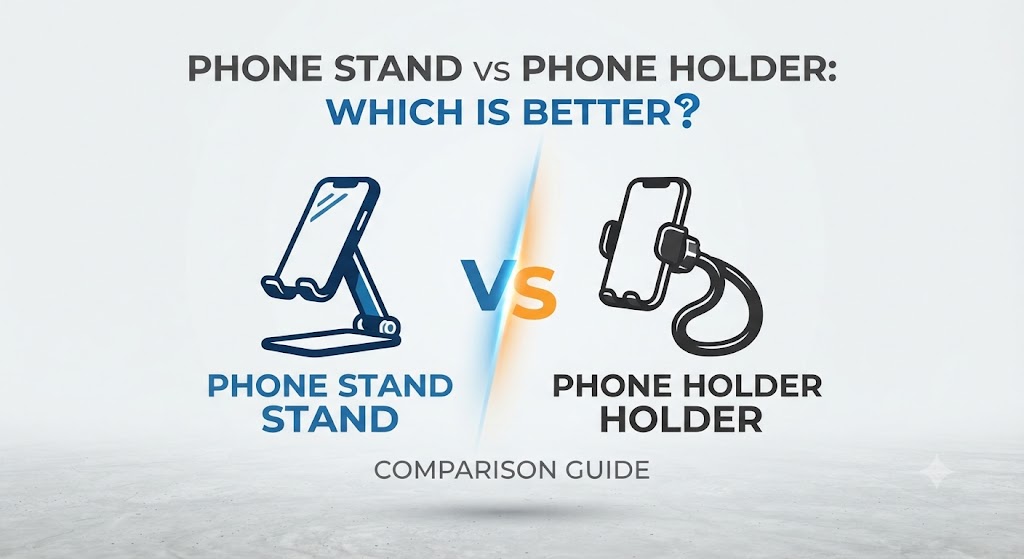
Phone Stand vs Phone Holder Introduction A phone stand and a phone holder both help keep a smartphone in a fixed position, but they are designed for different situations. A phone stand is generally used to place a phone on a desk, table, bedside surface, or other flat area. A phone holder is designed to securely hold a phone in a particular position and can be attached to places such as a car dashboard, air vent, desk, wall, or other mounting surface. The main difference is how and where the…
Read MoreAuthor: Parkhu
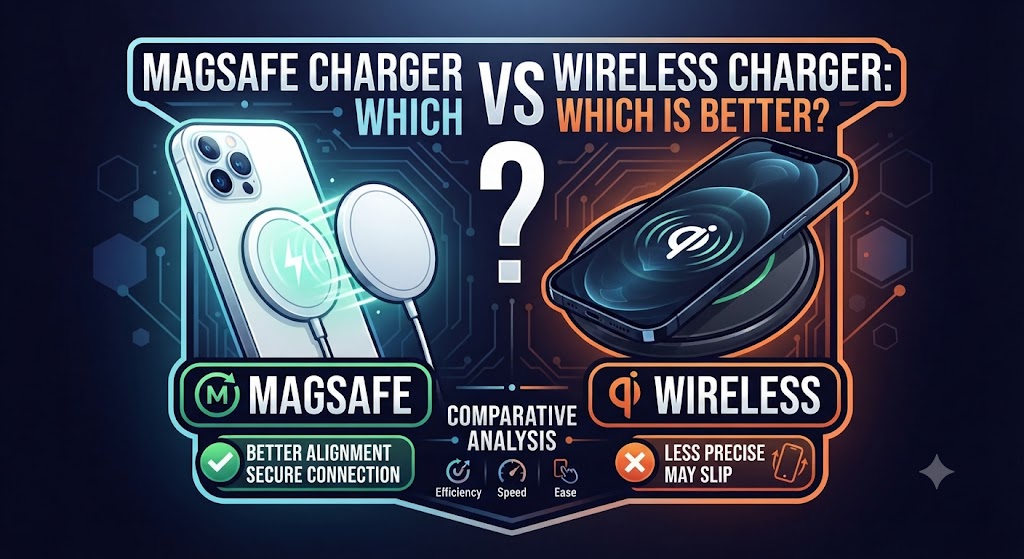
MagSafe Charger vs Wireless Charger: Which Is Better?
MagSafe Charger vs Wireless Charger MagSafe chargers and wireless chargers both allow you to charge a compatible smartphone without plugging a charging cable directly into the phone. However, they use different approaches. A standard wireless charger usually requires you to place the phone correctly on a charging pad, while a MagSafe charger uses magnets to align the charger with compatible devices. This magnetic connection can make charging more convenient, especially when you frequently pick up or move your phone while it is charging. The main difference between MagSafe and ordinary…
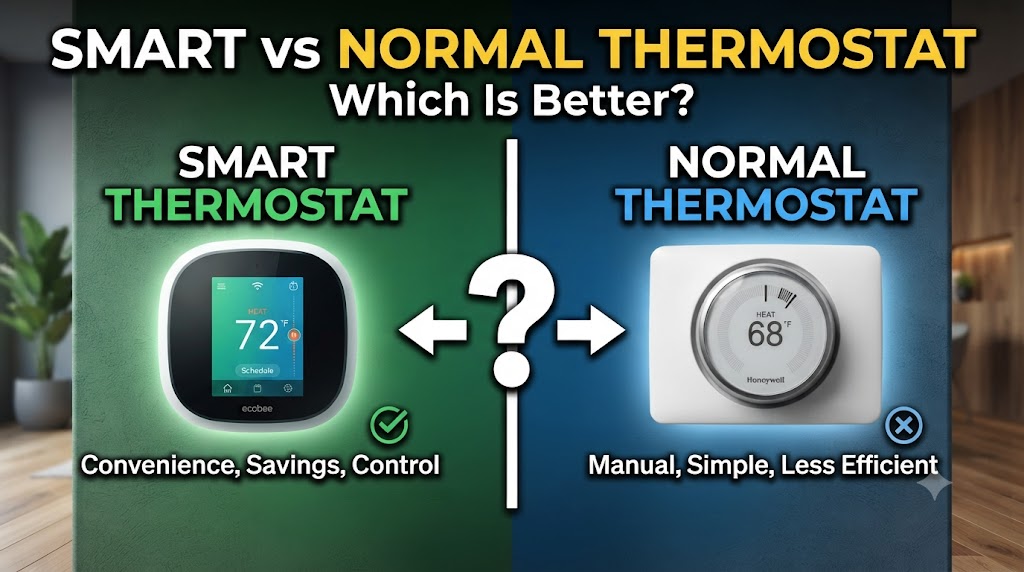
Read MoreSmart Thermostat vs Normal Thermostat: Which Is Better?
Smart Thermostat vs Normal Thermostat Introduction A thermostat controls the temperature of a heating or cooling system, but different thermostat technologies provide different levels of control. A normal thermostat generally allows users to set a desired temperature manually, while a smart thermostat can add features such as scheduling, smartphone control, learning functions, remote monitoring, and integration with compatible smart-home systems. The exact features vary between models and heating or cooling systems. Choosing between a smart thermostat and a normal thermostat depends on your comfort preferences, HVAC compatibility, installation requirements, and…
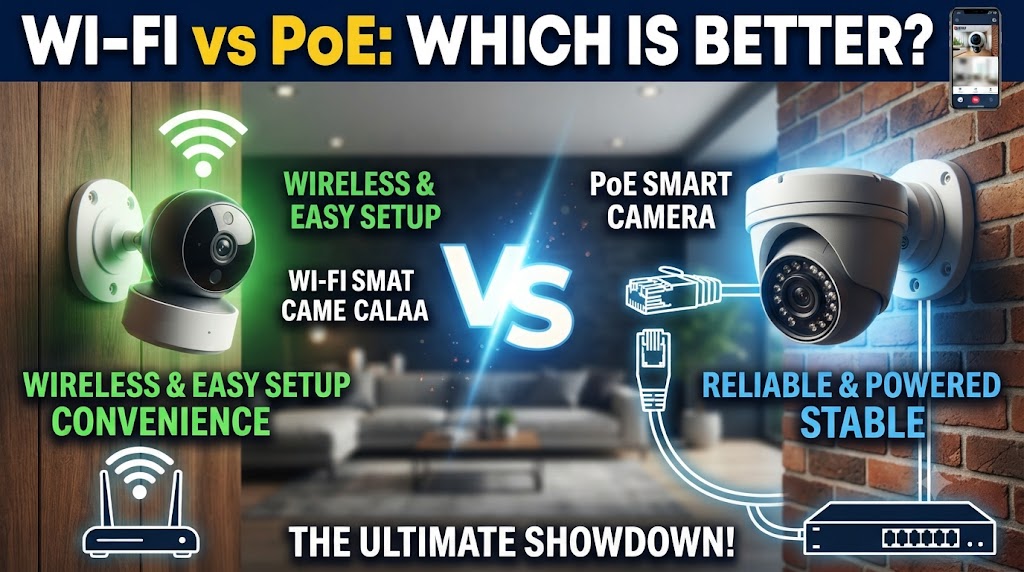
Read MoreWi-Fi Smart Camera vs PoE Smart Camera: Which Is Better?
Wi-Fi Smart Camera vs PoE Smart Camera Introduction A smart security camera can help monitor a home, office, shop, or other property, but the way the camera connects to the network can make a major difference. Wi-Fi smart cameras connect wirelessly to a network, while PoE smart cameras use an Ethernet cable to carry both network data and power. Both can provide features such as motion detection, mobile notifications, night vision, and remote viewing, depending on the model. The choice between Wi-Fi and PoE depends mainly on installation conditions, network…
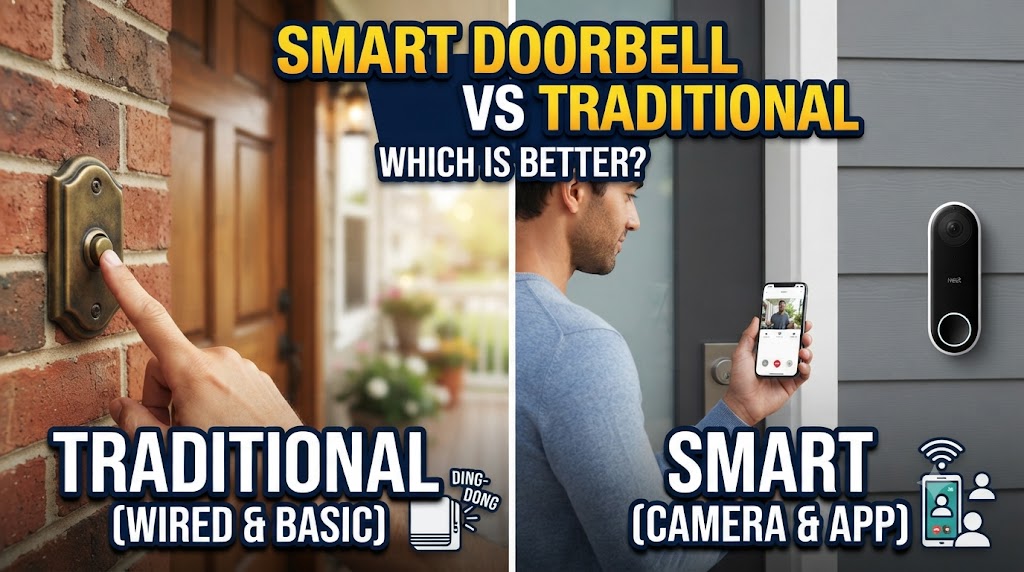
Read MoreSmart Doorbell vs Traditional Doorbell: Which Is Better?
Smart Doorbell vs Traditional Doorbell Introduction A doorbell is a simple way for visitors to let people inside the home know they have arrived. A traditional doorbell usually provides a basic audible chime when its button is pressed, while a smart doorbell can add features such as smartphone notifications, video, two-way communication, motion detection, and remote monitoring. The difference is mainly between a simple alert system and a connected device with additional functions. The better choice depends on what you expect from your doorbell. A traditional doorbell can be suitable…
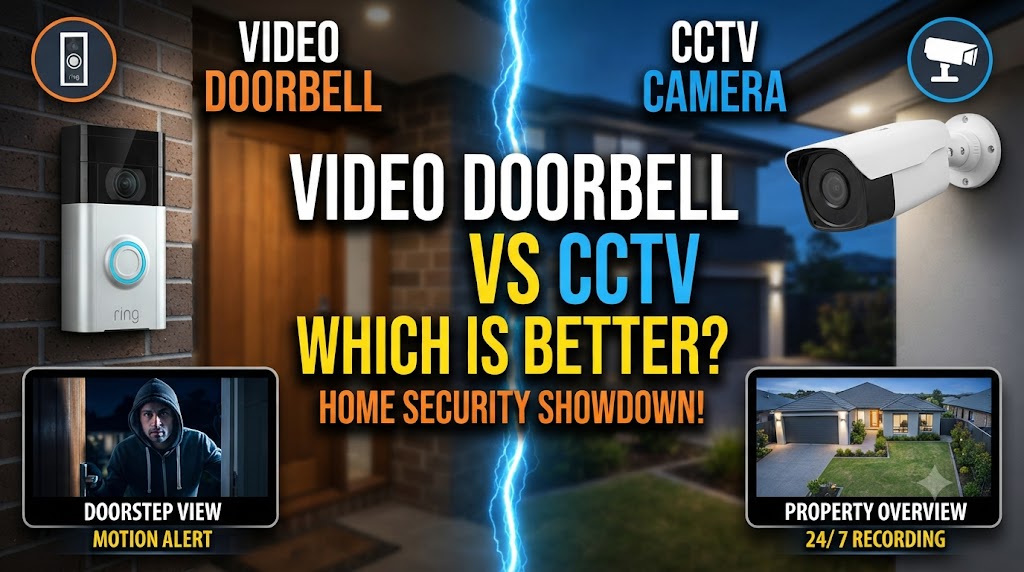
Read MoreVideo Doorbell vs CCTV Camera: Which Is Better for Home Security?
Video Doorbell vs CCTV Camera Introduction A video doorbell and a CCTV camera can both help monitor your home, but they are designed for different purposes. A video doorbell is installed near the entrance and combines a doorbell with a camera, microphone, speaker, and often motion detection. A CCTV camera is primarily designed for video surveillance and can cover areas such as entrances, driveways, gardens, parking spaces, and other parts of a property. The right choice depends on the area you want to monitor and the features you need. A…
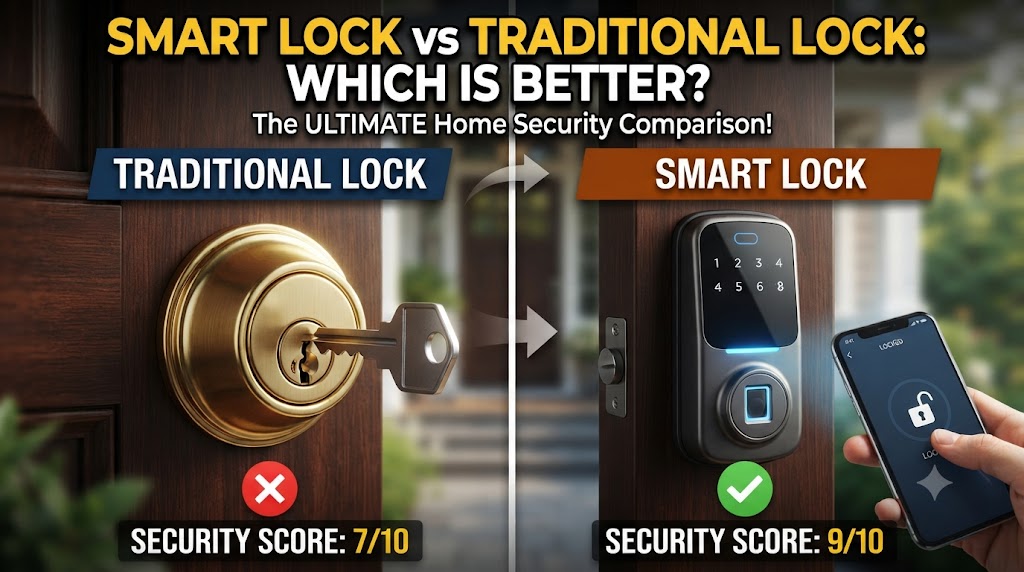
Read MoreSmart Lock vs Traditional Lock: Which Is Better for Home Security?
Smart Lock vs Traditional Lock Introduction A door lock is one of the most basic parts of home security, but the technology behind locks has changed significantly. Smart locks use electronic systems such as PIN codes, fingerprints, smartphone apps, or other access methods, while traditional locks generally use a physical key. Both can secure a home, but they differ in convenience, access control, installation, maintenance, and dependence on power or electronics. Choosing between a smart lock and a traditional lock depends on how you use your home and what you…
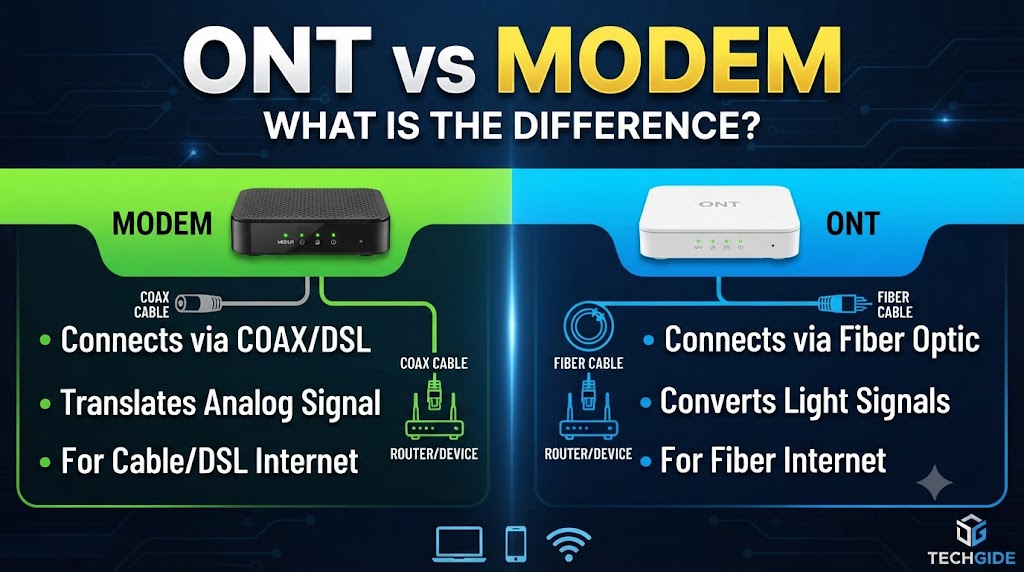
Read MoreONT vs Modem: What Is the Difference?
ONT vs Modem Introduction An ONT and a modem are both networking devices used to connect users to internet services, but they are designed for different types of connections. An ONT (Optical Network Terminal) is commonly used with fiber-optic internet to convert optical signals from the fiber network into electrical Ethernet signals. A traditional modem, depending on the type, converts signals used by technologies such as cable or DSL into a form that networking equipment can use. The main difference between an ONT and a modem is the access technology…
Read MoreFiber Internet vs 5G Internet: Which Is Better?
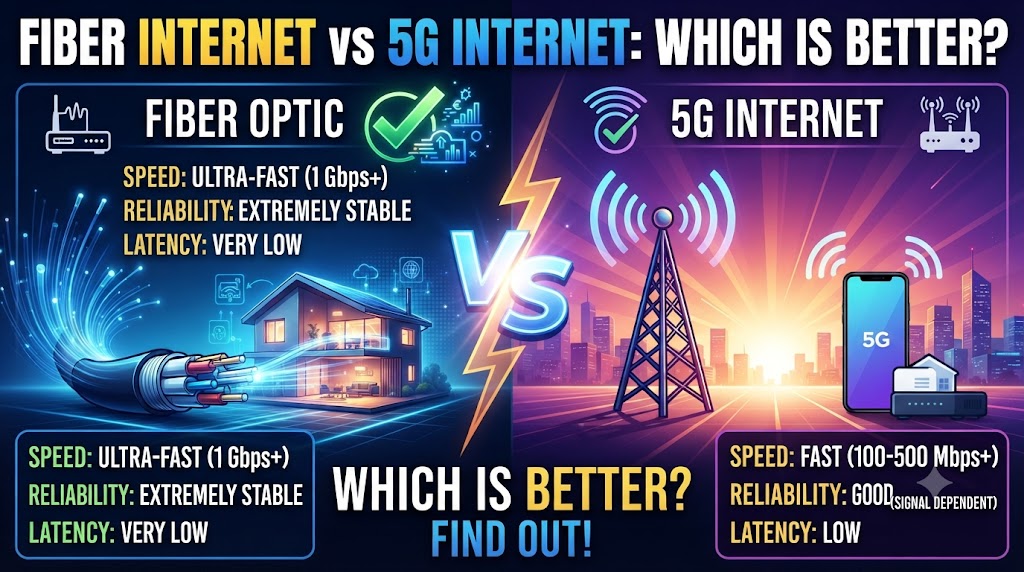
Fiber Internet vs 5G Internet Introduction Fiber Internet and 5G Internet are two modern ways to access high-speed internet, but they use very different technologies. Fiber Internet sends data through fiber-optic cables, while 5G Internet uses fifth-generation cellular wireless networks. Both can provide fast internet, but their real-world performance depends on the service provider, network infrastructure, location, congestion, and the equipment being used. The biggest difference is the connection between your home and the service provider. Fiber uses a physical cable, while 5G Internet connects wirelessly to a nearby 5G…
Read MoreFiber Internet vs Broadband: Which Is Better?
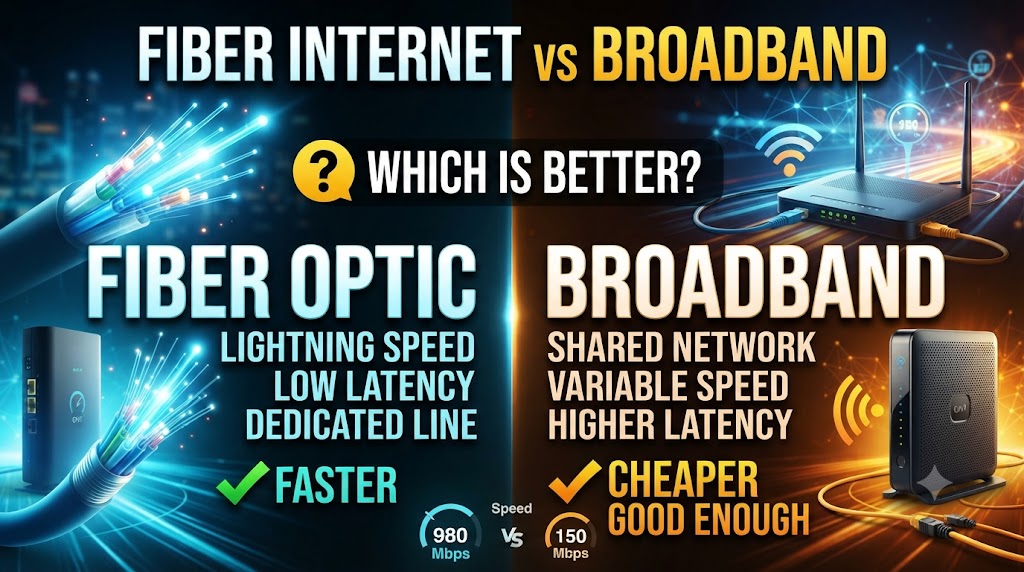
Fiber Internet vs Broadband Introduction Fiber Internet and Broadband are both used to provide internet access, but the terms do not describe exactly the same thing. Fiber Internet uses fiber-optic cables to transmit data using light, while “broadband” is a broader term for high-speed internet access that can be delivered through different technologies, including cable, DSL, fiber, fixed wireless, and other connections. This makes the comparison slightly different from comparing two completely separate technologies. For many users, the important differences are connection technology, speed, latency, reliability, upload performance, and availability.…
Read More