Induction Cooktop vs Infrared Cooktop
Introduction
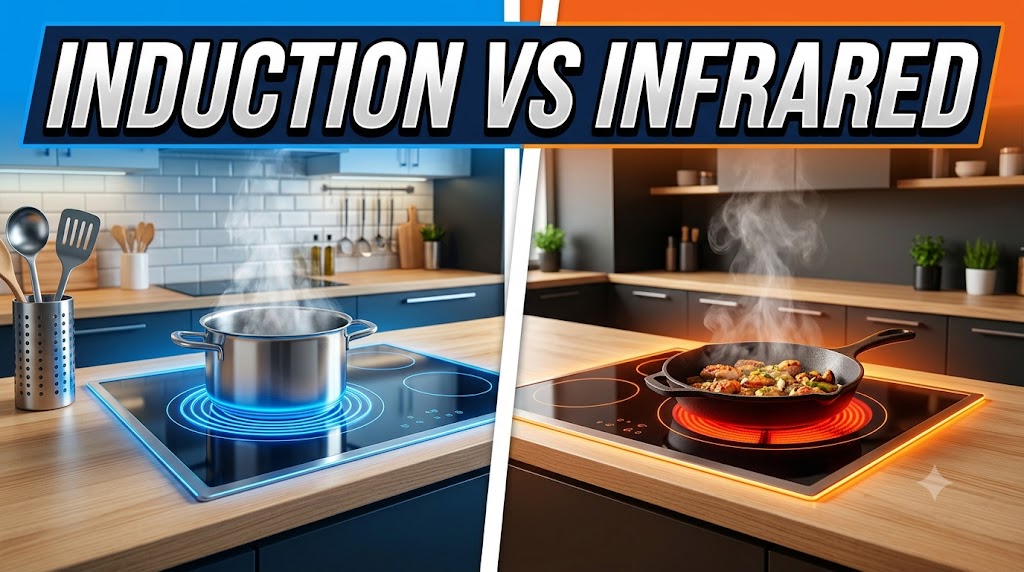
Induction cooktops and infrared cooktops are popular alternatives to gas stoves, offering electric cooking without an open gas flame. However, they use different heating technologies. An induction cooktop uses electromagnetic energy to heat compatible cookware directly, while an infrared cooktop typically uses an electric heating element beneath a heat-resistant glass surface. These differences affect heating speed, energy efficiency, cookware compatibility, surface temperature, and cleaning. Understanding how both appliances work can help you choose the right option for your kitchen, cooking habits, electricity supply, and budget.
An induction cooktop is generally known for efficient heating and quick response to power adjustments, but it requires compatible cookware. An infrared cooktop can work with a wider variety of flat-bottomed cookware, making it attractive for households that do not want to replace existing pots and pans. Both appliances depend on electricity, and their actual performance varies by model and power rating. Before buying one, compare cooking speed, operating costs, safety features, temperature control, and the type of food you prepare regularly.
Quick Comparison Table
| Feature | Induction Cooktop | Infrared Cooktop |
|---|---|---|
| Heating method | Electromagnetic heating of compatible cookware | Electric heating element transfers heat through the glass surface |
| Heating speed | Generally faster | Usually slower to heat and cool |
| Energy efficiency | Generally higher | Generally lower |
| Cookware compatibility | Requires induction-compatible cookware | Works with most heat-resistant, flat-bottomed cookware |
| Surface temperature | Heated mainly by the hot cookware | Heating surface itself becomes hot |
| Temperature adjustment | Usually responds quickly | Usually responds more slowly |
| Cleaning | Generally easy, but spills can still burn onto the surface | Easy to wipe after cooling, but spills may burn onto the hot surface |
| Electricity requirement | Requires electricity | Requires electricity |
| Purchase price | Varies by model | Varies by model |
| Best suited for | Efficient everyday cooking with compatible cookware | Flexible cookware use without an open flame |
1. Cooking Speed
Induction Cooktop
An induction cooktop generates heat directly in compatible cookware. Because less energy is lost between the heating source and the pan, it can heat food and boil water quickly. The result depends on the cooktop’s wattage, cookware quality, and selected power setting.
Infrared Cooktop
An infrared cooktop uses an electric heating element to heat the cooking surface, which then transfers heat to the cookware. This additional heating stage generally makes it slower to respond than induction. However, a powerful infrared model can still cook effectively.
Verdict: Induction generally wins for rapid heating, especially when boiling water or heating food quickly.
2. Energy Efficiency
Induction Cooktop
Induction transfers a relatively high proportion of its energy directly into compatible cookware. This reduces wasted heat around the cooking vessel and can help lower electricity consumption for the same cooking task.
Infrared Cooktop
An infrared cooktop first heats its internal element and glass surface before transferring heat to the pan. Some energy is lost to the surrounding air, and the surface may continue releasing heat after cooking stops.
Verdict: Induction generally wins on cooking energy efficiency, although actual consumption depends on the model, cookware, power level, and cooking duration.
3. Cookware Compatibility
Induction Cooktop
Induction requires cookware with a suitable magnetic base. Cast iron and many magnetic stainless-steel pans work, but ordinary aluminium, copper, and glass cookware generally will not work unless they have an induction-compatible base.
Infrared Cooktop
Infrared cooktops can work with most heat-resistant cookware that has a suitable flat base, including many aluminium, stainless-steel, glass, and ceramic pots and pans, subject to the manufacturer’s instructions.
Verdict: Infrared wins for cookware flexibility. Induction is suitable if your current cookware is compatible or you are willing to replace selected items.
4. Temperature Control
Induction Cooktop
Induction cooktops generally respond quickly when the power level is increased or reduced. Many models offer multiple power settings, timers, and preset cooking programs. This can be useful for tasks requiring rapid changes in heat.
Infrared Cooktop
Infrared cooktops also offer adjustable power or temperature settings, but the heating element and glass surface retain heat. Consequently, the cookware may continue receiving heat after you reduce the setting.
Verdict: Induction generally provides faster temperature response and more immediate control.
5. Safety
Induction Cooktop
An induction cooktop has no open flame and typically heats the cookware rather than directly heating the cooking surface. However, the surface can become hot from contact with the pan. Many models offer pan detection, overheat protection, and automatic shutoff.
Infrared Cooktop
An infrared cooktop also operates without an open flame, but its heating surface becomes hot during use and can remain hot after cooking stops. Residual heat indicators and automatic shutoff features may be available, depending on the model.
Verdict: Induction generally has an advantage because its cooking surface does not need to heat directly to generate heat in the pan. Both appliances require careful handling, especially around children.
6. Cleaning and Maintenance
Induction Cooktop
The flat glass surface is generally easy to wipe clean after it cools. Because the surface is not the primary heating element, some spills are less likely to burn onto it immediately, although heat from the cookware can still cause stubborn residue.
Infrared Cooktop
Infrared cooktops also have flat glass surfaces that are relatively easy to clean. However, spills can burn onto the hot surface, so it is important to let the cooktop cool before cleaning it.
Verdict: Induction generally has a slight advantage for everyday cleaning, but both are easier to wipe down than many traditional gas stoves.
7. Electricity Consumption and Running Cost
Induction Cooktop
Induction cooktops are generally more efficient at transferring electricity into the cookware. The total running cost depends on how much power the appliance uses, how long you cook, and your electricity tariff.
Infrared Cooktop
Infrared cooktops can draw substantial power while heating. Because heat transfer is generally less efficient, they may consume more electricity than induction for an equivalent cooking task, although the difference varies.
Verdict: Induction generally offers lower electricity use for comparable cooking tasks. Check the rated wattage and consider the actual time needed to prepare your usual meals.
8. Price and Long-Term Value
Induction Cooktop
The price of an induction cooktop depends on its power rating, brand, controls, safety features, and build quality. You may also need compatible cookware if your existing pans do not work with induction.
Infrared Cooktop
Infrared cooktops are available in a range of prices and may be attractive when cookware flexibility is important. You can often continue using compatible heat-resistant cookware you already own.
Verdict: Neither option is always cheaper overall. Include the cost of new cookware, electricity use, and expected lifespan when comparing value.
9. Which Cooktop Is Better for Different Households?
- Daily cooking: Induction is generally a strong choice when you want efficient heating and quick control.
- Existing non-magnetic cookware: Infrared may be more convenient because it supports a wider range of cookware.
- Frequent boiling and quick meals: Induction generally offers faster heating.
- Cooking that requires retained heat: Infrared’s hot surface retains heat after the power is reduced, which may be useful for some cooking tasks but requires care.
- Homes with children: Both are flameless, but induction generally reduces direct heating of the cooking surface. Neither should be treated as burn-proof.
- Budget-conscious buyers: Compare the appliance price and any cookware replacement costs before deciding.
Final Verdict: Induction Cooktop vs Infrared Cooktop
An induction cooktop is generally better for energy efficiency, fast heating, responsive temperature control, and reducing residual surface heat. It is a strong choice for frequent cooking when you have compatible cookware.
An infrared cooktop is generally better for cookware compatibility because it can work with many pots and pans that are unsuitable for induction. It is a practical alternative if you want electric cooking without replacing your existing cookware.
Overall, choose induction if efficient everyday cooking is your priority. Choose infrared if cookware flexibility matters more. Before purchasing, compare the power rating, safety features, warranty, and suitability for your regular cooking needs.
Disclaimer
Cooking speed, power consumption, prices, features, and performance vary by manufacturer and model. The energy-efficiency comparison is a general guideline and does not guarantee a specific electricity saving. Follow the manufacturer’s instructions for compatible cookware, installation, cleaning, and safe operation.