Built-In Hob vs Freestanding Gas Stove
Introduction
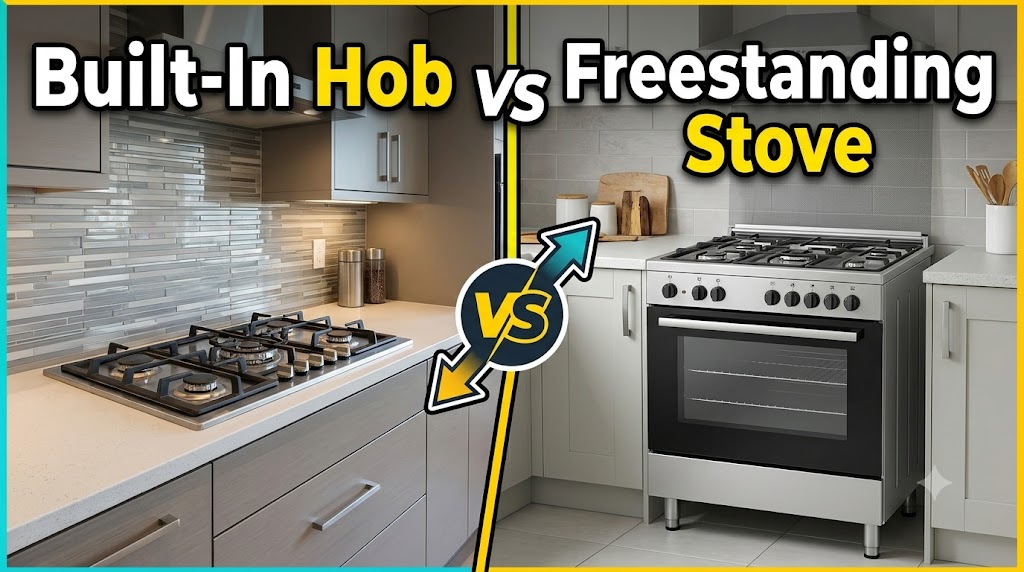
A built-in hob and a freestanding gas stove are two popular choices for home kitchens, but they differ in installation, design, cleaning, and flexibility. A built-in hob is fitted into a countertop, creating a streamlined appearance that works well in modular kitchens. A freestanding gas stove is a separate appliance that can generally be placed on a suitable counter or kitchen platform without cutting an opening into it. Both can provide effective gas cooking, but the right choice depends on your kitchen layout, budget, cooking habits, and installation requirements.
A built-in hob may appeal to homeowners who want a modern kitchen design and an integrated cooking area. Many models feature glass or stainless-steel surfaces, multiple burners, and integrated controls. A freestanding gas stove is often more practical for households that want straightforward installation, easier replacement, or the flexibility to rearrange their kitchen setup. Neither option is automatically better for cooking performance because burner output and build quality vary by model. Comparing installation costs, safety, cleaning, maintenance, and long-term value will help you make an informed decision.
Quick Comparison Table
| Feature | Built-In Hob | Freestanding Gas Stove |
|---|---|---|
| Installation | Fitted into a countertop cutout | Placed on a suitable kitchen platform |
| Appearance | Integrated, modern look | Separate appliance |
| Countertop modification | Usually required | Usually not required |
| Portability | Difficult to move after installation | Generally easier to move |
| Cleaning | Integrated design can simplify countertop cleaning, but edges need care | Accessible appliance; food can collect underneath |
| Initial cost | Often higher when installation is included | Available in many budget ranges |
| Burner options | Varies by model | Varies by model |
| Repair access | May require removal from the countertop | Usually easier to access from the outside |
| Replacement | Must match the cutout and installation requirements | Generally more straightforward |
| Best suited for | Modular kitchens and permanent installations | Flexible, budget-conscious kitchen setups |
1. Design and Kitchen Appearance
Built-In Hob
A built-in hob sits inside a cutout in the countertop, leaving its cooking surface level with or slightly above the surrounding worktop. This creates a clean, integrated appearance that is popular in modular kitchens. Glass-top and stainless-steel designs are commonly available.
Freestanding Gas Stove
A freestanding gas stove sits on top of the kitchen platform as a separate unit. It may not look as integrated as a built-in hob, but modern models are available in attractive designs and finishes.
Verdict: A built-in hob generally wins if you want a seamless, modern kitchen appearance. A freestanding stove is still a practical and visually appealing option.
2. Installation Requirements
Built-In Hob
A built-in hob usually requires a correctly sized opening in the countertop, appropriate clearance, and a safe gas connection. Installation must follow the manufacturer’s instructions, including ventilation and heat-clearance requirements. Professional installation is advisable.
Freestanding Gas Stove
A freestanding stove usually needs a level, heat-resistant platform and a suitable gas connection. It typically does not require a countertop cutout, making installation simpler when the kitchen is already complete.
Verdict: A freestanding gas stove generally wins for easier installation. A built-in hob requires more planning and preparation.
3. Cooking Performance and Burner Options
Built-In Hob
Built-in hobs are available with different burner counts, layouts, and heat outputs. Some include high-power burners designed for rapid heating, while others focus on everyday cooking. Actual performance depends on the specific model.
Freestanding Gas Stove
Freestanding stoves also offer different burner sizes and heat outputs. They can support a wide range of cooking tasks, from simmering to high-heat cooking, depending on the burner’s design.
Verdict: There is no universal winner. Compare burner power, flame adjustment, spacing, and pan support rather than assuming a built-in hob cooks better.
4. Cleaning and Maintenance
Built-In Hob
A built-in hob can make the surrounding countertop easier to wipe because the appliance is integrated into the work surface. However, food and grease can collect around the edges, and glass surfaces need appropriate cleaning products to prevent scratches or damage.
Freestanding Gas Stove
A freestanding stove can usually be lifted or moved for cleaning when the gas connection has been safely disconnected by a qualified person. However, spills and grease may collect underneath the appliance and around its base.
Verdict: A built-in hob can offer a cleaner countertop appearance, while a freestanding stove may be easier to access for certain maintenance tasks. Cleaning convenience depends on the design.
5. Safety
Built-In Hob
A built-in hob must be installed securely with the correct countertop clearances, heat-resistant materials, and a safe gas connection. Some models include flame-failure protection, which shuts off the gas if the flame goes out, but this feature is not universal.
Freestanding Gas Stove
A freestanding stove also requires a secure gas connection, stable placement, adequate ventilation, and safe clearance from combustible materials. Flame-failure protection may be available on selected models.
Verdict: Neither type is inherently safer in every situation. Correct installation, ventilation, gas-leak prevention, and available safety features are the most important factors.
6. Price and Installation Cost
Built-In Hob
The purchase price of a built-in hob may be higher than that of a basic freestanding stove. You may also need to pay for countertop cutting, installation, and any required changes to the kitchen cabinetry or gas connection.
Freestanding Gas Stove
Freestanding stoves are available across a broad range of budgets. Because they generally require less countertop modification, the total initial installation cost may be lower.
Verdict: A freestanding gas stove is often more economical upfront, especially when the kitchen is already built. Compare the complete installed cost of each option.
7. Repairs and Replacement
Built-In Hob
A built-in hob may require partial removal from the countertop for certain repairs. Replacing it can be more complicated if the new model has different dimensions or requires a different cutout.
Freestanding Gas Stove
A freestanding stove is generally easier to access and replace because it is not fixed into the countertop. However, repair difficulty still depends on the appliance’s construction and the availability of spare parts.
Verdict: A freestanding stove generally offers greater flexibility for replacement and access, although serviceability varies by model.
8. Space and Kitchen Layout
Built-In Hob
A built-in hob can help create an organised cooking area and may work well with separate built-in ovens or dedicated countertop storage. The final layout must allow adequate ventilation, clearance, and safe access to the controls.
Freestanding Gas Stove
A freestanding stove uses countertop space but can be a good choice in kitchens where cabinetry changes are not practical. It is also useful for households that may rearrange appliances in the future.
Verdict: A built-in hob is well suited to planned modular kitchens, while a freestanding stove is more flexible for existing or frequently changing layouts.
9. Which Option Is Better for Different Homes?
- New modular kitchen: A built-in hob is a strong choice if you want an integrated finish and can plan the countertop around it.
- Existing kitchen: A freestanding stove is often simpler because it usually does not require cutting the countertop.
- Rental home: A freestanding stove is generally more practical because it can be easier to move when relocating.
- Budget-conscious household: A freestanding stove may reduce the initial appliance and installation expenses.
- Premium kitchen design: A built-in hob can complement modern countertops and integrated appliances.
- Household that expects frequent replacement: A freestanding stove usually offers more flexibility.
Final Verdict: Built-In Hob vs Freestanding Gas Stove
A built-in hob is generally better for a modern, integrated kitchen design. It can create a streamlined cooking area and work well with planned cabinetry, but it requires suitable countertop preparation and may cost more to install.
A freestanding gas stove is generally better for affordability, simpler installation, and flexibility. It is particularly practical for existing kitchens, rental homes, and households that do not want to modify the countertop.
Overall, choose a built-in hob if appearance and a permanent modular-kitchen setup are your priorities. Choose a freestanding stove if you value easier installation, lower upfront costs, and simpler replacement.
Disclaimer
Prices, burner performance, safety features, dimensions, and warranty terms vary by manufacturer and model. Installation requirements depend on the countertop material, kitchen layout, and gas supply. Follow the manufacturer’s instructions and use a qualified professional for gas connections and built-in installation.