Air Fryer vs Deep Fryer
Introduction
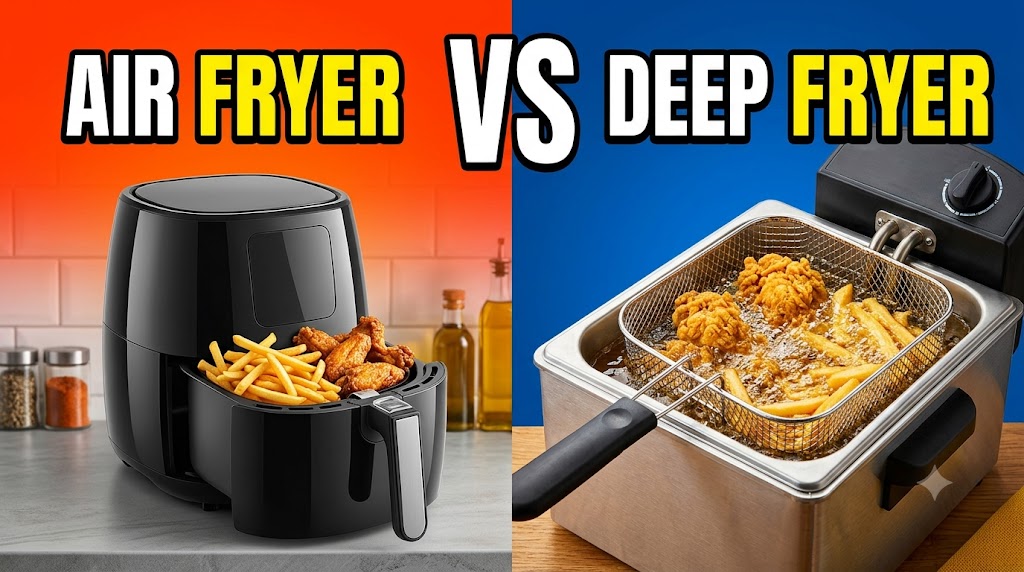
An air fryer and a deep fryer are kitchen appliances used to prepare foods such as fries, snacks, and other fried-style dishes, but they use different cooking methods. An air fryer circulates hot air around food to cook and brown its surface, often using little or no added oil. A deep fryer cooks food by immersing it in hot oil, producing the familiar texture and taste of traditionally deep-fried foods. Both appliances can be useful in a home kitchen, but the results, cooking process, and maintenance requirements differ significantly.
Choosing between an air fryer and a deep fryer depends on your food preferences, cooking frequency, health goals, budget, and willingness to handle cooking oil. An air fryer is generally convenient for preparing smaller portions with less added oil and avoiding a container full of hot oil. A deep fryer may be preferable when you want the characteristic texture of deep-fried foods. Capacity, temperature control, cleaning, and electricity consumption are also worth considering. Understanding these differences will help you choose an appliance that matches your cooking habits.
Quick Comparison Table
| Feature | Air Fryer | Deep Fryer |
|---|---|---|
| Cooking method | Circulating hot air | Food immersed in hot oil |
| Added oil | Often little or none | Requires a substantial quantity of oil |
| Food texture | Can produce a crisp surface | Often produces traditional deep-fried texture |
| Taste | May differ from deep-fried food | Traditional fried-food flavour |
| Cooking speed | Often convenient for small portions | Can cook some foods quickly once oil is hot |
| Cleaning | Basket and tray need cleaning | Oil container and accessories need cleaning |
| Oil disposal | Usually minimal used cooking oil | Used oil must be stored and disposed of appropriately |
| Safety concerns | Hot surfaces and air outlet | Hot oil and potential splashing |
| Energy consumption | Depends on power and cooking time | Depends on heater power, oil volume, and cooking time |
| Best suited for | Lower-oil cooking at home | Traditional deep-frying |
1. Cooking Method
Air Fryer
An air fryer uses a heating element and fan to circulate hot air around food. This helps cook and brown the surface, particularly when food is arranged with enough space for airflow. Some recipes benefit from a light coating of oil, although many foods can be cooked without adding any.
Deep Fryer
A deep fryer heats cooking oil and immerses the food in it. The hot oil transfers heat efficiently to the food’s surface, helping create the familiar texture associated with deep frying.
Winner: Depends on your preference. An air fryer suits hot-air cooking, while a deep fryer provides traditional oil frying.
2. Taste and Texture
Air fryers can produce crisp fries, vegetables, and breaded snacks, but their texture may differ from foods cooked in hot oil. Results depend on the recipe, moisture content, food preparation, and cooking settings.
Deep fryers often produce the characteristic flavour and texture of traditionally fried foods because the food is surrounded by hot oil during cooking.
Winner: Deep fryer for traditional deep-fried taste and texture; air fryer for many crispy foods with less added oil.
3. Oil Usage
An air fryer usually needs little or no added oil, depending on the food and recipe. Frozen products that already contain oil may not require additional oil at all.
A deep fryer requires enough oil to immerse the food properly. Oil can sometimes be filtered and reused according to food-safety guidance and the manufacturer’s instructions, but it eventually needs replacement.
Winner: Air fryer.
4. Health Considerations
Air frying can reduce the amount of added oil used in preparing many foods compared with deep frying. This may reduce the fat and calorie content of a dish, although the actual difference depends on the ingredients and cooking process.
Deep-fried foods generally absorb some oil during cooking. The amount varies with food type, coating, temperature, and cooking time. Neither appliance automatically makes every meal healthy; food choices and portion sizes remain important.
Winner: Air fryer when the goal is to reduce added oil in comparable recipes.
5. Cooking Speed
An air fryer often heats up quickly and is convenient for small portions. However, overcrowding the basket can reduce airflow and make cooking slower or less even.
A deep fryer may cook some foods quickly once the oil reaches the required temperature. However, heating the oil takes time, and adding too much cold food can lower its temperature and affect the results.
Winner: Depends on the food, portion size, preheating time, and appliance capacity.
6. Capacity and Batch Cooking
Air fryers come in different sizes, but smaller baskets may require food to be cooked in multiple batches when preparing meals for a family.
Deep fryers also vary in capacity. They can be convenient for foods that need to be fully immersed in oil, but larger batches require enough oil and adequate heating capacity to maintain the cooking temperature.
Winner: Depends on the capacity and quantity of food. Compare usable cooking space and recommended batch sizes before buying.
7. Cleaning and Maintenance
Air fryers typically have a removable basket or tray that can be cleaned after cooking. Regular cleaning helps remove grease and food residue, and non-stick coatings should be handled according to the manufacturer’s instructions.
Deep fryers require more attention to oil management. Depending on the model, cleaning may involve filtering or removing oil, cleaning the frying basket, and maintaining the oil container and heating components according to the instructions.
Winner: Air fryer for most routine household cooking.
8. Safety
Air fryers have hot surfaces and release hot air during operation. They should be placed on a suitable heat-resistant surface with adequate ventilation, following the manufacturer’s clearance instructions.
Deep fryers present additional risks because hot oil can cause serious burns if spilled or splashed. Overfilling, adding wet food, and allowing oil to overheat can increase hazards. Never add water to hot oil or leave a deep fryer unattended while operating.
Winner: Air fryer generally avoids the additional risks associated with handling a large quantity of hot oil.
9. Electricity Consumption and Running Costs
Both appliances use electricity, but their total energy consumption depends on rated power, cooking time, preheating, and the amount of food prepared.
An air fryer may use less energy for small portions because its cooking chamber is compact. A deep fryer must heat its oil before cooking, but actual energy use varies by model and batch size. Deep frying also involves the ongoing cost of cooking oil.
Winner: An air fryer may offer lower overall running costs when it substantially reduces oil use and suits the portion size, but the exact difference depends on usage.
10. Price and Value for Money
The purchase price of both appliances depends on capacity, construction, temperature controls, safety features, and brand. A basic model of either type may be affordable, while larger or more advanced appliances can cost more.
When comparing value, consider not only the initial price but also cooking oil, cleaning supplies, electricity, and how often you will use the appliance.
Winner: Depends on the specific models and long-term usage. An air fryer may offer better value for households prioritising lower-oil cooking.
Which One Should You Choose?
| Your requirement | Better choice |
|---|---|
| Cooking with little or no added oil | Air fryer |
| Traditional deep-fried texture | Deep fryer |
| Crispy fries and snacks with less added oil | Air fryer |
| Preparing foods that need immersion in oil | Deep fryer |
| Avoiding large quantities of hot oil | Air fryer |
| Easier routine cleaning | Air fryer |
| Reducing used cooking oil | Air fryer |
| Occasional home cooking | Depends on your preferred foods |
Conclusion
An air fryer is generally the better choice for households that want crispy foods with less added oil, simpler oil management, and convenient everyday cooking. A deep fryer is more suitable when traditional deep-fried flavour and texture are the priority. Both appliances can produce enjoyable meals, but they differ in oil usage, safety considerations, cleaning, and running costs. Before purchasing, consider the foods you cook most often, your household’s portion sizes, and the manufacturer’s capacity and safety recommendations.
Frequently Asked Questions
1. Is an air fryer healthier than a deep fryer?
An air fryer can reduce the amount of added oil used in many recipes. This may lower the fat and calorie content compared with deep-frying the same food, although the actual result depends on ingredients and preparation.
2. Does an air fryer taste the same as a deep fryer?
Not always. An air fryer can make food crispy, but deep frying often creates a different texture and flavour because the food is immersed in hot oil.
3. Can an air fryer cook frozen French fries?
Yes. Many frozen French fries can be cooked in an air fryer. Follow the product instructions and the appliance’s recommended temperature and cooking time.
4. Does a deep fryer use more oil than an air fryer?
Yes, a deep fryer requires enough oil to immerse the food, while an air fryer generally needs little or no additional oil.
5. Which appliance is easier to clean?
An air fryer is generally easier to clean because it usually has a removable basket or tray. Deep fryers require additional oil handling and maintenance.
6. Which appliance uses less electricity?
An air fryer may use less electricity for small portions, but actual consumption depends on power rating, preheating, cooking time, and batch size.
7. Can an air fryer completely replace a deep fryer?
An air fryer can replace a deep fryer for many everyday recipes, but it may not reproduce the exact texture and taste of traditionally deep-fried food.
Disclaimer
Cooking results, capacity, power ratings, and prices vary by model and may change over time. Follow the manufacturer’s operating and cleaning instructions, and handle hot oil carefully when using a deep fryer.