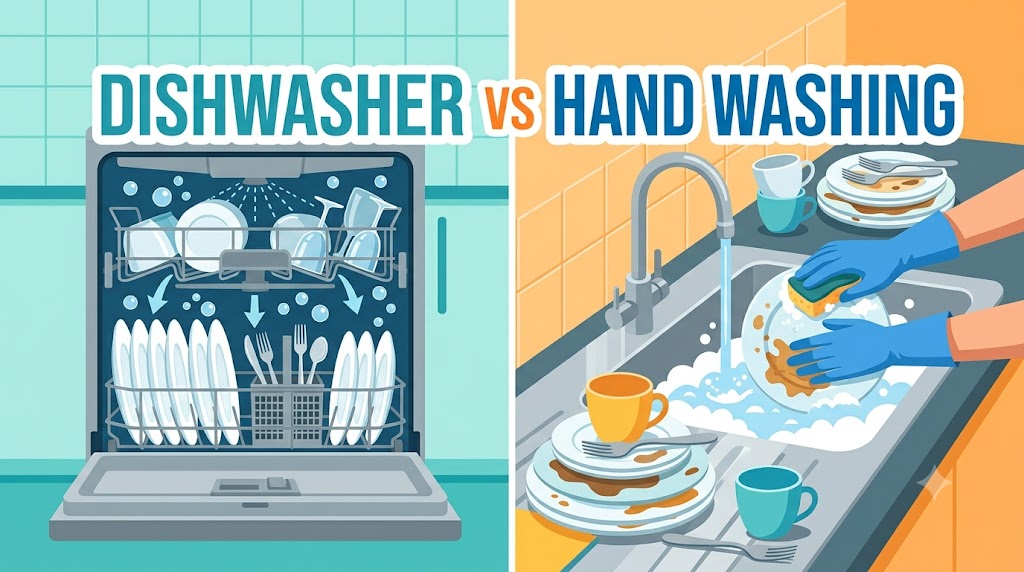
Dishwasher vs Hand Washing
Introduction
A dishwasher and hand washing are two common ways to clean dishes at home, but they differ in convenience, water usage, energy consumption, and effort. A dishwasher automatically washes dishes using water, detergent, and a programmed cleaning cycle. Hand washing requires you to clean utensils manually using a sink, water, dishwashing liquid, and a sponge or brush. Both methods can clean plates, glasses, cookware, and cutlery when used properly. The better option depends on your household size, the number of dishes you wash daily, your kitchen space, and your budget.
Before choosing between a dishwasher and hand washing, consider the purchase cost, ongoing expenses, available water supply, electricity costs, and time spent cleaning. A dishwasher can reduce repetitive work and may use less water than running a tap continuously, particularly when fully loaded and operated efficiently. Hand washing avoids the initial cost of buying an appliance and can be practical for small households with fewer dishes. However, water and energy use vary considerably depending on washing habits and appliance efficiency. Understanding these differences helps you select the method that suits your household.
Quick Comparison Table
| Feature | Dishwasher | Hand Washing |
|---|---|---|
| Cleaning method | Automated washing cycles | Manual cleaning |
| Initial cost | Requires appliance purchase and installation | No appliance purchase required |
| Water usage | Often lower with efficient, full-load cycles | Depends on tap flow and washing technique |
| Electricity usage | Uses electricity for operation and sometimes heating water | Depends on whether hot water is used and how it is heated |
| Time and effort | Less active work | Requires manual scrubbing and rinsing |
| Large quantities of dishes | Convenient for suitable loads | Can require considerable time |
| Small quantities of dishes | May be inefficient if run partially loaded | Often practical |
| Hygiene | High-temperature cycles can help sanitise suitable items | Depends on water temperature, detergent, and technique |
| Drying | Many models offer heated or other drying options | Usually requires air drying or towel drying |
| Kitchen space | Requires suitable space and plumbing | Requires a sink and washing area |
| Best suited for | Busy households with regular dishwashing loads | Small households or people washing fewer dishes |
1. Cleaning Performance
Dishwasher
A dishwasher sprays water mixed with detergent over dishes during a programmed cycle. Water temperature, spray pressure, detergent, and cycle duration help remove food residue and grease. Loading dishes correctly is important because blocked spray arms and overcrowding can reduce cleaning performance.
Hand Washing
Hand washing allows you to focus directly on individual dishes, including heavily soiled pans and utensils that may not fit comfortably in a dishwasher. Effective cleaning requires suitable detergent, proper scrubbing, and thorough rinsing when necessary.
Winner: Both can clean dishes effectively when used correctly. A dishwasher offers consistent automated cleaning, while hand washing provides direct control over individual items.
2. Water Consumption
An efficient dishwasher can use less water than hand washing, especially when it is run with a full load and the correct cycle. Actual consumption depends on the model, programme, and how often the appliance is operated.
Hand washing can use relatively little water if you fill a basin or use a controlled rinse. However, leaving the tap running throughout washing can increase water consumption considerably.
Winner: A dishwasher often has an advantage over running-tap hand washing, but efficient manual washing can also conserve water.
3. Electricity Consumption
Dishwashers use electricity to operate pumps, controls, and sometimes heating and drying systems. Energy use varies according to the appliance’s efficiency, programme, water temperature, and drying settings.
Hand washing usually avoids using a dishwasher, but heating water with an electric geyser or other appliance also consumes energy. If cold water is sufficient for the task, the electricity requirement may be lower.
Winner: Depends on the method of heating water and the dishwasher’s efficiency. Compare total household energy use rather than considering the dishwasher alone.
4. Time and Convenience
A dishwasher reduces the amount of active work involved in cleaning a large quantity of dishes. You generally need to remove food scraps, load the racks, add detergent, select a programme, and unload the clean dishes later.
Hand washing requires you to scrub, rinse, and organise each item yourself. It may be quicker for a few cups or plates, but washing a large pile of dishes can take considerable time.
Winner: Dishwasher for reducing repetitive work and handling large loads; hand washing for a few dishes that need immediate cleaning.
5. Hygiene and Sanitisation
Dishwashers can use relatively high water temperatures during suitable cycles, helping remove food residue and reduce microorganisms. Some models include sanitising programmes, but the actual performance depends on the cycle and appliance specifications.
Hand washing can also clean dishes effectively when you use appropriate detergent, clean water, and proper technique. Ordinary hand washing should not automatically be considered equivalent to a dishwasher’s validated sanitising cycle.
Winner: A dishwasher with a suitable high-temperature or sanitising cycle may offer an advantage when sanitisation is important.
6. Cost and Budget
Buying a dishwasher requires an upfront investment, and installation may involve plumbing or electrical work. Ongoing costs include electricity, water, detergent, maintenance, and possible repairs.
Hand washing does not require purchasing a dishwasher. However, households still pay for water, dishwashing liquid, sponges or brushes, and any energy used to heat water.
Winner: Hand washing for lower initial cost. A dishwasher may provide better value for households that prioritise convenience and regularly wash large loads.
7. Cleaning Cookware and Delicate Items
Many plates, bowls, glasses, and dishwasher-safe utensils can be cleaned in a dishwasher. However, some non-stick cookware, wooden utensils, delicate glassware, and items made from particular materials may require special care. Always check the manufacturer’s instructions.
Hand washing gives you more control over delicate items and lets you clean cookware that is unsuitable for a dishwasher. It can also be convenient for large pots and pans that do not fit into the machine.
Winner: Hand washing for delicate, oversized, or non-dishwasher-safe items; a dishwasher for compatible everyday dishes.
8. Drying and Storage
Many dishwashers include drying functions that help prepare dishes for storage. Results vary by model, programme, and the material and shape of the items. Plastic containers may retain moisture more readily than glass or ceramic items.
After hand washing, dishes can be placed on a draining rack or dried with a clean towel. This requires additional handling and space, but it avoids relying on a machine’s drying cycle.
Winner: Dishwasher for automated washing and drying convenience, although some items may still need air drying.
9. Environmental Impact
Environmental impact depends on water consumption, electricity generation, detergent, appliance manufacturing, and how long the equipment is used. An efficient dishwasher operated with full loads can reduce water consumption compared with wasteful hand washing.
Hand washing can also be resource-efficient when water is managed carefully and hot water is used only when necessary. Neither method is automatically more environmentally friendly in every household.
Winner: An efficient, fully loaded dishwasher often performs well on water use, while the overall environmental comparison depends on local conditions and usage.
10. Which Is Better for Your Home?
| Your requirement | Better choice |
|---|---|
| Cleaning many dishes every day | Dishwasher |
| Avoiding the upfront appliance cost | Hand washing |
| Reducing active cleaning time | Dishwasher |
| Washing a few dishes immediately | Hand washing |
| Conserving water compared with a continuously running tap | Efficient dishwasher |
| Cleaning delicate or unsuitable cookware | Hand washing |
| Automated washing and drying | Dishwasher |
| A small kitchen without installation space | Hand washing |
| Reducing manual work in a busy household | Dishwasher |
Conclusion
A dishwasher is generally the better choice for busy households that regularly wash large quantities of dishes and want to reduce manual work. An efficient model can also save water compared with hand washing under wasteful running-tap conditions. Hand washing remains practical for small households, a few dishes, delicate utensils, and homes where buying or installing a dishwasher is not worthwhile. Before deciding, compare your daily dishwashing volume, available kitchen space, utility costs, and the total cost of ownership. The most suitable option is the one that fits your routine and uses resources responsibly.
Frequently Asked Questions
1. Is a dishwasher better than hand washing?
A dishwasher is often more convenient for large loads and can use less water than washing dishes under a continuously running tap. Hand washing may be more practical for small quantities.
2. Does a dishwasher use less water than hand washing?
An efficient dishwasher used with a full load often uses less water than running-tap hand washing. Actual results depend on the appliance and manual washing technique.
3. Is a dishwasher more hygienic than hand washing?
A dishwasher with an appropriate high-temperature cycle can help reduce microorganisms. Proper hand washing also cleans dishes effectively, but sanitisation depends on the washing method and conditions.
4. Is a dishwasher expensive to run?
Running costs include electricity, water, detergent, and maintenance. The total depends on the model, selected cycles, utility rates, and how frequently it is used.
5. Can all utensils be washed in a dishwasher?
No. Some wooden items, delicate glassware, certain non-stick cookware, and utensils made from particular materials may not be dishwasher-safe. Follow the manufacturer’s care instructions.
6. Is hand washing better for a small family?
Hand washing can be practical for a small family that produces relatively few dirty dishes. A dishwasher may still be worthwhile if the family values convenience or generates enough dishes for regular full loads.
7. Should I rinse dishes before putting them in a dishwasher?
Usually, scraping off leftover food is sufficient. Many modern dishwashers are designed to handle remaining food residue, and extensive pre-rinsing may waste water. Follow the instructions for your particular appliance and detergent.
Disclaimer
Water and electricity consumption, cleaning performance, sanitising capabilities, and prices vary by dishwasher model and household washing habits. Check the manufacturer’s specifications and care instructions before purchasing or operating an appliance.