Fan Heater vs Oil-Filled Radiator
Introduction
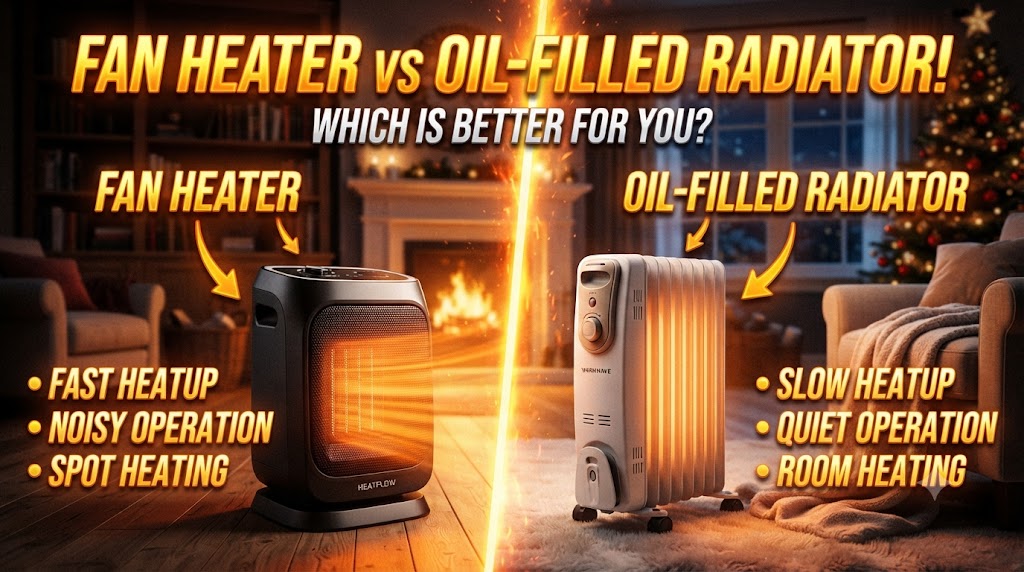
Fan heaters and oil-filled radiators are two popular electric heating appliances used to keep homes warm during winter. Both generate heat using electricity, but their heating methods are different. A fan heater uses an electric heating element and a fan to blow warm air into the room, while an oil-filled radiator heats sealed oil inside its metal body and gradually releases warmth into the surrounding air. These differences affect heating speed, noise, comfort, electricity consumption and portability.
Choosing between a fan heater and an oil-filled radiator depends on your room size, heating requirements, usage duration and budget. A fan heater is generally suitable for quick heating in smaller spaces, while an oil-filled radiator is more suitable for maintaining steady warmth over longer periods. Understanding their features can help you choose the right heating appliance for your home.
Fan Heater vs Oil-Filled Radiator: Quick Comparison Table
| Features | Fan Heater | Oil-Filled Radiator |
|---|---|---|
| Heating Technology | Electric heating element with fan | Electrically heated sealed oil |
| Heating Method | Forced hot air | Radiation and natural convection |
| Heating Speed | Fast | Slower |
| Heat Distribution | Blows warm air | Gradually warms the room |
| Warmth Retention | Stops quickly after switching off | Retains heat for longer |
| Noise Level | Produces fan noise | Generally quiet |
| Air Movement | Stronger air movement | Natural convection |
| Portability | Usually lightweight | Generally heavier |
| Room Suitability | Small rooms and quick heating | Small to medium rooms, depending on capacity |
| Electricity Consumption | Depends on wattage and usage | Depends on wattage and usage |
| Maintenance | Generally simple | Generally simple |
| Price | Generally affordable | Generally more expensive |
| Best For | Quick heating | Steady and prolonged heating |
1. Heating Technology
Fan Heater
A fan heater uses an electric heating element to generate heat. A built-in fan blows air over the hot element and distributes warm air into the surrounding space.
This forced-air heating method allows the appliance to deliver warm air quickly.
Oil-Filled Radiator
An oil-filled radiator contains special heat-transfer oil sealed inside its metal body. Electricity heats the oil, which transfers heat to the radiator’s metal sections.
The radiator gradually releases warmth through radiation and natural convection.
Winner: Depends. A fan heater uses forced hot air, while an oil-filled radiator provides gradual heating without requiring a fan.
2. Heating Speed
Fan Heater
A fan heater produces warm air shortly after being switched on. Its fan distributes the heated air immediately, making it useful when you need quick warmth.
It is particularly convenient during short heating sessions.
Oil-Filled Radiator
An oil-filled radiator takes longer to warm up because its internal oil and metal body need time to reach operating temperature.
Once heated, it provides steady warmth for an extended period.
Winner: Fan Heater for faster heating.
3. Heat Distribution
Fan Heater
A fan heater blows warm air into the room. This helps distribute heat quickly, particularly when the appliance is positioned appropriately.
However, heating may be less uniform in larger or poorly insulated rooms.
Oil-Filled Radiator
An oil-filled radiator releases heat from its metal body. Natural convection helps circulate warm air around the room.
It can provide more gradual and consistent room warmth when its capacity is suitable.
Winner: Oil-Filled Radiator for steady room heating.
4. Heat Retention
Fan Heater
A fan heater stops producing significant warmth shortly after being switched off because its heating element cools relatively quickly.
It does not retain much heat for continued room warming.
Oil-Filled Radiator
An oil-filled radiator stores thermal energy in its internal oil and metal body.
After switching it off, it continues releasing stored heat while gradually cooling down.
Winner: Oil-Filled Radiator for retaining warmth after switching off.
5. Electricity Consumption
Fan Heater
Fan heaters are available in different wattage ratings. Their electricity consumption depends on power setting and operating duration.
A fan heater can be useful for short heating sessions because it delivers warmth quickly.
Oil-Filled Radiator
Oil-filled radiators also consume electricity according to their wattage and operating duration.
A thermostat can regulate heating by switching the heating element on and off to maintain the selected temperature.
Winner: Depends. Neither appliance is automatically more energy-efficient. Compare wattage, usage duration, thermostat operation and room insulation.
6. Comfort and Air Movement
Fan Heater
A fan heater distributes warm air through forced airflow.
This can provide quick comfort, but the airflow may feel uncomfortable to some people, especially when directed continuously towards them.
Oil-Filled Radiator
An oil-filled radiator uses natural convection and radiant heat rather than a fan to distribute warmth.
This creates a more gradual heating experience with less forced air movement.
Winner: Oil-Filled Radiator for people who prefer quieter heating without forced airflow.
7. Noise Level
Fan Heater
Fan heaters contain moving fans that produce operating noise.
The noise level varies according to fan design, speed and appliance quality.
Oil-Filled Radiator
Oil-filled radiators generally operate quietly because they do not require a fan for normal heating.
Some models may produce occasional clicking or expansion sounds as their metal components heat and cool.
Winner: Oil-Filled Radiator for quieter operation.
8. Portability and Space
Fan Heater
Fan heaters are generally compact and lightweight. They can easily be moved between rooms.
Their smaller size makes them suitable for homes with limited storage space.
Oil-Filled Radiator
Oil-filled radiators are generally heavier because of their metal construction and internal oil.
Some models include wheels to make movement easier.
Winner: Fan Heater for portability and compact storage.
9. Safety Features
Fan Heater
Fan heaters use hot heating elements and forced airflow. They should be kept away from curtains, bedding and other combustible materials.
Useful safety features include:
- Overheat protection.
- Tip-over protection.
- Automatic shut-off.
- A stable base.
- A properly designed protective grille.
Oil-Filled Radiator
Oil-filled radiators do not normally have exposed glowing heating elements, but their metal surfaces can become hot during operation.
Useful safety features include:
- Overheat protection.
- Thermostat control.
- Tip-over protection, where available.
- Stable construction.
- Proper electrical protection.
Winner: Depends. Both can be safe when properly designed and used according to manufacturer instructions. Safety features vary between models.
10. Price and Maintenance
Fan Heater
Fan heaters are generally available at affordable prices.
Their maintenance mainly involves keeping the air intake and outlet clean and checking the electrical cable and protective grille.
Oil-Filled Radiator
Oil-filled radiators generally cost more because of their larger metal construction and sealed heating system.
They usually require little routine maintenance, although repairs may be more complicated.
Winner: Fan Heater for lower initial purchase cost.
Advantages and Disadvantages
Fan Heater
Advantages
- Provides quick heating.
- Generally affordable.
- Lightweight and portable.
- Compact design.
- Suitable for short heating sessions.
- Easy to move between rooms.
Disadvantages
- Produces fan noise.
- Stops providing significant heat quickly after switching off.
- Creates forced airflow.
- May require frequent operation to maintain warmth.
Oil-Filled Radiator
Advantages
- Provides steady room warmth.
- Retains heat after switching off.
- Generally operates quietly.
- Does not require a fan for normal heating.
- Provides gradual heating without strong forced airflow.
Disadvantages
- Takes longer to warm up.
- Generally more expensive.
- Heavier than most fan heaters.
- Outer metal surfaces become hot.
- Requires more storage space.
Which One Should You Choose?
Choose a Fan Heater If:
- You need immediate warmth.
- You mainly heat a small room or personal area.
- You use a heater for short periods.
- You want a lightweight and portable appliance.
- You have a limited purchasing budget.
- You do not mind some operating noise.
Choose an Oil-Filled Radiator If:
- You need steady room heating.
- You regularly use a heater for longer periods.
- You prefer quiet operation.
- You want warmth that continues after switching off.
- You prefer heating without strong forced airflow.
- You want gradual and consistent warmth.
Final Verdict: Fan Heater vs Oil-Filled Radiator
Both fan heaters and oil-filled radiators are useful electric heating appliances, but they serve different household requirements.
A fan heater is a practical option for quick heating, short usage periods and smaller spaces. An oil-filled radiator is more suitable for maintaining steady warmth, particularly when a room needs heating for longer periods.
Overall Winner: Oil-Filled Radiator for comfortable and steady room heating. However, a fan heater offers better convenience for quick warmth, portability and affordability.
Frequently Asked Questions (FAQs)
1. Which is better, a fan heater or an oil-filled radiator?
An oil-filled radiator is generally better for steady room heating, while a fan heater is better for quick warmth and short heating sessions.
2. Which heater warms a room faster?
A fan heater warms the surrounding air faster because it blows heated air directly into the room. An oil-filled radiator takes longer to reach operating temperature.
3. Does an oil-filled radiator consume more electricity than a fan heater?
Not necessarily. Electricity consumption depends on wattage, operating duration, thermostat settings and room conditions. Compare the actual power ratings of both appliances.
4. Which heater is better for sleeping?
An oil-filled radiator may be more suitable because it generally operates quietly and provides steady warmth. Use an appropriate thermostat and follow all manufacturer safety instructions.
5. Does an oil-filled radiator work after switching off?
Yes. Its heated oil and metal body retain thermal energy and continue releasing warmth while cooling down.
6. Is a fan heater suitable for a large room?
A fan heater can provide warmth in a larger room, but its effectiveness depends on wattage, airflow, room insulation and size. Check the manufacturer’s recommended coverage.
7. Which heater is quieter?
An oil-filled radiator is generally quieter because it does not need a fan to distribute heat. Fan heaters produce noise from their moving fans.
8. Which heater is easier to move?
A fan heater is generally easier to move because it is smaller and lighter. Oil-filled radiators are heavier, although some models have wheels.
Disclaimer
This comparison is based on the general heating technologies and features of household fan heaters and oil-filled radiators. Actual heating performance, electricity consumption, safety features, prices and durability may vary depending on the brand and model. Always follow manufacturer instructions and maintain adequate clearance around heating appliances.