Solar Inverter vs Normal Home Inverter
Introduction
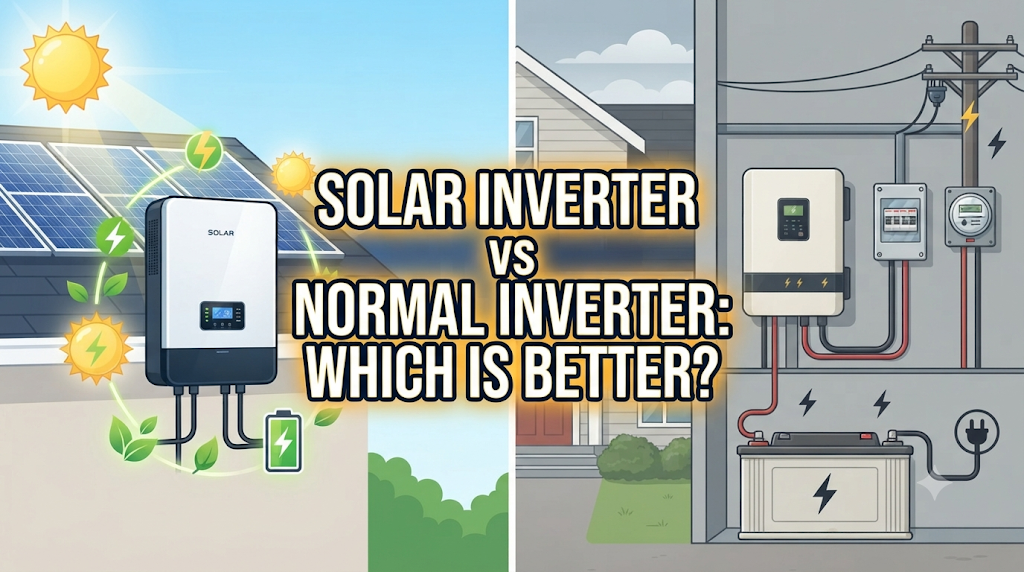
A solar inverter and a normal home inverter both help provide electricity to households, but they are designed for different purposes. A solar inverter converts the DC electricity generated by solar panels into AC electricity that can be used by household appliances. A normal home inverter primarily uses electricity stored in batteries to provide backup power during electricity outages. Although both systems can supply electricity to lights, fans, televisions and other appliances, their working methods, charging arrangements and solar compatibility are different.
Choosing between a solar inverter and a normal home inverter depends on your electricity requirements, power cuts, budget and plans for installing solar panels. A solar inverter is generally more suitable for households that want to generate electricity using sunlight and reduce their dependence on grid electricity. A normal home inverter is a practical option for households that mainly need battery backup during power cuts. Understanding their differences will help you select the right system for your home.
Quick Comparison Table
| Feature | Solar Inverter | Normal Home Inverter |
|---|---|---|
| Main purpose | Converts solar DC into AC | Provides battery backup |
| Energy source | Solar panels, grid or battery depending on type | Battery and grid charging |
| Solar panel support | Designed for solar integration | Only if solar-compatible |
| Battery requirement | Depends on inverter type | Generally required |
| Battery charging | Solar and/or grid depending on model | Usually grid electricity |
| Electricity generation | Uses solar energy | Does not generate electricity |
| Power backup | Available in hybrid and suitable off-grid models | Available through battery |
| Electricity bill savings | Possible with solar generation | No direct solar savings |
| Initial cost | Generally higher with solar panels | Generally lower |
| Installation | Requires solar-compatible electrical setup | Comparatively simple |
| Maintenance | Panels, inverter and battery if installed | Inverter and battery |
| Best suited for | Solar electricity generation | Backup during power cuts |
1. Working Principle
Solar Inverter
A solar inverter converts the DC electricity generated by solar panels into AC electricity for household appliances.
Depending on its type, it can supply electricity to the home, send excess electricity to the grid or charge batteries. Hybrid and off-grid solar inverters can also provide backup through compatible batteries.
The inverter continuously manages the available solar energy according to its design and operating conditions.
Normal Home Inverter
A normal home inverter stores electrical energy in batteries. When grid electricity is available, the inverter generally charges the batteries.
During a power cut, it converts the stored battery DC electricity into AC electricity to operate connected household appliances.
Its primary function is providing backup rather than generating electricity from solar panels.
Winner: Solar Inverter. It offers solar electricity conversion and can help reduce dependence on grid electricity.
2. Electricity Source
Solar Inverter
A solar inverter uses electricity generated by solar panels. Depending on its configuration, it may also use grid electricity and battery power.
A grid-connected solar inverter primarily works with solar panels and the electricity grid. A hybrid inverter can manage solar panels, batteries and grid electricity together.
Normal Home Inverter
A normal home inverter mainly uses electricity stored in batteries. These batteries are generally charged using grid electricity.
When the power supply fails, the inverter uses the stored energy to provide backup.
Winner: Solar Inverter. It can use renewable solar energy instead of depending entirely on grid electricity for charging.
3. Battery Requirement
Solar Inverter
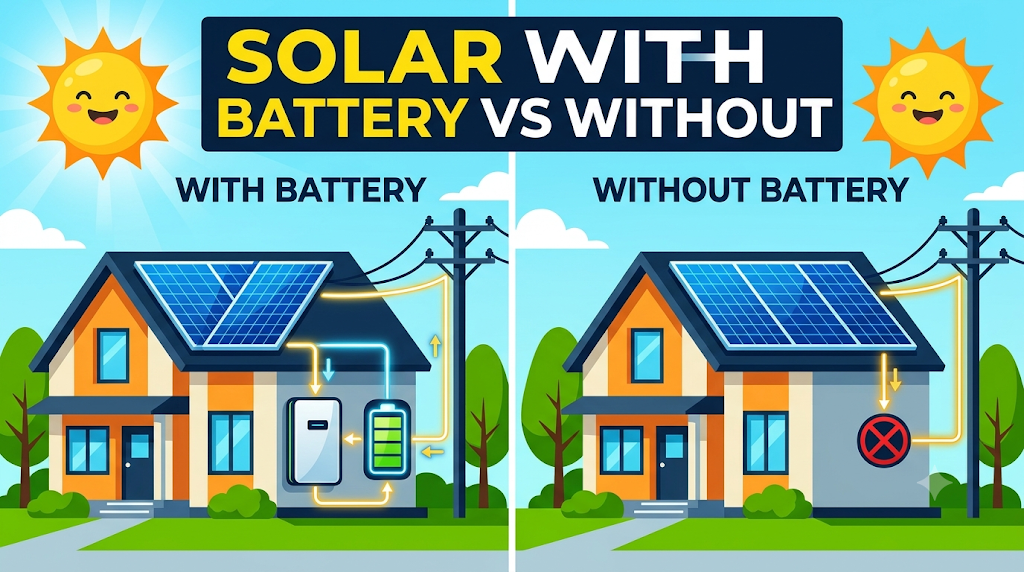
Not every solar inverter requires batteries.
An on-grid solar inverter generally operates without battery storage. It uses solar electricity and works with the electricity grid.
An off-grid or hybrid solar inverter can use batteries to store electricity for backup and later consumption.
Normal Home Inverter
A normal home inverter generally requires a battery to provide backup electricity.
The battery stores energy when grid electricity is available and supplies it during power cuts.
Without a suitable battery, a conventional home inverter cannot provide its usual backup function.
Winner: Depends. A battery-free on-grid solar system can reduce installation costs, while a normal home inverter is useful when battery backup is the main requirement.
4. Electricity Bill Savings
Solar Inverter
A solar inverter can help reduce electricity bills by converting solar energy into usable household electricity.
In a suitable grid-connected system, excess electricity may be exported to the grid under applicable net-metering or other approved arrangements.
Actual savings depend on solar generation, household consumption, electricity tariffs, system capacity and local regulations.
Normal Home Inverter
A normal home inverter does not generate electricity. It stores electricity from the grid in its battery and supplies it during power cuts.
It therefore does not provide the same direct electricity bill savings as a solar installation.
Winner: Solar Inverter. It can reduce electricity purchases from the grid when the solar system is properly designed.
5. Power Backup During Electricity Cuts
Solar Inverter
Backup capability depends on the type of solar inverter.
An on-grid solar inverter generally shuts down during a grid outage for safety reasons, even when sunlight is available. It normally cannot provide independent household backup.
A hybrid or off-grid solar inverter with suitable battery storage can provide electricity during power cuts.
Normal Home Inverter
A normal home inverter is specifically designed to provide backup when grid electricity is unavailable.
Its backup duration depends on battery capacity, battery condition and the connected electrical load.
Winner: Normal Home Inverter for basic backup requirements. However, a hybrid solar inverter with batteries can also provide backup while using solar energy.
6. Installation Cost
Solar Inverter
A solar inverter installation generally requires more equipment, especially when solar panels, mounting structures, wiring, protection devices and batteries are included.
An on-grid solar system without batteries may have a different cost structure from an off-grid or hybrid installation.
The total cost depends on system capacity, equipment quality, installation requirements and local pricing.
Normal Home Inverter
A normal home inverter generally has a lower initial installation cost because it mainly requires an inverter, battery and suitable electrical connections.
It does not require solar panels or rooftop mounting equipment.
Winner: Normal Home Inverter. It is generally more affordable when the only requirement is electricity backup.
7. Maintenance Requirements
Solar Inverter
A solar installation requires periodic inspection of the inverter, electrical connections, protection equipment and solar panels.
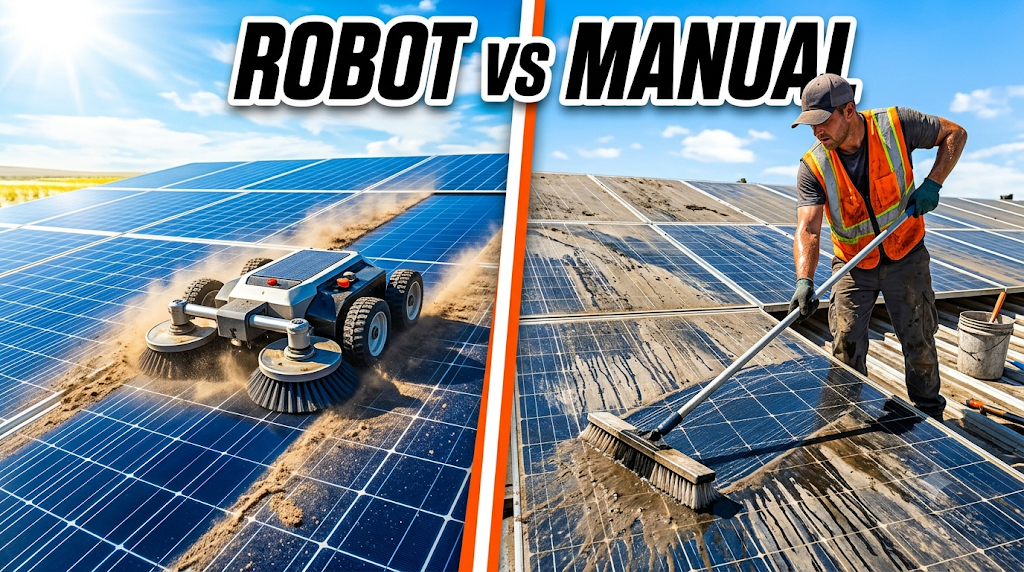
Dust accumulation on panels can reduce electricity generation, so cleaning may be necessary depending on local environmental conditions.
If batteries are installed, they also require appropriate maintenance according to their technology.
Normal Home Inverter
A normal home inverter generally requires less installation-related maintenance.
However, the battery needs proper care, charging and periodic inspection. Battery life depends on its type, operating conditions and usage.
Winner: Normal Home Inverter for simpler maintenance. Solar systems have additional components that require inspection.
8. Operating Cost
Solar Inverter
A solar inverter uses sunlight to generate electricity, which can reduce the amount of electricity purchased from the grid.
However, the system has an initial investment, and its long-term costs may include maintenance, cleaning and eventual equipment replacement.
Normal Home Inverter
A normal home inverter uses grid electricity to charge its battery. It also consumes some energy during charging and conversion.
Its operating expenses include electricity used for charging and eventual battery replacement.
Winner: Solar Inverter. It can offer lower long-term electricity expenses when the installation generates sufficient usable solar energy.
9. Lifespan and Replacement
Solar Inverter
The lifespan of a solar inverter depends on its technology, manufacturing quality, operating temperature and maintenance.
Solar panels generally have a longer expected service life than the inverter, so inverter replacement may be required during the lifetime of a solar installation.
Normal Home Inverter
A normal home inverter can operate for several years, depending on its quality and usage.
Its battery generally has a separate lifespan and may need replacement before the inverter itself.
Winner: Depends. Both systems contain components with different replacement schedules. Manufacturer warranties and actual operating conditions should be considered.
10. Which Is Better for Indian Homes?
Solar Inverter
A solar inverter can be a suitable option for households that:
- Want to reduce monthly electricity bills.
- Have sufficient rooftop space for solar panels.
- Receive good sunlight throughout the year.
- Want to generate their own electricity.
- Need battery backup through a hybrid or off-grid system.
Normal Home Inverter
A normal home inverter can be suitable for households that:
- Mainly experience occasional power cuts.
- Need backup for lights, fans and essential appliances.
- Have a limited installation budget.
- Do not have suitable rooftop space for solar panels.
- Want a simple electricity backup arrangement.
Winner: Depends. A solar inverter is better for electricity generation and potential bill savings, while a normal home inverter is better suited to basic backup requirements.
Overall Comparison: Which Is Better?
| Comparison Factor | Better Option |
|---|---|
| Solar electricity generation | Solar Inverter |
| Basic battery backup | Normal Home Inverter |
| Electricity bill savings | Solar Inverter |
| Lower initial cost | Normal Home Inverter |
| Solar panel compatibility | Solar Inverter |
| Simple installation | Normal Home Inverter |
| Renewable energy usage | Solar Inverter |
| Backup without solar panels | Normal Home Inverter |
| Long-term electricity savings | Solar Inverter |
| Simple maintenance | Normal Home Inverter |
Final Verdict
A solar inverter is generally better for homeowners who want to generate electricity from sunlight, reduce grid electricity consumption and potentially save money on electricity bills. It is particularly useful when a household has sufficient rooftop space and receives good sunlight.
A normal home inverter is better for households that mainly need electricity backup during power cuts. It has a lower initial installation cost and does not require solar panels.
If you want both solar electricity generation and reliable backup, a hybrid solar inverter with a suitable battery can be a practical solution. However, if your requirement is only backup for a few hours, a normal home inverter may be sufficient.
Frequently Asked Questions (FAQs)
1. Can a normal home inverter work with solar panels?
A conventional home inverter is not necessarily solar-compatible. It can work with solar panels only if it supports a suitable solar charging arrangement or is connected through compatible solar equipment.
2. Can a solar inverter work without a battery?
Yes. Most grid-connected on-grid solar inverters operate without batteries. However, they generally shut down during grid outages unless they have a specific backup capability.
3. Which inverter is better for home use?
A normal home inverter is suitable for basic backup, while a solar inverter is more suitable for generating electricity from solar panels. The better option depends on household requirements.
4. Does a solar inverter provide backup during power cuts?
Not every solar inverter provides backup. On-grid models generally shut down during grid failures, while suitable hybrid and off-grid models can provide backup with compatible batteries.
5. Can a solar inverter reduce electricity bills?
Yes. A properly installed solar system can reduce grid electricity consumption. Actual savings depend on solar generation, electricity usage and applicable electricity regulations.
6. Which inverter is cheaper, solar or normal?
A normal home inverter is generally cheaper because it does not require solar panels and their installation equipment. A complete solar system requires a higher initial investment.
7. Can I use a solar inverter with a normal home inverter battery?
Some solar inverters support batteries used in home backup systems, but compatibility depends on battery voltage, chemistry, charging requirements and inverter specifications.
8. Is a hybrid solar inverter better than a normal home inverter?
A hybrid solar inverter can provide solar electricity generation, battery charging and backup functionality. However, it is generally more expensive and may be unnecessary if you only need basic backup.
Disclaimer
This article is intended for general educational and comparison purposes. Solar inverter features, battery compatibility, installation costs, electricity savings and backup performance may vary depending on the manufacturer, model, system capacity and local electricity regulations. Consult a qualified solar installer before purchasing or installing an inverter system.