Net Metering vs Gross Metering
Introduction
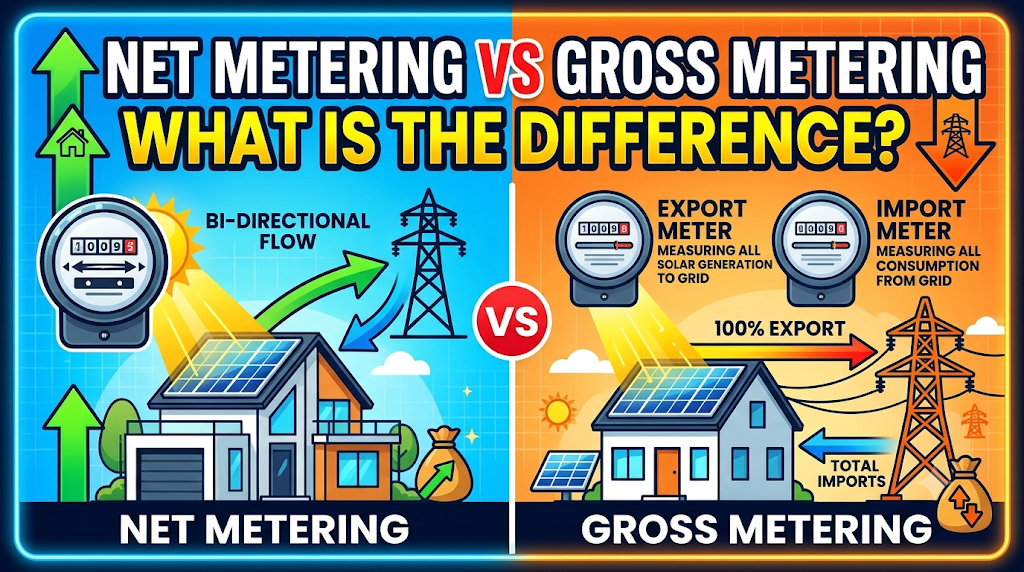
Net metering and gross metering are two different methods of measuring and billing electricity generated by a rooftop solar system. Both arrangements allow solar power to be connected to the electricity grid, but they handle generated electricity differently. Under net metering, the electricity produced by solar panels is first used to meet the property’s electricity demand, while surplus power can be exported to the grid. Under gross metering, the entire solar electricity generation is supplied to the grid and accounted for separately from the electricity consumed by the property.
Understanding the difference between net metering and gross metering is important before installing a rooftop solar system. The two arrangements have different billing methods, payment structures and financial benefits. Net metering generally focuses on reducing electricity bills through the adjustment of imported and exported units, whereas gross metering pays for the total solar electricity generated at an approved feed-in tariff. The availability, eligibility and financial benefits of each arrangement depend on local electricity regulations and utility policies.
Quick Comparison Table
| Feature | Net Metering | Gross Metering |
|---|---|---|
| Electricity usage | Solar power is used for self-consumption first | Entire solar generation is exported |
| Grid connection | Imports and exports electricity | Exports all solar generation |
| Metering | Bidirectional meter | Separate generation and consumption accounting |
| Electricity billing | Based on net energy units | Consumption and generation calculated separately |
| Solar payment | Energy units are adjusted or credited | Payment based on approved feed-in tariff |
| Self-consumption | Yes | No direct self-consumption under the arrangement |
| Main benefit | Reduces electricity bills | Earns revenue from solar generation |
| Suitable for | Homes and businesses using electricity | Consumers opting to sell all generated solar power |
| Financial calculation | Depends on net imported or exported units | Depends on generation and feed-in tariff |
| Regulations | Subject to local utility rules | Subject to local utility rules |
1. How Net Metering Works
Net metering allows a property owner to use electricity generated by their solar panels directly. When solar production exceeds the property’s immediate electricity demand, the surplus electricity is exported to the electricity grid.
A bidirectional meter records both electricity imported from the grid and electricity exported by the solar system. At the end of the applicable billing period, the utility calculates the net electricity consumption or surplus according to the local settlement rules.
For example, if a property imports 400 units from the grid and exports 300 units of surplus solar electricity during the applicable billing period, the net energy difference is 100 units. The consumer is generally billed for the net imported units, along with applicable fixed charges and other charges.
Main Benefits of Net Metering
- Allows direct use of solar electricity.
- Reduces the number of electricity units billed by the utility.
- Provides value for surplus electricity through eligible energy adjustments.
- Helps households and businesses reduce their electricity expenses.
- Makes grid-connected solar systems useful even when solar production and electricity consumption occur at different times.
2. How Gross Metering Works
Gross metering uses a different approach. Under this arrangement, the entire electricity generated by the rooftop solar system is supplied to the electricity grid instead of being directly used by the property’s electrical appliances.
The solar generation is measured separately, and the consumer receives payment according to the feed-in tariff approved by the relevant electricity regulatory commission. Meanwhile, electricity consumed by the property is measured and billed separately at the applicable retail tariff.
For example, if a rooftop solar system generates 500 units during a billing period, all 500 units are exported to the grid. The consumer receives payment for those units according to the approved feed-in tariff. Electricity consumed by the property is billed separately under the applicable electricity tariff.
Main Benefits of Gross Metering
- Provides payment for the entire solar electricity generation.
- Separates solar generation income from electricity consumption expenses.
- Allows consumers to earn revenue from generated solar electricity.
- Makes solar generation accounting easier to distinguish from household or business consumption.
- Can be useful when selling the entire solar output is financially attractive under the approved tariff.
3. Difference in Electricity Consumption
One of the biggest differences between net metering and gross metering is how solar electricity is used.
Under net metering, solar electricity is first available for the property’s own electricity requirements. This reduces the amount of electricity that needs to be imported from the grid. Only surplus electricity is exported.
Under gross metering, the complete solar generation is supplied to the grid. The property continues to receive electricity separately from its distribution utility and pays for the electricity it consumes.
Therefore, net metering combines solar generation with the property’s electricity usage, while gross metering accounts for generation and consumption separately.
4. Difference in Electricity Billing
Net metering and gross metering also have different billing structures.
With net metering, the imported and exported electricity units are adjusted according to the applicable regulations. If electricity imports exceed exports, the consumer generally pays for the net imported units. If exports exceed imports, surplus credits or payments depend on the local settlement policy.
With gross metering, the consumer receives payment for total solar generation at the approved feed-in tariff. However, the electricity consumed from the grid is billed separately at the applicable retail tariff.
This difference is important because the retail electricity tariff and solar feed-in tariff may not be equal.
5. Difference in Financial Benefits
The financial benefits of both arrangements depend on electricity consumption, solar generation, retail tariffs, feed-in tariffs and applicable charges.
Net metering can provide greater value to consumers who use a significant amount of electricity during daylight hours because they can directly consume solar electricity and reduce grid imports.
Gross metering may be financially attractive when the approved payment for exported solar electricity provides a suitable return compared with the cost of purchasing electricity separately.
However, neither arrangement is automatically more profitable. Consumers should compare the applicable tariffs and calculate their expected electricity expenses and solar income before choosing a metering arrangement.
6. Which Metering System Is Suitable for Homes?
Net metering is generally a practical option for residential properties that want to reduce their electricity bills through rooftop solar. Homes can use solar-generated electricity during the day and export excess generation to the grid.
Gross metering may suit residential consumers who prefer to sell all their solar electricity under an approved generation tariff rather than use it directly.
The better option depends on local regulations, available metering arrangements, electricity consumption patterns and the financial terms offered by the utility.
7. Which Metering System Is Suitable for Businesses?
Businesses with substantial daytime electricity consumption may benefit from net metering because solar electricity can directly support their operational requirements and reduce grid electricity purchases.
Gross metering can be considered by businesses or property owners who want to sell the entire electricity output of their solar installation under an approved tariff.
Before selecting either arrangement, businesses should examine their operating hours, electricity demand, sanctioned load, solar generation capacity and applicable utility regulations.
8. Can Net Metering and Gross Metering Reduce Electricity Bills to Zero?
Neither arrangement guarantees a zero electricity bill.
Under net metering, electricity charges can be substantially reduced when solar generation adequately offsets grid imports. However, fixed charges, demand charges, meter charges, taxes and other applicable fees may still remain.
Under gross metering, the consumer receives payment for solar generation but continues to pay separately for electricity consumed from the grid. The final financial result depends on the difference between solar income and electricity expenses.
Consumers should consider the complete bill rather than comparing only the number of solar units generated.
9. Net Metering vs Gross Metering: Which Is Better?
Net metering is generally more suitable for consumers who want to use solar electricity directly and reduce their electricity bills. It allows solar generation to offset electricity imported from the grid under the applicable settlement rules.
Gross metering can be a suitable choice for consumers who want to export all generated solar electricity and receive payment at an approved feed-in tariff. It separates solar generation earnings from electricity consumption expenses.
Overall, net metering is often the more practical choice for ordinary households with regular electricity consumption, while gross metering may suit consumers who prefer selling their entire solar generation. The final decision should be based on local regulations, tariff rates and individual electricity requirements.
Frequently Asked Questions (FAQs)
1. What is the main difference between net metering and gross metering?
The main difference is how solar electricity is accounted for. Net metering allows solar electricity to be used by the property first, with surplus electricity exported to the grid. Gross metering sends the entire solar generation to the grid and accounts for electricity consumption separately.
2. Which is better, net metering or gross metering?
Net metering is generally suitable for consumers who want to reduce their electricity bills through direct solar consumption. Gross metering may be suitable for those who want to sell all their generated solar electricity at an approved tariff.
3. Does gross metering allow direct use of solar electricity?
Under a standard gross metering arrangement, the entire solar generation is exported to the electricity grid rather than directly supplying the property’s electrical load.
4. Can I sell surplus electricity under net metering?
Yes, surplus solar electricity can be exported to the grid. However, its adjustment, credit or payment depends on the applicable state regulations and utility settlement policy.
5. Does net metering require a special electricity meter?
Yes. A bidirectional net meter records both electricity imported from the grid and electricity exported by the solar system.
6. Is gross metering available everywhere in India?
No. Availability and eligibility depend on the regulations of the relevant State Electricity Regulatory Commission and the local distribution company.
7. Can net metering make my electricity bill zero?
It can significantly reduce electricity charges, but fixed charges, taxes and other applicable fees may still be payable.
8. Are net metering and net billing the same?
No. Under net metering, imported and exported electricity is generally adjusted in energy units. Under net billing, imported and exported electricity are valued at different tariffs, and their monetary values are adjusted against each other.
Disclaimer
This article is intended for general informational and educational purposes. Net metering, gross metering, net billing, feed-in tariffs, eligibility limits and electricity settlement policies may vary by state, electricity distribution company and regulatory authority. Electricity tariffs and government regulations may also change over time. Consumers should verify the latest applicable rules with their local electricity distribution company or State Electricity Regulatory Commission before installing a solar system or selecting a metering arrangement.