Solar Water Heater vs Electric Water Heater
Introduction
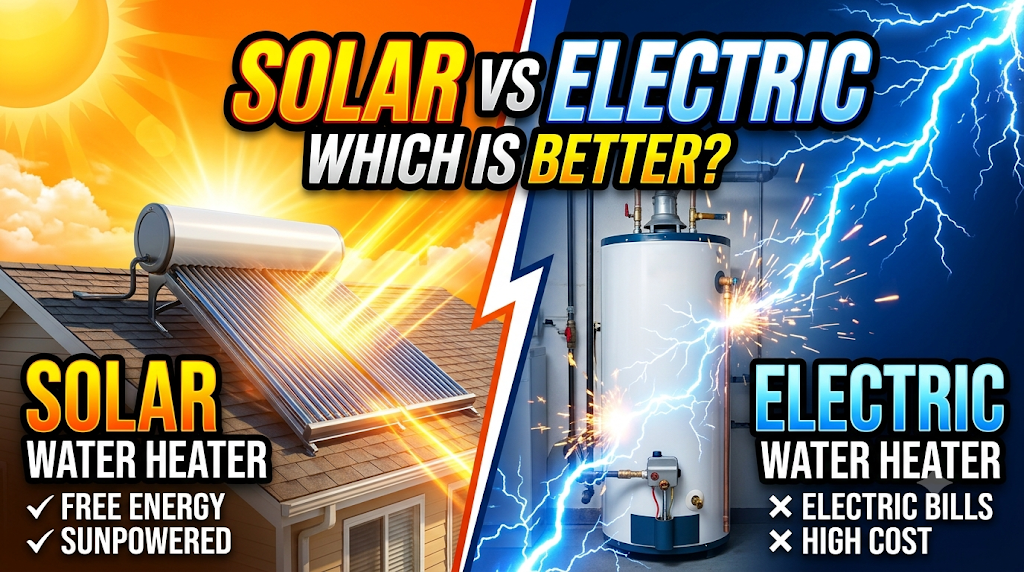
Water heating is an important part of everyday household life, especially during winter when hot water is needed for bathing, cleaning and other domestic activities. Solar water heaters and electric water heaters are two common options for supplying hot water. A solar water heater uses energy from sunlight to heat water, while an electric water heater uses electricity to raise the water temperature. Both systems provide hot water, but they differ in operating costs, installation requirements, energy consumption and performance.
Choosing between a solar water heater and an electric water heater depends on household requirements, family size, sunlight availability, electricity costs and installation space. Solar water heaters can reduce electricity consumption because they primarily use solar energy, whereas electric water heaters offer convenient operation and can heat water whenever electricity is available. Comparing their features helps homeowners select a water-heating system that provides suitable performance and long-term value.
Solar Water Heater vs Electric Water Heater: Quick Comparison
| Feature | Solar Water Heater | Electric Water Heater |
|---|---|---|
| Energy source | Sunlight | Electricity |
| Operating cost | Generally lower | Generally higher |
| Initial cost | Generally higher | Generally lower |
| Electricity consumption | Usually low or none for direct heating | Required for heating |
| Weather dependency | Yes | No |
| Heating availability | Depends on stored hot water and sunlight | On demand, subject to capacity |
| Installation | Usually rooftop installation | Wall-mounted or floor-mounted |
| Maintenance | Periodic system maintenance | Periodic maintenance |
| Environmental impact | Generally lower operational emissions | Depends on electricity source |
| Best suited for | Homes with good sunlight | Homes needing convenient heating |
1. Working Principle
Solar Water Heater
A solar water heater uses solar collectors to absorb heat from sunlight and transfer it to water. The heated water is stored in an insulated tank for later use.
Depending on the system design, water circulation can happen naturally through thermosiphon action or through a pump. Some models also include an electric backup heating element.
Electric Water Heater
An electric water heater uses an electrical heating element to heat water inside a storage tank or through an instantaneous heating system.
When the water temperature falls below the selected setting, the thermostat activates the heating element to maintain or restore the desired temperature.
2. Energy Consumption and Operating Cost
Solar Water Heater
Solar water heaters primarily use sunlight, which is free after installation. This can significantly reduce the electricity required for household water heating.
However, systems with pumps or electric backup heaters may still consume electricity. Their operating cost depends on sunlight availability and household hot-water requirements.
Electric Water Heater
Electric water heaters use electricity whenever their heating elements operate. Electricity consumption depends on heater capacity, water temperature, usage frequency and insulation quality.
Households using hot water frequently may experience higher electricity bills compared with an effectively operating solar water heater.
3. Initial Installation Cost
Solar Water Heater
Solar water heaters generally require a higher initial investment because they include solar collectors, insulated storage tanks, mounting structures and plumbing arrangements.
Installation costs can also depend on collector capacity, rooftop accessibility and the complexity of the plumbing system.
Electric Water Heater
Electric water heaters are generally less expensive to purchase and install. Many models require only a suitable electrical connection, water supply and mounting arrangement.
This makes them a practical option for households that want a lower initial investment.
4. Heating Performance
Solar Water Heater
Solar water heaters can provide a good supply of hot water when sufficient sunlight is available. Their performance depends on sunlight intensity, collector design, tank capacity and weather conditions.
During cloudy or rainy periods, water heating may become slower, and an auxiliary heating arrangement may be required.
Electric Water Heater
Electric water heaters provide more predictable heating because their operation does not depend on sunlight.
Storage models heat a fixed quantity of water, while instantaneous models heat water as it passes through the unit, within their rated capacity.
5. Performance During Winter and Cloudy Weather
Solar Water Heater
Solar water heaters can continue working during winter, but reduced sunlight and lower outdoor temperatures can affect heating performance.
A properly sized system with suitable insulation can help maintain hot-water availability. Electric backup heating may be useful during extended periods of poor sunlight.
Electric Water Heater
Electric water heaters can heat water throughout the year, including during winter and cloudy weather.
Their performance mainly depends on electrical supply, heater capacity and the temperature of incoming water.
6. Maintenance Requirements
Solar Water Heater
Solar water heaters require periodic inspection of collectors, pipes, storage tanks and mounting structures. Depending on water quality and system design, cleaning or removal of mineral deposits may also be necessary.
Proper maintenance helps maintain heat transfer efficiency and system performance.
Electric Water Heater
Electric water heaters require periodic inspection of heating elements, thermostats, electrical connections and storage tanks.
In areas with hard water, sediment and scale buildup may reduce heating efficiency and affect the lifespan of the appliance.
7. Installation Space and Requirements
Solar Water Heater
Solar water heaters generally require suitable rooftop space to install collectors and storage tanks. The location should receive adequate sunlight without significant shading.
The roof must also be capable of supporting the system’s weight.
Electric Water Heater
Electric water heaters usually require less installation space and can be installed in bathrooms, kitchens or utility areas.
They need an appropriate electrical connection, suitable plumbing and proper safety arrangements.
8. Lifespan and Durability
Solar Water Heater
The lifespan of a solar water heater depends on collector materials, tank construction, water quality, installation and maintenance.
Its different components may have different service lives and replacement requirements.
Electric Water Heater
Electric water heaters also provide long-term service when properly installed and maintained. Tank corrosion, heating element failure, hard-water deposits and electrical problems can affect their durability.
The quality of the tank lining and protective components is important when selecting a model.
9. Safety Features
Solar Water Heater
Solar water heaters should include suitable temperature and pressure control arrangements. Proper plumbing, pressure-relief valves and protection against overheating are important for safe operation.
Electric Water Heater
Electric water heaters commonly include thermostats, thermal cut-outs and pressure-relief valves. Proper earthing, suitable wiring and electrical protection are essential to reduce the risk of electric shock and overheating.
10. Which Water Heater Is Better for Different Applications?
| Application | More Suitable Option |
|---|---|
| Independent house with rooftop | Solar Water Heater |
| Apartment with limited rooftop access | Electric Water Heater |
| High daily hot-water consumption | Solar Water Heater |
| Occasional hot-water use | Electric Water Heater |
| Areas with good sunlight | Solar Water Heater |
| Cloudy regions | Electric Water Heater |
| Lower initial investment | Electric Water Heater |
| Lower long-term heating cost | Solar Water Heater |
Advantages and Disadvantages
Solar Water Heater
Advantages
- Uses free solar energy.
- Reduces electricity consumption.
- Can lower long-term water-heating costs.
- Suitable for households with high hot-water requirements.
- Generally produces fewer operational emissions.
Disadvantages
- Higher initial installation cost.
- Depends on sunlight availability.
- Requires suitable rooftop space.
- Heating performance can decrease during cloudy weather.
- May require electric backup heating.
Electric Water Heater
Advantages
- Works during all weather conditions.
- Convenient and easy to operate.
- Generally lower initial cost.
- Requires relatively little installation space.
- Available in different capacities and designs.
Disadvantages
- Consumes electricity for heating.
- Can increase household electricity bills.
- Heating performance depends on electrical supply and rated capacity.
- Heating elements may require maintenance.
Frequently Asked Questions (FAQs)
1. Which is cheaper to operate, a solar or electric water heater?
A solar water heater is generally cheaper to operate because it primarily uses sunlight instead of electricity. However, backup heating and maintenance costs should also be considered.
2. Does a solar water heater work during winter?
Yes. It can heat water during winter when sunlight is available, although heating performance may decrease because of lower temperatures and reduced sunlight.
3. Can a solar water heater work without electricity?
Many thermosiphon solar water heaters can circulate water without an electric pump. However, some designs require electricity for pumps or backup heating.
4. Which water heater is better for a family of five?
A properly sized solar water heater can be economical for a family of five with regular hot-water requirements, provided sufficient rooftop space and sunlight are available.
5. Can a solar water heater replace an electric geyser?
Yes, in many households. However, an electric backup heater may still be useful during extended cloudy periods or when additional hot water is required.
Conclusion
Solar water heaters and electric water heaters both provide convenient hot water, but their operating methods and costs are different. Solar water heaters are generally more economical over the long term because they use sunlight, while electric water heaters provide convenient and predictable heating regardless of weather conditions.
Final Verdict: A solar water heater is generally the better choice for independent houses with adequate rooftop space, good sunlight and regular hot-water requirements. An electric water heater is more suitable for apartments, smaller households and locations where rooftop installation is difficult.
Disclaimer
Water heater prices, heating performance, energy consumption and lifespan may vary depending on brand, capacity, installation quality, water conditions and usage patterns. Always follow manufacturer instructions and use qualified professionals for installation.