Solar Generator vs Portable Power Station
Introduction
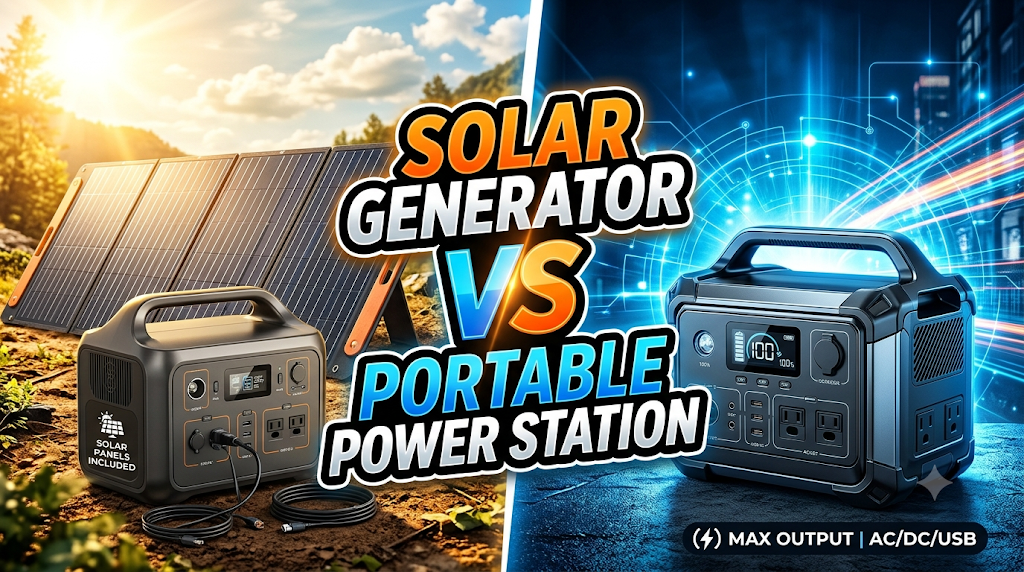
Portable backup power solutions are useful for homes, outdoor activities, camping, travelling, emergency situations and locations where regular electricity is unavailable. Solar generators and portable power stations are two popular options for storing and supplying electricity to electronic devices and appliances. Although these terms are sometimes used interchangeably, they are not exactly the same. A portable power station is a rechargeable battery-based unit with built-in power management and output connections, while a solar generator generally refers to a portable power system that uses a power station together with solar panels for charging.
Both solutions can provide electricity without a conventional grid connection, but their charging methods, battery capacities, portability and applications can differ. A portable power station can be charged through a wall outlet, vehicle connection or compatible solar panel. A solar generator is designed around solar charging, although many models also support other charging methods. Understanding these differences helps buyers select a suitable backup power solution for their homes, outdoor activities and emergency requirements.
Quick Comparison Table
| Feature | Solar Generator | Portable Power Station |
|---|---|---|
| Main Function | Provides portable electricity with solar charging capability | Stores and supplies portable electricity |
| Power Source | Solar panels, grid and other supported inputs | Grid, vehicle and compatible solar panels |
| Solar Panel | Often included in a complete kit | Usually optional |
| Battery | Required | Required |
| Charging | Solar and often other supported methods | Grid, vehicle and solar where supported |
| Portability | Depends on system size and panel arrangement | Usually compact and portable |
| Electricity Output | Depends on inverter and battery specifications | Depends on inverter and battery specifications |
| Running Cost | Can use free solar energy | Depends on charging source |
| Backup Duration | Depends on battery capacity and energy generation | Depends on battery capacity and usage |
| Best For | Solar-based backup and off-grid use | Portable power and flexible charging |
1. Design and Working Principle
Solar Generator
A solar generator is a portable power system designed to store electricity and supply it to different devices. A typical setup includes a battery-based power station, an inverter, a charge controller and compatible solar panels.
During the daytime, the solar panels convert sunlight into electricity. The charging system manages the incoming power and stores energy in the battery.
The stored electricity can then be used to operate compatible appliances, lights, laptops, mobile phones and other electrical equipment.
Many solar generator systems also support charging through a household electrical outlet or vehicle connection.
Portable Power Station
A portable power station is a rechargeable battery-based unit that stores electricity and supplies power through different output ports.
It generally includes a battery, battery management system, inverter, charging electronics and multiple output connections.
Users can connect devices through AC outlets, USB ports, USB-C connections or DC outputs, depending on the model.
A portable power station does not necessarily include solar panels, but many models support solar charging through compatible external panels.
2. Charging Methods and Flexibility
Solar Generator
A solar generator is designed to use solar energy as an important charging source.
Its battery can be charged through compatible solar panels, allowing users to generate electricity without depending entirely on the grid.
Depending on the model, additional charging options may include household electricity and vehicle charging.
The actual solar charging performance depends on panel wattage, sunlight conditions, charging limits and battery capacity.
Portable Power Station
A portable power station commonly supports charging through a household wall outlet.
Many models also support vehicle charging and solar charging through compatible panels.
This gives users flexibility when they have access to different power sources.
However, not every portable power station supports solar charging, and some require specific solar input connectors or voltage ranges.
Winner: Depends. A solar generator is more suitable when solar charging is a priority, while a portable power station offers flexible charging options across different environments.
3. Battery Capacity and Backup Time
Solar Generator
Solar generators are available in different battery capacities, from compact units for small electronic devices to larger systems for household backup.
Battery capacity determines how much electricity can be stored and made available for later use.
A larger battery can provide longer backup, provided the connected appliances remain within the system’s output limits.
Solar charging can replenish the stored energy during the day when sunlight is available.
Portable Power Station
Portable power stations also come in different battery capacities.
Small models can power mobile phones, laptops and lights, while larger models can support selected household appliances.
Backup time depends on battery capacity, inverter efficiency, connected load and operating conditions.
Some models also support additional battery packs to increase total storage capacity.
Winner: Depends. Both can provide substantial backup. Actual battery capacity in Wh is more important than the product name.
4. Power Output and Appliance Compatibility
Solar Generator
A solar generator can supply electricity through AC outlets, USB connections and DC outputs, depending on its specifications.
Its inverter converts stored battery electricity into AC power for compatible household appliances.
The continuous inverter rating determines how much load the system can operate at one time, while surge capacity determines whether it can handle temporary starting loads.
A larger solar generator may support refrigerators, fans, televisions and selected other appliances.
Portable Power Station
A portable power station also provides different output connections for electronic devices and appliances.
Its inverter rating determines the maximum continuous AC load, while surge capacity is important for equipment with motors or compressors.
For example, a portable power station with a suitable inverter may operate a laptop, television, fan or refrigerator.
However, buyers must check the actual power requirements of each appliance before connecting it.
Winner: Depends. Both can operate similar appliances when their battery capacity, continuous output and surge ratings are comparable.
5. Solar Charging Performance
Solar Generator
Solar charging is a central feature of a solar generator system.
The panels collect sunlight and convert it into electricity to recharge the battery. Users can select compatible panels according to the system’s solar input capacity.
Charging speed depends on solar panel wattage, sunlight intensity, panel positioning, temperature and charging efficiency.
A larger panel arrangement can provide faster charging when the system supports the additional input.
Portable Power Station
Many portable power stations support solar charging, but the solar panels may need to be purchased separately.
Some models have limited solar input capacity, which can restrict the maximum charging speed.
Before purchasing solar panels, users should check the supported input voltage, current, connector type and maximum solar wattage.
Winner: Solar Generator when comparing a complete solar-ready system with a portable power station sold without panels.
6. Portability and Transportation
Solar Generator
A solar generator’s portability depends on its battery size and the number of solar panels included.
Small systems can be carried easily, while larger systems may include wheels or handles.
However, carrying and positioning separate solar panels can require additional space and effort.
This is important for camping, outdoor activities and travelling.
Portable Power Station
Portable power stations are designed for convenient transportation.
Compact models can fit inside vehicles and can be carried during camping trips, road journeys and outdoor activities.
Larger models may be heavier and may require wheels or two-person handling.
Winner: Portable Power Station for portability when comparing a standalone power station with a complete solar generator kit.
7. Electricity Cost and Running Expenses
Solar Generator
A solar generator can reduce dependence on purchased grid electricity because sunlight is used to recharge its battery.
Once the system is installed, solar energy does not have a direct electricity purchase cost.
However, the initial investment includes the power station and possibly solar panels, and batteries may eventually need replacement.
Portable Power Station
A portable power station charged through a household outlet uses grid electricity.
Its running cost depends on charging frequency, battery capacity, charging efficiency and electricity tariffs.
If compatible solar panels are used, it can also operate with solar energy and reduce grid electricity consumption.
Winner: Solar Generator when regularly charged using solar energy.
8. Maintenance and Battery Life
Solar Generator
A solar generator requires periodic inspection of its solar panels, charging connections and battery system.
Dust and dirt on solar panels can reduce energy generation, so occasional cleaning is important.
Battery lifespan depends on battery chemistry, charging cycles, operating temperature and usage habits.
Lithium iron phosphate (LiFePO4) batteries are used in many modern power stations because of their cycle-life characteristics.
Portable Power Station
Portable power stations require checking their charging ports, output connections, ventilation and battery condition.
They generally do not require the same solar panel maintenance when used without external panels.
Battery performance gradually changes with age and usage.
Winner: Portable Power Station for simpler maintenance when used without external solar panels.
9. Initial Cost and Overall Value
Solar Generator
A complete solar generator kit may include the power station, solar panels and necessary accessories.
This can make its initial purchase price higher than that of a standalone portable power station.
However, buyers receive a more complete solar charging arrangement and may avoid purchasing additional panels separately.
The overall value depends on battery capacity, inverter output, solar panel wattage and included accessories.
Portable Power Station
A standalone portable power station may have a lower initial price because solar panels are often sold separately.
Users can begin with the power station and purchase compatible solar panels later if required.
This approach offers flexibility for buyers who mainly need grid-charged portable backup.
Winner: Depends. A standalone power station may be cheaper initially, while a complete solar generator kit may offer better value for buyers who need solar charging equipment.
10. Applications and Suitable Locations
Solar Generator
Solar generators are suitable for:
- Off-grid homes and remote properties.
- Camping and outdoor activities.
- Emergency electricity backup.
- Farmhouses and agricultural locations.
- Small shops and outdoor work areas.
- Charging devices using renewable energy.
- Locations with limited grid electricity availability.
They are especially useful when users can recharge the battery through sunlight.
Portable Power Station
Portable power stations are suitable for:
- Home backup for selected appliances.
- Road trips and travelling.
- Camping and recreational activities.
- Laptops and mobile devices.
- Photography and outdoor work.
- Emergency charging requirements.
- Temporary power at work locations.
They are practical when users need a compact source of electricity with flexible charging options.
11. Advantages and Disadvantages
Solar Generator
Advantages
- Supports solar-powered battery charging.
- Reduces dependence on grid electricity.
- Useful for off-grid applications.
- Can operate selected household appliances.
- Provides portable emergency electricity.
- Solar energy can reduce long-term charging expenses.
Disadvantages
- Complete kits can have higher initial costs.
- Solar charging depends on sunlight availability.
- Larger solar panels require additional storage space.
- Charging speed depends on panel capacity and weather.
- Battery capacity limits available backup energy.
Portable Power Station
Advantages
- Compact and convenient design.
- Easy to transport in many models.
- Supports different charging methods.
- Useful for electronic devices and selected appliances.
- Many models offer AC, USB and DC outputs.
- Solar panels can be added to compatible models.
Disadvantages
- Solar panels may need to be purchased separately.
- Grid charging adds electricity expenses.
- Battery capacity limits backup duration.
- Large-capacity models can be heavy.
- Not every model supports high-power appliances.
- Solar charging compatibility varies between models.
12. Which One Should You Choose?
The right choice depends on how and where you plan to use the system.
Choose a solar generator if you want a portable backup system that can recharge through sunlight. It is suitable for off-grid locations, camping, remote properties and emergency power requirements where reducing dependence on grid electricity is important.
Choose a portable power station if you need a convenient battery-based electricity source for travelling, camping, laptops, mobile phones and selected household appliances. It is particularly suitable when you can charge the unit through a household outlet and want the option of adding solar panels later.
Before purchasing either option, compare battery capacity in Wh, continuous inverter output in watts, surge capacity, charging time, solar input limits and available output ports. Also check battery chemistry and the manufacturer’s warranty.
Conclusion
Solar generators and portable power stations both provide portable electricity, but their main differences are related to solar charging arrangements and system configuration. Solar generators are useful for users who want a complete solar-based charging solution, while portable power stations offer a convenient battery-based system with flexible charging options.
Overall, a solar generator is a practical choice for regular solar charging and off-grid use, whereas a portable power station is better for general portable backup and everyday transportation. The best option depends on your power requirements, budget and preferred charging method.
Frequently Asked Questions (FAQs)
1. What is the main difference between a solar generator and a portable power station?
A portable power station is a rechargeable battery-based electricity unit. A solar generator generally refers to a power station used with solar panels to generate and store electricity.
2. Can a portable power station be charged using solar panels?
Yes, many portable power stations support solar charging. However, users must check the supported voltage, current, connector type and maximum solar input.
3. Can a solar generator run a refrigerator?
Yes, a suitably sized solar generator can run a refrigerator if its continuous inverter output, surge capacity and battery storage are sufficient for the refrigerator’s requirements.
4. Which is better for home backup?
Both can provide home backup for selected appliances. The correct choice depends on battery capacity, inverter output, charging options and the appliances you want to operate.
5. Do solar generators work at night?
Yes. They use electricity stored in their batteries during the daytime. Solar panels do not need to generate electricity while the system is supplying stored energy at night.
6. How long can a portable power station provide electricity?
Backup time depends on battery capacity, connected appliance load and system efficiency. A larger battery generally provides longer operating time for the same load.
7. Are solar generators completely independent of electricity?
They can operate without grid electricity when sufficient energy is available from their batteries and solar panels. However, prolonged poor sunlight or excessive power consumption can reduce their available backup.
8. Which battery is better for a portable power station?
LiFePO4 batteries are popular because of their long cycle-life characteristics and thermal stability. Other battery chemistries are also used, so buyers should compare specifications and warranties.
Disclaimer
The specifications, battery capacities, inverter ratings, solar input limits, charging speeds, prices and operating performance of solar generators and portable power stations vary by manufacturer and model. Actual backup time depends on connected appliances, battery condition, system efficiency and charging conditions. Always verify compatibility, electrical ratings and warranty details before purchasing or connecting appliances.