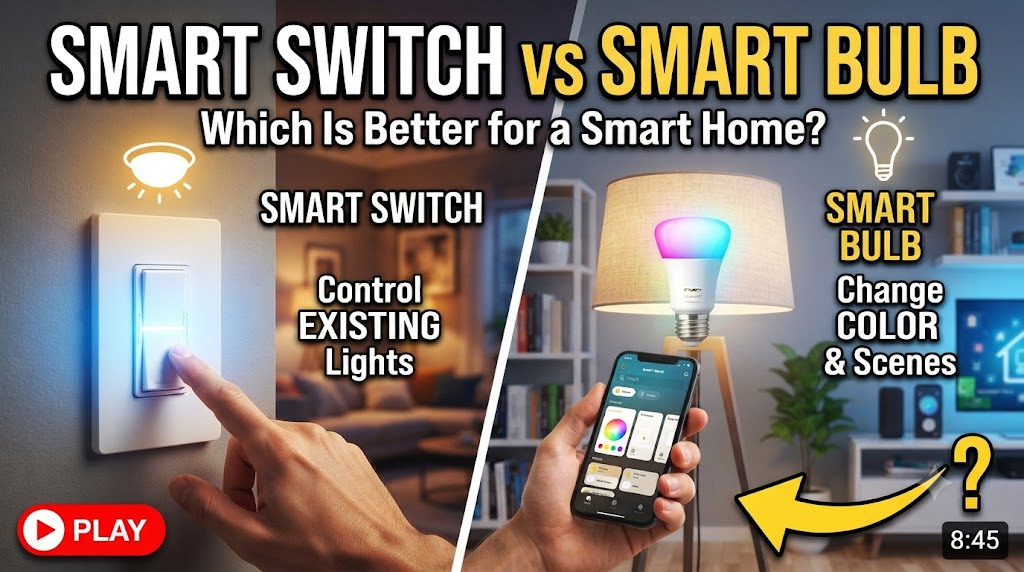
Smart Switch vs Smart Bulb
A smart switch and a smart bulb can both bring smart-home control to your lighting, but they work in different ways. A smart switch replaces or controls the wall switch connected to a light fixture, while a smart bulb replaces the existing bulb and adds smart features directly to the light source. Both can offer app control, scheduling, automation, and, depending on the model, voice control. The better choice depends on the type of lighting setup you already have and how much control you want.
A smart bulb is usually easier to add to an individual light because you replace the existing bulb rather than changing the wall switch. A smart switch can be more useful when you want to control an entire light fixture or multiple compatible lights from the wall. However, installation requirements can vary, especially with wiring and switch compatibility. Therefore, the right option depends on your home, lighting setup, and smart-home requirements.
Quick Comparison Table
| Feature | Smart Switch | Smart Bulb |
|---|---|---|
| Replaces | Wall switch | Light bulb |
| App control | Usually available | Usually available |
| Voice control | Often available | Often available |
| Scheduling | Yes, depending on model | Yes |
| Automation | Yes | Yes |
| Controls existing fixture | Yes | Depends on bulb fitting |
| Multiple bulbs together | Often possible | Can be grouped |
| Installation | May require electrical work | Usually simple bulb replacement |
| Works with normal bulbs | Usually yes | No |
| Colour-changing features | Depends on bulb | Available on some models |
| Best for | Whole fixtures and wall control | Individual smart lighting |
Installation
A smart bulb is generally simple to install. You remove the existing bulb, install the smart bulb, and complete the required app or smart-home setup.
A smart switch replaces the existing wall switch. Its installation can be more involved because electrical wiring and compatibility need to be considered. Some installations may require a qualified electrician.
What this means: If you want the simpler installation, a smart bulb is usually the better choice.
Winner: Smart Bulb
Control from the Wall
A smart switch keeps the traditional wall-switch experience while adding smart control. You can normally operate the connected light from the switch and use smart features when supported.
A smart bulb can also be controlled through an app or smart-home system, but its smart functions may become unavailable when power to the bulb is switched off at a regular wall switch.
What this means: A smart switch can be more practical for households where people still want to use the wall switch normally.
Winner: Smart Switch
Smart Features
Both options can provide smart features such as remote control, scheduling, routines, and automation. The exact features depend on the model and the smart-home ecosystem it supports.
Smart bulbs can add lighting-specific features such as adjustable brightness and, on some models, colour or colour-temperature control.
Smart switches generally focus on controlling the connected electrical load rather than changing the characteristics of the light itself.
What this means: Both offer smart control, but smart bulbs can provide more lighting-specific options.
Winner: Depends on your needs
Controlling Multiple Lights
A smart switch can be useful when one switch controls a complete light fixture or a group of lights. You can control the fixture through the switch and its connected smart system.
Smart bulbs can also be grouped together through compatible apps or platforms. This can allow several bulbs to operate together.
What this means: A smart switch can be convenient for whole fixtures, while smart bulbs offer flexibility when you want to control individual bulbs or create different lighting groups.
Winner: Depends on the setup
Lighting Flexibility
Smart bulbs can offer features beyond simple on/off control. Depending on the model, you may be able to adjust brightness, colour temperature, or colour.
A smart switch normally controls the power supplied to the light. The lighting features themselves depend on the bulbs or fixture connected to it.
What this means: If changing the appearance of the light is important, a smart bulb is usually the better option.
Winner: Smart Bulb
Compatibility
A smart bulb needs to fit the appropriate bulb socket and work with your chosen smart-home platform or connection method.
A smart switch needs to be compatible with the electrical setup, wiring, load, and type of lighting it controls. Some switches also have specific installation requirements.
Because these requirements differ between products, checking the manufacturer’s compatibility information is important before buying either option.
What this means: Smart bulbs are generally simpler from an installation perspective, while smart switches require more attention to the existing electrical setup.
Winner: Smart Bulb for easier compatibility
Cost
The cost of either option varies significantly by brand and features.
A smart bulb can be cheaper to install because you normally only replace the bulb. However, if you want smart control for many bulbs, the total cost can increase.
A smart switch can control an existing fixture without requiring every bulb to be smart. This can make it useful for larger lighting setups.
What this means: The cheaper overall option depends on how many lights you want to make smart and what equipment you already have.
Winner: Depends
Smart Switch vs Smart Bulb: Which Is Better for a Smart Home?
Choose a Smart Switch If:
- You want to keep using a physical wall switch.
- One switch controls a complete light fixture.
- You want to make existing lights smart.
- You want a consistent wall-control experience.
- You do not need colour-changing bulbs.
Choose a Smart Bulb If:
- You want simple installation.
- You want individual bulb control.
- You want adjustable brightness or colour features.
- You want to change lighting without replacing the wall switch.
- You are starting with one or a few smart lights.
Final Verdict
A smart switch is better for whole fixtures and traditional wall control, while a smart bulb is better for flexible individual lighting and easier installation.
For a new smart-home setup, choose a smart switch if maintaining normal wall-switch control is your priority. Choose a smart bulb if you want lighting-specific features such as adjustable brightness, colour, or simple individual control.
There is no universal winner. The better option depends on your existing wiring, lighting arrangement, and the smart features you actually need.
Conclusion
The choice between a Smart Switch vs Smart Bulb comes down to control, installation, and lighting flexibility. Smart switches are useful for upgrading existing fixtures while keeping wall control. Smart bulbs are easier to install and can provide more direct control over individual lights. For traditional wall operation, a smart switch is often the more practical choice. For flexible smart lighting, a smart bulb can be the better option.
Primary Focus Keyphrase: Smart Switch vs Smart Bulb
SEO Title: Smart Switch vs Smart Bulb: Which Is Better?
Meta Description: Smart Switch vs Smart Bulb comparison covering installation, control, compatibility, cost, lighting features, and which is better for a smart home.
URL Slug: smart-switch-vs-smart-bulb
Disclaimer
Smart-home features, compatibility, wiring requirements, prices, and supported platforms can vary between models and may change over time. Check the latest manufacturer specifications and installation requirements before purchasing or installing a product.