Air Cooler vs Air Conditioner
Introduction
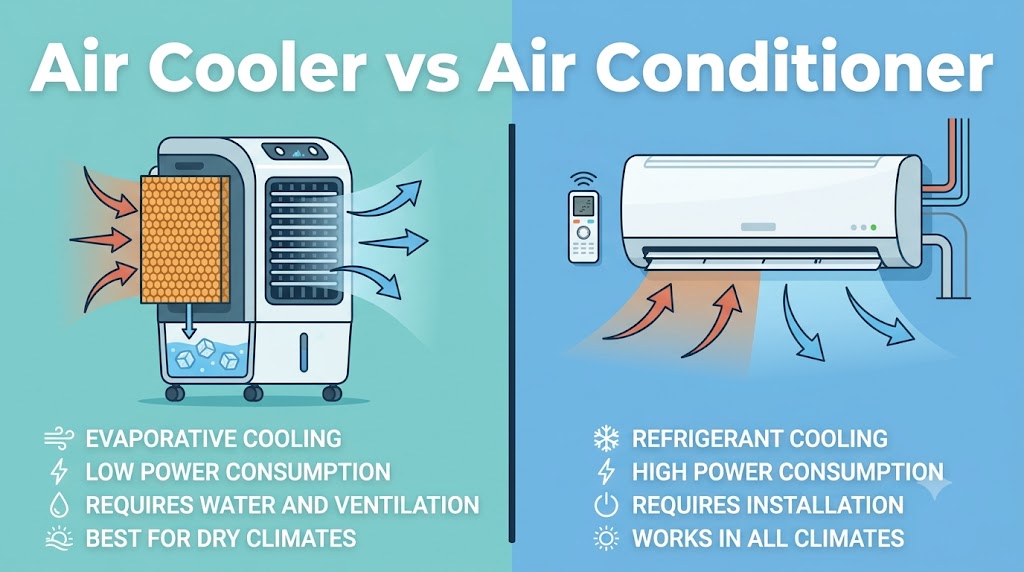
An air cooler and an air conditioner both help people stay comfortable during hot weather, but they work in different ways. An air cooler uses water evaporation to cool incoming air, while an air conditioner uses a refrigeration system to remove heat from indoor air. This difference affects cooling performance, electricity consumption, humidity, and the conditions in which each appliance works best. An air cooler generally costs less to buy and operate, whereas an AC offers more consistent temperature control and can remove excess moisture from a room.
The right choice depends mainly on your local climate, budget, room ventilation, and cooling requirements. An air cooler can be a practical option in hot, dry weather when fresh air can circulate through the room. An AC is generally more suitable for humid weather, enclosed bedrooms, and situations where you need consistent cooling. Before making a purchase, consider the appliance’s power consumption, water requirements, maintenance, installation costs, and expected daily use. Neither option is ideal for every home, so comparing their practical advantages is more useful than choosing based on price alone.
Quick Comparison Table
| Feature | Air Cooler | Air Conditioner |
|---|---|---|
| Cooling method | Evaporative cooling using water | Refrigeration cycle |
| Cooling performance | Best in hot, dry conditions | Consistent cooling in dry and humid conditions |
| Electricity consumption | Generally low | Generally higher |
| Purchase cost | Usually lower | Usually higher |
| Humidity | Adds moisture to the air | Usually removes moisture while cooling |
| Ventilation | Requires adequate fresh-air circulation | Works best in a closed room |
| Water requirement | Usually requires water | Does not require regular water refilling for cooling |
| Temperature control | Usually limited | Precise thermostat control |
| Portability | Many models are movable | Usually fixed after installation |
| Maintenance | Tank, pads, and filters need cleaning | Filters, coils, drainage, and other components need maintenance |
| Best suited for | Dry climates and budget-conscious cooling | Humid climates and consistent indoor comfort |
Air Cooler vs Air Conditioner: Key Differences
1. Cooling Performance
An air cooler draws warm air through water-soaked cooling pads. As water evaporates, it absorbs heat and lowers the temperature of the outgoing air. Its effectiveness depends heavily on the humidity of the incoming air and the ventilation available.
An air conditioner removes heat through a refrigerant-based system and can maintain a selected indoor temperature. It generally provides more reliable cooling when outdoor humidity is high or when a room needs to remain comfortably cool for several hours.
Verdict: AC wins for consistent cooling; an air cooler can work well in dry weather.
2. Electricity Consumption
Air coolers generally consume less electricity because they mainly operate a fan and water pump. Their exact consumption depends on the model, fan speed, and pump design.
An AC operates a compressor and other components that usually require considerably more electricity. However, its consumption varies with cooling capacity, inverter technology, outdoor temperature, thermostat setting, and room insulation.
Check the rated power consumption of the actual appliances before estimating your electricity bill.
Verdict: Air cooler wins for lower electricity consumption.
3. Purchase Price and Installation
Air coolers are usually less expensive to purchase and generally need no professional installation. You need a suitable location, an electrical outlet, and access to water.
An AC generally costs more initially. A split AC also requires professional installation, including refrigerant piping, drainage, and electrical connections. Window ACs have different installation requirements.
For a fair comparison, include the purchase price, installation, accessories, and any electrical work.
Verdict: Air cooler generally wins for lower initial cost.
4. Performance in Dry and Humid Weather
An air cooler works best when the air is relatively dry because evaporation becomes less effective as humidity rises. It also increases the moisture content of the air it releases.
An AC can cool and dehumidify indoor air, making it more suitable for humid weather, including muggy monsoon conditions. In dry weather, an air cooler may offer sufficient comfort at a lower operating cost.
Verdict: Air cooler wins in suitable dry conditions; AC wins in humid conditions.
5. Electricity Bill and Long-Term Cost
Because an air cooler typically consumes less electricity, it can be an economical choice for households that have suitable weather conditions and ventilation.
An AC costs more to operate in many comparable household situations, but it may be worth the expense when consistent cooling and humidity control are essential. The total cost depends on the appliance’s purchase price, daily operating hours, electricity tariff, and maintenance.
Verdict: Air cooler generally wins on running costs; AC may offer better comfort for the additional expense.
6. Humidity and Indoor Comfort
Air coolers add moisture to the air. This can feel refreshing in dry weather, but excessive humidity can make a room feel sticky and uncomfortable.
An AC normally removes some moisture as indoor air passes over its cold evaporator coil. This helps control humidity while cooling the room, although the result depends on the AC’s operation and conditions.
Verdict: AC wins when controlling excess indoor humidity is important.
7. Maintenance and Water Requirements
An air cooler needs regular water refilling, tank cleaning, and inspection of its cooling pads and pump. Neglected water tanks can develop deposits, odours, and microbial growth.
An AC needs regular filter cleaning and periodic servicing. Its coils, drainage system, and outdoor unit also require attention. Professional repair may be necessary if the refrigerant circuit or other components develop a fault.
Verdict: Depends on the appliance and maintenance routine; neither is maintenance-free.
8. Portability and Power Cuts
Many air coolers can be moved between rooms, provided there is adequate airflow and a suitable electrical supply. Their relatively low power demand may also make them easier to operate using a compatible home inverter.
An AC is generally installed in a fixed location. Running it during a power cut requires an inverter or backup system capable of handling its electrical demand, including compressor startup where relevant.
Verdict: Air cooler wins for portability and easier backup-power use.
Which One Should You Choose?
Choose an Air Cooler If:
- You live in a hot, relatively dry climate.
- You want to keep the purchase price and electricity bill lower.
- Your room has good ventilation.
- You can regularly refill and clean its water tank.
- You do not need precise temperature control.
Choose an Air Conditioner If:
- You need reliable cooling in humid weather.
- You want to control the room temperature.
- You prefer to keep windows and doors closed while cooling.
- You need more comfortable sleeping conditions during hot nights.
- Your budget covers the higher purchase and running costs.
Final Verdict: Air Cooler vs Air Conditioner
An air cooler is generally the economical choice for hot, dry weather, especially when the room has adequate ventilation and electricity savings are a priority. An air conditioner is usually better for consistent cooling, humid conditions, and enclosed rooms where temperature and moisture control matter.
For households facing both dry summer heat and humid monsoon weather, using an air cooler during dry periods and an AC when humidity rises may be practical if the budget allows. Compare your climate, room conditions, power consumption, and overall costs before deciding.
Disclaimer
Prices, specifications, power consumption, and availability vary by model and location. Actual cooling performance depends on outdoor humidity, ventilation, room size, appliance capacity, maintenance, and usage. Check manufacturer specifications and local electricity tariffs before purchasing.