Direct Cool vs Frost Free Refrigerator
Introduction
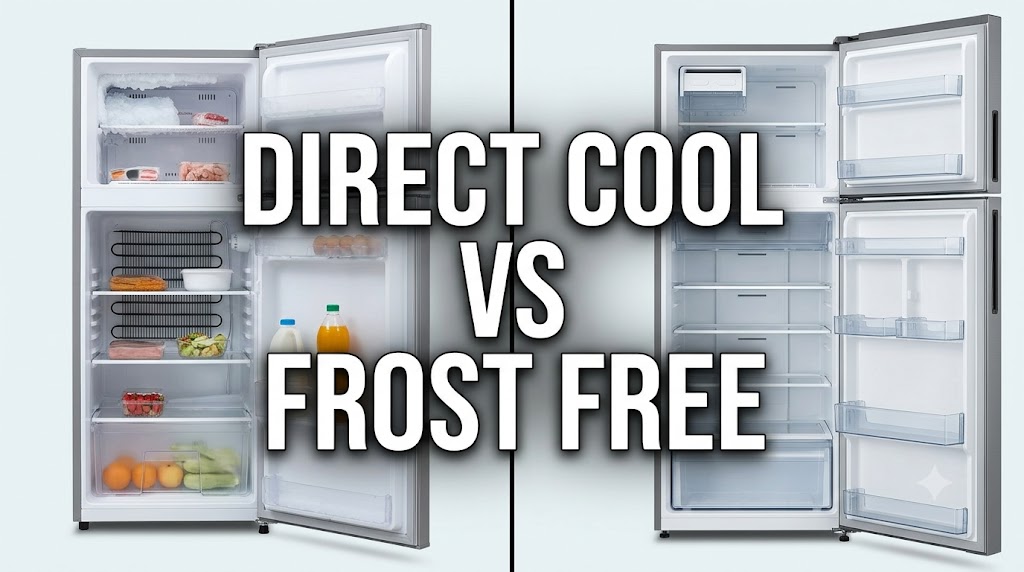
Choosing between a direct cool and a frost free refrigerator depends on your household size, food storage needs, budget, and willingness to perform regular maintenance. Both types are designed to keep food fresh, but they use different cooling methods. A direct cool refrigerator generally relies on natural convection to distribute cold air, while a frost free refrigerator uses a fan-assisted cooling system to circulate cold air throughout the compartment. Understanding these differences can help you select a refrigerator that suits your daily routine without paying for features you may not need.
The main difference between direct cool and frost free refrigerators is how they distribute cold air and manage ice formation. Direct cool models are commonly available in smaller capacities and may suit individuals or small families looking for a straightforward refrigerator. Frost free models are often preferred by households that need more storage space and want to avoid manually defrosting the freezer. However, actual electricity consumption, cooling performance, storage capacity, and price depend on the specific model. Comparing these factors is more useful than choosing a refrigerator based on its cooling technology alone.
Quick Comparison Table
| Feature | Direct Cool Refrigerator | Frost Free Refrigerator |
|---|---|---|
| Cooling method | Mainly natural convection | Fan-assisted air circulation |
| Ice formation | Ice can build up in the freezer | Designed to prevent significant frost buildup |
| Manual defrosting | Usually required periodically | Generally not required |
| Temperature distribution | Can be less uniform | Generally more uniform |
| Maintenance | Requires occasional defrosting | Automatic defrost system needs less routine intervention |
| Available capacity | Commonly found in smaller models | Available in a wide range of capacities |
| Electricity consumption | Can be lower in comparable smaller models | Depends on capacity, efficiency rating, and model |
| Purchase price | Often more affordable | Often costs more for comparable capacity and features |
| Best suited for | Budget-conscious users and smaller households | Families seeking convenience and easier freezer maintenance |
1. Cooling Technology
Direct Cool Refrigerator
A direct cool refrigerator cools its compartment primarily through natural convection. Cold air circulates without the fan-assisted distribution used in typical frost free models. Temperature differences may occur between different areas of the refrigerator, depending on its design and how food is arranged.
Frost Free Refrigerator
A frost free refrigerator uses a fan to circulate cold air through the compartment. Its automatic defrost system periodically removes frost from the evaporator, helping prevent ice buildup that would otherwise require manual defrosting.
Winner: Frost free for more consistent air circulation and reduced frost buildup.
2. Ice Formation and Defrosting
Direct Cool Refrigerator
Ice can accumulate inside the freezer over time. When the buildup becomes excessive, the refrigerator generally needs to be switched off and defrosted according to the manufacturer’s instructions. This requires some time and attention.
Frost Free Refrigerator
The automatic defrost system manages frost buildup without requiring routine manual defrosting. This is especially convenient for people who regularly store frozen food or use the freezer frequently.
Winner: Frost free because it reduces the need for manual defrosting.
3. Electricity Consumption
Direct Cool Refrigerator
Direct cool refrigerators may consume less electricity than larger frost free models because many direct cool units have smaller capacities and simpler cooling systems. However, this is not a universal rule.
Frost Free Refrigerator
Frost free refrigerators use electricity for components such as the circulation fan and automatic defrost system. Their actual consumption depends on the refrigerator’s size, insulation, compressor technology, energy rating, and usage conditions.
Winner: Depends. Compare the annual electricity consumption printed on the energy label for models of similar capacity rather than assuming one technology always saves more electricity.
4. Purchase Price
Direct Cool Refrigerator
Direct cool models are often available at lower prices, making them a practical option for buyers who want basic refrigeration without spending more on additional convenience features.
Frost Free Refrigerator
Frost free models often cost more when comparing similar capacities and feature levels. The additional expense may be worthwhile for households that value automatic defrosting and convenient food storage.
Winner: Direct cool for buyers prioritising a lower initial purchase price.
5. Storage Capacity and Food Organisation
Direct Cool Refrigerator
Direct cool refrigerators are commonly available in smaller capacities, although availability varies by manufacturer. They can be suitable for individuals, couples, or small families with limited storage requirements.
Frost Free Refrigerator
Frost free refrigerators are available in many sizes, including larger models designed for family use. Their air circulation system can help maintain cooling throughout the compartment, although food should still be arranged according to the manufacturer’s instructions.
Winner: Frost free for households that need a larger selection of capacities and convenient storage options.
6. Food Freshness and Cooling Performance
Direct Cool Refrigerator
Direct cool models can preserve food effectively when operated at the recommended temperature. However, temperature distribution may vary between locations inside the compartment, so proper food placement is important.
Frost Free Refrigerator
Fan-assisted circulation can help distribute cold air more evenly. Nevertheless, uncovered food may dry out more quickly in some fan-assisted systems, so storing food in suitable containers is advisable.
Winner: Frost free for generally more uniform cooling, although actual performance depends on the individual model.
7. Maintenance and Convenience
Direct Cool Refrigerator
The main inconvenience is periodic manual defrosting. Users also need to clean the refrigerator and follow normal maintenance instructions to keep it working properly.
Frost Free Refrigerator
Automatic defrosting reduces routine work related to ice buildup. The refrigerator still requires cleaning and proper ventilation, and any faults in its cooling or defrosting system may need professional attention.
Winner: Frost free for everyday convenience and reduced defrosting effort.
8. Which Refrigerator Is Better for Your Household?
Choose a Direct Cool Refrigerator If:
- You want a refrigerator with a lower initial purchase price.
- Your household has modest food storage requirements.
- You do not mind defrosting the freezer periodically.
- You find a model with suitable capacity and energy consumption for your needs.
Choose a Frost Free Refrigerator If:
- You want to avoid routine manual defrosting.
- Your family needs more freezer or refrigerator space.
- You prefer fan-assisted cooling and convenient food organisation.
- You are willing to compare models and potentially pay more for added convenience.
Final Verdict: Direct Cool vs Frost Free Refrigerator
A frost free refrigerator is generally the more convenient choice for households that want to avoid manual defrosting and prefer fan-assisted cooling. A direct cool refrigerator can be a sensible alternative for buyers who want a straightforward, potentially more affordable model and do not mind occasional maintenance.
Neither type is automatically better in every situation. Before purchasing, compare the actual capacity, annual electricity consumption, energy rating, warranty, price, and features of the specific models you are considering.
Disclaimer
Refrigerator prices, capacities, energy ratings, and features vary by manufacturer and model. Cooling performance and electricity consumption also depend on usage conditions. Check the latest product specifications and energy label before making a purchase.