Solar Water Heater vs Electric Water Heater
Introduction
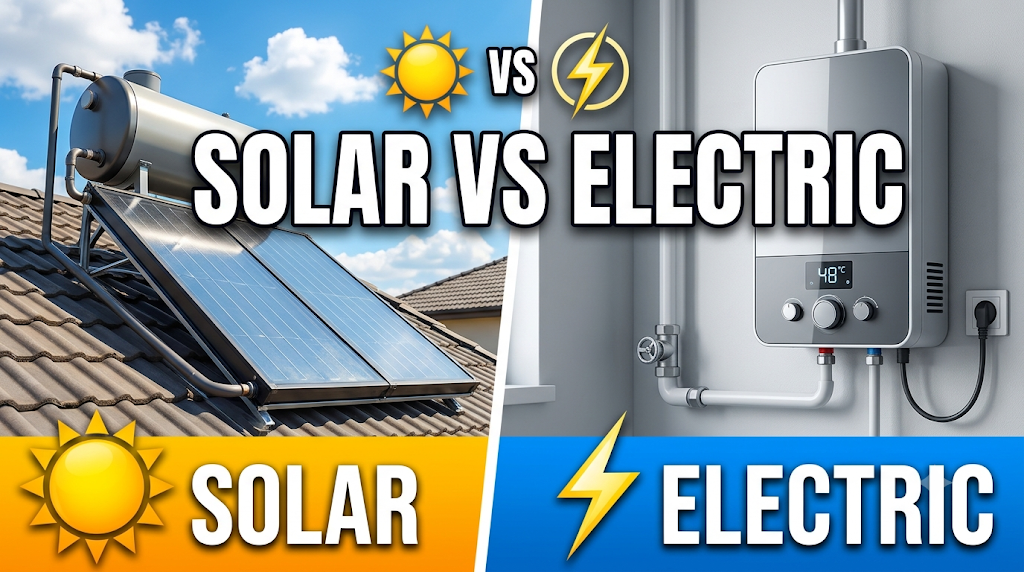
Water heaters are essential household appliances used for bathing, washing and other daily activities. Two popular options are solar water heaters and electric water heaters. Both provide hot water, but they use different energy sources. A solar water heater uses sunlight to heat water, while an electric water heater uses electricity to raise the water temperature. The choice between these systems depends on household requirements, available sunlight, electricity costs, installation space and the amount of hot water needed.
Solar water heaters are often considered by households looking to reduce electricity consumption over the long term. They can use free solar energy during suitable weather conditions, although their performance depends on sunlight availability. Electric water heaters, on the other hand, provide convenient water heating without depending on sunlight and are available in different storage and instant models. Comparing their operating costs, installation requirements, heating performance and maintenance needs can help homeowners select the right option.
Quick Comparison Table
| Feature | Solar Water Heater | Electric Water Heater |
|---|---|---|
| Energy Source | Sunlight | Electricity |
| Heating Cost | Generally lower during sunny conditions | Depends on electricity consumption and tariff |
| Initial Cost | Generally higher | Generally lower |
| Electricity Consumption | Usually low for circulation and controls, if required | Uses electricity for heating |
| Weather Dependency | Yes | No |
| Heating Availability | Depends on sunlight and backup arrangements | Available whenever electricity is supplied |
| Installation | Usually requires rooftop space | Generally requires less space |
| Maintenance | Periodic system inspection | Periodic inspection and descaling |
| Environmental Impact | Lower operational emissions when solar energy supplies the heat | Depends on electricity generation source |
| Backup Requirement | Useful during cloudy weather | Not normally required for heating |
| Best For | Homes with suitable sunlight and regular hot-water demand | Homes needing convenient, on-demand or controlled heating |
1. Working Principle
Solar Water Heater
A solar water heater uses solar collectors to absorb heat from sunlight and transfer it to water.
The heated water is stored in an insulated tank for later use. Common systems include flat plate collectors and evacuated tube collectors.
Some systems use natural circulation, while others use pumps and controllers to move water through the system.
Electric Water Heater
An electric water heater uses an electrical heating element to heat water inside a storage tank or through an instant heating arrangement.
In storage models, water is heated and kept inside an insulated tank until required. Instant models heat water as it flows through the appliance, subject to their rated capacity and water flow.
2. Initial Installation Cost
Solar Water Heater
Solar water heaters generally require a higher initial investment because they include solar collectors, an insulated storage tank, mounting arrangements and associated plumbing.
The installation cost depends on capacity, collector technology, brand and roof requirements.
Electric Water Heater
Electric water heaters are generally less expensive to purchase and install. Their installation normally requires a suitable electrical connection, water supply and appropriate mounting arrangements.
Storage and instant models are available at different price points.
Winner: Electric Water Heater for lower initial purchase and installation costs in most household applications.
3. Electricity Consumption and Running Cost
Solar Water Heater
Solar water heaters use sunlight as their primary heating energy source. Consequently, they can reduce the amount of electricity required for water heating.
Some systems may use electricity for circulation pumps, controllers or backup heating elements.
Electric Water Heater
Electric water heaters consume electricity whenever their heating elements operate.
The actual running cost depends on the appliance’s power rating, water temperature, usage duration, storage losses and electricity tariff.
Winner: Solar Water Heater for reducing electricity consumption when sufficient sunlight is available.
4. Heating Performance
Solar Water Heater
Solar water heaters can heat water effectively during sunny conditions. Their performance depends on sunlight intensity, collector efficiency, water temperature requirements and system capacity.
During cloudy or rainy weather, the heating performance may decrease.
Electric Water Heater
Electric water heaters provide more predictable heating because their operation does not depend on sunlight.
Storage models heat water according to their thermostat settings, while instant models provide hot water within their rated heating capacity.
Winner: Electric Water Heater for predictable heating availability regardless of weather.
5. Installation Space Requirements
Solar Water Heater
Solar water heaters generally require suitable rooftop space for solar collectors and a storage tank.
The roof must have adequate structural strength, suitable sunlight exposure and appropriate installation access.
Electric Water Heater
Electric water heaters generally require less installation space. Small storage and instant models can be installed in bathrooms, kitchens or other suitable locations.
They do not require rooftop solar collectors.
Winner: Electric Water Heater for installation flexibility and smaller space requirements.
6. Maintenance Requirements
Solar Water Heater
Solar water heaters require periodic inspection of collectors, pipes, insulation, storage tanks and associated circulation components.
Depending on water quality and system design, cleaning and removal of mineral deposits may also be necessary.
Electric Water Heater
Electric water heaters require inspection of heating elements, thermostats, electrical connections and storage tanks.
In areas with hard water, mineral deposits can accumulate and may require periodic descaling.
Winner: Electric Water Heater for simpler maintenance in many conventional household installations.
7. Weather Dependency and Hot Water Availability
Solar Water Heater
Solar water heaters depend on sunlight for their primary heating energy. They can perform well in sunny conditions, but prolonged cloudy or rainy weather can reduce the available hot water.
A suitable electric or other backup arrangement can improve reliability.
Electric Water Heater
Electric water heaters do not depend on weather conditions. They can heat water during daytime or nighttime whenever a reliable electricity supply is available.
Winner: Electric Water Heater for weather-independent operation.
8. Environmental Impact
Solar Water Heater
Solar water heaters use renewable solar energy to produce hot water. When sunlight supplies most of the required heat, they can reduce electricity consumption and associated operational emissions.
Electric Water Heater
Electric water heaters use electricity for heating. Their environmental impact depends partly on how that electricity is generated.
They can have lower operational emissions when supplied by electricity generated from renewable sources.
Winner: Solar Water Heater when it replaces electricity generated from fossil fuels.
Advantages and Disadvantages
Solar Water Heater
Advantages
- Uses renewable solar energy.
- Can significantly reduce water-heating electricity consumption.
- Lower running costs during suitable sunny conditions.
- Suitable for households with regular hot-water requirements.
- Can operate for many years with proper maintenance.
Disadvantages
- Higher initial installation cost.
- Depends on sunlight availability.
- Requires suitable rooftop space.
- May need backup heating during cloudy weather.
- Installation and maintenance can be more involved.
Electric Water Heater
Advantages
- Generally lower initial purchase cost.
- Does not depend on sunlight.
- Provides predictable heating when electricity is available.
- Available in instant and storage models.
- Suitable for bathrooms and kitchens.
- Generally straightforward to install.
Disadvantages
- Consumes electricity for water heating.
- Running costs depend on electricity tariffs.
- Storage models can experience standby heat losses.
- Heating capacity depends on the appliance rating.
- Heating elements may require descaling in hard-water areas.
Which Is Better: Solar Water Heater or Electric Water Heater?
Both water-heating systems have different advantages, and the better choice depends on household usage and installation conditions.
A solar water heater is generally better for households with suitable rooftop space, good sunlight exposure and regular hot-water requirements. Although its initial cost is higher, it can reduce electricity consumption and operating expenses over time.
An electric water heater is better for households that need convenient and predictable hot water without depending on sunlight. It is also a practical option for apartments, smaller homes and locations where rooftop installation is difficult.
Final Verdict: Solar Water Heater is generally better for long-term electricity savings in sunny locations, while Electric Water Heater is better for lower initial investment, convenience and weather-independent heating.
Frequently Asked Questions (FAQs)
1. Which is cheaper to operate, a solar or electric water heater?
A solar water heater generally has lower operating costs when sufficient sunlight is available because it uses solar energy instead of electricity for most heating.
2. Does a solar water heater work during cloudy weather?
Yes, but its heating performance may decrease when sunlight is limited. A backup heating arrangement can help maintain hot-water availability.
3. Is an electric water heater better for winter?
An electric water heater provides more predictable heating during winter because it does not depend on sunlight. A solar water heater can also work in winter when sufficient sunlight is available.
4. Can a solar water heater completely replace an electric water heater?
It can meet a large portion of household hot-water requirements, but backup heating may be needed during prolonged cloudy weather or periods of high demand.
5. Which water heater is better for a family?
The right choice depends on family size, daily hot-water consumption, available installation space and budget. Larger households with regular hot-water demand may benefit from a properly sized solar water heater.
6. Does a solar water heater need electricity?
Many solar water heaters can operate without electricity through natural circulation. Pump-based systems and backup heating arrangements may require electricity.
7. Which water heater is more environmentally friendly?
A solar water heater generally has a lower operational environmental impact when it replaces electricity generated from fossil fuels. The environmental impact of an electric water heater depends on the electricity source.
Disclaimer
Water heater prices, heating capacity, electricity consumption and operating costs may vary depending on manufacturer, model, household usage, water quality, weather conditions, electricity tariffs and installation requirements. Consult a qualified installer before selecting a water-heating system.