Copper Coil vs Aluminum Coil AC
Introduction
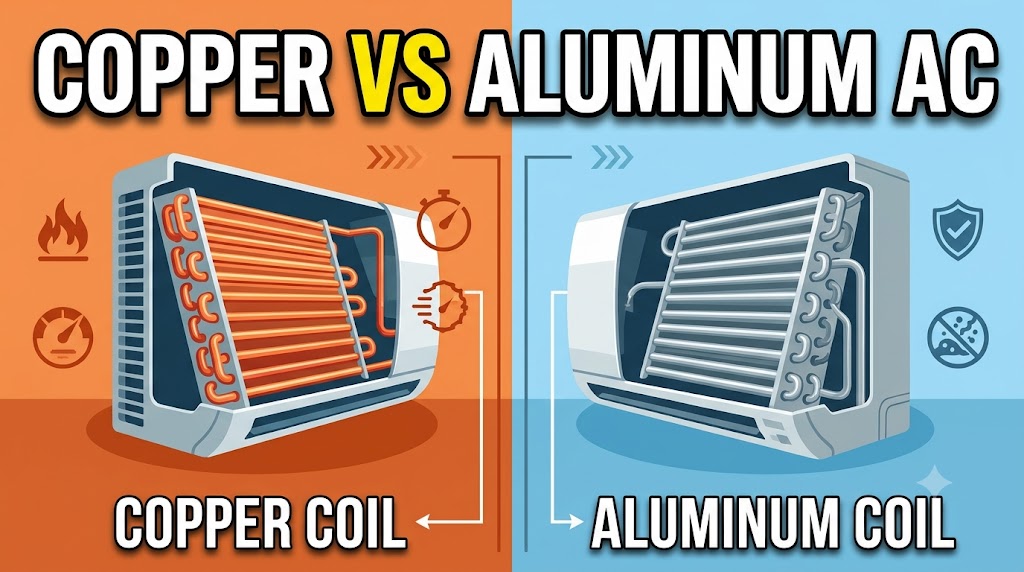
When buying an air conditioner, the coil material is an important factor to consider because it affects heat transfer, durability, maintenance, and repair options. Copper coil ACs use copper tubing in their heat exchangers, while aluminium coil ACs use aluminium-based tubing or heat-exchanger designs. Both materials can be used to build effective air conditioners, but their properties and repair requirements differ. Choosing the right option requires more than comparing the metal alone. You should also consider the AC’s design, protective coating, warranty, service availability, and expected usage.
A copper coil AC is often preferred by buyers who value conventional repairability and long-term serviceability. Aluminium coil designs can offer advantages in weight, manufacturing cost, and certain heat-exchanger configurations. However, neither material guarantees a longer lifespan or lower electricity bill in every model. The actual cooling performance depends on the complete heat-exchanger design, airflow, compressor, refrigerant system, and installation. Before purchasing an AC, check which components use copper or aluminium, as some air conditioners combine copper tubes with aluminium fins rather than using a single material throughout.
Quick Comparison Table
| Feature | Copper Coil AC | Aluminium Coil AC |
|---|---|---|
| Heat transfer | Higher thermal conductivity as a material | Lower thermal conductivity as a material |
| Cooling performance | Depends on the complete AC design | Can provide effective cooling with good design |
| Repairability | Conventional copper-tube repairs are generally easier | Repairs can be more difficult and may require replacement |
| Weight | Copper tubing is relatively heavy | Aluminium is lightweight |
| Manufacturing cost | Copper material is generally more expensive | Aluminium is generally less expensive |
| Corrosion behaviour | Generally good resistance, but not corrosion-proof | Forms a protective oxide layer, but can still corrode |
| Maintenance | Requires regular cleaning and inspection | Requires regular cleaning and inspection |
| Best suited for | Buyers prioritising repairability and serviceability | Buyers considering lightweight designs and upfront cost |
Copper Coil vs Aluminium Coil AC: Key Differences
1. Heat Transfer and Cooling Performance
Copper has higher thermal conductivity than aluminium, meaning heat can travel through copper more readily under comparable conditions. However, the performance of an AC coil depends on more than the metal’s conductivity.
Tube dimensions, fin design, surface area, refrigerant flow, and airflow all affect how effectively heat moves through the system. A well-engineered aluminium heat exchanger can deliver effective cooling, so a copper coil alone does not guarantee that an AC will cool a room faster.
Verdict: Copper has the material-level advantage in thermal conductivity, but overall cooling performance depends on the complete AC design.
2. Durability and Lifespan
Copper tubing is widely used in air-conditioning systems and is valued for its strength and serviceability. It can still develop leaks or corrosion under certain conditions.
Aluminium coils can also provide reliable service when correctly designed, manufactured, installed, and maintained. Their lifespan depends on the specific construction, environmental exposure, and protection against corrosion.
Instead of assuming one material will always last longer, check the manufacturer’s warranty, coil construction, and availability of replacement parts.
Verdict: Copper is often preferred for conventional tubing durability, but the actual lifespan depends on the design and operating environment.
3. Repair and Maintenance Costs
One of copper’s practical advantages is that a technician can often repair a damaged copper tube using established joining or brazing methods, provided the damage and repair location permit it.
Aluminium tubing can require specialised repair techniques and equipment. Depending on the type and location of the damage, replacing the coil may be more practical than repairing it.
The final bill depends on the extent of damage, labour, refrigerant handling, spare-part prices, and warranty coverage. Neither material eliminates the need for regular servicing.
Verdict: Copper generally wins for repairability and flexibility in conventional field repairs.
4. Corrosion Resistance
Both copper and aluminium can corrode, but they react differently to environmental conditions. Copper generally performs well in many HVAC applications, while aluminium forms a naturally occurring oxide layer that provides some protection.
Moisture, salt in coastal air, industrial pollutants, chemical contaminants, and contact between dissimilar metals can affect coil condition. Protective coatings may help, depending on the design and exposure.
If you live in a coastal or heavily polluted area, check whether the manufacturer offers a suitable anti-corrosion coating and what its warranty covers.
Verdict: Copper is often a strong choice for conventional coil construction, but corrosion resistance depends on the full assembly, coating, and environment.
5. Purchase Price
Copper is generally more expensive as a raw material than aluminium. This can affect manufacturing costs, although the final price of an AC also depends on its capacity, compressor, features, brand, and efficiency.
An aluminium coil model may be attractive when the initial budget is limited. A copper coil model may justify a higher price if its serviceability and repair options better match your needs.
Compare ACs with similar cooling capacities and features instead of comparing prices alone.
Verdict: Aluminium may offer an upfront cost advantage, but actual AC prices vary by model.
6. Weight and Design
Aluminium is lighter than copper, making it useful for heat-exchanger designs where reducing material weight is beneficial. Some modern aluminium heat exchangers use compact, specialised structures rather than conventional round tubes.
Copper tubing is heavier, but its thermal conductivity and established repair methods make it attractive in many conventional AC designs.
The weight of the entire air conditioner also depends on its casing, compressor, fans, and other components.
Verdict: Aluminium wins for material weight; the complete unit’s weight depends on its construction.
7. Electricity Consumption
Coil material alone does not determine an AC’s electricity consumption. The compressor, inverter control, heat-exchanger design, rated efficiency, refrigerant system, room conditions, and operating hours all matter.
A copper coil AC is not automatically more energy-efficient than every aluminium coil AC. For a fair comparison, check the BEE star rating, annual energy consumption, and rated efficiency figures of the specific models.
Verdict: Depends on the model’s measured energy performance, not just coil material.
Which AC Should You Choose?
Choose a Copper Coil AC If:
- You prioritise conventional repairability.
- You want more flexibility when a repairable copper-tube leak occurs.
- You have access to technicians who service copper-tube systems.
- The price, warranty, and other specifications are suitable for your needs.
Choose an Aluminium Coil AC If:
- You want to consider a potentially more affordable model.
- You prefer a lightweight heat-exchanger design.
- The manufacturer offers suitable warranty and service support.
- The actual efficiency and reliability specifications meet your requirements.
Final Verdict: Copper Coil vs Aluminium Coil AC
A copper coil AC is often the more practical choice for buyers who prioritise conventional repairability and serviceability. Aluminium coil ACs can also be effective and may offer advantages in weight and manufacturing cost.
However, copper does not automatically guarantee faster cooling, lower electricity bills, or a longer lifespan. Before buying, compare the complete heat-exchanger design, BEE energy label, corrosion protection, warranty, repair options, and total ownership cost. The better AC is the one that offers suitable cooling performance and dependable service at a price you can justify.
Disclaimer
AC specifications, prices, warranties, and service availability may change. Coil construction differs between models, and some ACs combine copper tubing with aluminium fins. Actual cooling performance, energy consumption, corrosion resistance, and repair costs depend on the complete design, installation, usage, and local service conditions. Verify the manufacturer’s specifications before purchasing.