String Inverter vs Hybrid Inverter
Introduction
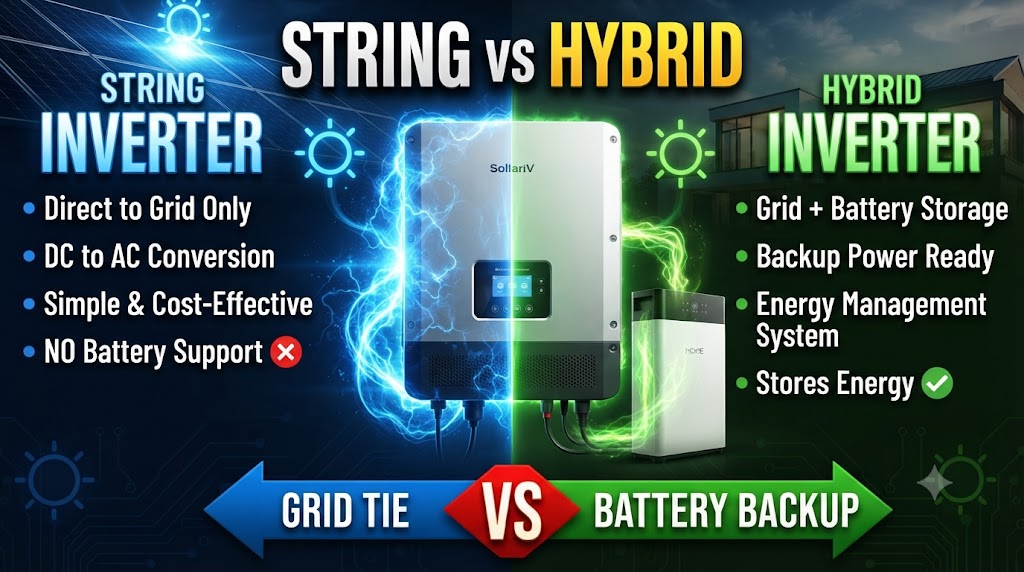
A string inverter and a hybrid inverter are two types of solar inverters used in residential and commercial solar power systems. Both convert the DC electricity generated by solar panels into AC electricity that can power household appliances and electrical equipment. However, their capabilities are different. A conventional string inverter mainly manages solar electricity conversion, while a hybrid inverter can also manage energy storage through compatible batteries.
Choosing between these inverter types depends on how you plan to use solar electricity. If you want a grid-connected solar system without battery storage, a string inverter may be a practical and economical choice. If you want to store excess solar electricity in batteries for use at night or during grid outages, a compatible hybrid inverter may be more suitable.
Quick Comparison Table
| Feature | String Inverter | Hybrid Inverter |
|---|---|---|
| Main function | Converts solar DC into AC | Converts solar DC and manages battery storage |
| Battery compatibility | Usually requires additional compatible equipment | Designed to work with compatible batteries |
| Energy storage | Not directly supported in conventional models | Supported |
| Grid connection | Available in grid-connected models | Available in grid-connected models |
| Backup power | Usually needs additional equipment | Can support backup with suitable configuration |
| Initial cost | Generally lower | Generally higher |
| System complexity | Relatively simple | More complex |
| Energy management | Mainly solar power conversion | Solar, battery, and grid energy management |
| Best suited for | Solar systems without batteries | Solar systems with or planning battery storage |
What Is a String Inverter?
A string inverter is a conventional solar inverter connected to a group of solar panels wired together in a series arrangement called a string. It receives DC electricity from the panels and converts it into AC electricity for use in homes or businesses.
String inverters are widely used in grid-connected solar installations. They are generally suitable for systems where the main objective is to generate solar electricity and reduce dependence on grid power without directly adding battery storage.
Advantages of String Inverters
- Lower initial cost: They are generally less expensive than comparable hybrid inverters.
- Simple system design: They mainly focus on converting solar electricity into usable AC power.
- Common technology: Many solar installers are familiar with their installation and servicing.
- Suitable for grid-connected systems: They work well in installations without battery storage.
- Centralised maintenance: The main inverter is usually installed in an accessible location.
Disadvantages of String Inverters
- Limited battery support: Conventional models do not directly manage battery storage.
- Additional equipment may be needed: Battery integration may require a separate inverter or compatible storage equipment.
- Limited backup capability: A standard grid-tied string inverter normally shuts down during a grid outage unless a suitable backup arrangement is installed.
- Less integrated energy management: Solar and battery operation may require separate components.
What Is a Hybrid Inverter?
A hybrid inverter is designed to manage electricity from solar panels, batteries, and the utility grid. It converts solar DC electricity into AC power and can also control battery charging and discharging.
During the day, excess solar electricity can be stored in a compatible battery instead of being used only by household appliances or exported to the grid. When solar generation is insufficient, the stored energy can be used if the system is configured for battery operation.
Some hybrid inverters also support backup power during grid outages. However, backup functionality depends on the inverter model, battery capacity, wiring, and installation configuration.
Advantages of Hybrid Inverters
- Battery integration: They can work with compatible battery storage systems.
- Energy storage: Excess solar electricity can be stored for later use.
- Backup capability: Suitable models can supply selected loads during grid outages.
- Flexible energy management: They can manage solar, battery, and grid electricity.
- Future flexibility: They can be useful when battery storage is part of your long-term plan.
Disadvantages of Hybrid Inverters
- Higher initial cost: They generally cost more than conventional string inverters.
- Battery expense: A battery may be an additional major investment.
- Compatibility requirements: Battery voltage, communication protocols, and inverter specifications must match.
- More complex installation: Proper configuration and electrical protection are important.
- Maintenance considerations: The system includes additional components that may need servicing.
Key Differences Between String Inverter and Hybrid Inverter
1. Battery Compatibility
A conventional string inverter mainly converts solar electricity. A hybrid inverter is designed to manage compatible battery storage as part of the solar system.
2. Electricity Storage
A standard string inverter does not directly store excess solar energy. A hybrid inverter can charge a compatible battery with surplus electricity and use stored energy later.
3. Power Backup During Outages
A conventional grid-tied string inverter generally stops operating during a grid outage for safety reasons. A hybrid inverter with a suitable battery and backup configuration can continue supplying designated loads.
4. Installation Cost
String inverters generally have a lower purchase price because they have fewer integrated energy-management functions. Hybrid inverters usually cost more, and the battery adds to the total project cost.
5. Energy Management
A string inverter primarily manages solar power conversion. A hybrid inverter can coordinate solar generation, battery charging, battery discharge, and grid electricity according to its available operating modes.
6. Future Expansion
A hybrid inverter may make it easier to add battery storage later, provided the model supports the planned battery and system configuration. With a conventional string inverter, adding storage may require additional compatible equipment or changes to the system.
Which Is Better for Different Applications?
| Application | Suitable Option |
|---|---|
| Grid-connected solar without batteries | String inverter |
| Solar system with battery storage | Hybrid inverter |
| Home needing backup during power cuts | Hybrid inverter with suitable battery |
| Lower initial investment | String inverter |
| Storing excess solar electricity | Hybrid inverter |
| Commercial system without battery storage | String inverter |
| Future battery installation planned | Compatible hybrid inverter |
String Inverter vs Hybrid Inverter: Which Should You Choose?
Choose a string inverter if:
- You want a grid-connected solar system without batteries.
- Your main aim is to reduce electricity bills.
- You want a lower initial equipment cost.
- You do not need battery-based backup power.
Choose a hybrid inverter if:
- You want to store excess solar electricity.
- You need backup power during grid outages.
- You plan to install compatible batteries.
- You want integrated management of solar, battery, and grid electricity.
Final Verdict
A string inverter is generally the better choice for a straightforward grid-connected solar installation without battery storage. It offers a simpler design and usually costs less.
A hybrid inverter is a better option when battery storage, backup power, or flexible energy management is important. Although its initial cost is higher, it provides additional capabilities that a conventional string inverter does not offer on its own.
Before purchasing, compare inverter capacity, efficiency, battery compatibility, backup output, warranty, grid requirements, and installation cost. In India, also check the applicable electricity distribution company requirements and solar scheme conditions before finalising your system.
Frequently Asked Questions (FAQs)
1. What is the main difference between a string inverter and a hybrid inverter?
A string inverter mainly converts solar DC electricity into AC electricity. A hybrid inverter can also manage compatible battery storage and grid electricity.
2. Can a string inverter work with batteries?
A conventional string inverter does not directly manage batteries. Battery storage may be added through compatible additional equipment, depending on the system design.
3. Does a hybrid inverter work without a battery?
Many hybrid inverters can operate without a battery, but their available functions depend on the model and configuration. Check the manufacturer’s specifications.
4. Which inverter provides backup during power cuts?
A hybrid inverter can provide backup when it supports backup operation and has a suitable battery and correctly configured backup circuits. Not every hybrid inverter installation automatically provides backup.
5. Is a hybrid inverter more expensive?
Generally, yes. Hybrid inverters usually cost more than conventional string inverters because they include additional battery-management and energy-control capabilities.
6. Which inverter is better for home solar in India?
A string inverter can be suitable for homes using grid-connected solar without battery storage. A hybrid inverter may be more suitable where battery storage and backup power are required.
Disclaimer
Solar inverter prices, efficiency, battery compatibility, backup capacity, and warranties vary by manufacturer and model. Not every hybrid inverter supports every battery or provides backup power automatically. Always check the technical datasheet, applicable grid requirements, and installation conditions before purchasing. Consult a qualified solar installer for system selection.