Front Load vs Top Load Washing Machine
Introduction
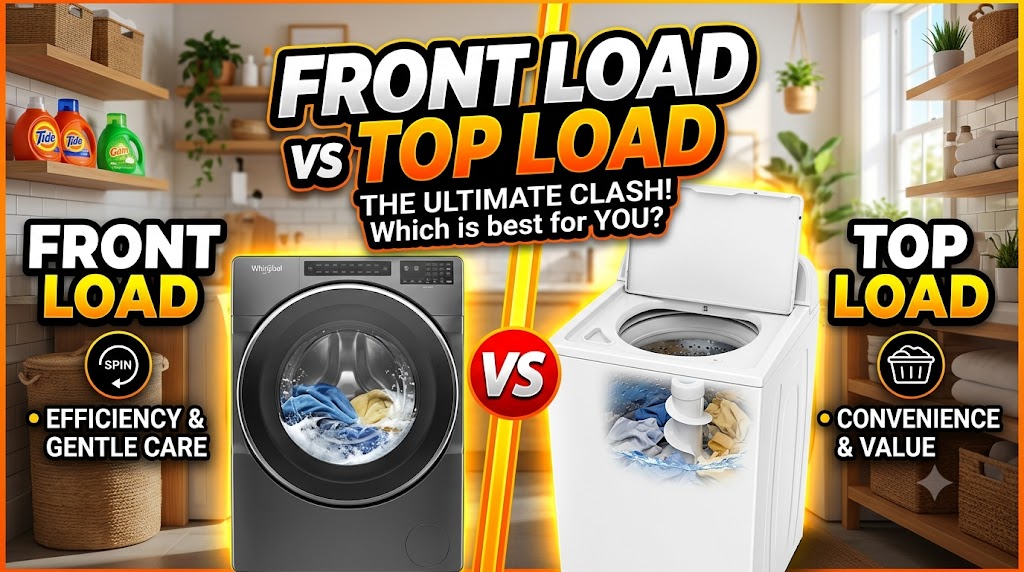
Choosing between a front load and a top load washing machine depends on your laundry habits, available space, budget, and expectations for cleaning performance. Both types are designed to wash everyday clothes, bedsheets, towels, and other washable fabrics, but they differ in how they handle clothes, how much water they may use, and how convenient they are to operate. A front load washing machine opens from the front, while a top load washing machine opens from the top. Understanding these differences can help you choose a machine that suits your household.
The better option is not the same for every family. Front load washing machines are often a good choice for households that prioritise water efficiency, fabric care, and effective cleaning with suitable wash programs. Top load models can be more convenient for people who prefer loading clothes while standing and do not want to bend as much. However, performance, energy consumption, maintenance, and washing capacity vary by model. Before buying, compare the machine’s actual specifications and features rather than choosing based only on its loading design or advertised price.
Quick Comparison Table
| Feature | Front Load Washing Machine | Top Load Washing Machine |
|---|---|---|
| Loading method | Door at the front | Lid at the top |
| Water consumption | Generally lower | Often higher in traditional models |
| Cleaning performance | Very good with suitable cycles | Very good, depending on the model |
| Fabric care | Often gentler due to tumbling action | Depends on the agitator or impeller design |
| Electricity consumption | Often efficient, especially with suitable programs | Varies by model and wash technology |
| Loading convenience | Requires bending to load clothes | Easier to load while standing |
| Adding forgotten clothes | Depends on the model and cycle | Often easier, depending on the model |
| Washing time | Some cycles can be longer | Some cycles can be shorter |
| Space requirements | Requires front-door clearance | Requires clearance above the machine |
| Maintenance | Door gasket and detergent drawer need cleaning | Tub and dispenser need regular cleaning |
| Best suited for | Efficiency-focused households | People who prioritise convenient loading |
1. Washing Mechanism and Cleaning Performance

Front Load
Clothes tumble inside a horizontal drum, lifting and dropping through the wash. This action can provide effective cleaning with relatively gentle fabric handling.

Top Load
Clothes move inside a vertical drum using an agitator or impeller. The exact washing action depends on the machine’s design.
Front load machines are often a good choice for households that wash delicate garments alongside everyday clothes. Their tumbling action can clean effectively without relying on a central agitator. However, you still need to select the correct program for fabrics and stains.
Top load machines can also deliver very good cleaning results. Models with different wash motions are available, so performance depends on the design, detergent, load size, and selected cycle. Neither type guarantees removal of every stubborn stain.
Electrolux India
+1
Winner: Front Load for gentle fabric care; overall cleaning depends on the model and wash program.
2. Water Consumption
Water consumption is one of the most important differences between these washing machines.
Front load machines generally use less water because they tumble clothes through a controlled amount of water rather than filling the tub to the same level as many traditional top load models.
Traditional top load machines often use more water, especially when deep-water settings are selected. However, some high-efficiency top load models can also reduce water consumption considerably.
Electrolux India
+1
For households where water supply is limited or water must be purchased, a water-efficient washing machine may help reduce running costs. Check the manufacturer’s water-consumption figures for the specific model rather than relying only on the machine type.
Winner: Front Load, generally.
3. Electricity Consumption
Electricity use depends on the motor, heating system, load size, water temperature, spin speed, and selected wash program.
Front load machines can be energy-efficient because they typically use less water to wash a load. However, a model that heats water may consume more electricity during hot-water cycles.
Top load machines may complete certain cycles faster, but shorter wash times do not automatically mean lower electricity consumption. Motor efficiency and wash settings also matter.
Before buying, compare the energy-rating label and annual or per-cycle electricity information where available. For a fair comparison, use machines of similar capacity and consider how you actually wash clothes.
Winner: Depends on the specific model and your washing habits.
4. Fabric Care and Clothes Damage
Front load machines generally have an advantage in fabric care because their tumbling action can be gentler than the action of some top load machines with central agitators. They may be a practical choice if your household regularly washes delicate clothes, workwear, and mixed fabrics.
Top load machines vary in their washing mechanisms. An agitator model may produce more direct mechanical action, while an impeller model uses a different movement to circulate clothes. This means not all top load machines treat fabrics in the same way.
In either type, overloading the drum, using an unsuitable cycle, or selecting excessive spin speeds can affect clothing. Follow garment-care labels and use the appropriate program.
Winner: Front Load, generally, for fabric care.
Electrolux India
+1
5. Loading and Unloading Convenience
A top load washing machine allows you to place clothes into the drum from above. This can be convenient for people who find bending difficult or prefer a straightforward loading process.
A front load washing machine requires you to bend or squat to reach the drum unless it is installed on a suitable raised platform. However, a raised installation must be stable and approved for the appliance.
Think about the people who will use the machine every day. A machine that is easier to load comfortably may be more practical even if another model has better water efficiency.
Winner: Top Load for easier loading without bending.
6. Adding Forgotten Clothes
Top load machines often make it easier to add a forgotten garment during a wash cycle, provided the machine permits it and the water level is safe.
Front load machines usually lock the door during parts of the cycle. Some models provide a pause-and-add function, but whether it works depends on the water level, temperature, and stage of the wash.
If you frequently discover missing socks or clothes after starting a wash, check the specific model’s instructions before buying.
Winner: Top Load, generally, for mid-cycle access.
Electrolux India
+1
7. Washing Time
Neither machine type is always faster.
Traditional top load models often offer relatively short everyday wash cycles. Front load machines can take longer because some programs use controlled water levels, tumbling action, and additional rinsing or heating stages.
However, both types have models with quick-wash programs. These programs may be intended for lightly soiled, smaller loads rather than a full load of heavily soiled laundry.
If you need to wash clothes quickly before work or school, compare the duration of the everyday and quick-wash cycles rather than relying on a general rule.
Winner: Top Load in many traditional models, but the specific cycle determines the result.
8. Purchase Price and Running Costs
The purchase price varies by brand, capacity, motor technology, features, and model. Front load machines are often priced higher than basic top load machines, although the difference is not the same across every product range.
Top load models can be attractive if you have a limited initial budget. Front load machines may offer long-term savings through lower water consumption and efficient operation, but actual savings depend on usage and the price difference at purchase.
For a sensible comparison, calculate the total ownership cost:
- Initial purchase price.
- Electricity and water costs.
- Detergent requirements.
- Maintenance and repair expenses.
- Expected service life.
Winner: Top Load for buyers prioritising a lower initial cost; long-term value depends on actual usage and model costs.
9. Space and Installation
Front load machines require enough space in front for the door to open fully. Their flat top can also provide a useful surface for laundry supplies, provided the manufacturer permits the intended use. Some front load models can be stacked with a compatible dryer using the correct installation kit.
Top load machines require sufficient clearance above the lid. Placing shelves or cabinets too close to the machine can make loading and servicing difficult. Their lids also mean that stacking a dryer directly above is generally impractical.
Measure the installation area, including door clearance, plumbing connections, and room to service the machine.
Winner: Depends on the laundry area’s layout.
Electrolux India
+1
10. Maintenance and Hygiene
Both washing machine types require regular cleaning. Detergent residue, moisture, lint, and dirt can build up inside the drum and dispensers.
Front load machines have a door gasket that needs attention. Wiping the gasket and leaving the door open when appropriate can help the interior dry and reduce unpleasant odours.
Top load machines do not have the same front-door gasket arrangement, but their tubs and dispensers still require cleaning. Follow the manufacturer’s maintenance schedule and use only the recommended cleaning products.
Hard water can cause mineral deposits in either type. Correct detergent use and periodic maintenance are important for both.
Winner: Neither universally. Top load machines may avoid some front-gasket cleaning, while both require routine care.
11. Which Washing Machine Is Better for Indian Homes?
The right choice depends on your home’s water supply, budget, laundry routine, and available space.
- Choose Front Load if water efficiency, fabric care, and potentially lower running costs are your priorities.
- Choose Top Load if you prefer easier loading, convenient access, and a potentially lower purchase price.
- For hard water areas: Compare the manufacturer’s guidance for your water conditions, maintenance requirements, and available wash features. Hard water alone does not make one type universally better.
- For a family: Choose capacity according to the size of your household, how often you wash, and the bulky items you need to clean.
Pros and Cons
| Front Load Washing Machine | Top Load Washing Machine |
|---|---|
| Generally uses less water | Easier loading without bending |
| Often gentler on fabrics | Often shorter cycles on traditional models |
| Can offer efficient spinning | Basic models may cost less initially |
| Requires front-door clearance | Requires overhead lid clearance |
| Door gasket needs regular cleaning | May use more water in traditional designs |
| Some models have longer wash cycles | Fabric care varies with wash mechanism |
Final Verdict: Front Load vs Top Load Washing Machine
Front load is the better overall choice for households prioritising water efficiency and fabric care. It is particularly worth considering if you wash clothes frequently and want to reduce water consumption.
However, a top load washing machine may be the better purchase if your budget is limited, you prefer loading clothes without bending, or you value convenient access during a wash cycle. Modern top load models can also provide efficient washing, so compare individual machines before making a decision.
There is no universal winner for every home. The best washing machine is the one that meets your household’s needs while balancing purchase price, running costs, convenience, and maintenance.
Frequently Asked Questions
1. Which washing machine cleans clothes better?
Both types can clean clothes effectively. Front load machines often provide an advantage in fabric care, while the result also depends on the wash mechanism, detergent, cycle, and type of stain.
2. Which washing machine uses less water?
Front load washing machines generally use less water than traditional top load machines. Some high-efficiency top load models can also be water-efficient.
3. Is a front load washing machine worth the extra cost?
It may be worth the extra cost if you value water efficiency, fabric care, and suitable energy-saving features. Compare the purchase price and expected running costs to determine whether the additional expense makes sense.
4. Which washing machine is easier for elderly people to use?
Top load machines can be easier for people who have difficulty bending down. However, reaching clothes at the bottom of a deep top load drum can also be difficult for some users.
5. Which washing machine is better for a large family?
Either type can work well. Choose sufficient capacity for your typical laundry load, and compare the wash programs, efficiency, and space requirements.
Disclaimer
Washing machine features, energy ratings, prices, warranty terms, and maintenance requirements vary by model and may change over time. Check the manufacturer’s specifications and current product details before purchasing.