Heat Pump Dryer vs Condenser Dryer: Which Is Better?
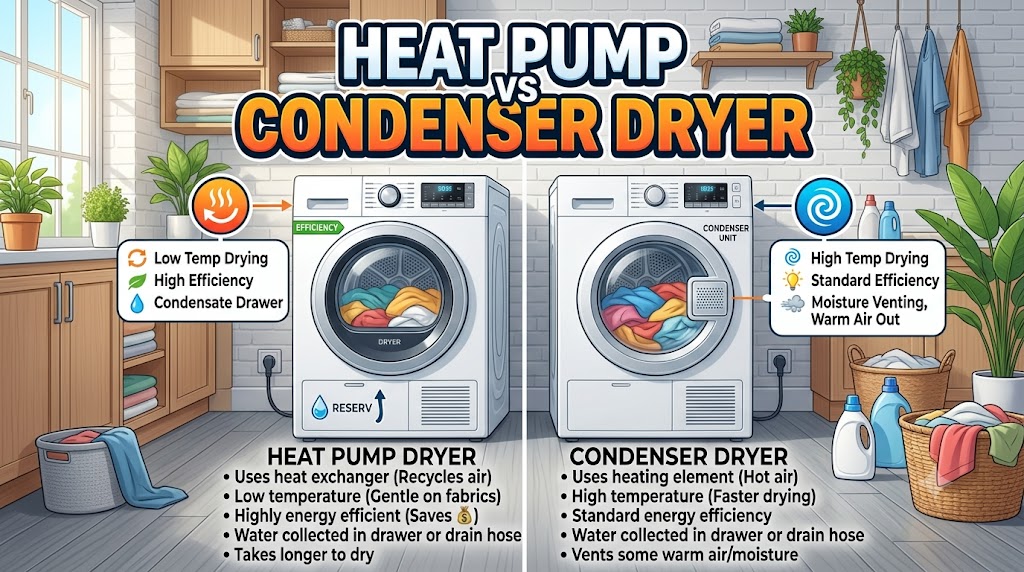
Heat pump dryer vs condenser dryer comparison showing two types of clothes drying appliances

Heat Pump Dryer vs Condenser Dryer Introduction Choosing between a heat pump dryer and a condenser dryer depends on your budget, laundry frequency, electricity costs, available space, and drying requirements. Both appliances dry clothes by removing moisture and collecting the resulting water, but they use different methods to manage heat. A heat pump dryer reuses much of the heat generated during drying, while a conventional condenser dryer generally uses an electric heating element to warm the air. This difference can affect electricity consumption, drying time, purchase price, and the overall…

Read More

Washer Dryer vs Separate Washing Machine and Dryer: Which Is Better?

Washer dryer vs separate washing machine and dryer comparison showing combined and separate laundry appliances

Washer Dryer vs Separate Washing Machine and Dryer Introduction Choosing between a washer dryer and a separate washing machine and dryer depends on your available space, laundry volume, budget, and drying requirements. A washer dryer combines washing and drying functions in one appliance, allowing you to wash clothes and then dry them without transferring the laundry to another machine. A separate setup uses one machine for washing and another for drying. Both options can handle everyday laundry, but they differ in capacity, convenience, drying performance, and how much space they…

Read More

Inverter Washing Machine vs Normal Washing Machine: Which Is Better?

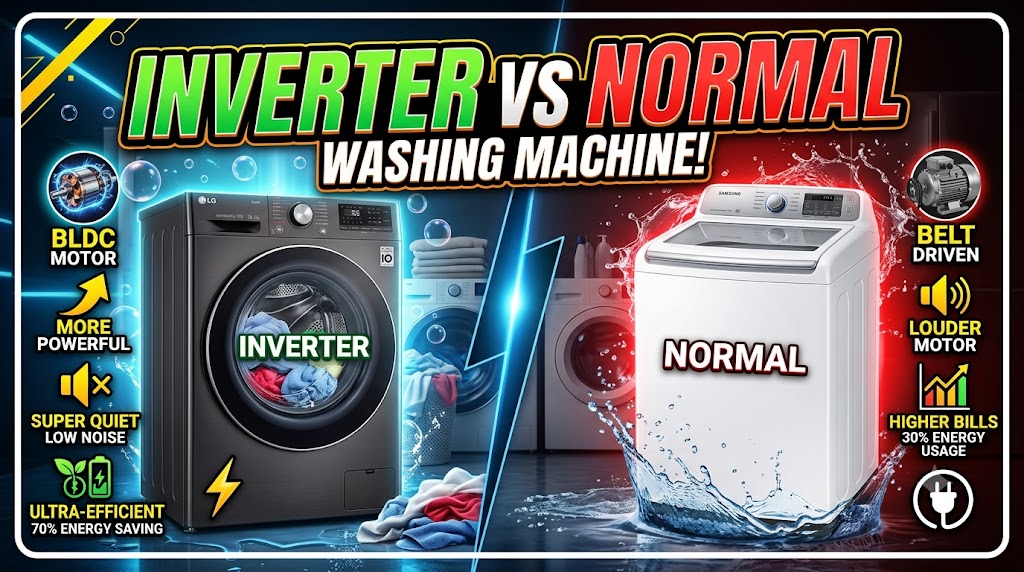
Inverter washing machine vs normal washing machine comparison showing differences in motor technology and efficiency

Inverter Washing Machine vs Normal Washing Machine Introduction Choosing between an inverter washing machine and a normal washing machine depends on your budget, laundry frequency, electricity usage, and preferred features. The main difference is how the motor is controlled. An inverter washing machine uses electronic control to adjust motor operation according to the load and selected program. A normal washing machine may use a conventional motor-control system that operates less flexibly, although designs vary between models. This difference can affect energy consumption, noise, performance, and long-term running costs. An inverter…

Read More

Fully Automatic vs Semi-Automatic Washing Machine: Which Is Better?

Fully automatic vs semi-automatic washing machine comparison showing their designs and operation

Fully Automatic vs Semi-Automatic Washing Machine Introduction Choosing between a fully automatic and a semi-automatic washing machine depends on your budget, water supply, available space, and how much effort you want to spend doing laundry. A fully automatic washing machine handles the washing process with minimal manual intervention, and many models also manage rinsing and spinning automatically. A semi-automatic washing machine usually has separate wash and spin tubs, requiring you to move clothes between them. Both types can clean everyday laundry effectively, but their convenience, water requirements, and operating procedures…

Read More

Front Load vs Top Load Washing Machine: Which Is Better?

Front load vs top load washing machine comparison showing their designs and key differences

Front Load vs Top Load Washing Machine Introduction Choosing between a front load and a top load washing machine depends on your laundry habits, available space, budget, and expectations for cleaning performance. Both types are designed to wash everyday clothes, bedsheets, towels, and other washable fabrics, but they differ in how they handle clothes, how much water they may use, and how convenient they are to operate. A front load washing machine opens from the front, while a top load washing machine opens from the top. Understanding these differences can…

Read More