Solar Street Light vs Grid-Powered Street Light
Introduction
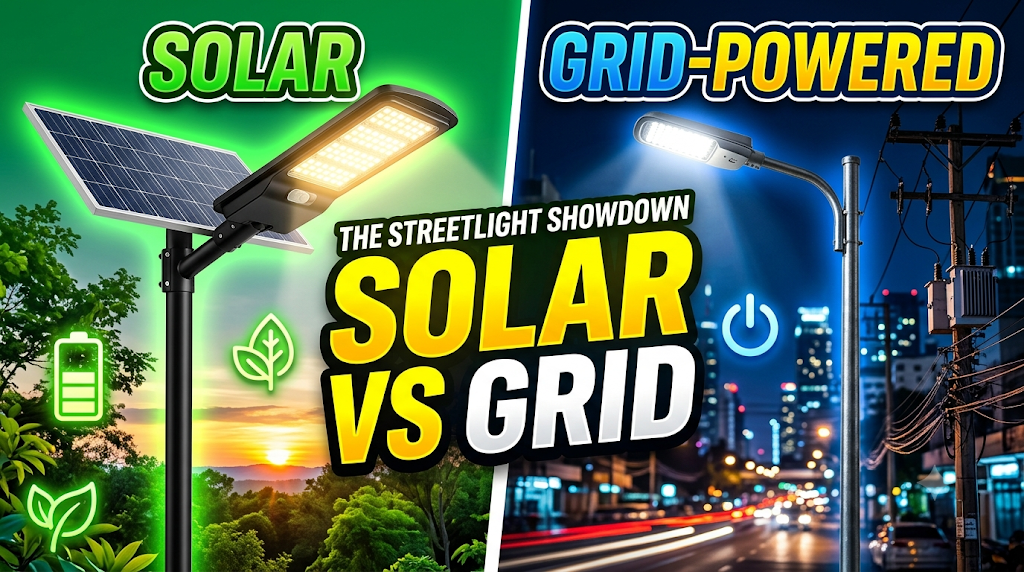
Street lighting is essential for improving visibility, road safety, and security in residential areas, commercial locations, highways, and public spaces. Two commonly used street lighting solutions are solar street lights and grid-powered street lights. Solar street lights use solar panels to generate electricity during the day and store it in batteries for nighttime operation. Grid-powered street lights receive electricity from the conventional power supply and use it to illuminate roads and public areas after sunset. Both systems provide outdoor lighting, but they differ in energy sources, installation costs, operating expenses, maintenance, and reliability.
Choosing between solar street lights and grid-powered street lights depends on installation location, electricity availability, lighting requirements, budget, and long-term operating costs. Solar street lights can operate independently of the electricity grid and reduce dependence on conventional electricity. Grid-powered street lights offer continuous access to the electricity supply without requiring solar batteries. Understanding these differences helps municipalities, businesses, housing societies, and property owners select a suitable street lighting solution.
Quick Comparison Table
| Feature | Solar Street Light | Grid-Powered Street Light |
|---|---|---|
| Energy source | Solar energy | Grid electricity |
| Electricity bill | Generally none for operation | Regular electricity cost |
| Battery requirement | Usually required | Not normally required |
| Solar panel | Required | Not required |
| Initial installation | Can be higher per unit | Depends on grid infrastructure |
| Operating cost | Generally lower | Depends on electricity tariffs |
| Grid dependency | No | Yes |
| Daytime energy storage | Yes | Not required |
| Power outage operation | Can continue with charged battery | Usually stops |
| Maintenance | Panel, battery, and light inspection | Electrical connections and light inspection |
| Installation location | Suitable for remote areas | Requires grid access |
| Environmental impact | Generally lower operational emissions | Depends on electricity generation |
1. What Is a Solar Street Light?
shirunsolar.en.made-in-china.com
A solar street light is an outdoor lighting system that uses solar energy to illuminate roads, streets, parking areas, pathways, and public spaces. It generally consists of a solar panel, rechargeable battery, LED light, charge controller, and mounting pole.
During the daytime, the solar panel converts sunlight into electricity and charges the battery. After sunset, the stored electricity powers the LED light automatically. Many modern solar street lights include light sensors, motion sensors, and automatic brightness controls to manage energy consumption.
Solar street lights are commonly installed in locations where electricity infrastructure is unavailable, expensive, or difficult to extend.
Advantages of Solar Street Lights
- No regular grid electricity bill: They generate their own electricity from sunlight.
- Independent operation: They can operate without a direct connection to the electricity grid.
- Useful during power cuts: Charged batteries can continue supplying lighting during grid outages.
- Suitable for remote locations: They can be installed in villages, rural roads, parks, and isolated areas.
- Lower operational emissions: They use renewable solar energy during operation.
- Flexible installation: They can reduce the need for underground electrical cabling.
Disadvantages of Solar Street Lights
- Higher component requirements: Solar panels, batteries, and controllers add to the system cost.
- Battery replacement: Batteries have a limited service life and eventually require replacement.
- Weather dependency: Extended cloudy or rainy periods can reduce battery charging.
- Panel cleaning: Dust and dirt can reduce solar energy generation.
- Capacity limitations: Battery size and panel capacity must match the required lighting duration and brightness.
2. What Is a Grid-Powered Street Light?
V-Max | Fabricantes Alumbrado Publico | Luminaria Vial LED – CARANDINI
A grid-powered street light is an outdoor lighting system that receives electricity from the conventional power grid. It generally consists of an LED lamp or other lighting fixture, pole, electrical wiring, protective equipment, and a connection to the electricity distribution network.
Electricity is supplied through underground or overhead cables, and the street lights operate according to manual controls, timers, photocells, or central lighting management systems.
These systems are widely used in cities, highways, residential streets, industrial areas, and commercial locations where electricity infrastructure is available.
Advantages of Grid-Powered Street Lights
- Continuous electricity supply: They receive power directly from the grid.
- No battery storage requirement: Standard installations do not require rechargeable batteries.
- Consistent lighting: They can maintain brightness without depending on daily solar charging.
- Suitable for high-power lighting: They can support lighting requirements that may be difficult to meet with smaller standalone solar systems.
- Centralised control: Multiple street lights can be managed through electrical control systems.
- No solar panel cleaning: They do not require solar panel maintenance.
Disadvantages of Grid-Powered Street Lights
- Regular electricity expenses: They increase electricity consumption and operating costs.
- Grid dependency: They generally stop working during power failures unless backup systems are installed.
- Electrical infrastructure: They require suitable wiring, connections, and distribution infrastructure.
- Installation expenses: Cable installation and trenching can increase project costs.
- Environmental impact: Their indirect emissions depend on the electricity generation mix.
3. Solar Street Light vs Grid-Powered Street Light: Key Differences
Energy Source
Solar street lights use solar panels to convert sunlight into electricity, which is stored in rechargeable batteries for nighttime use.
Grid-powered street lights receive electricity from the conventional electricity distribution network.
Winner: Solar Street Light for renewable energy use and independence from grid electricity.
Initial Installation Cost
Solar street lights generally require solar panels, batteries, charge controllers, LED fixtures, and supporting structures. These components can increase the upfront cost of each lighting unit.
Grid-powered street lights require electrical connections and distribution infrastructure. If the grid is already available, their installation can be relatively economical. However, extending cables to remote locations can make the project expensive.
Winner: Depends on existing electrical infrastructure, project size, and equipment specifications.
Operating Cost
Solar street lights generate electricity from sunlight, so they generally do not require regular grid electricity payments. However, battery replacement, cleaning, and maintenance must be included in long-term costs.
Grid-powered street lights consume electricity every night, resulting in recurring electricity expenses. Their operating costs depend on lamp wattage, operating hours, efficiency, and electricity tariffs.
Winner: Solar Street Light for lower routine electricity expenses.
Performance During Power Cuts
Solar street lights use stored battery energy to operate after sunset. They can continue providing illumination during grid power failures if their batteries are adequately charged and functioning properly.
Grid-powered street lights generally depend on the electricity supply. Without backup power, they stop operating during an outage.
Winner: Solar Street Light for independence during grid outages.
Lighting Performance
Solar street lights can provide effective illumination when their solar panels, batteries, and LED fixtures are correctly sized for the required lighting conditions.
Grid-powered street lights can supply consistent electricity and support different lighting capacities. Their performance is not affected by daily solar charging conditions.
Winner: Grid-Powered Street Light for predictable power availability.
Maintenance Requirements
Solar street lights require inspection of solar panels, batteries, controllers, electrical connections, and LED fixtures. Battery condition is particularly important for long-term reliability.
Grid-powered street lights require inspection of electrical connections, cables, control systems, poles, and LED fixtures. They generally do not require battery or solar panel maintenance.
Winner: Grid-Powered Street Light for simpler energy-system maintenance.
Installation in Remote Areas
Solar street lights can operate independently of grid infrastructure, making them suitable for remote roads, villages, farms, and isolated public locations.
Grid-powered street lights need electricity connections. Extending the distribution network to remote locations can increase installation costs.
Winner: Solar Street Light for remote locations.
Environmental Impact
Solar street lights use renewable solar energy and generally have lower operational emissions. However, battery manufacturing, replacement, and disposal also have environmental impacts.
Grid-powered street lights have an environmental impact linked to the electricity generation mix. Their emissions can be reduced when the grid uses more renewable energy.
Winner: Solar Street Light in locations where it replaces electricity generated from fossil fuels.
4. Which Street Lighting System Is Better for Different Locations?
Residential Streets
Both systems can provide suitable lighting for residential streets. Solar street lights can be useful where independent operation and lower electricity bills are priorities. Grid-powered lights may be preferable where reliable electrical infrastructure is already available.
Highways and Main Roads
Grid-powered LED street lights are commonly suitable for highways and major roads where consistent lighting and higher power requirements are important. Solar systems can also work when properly designed for the location and required illumination.
Villages and Rural Areas
Solar street lights are a practical option for villages and rural roads where extending grid connections may be expensive or difficult.
Parks and Walking Paths
Solar street lights can be suitable for parks, gardens, walking paths, and open spaces because they can operate independently without extensive electrical cabling.
Industrial and Commercial Areas
Grid-powered lighting can be suitable for industrial facilities and commercial areas with established electrical infrastructure and higher lighting requirements. Solar street lights can also reduce electricity consumption in suitable outdoor locations.
5. Which Street Light Should You Choose?
Choose Solar Street Lights If:
- You want to reduce regular electricity expenses.
- The installation location has limited grid access.
- You need lighting during electricity outages.
- You are installing lights in villages, parks, or remote roads.
- You want to use renewable energy for outdoor lighting.
Choose Grid-Powered Street Lights If:
- A reliable electricity connection is already available.
- You need predictable electricity supply.
- Your project requires higher lighting capacity.
- You want to avoid battery replacement.
- You prefer a lighting system without solar panels and battery storage.
6. Which System Offers Better Long-Term Value?
The long-term value of solar and grid-powered street lights depends on the complete project cost rather than the initial equipment price alone.
Solar street lights can reduce electricity expenses over their operating life, but batteries eventually require replacement. Their financial benefits also depend on sunlight availability, panel capacity, battery quality, and maintenance requirements.
Grid-powered street lights can have lower initial equipment costs when electrical infrastructure already exists. However, recurring electricity bills can increase total operating expenses over time.
For a fair comparison, project owners should calculate installation costs, electricity consumption, battery replacement, maintenance, and expected operating life.
Conclusion
Solar street lights and grid-powered street lights both provide useful outdoor lighting solutions, but their suitability depends on location, electricity availability, and operating requirements. Solar street lights offer energy independence, lower routine electricity expenses, and advantages in remote areas. Grid-powered street lights provide predictable electricity supply, avoid battery storage requirements, and can be suitable for locations with established electrical infrastructure.
Overall Winner: Solar Street Light is the better choice for remote locations, villages, parks, and projects focused on reducing grid electricity consumption. Grid-Powered Street Light is a strong choice for urban roads, highways, and locations where reliable electrical infrastructure is already available.
Frequently Asked Questions (FAQs)
1. Which is better, solar street lights or grid-powered street lights?
Solar street lights are generally better for remote locations and reducing electricity expenses. Grid-powered street lights are suitable for areas with reliable electricity infrastructure and consistent lighting requirements.
2. Do solar street lights work at night?
Yes. Solar street lights use rechargeable batteries to store electricity generated during the day and power their LED lights at night.
3. How long can a solar street light operate without sunlight?
It depends on battery capacity, lighting power, operating hours, and energy-saving settings. A properly designed system may provide backup for multiple nights, but actual performance varies.
4. Do solar street lights require electricity from the grid?
No. Standalone solar street lights generate and store their own electricity. Some integrated systems may have optional grid backup.
5. Which street light has lower maintenance costs?
Grid-powered street lights generally have simpler energy-system maintenance because they do not require solar panels or batteries. However, solar systems can reduce electricity expenses, so total lifetime costs depend on the installation.
6. Are solar street lights suitable for highways?
Yes. Properly engineered solar street lights can be used on highways, but their lighting output, battery capacity, autonomy, and reliability must meet the road’s lighting requirements.
7. Do solar street lights work during rainy weather?
Yes, if their batteries have sufficient stored energy. However, prolonged cloudy or rainy weather can reduce charging and affect operating duration.
Disclaimer
The information in this article is provided for general educational and comparison purposes. Solar street light prices, battery capacity, lighting output, electricity consumption, installation expenses, and maintenance requirements may vary depending on the manufacturer, model, location, weather conditions, and project requirements. Consult a qualified lighting or electrical professional before selecting and installing a street lighting system.