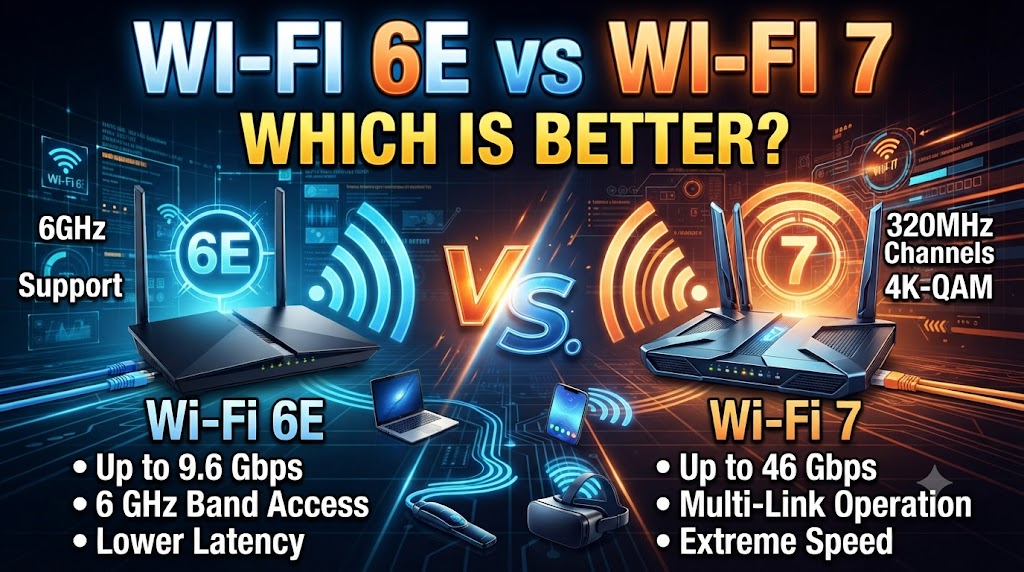
Wi-Fi 6E vs Wi-Fi 7 Wi-Fi 6E and Wi-Fi 7 are designed for newer wireless networks, but they represent different generations of Wi-Fi technology. Wi-Fi 6E extends Wi-Fi 6 into the 6GHz band, while Wi-Fi 7 is based on the newer 802.11be standard and introduces technologies such as Multi-Link Operation (MLO), wider 320MHz channels, and 4096-QAM. These changes are designed to improve throughput, efficiency, latency, and reliability on compatible networks. The choice between Wi-Fi 6E vs Wi-Fi 7 depends on your devices, internet connection, budget, and how demanding your wireless…
Read MoreCategory: Networking
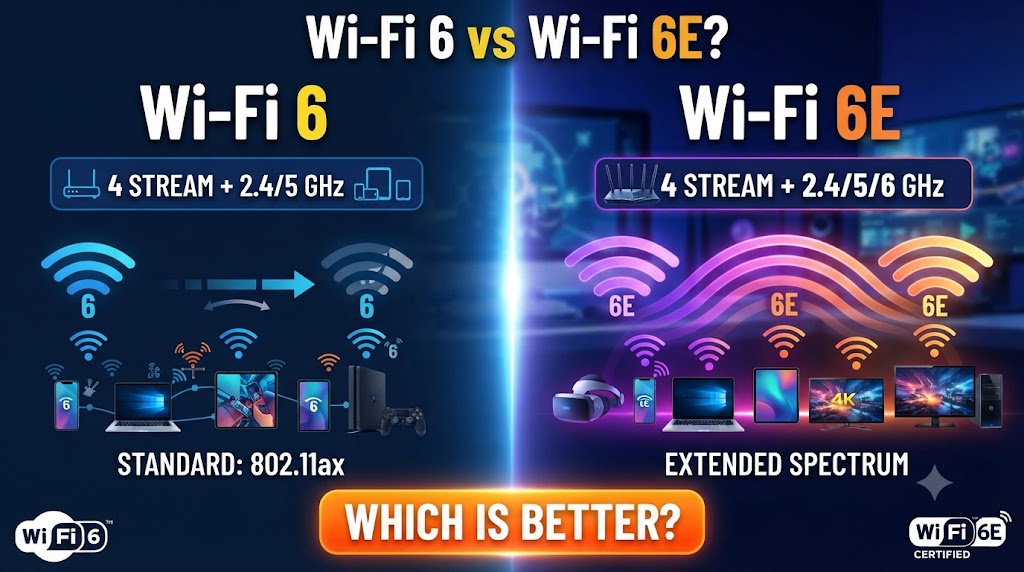
Wi-Fi 6 vs Wi-Fi 6E: Which Is Better?
Wi-Fi 6 vs Wi-Fi 6E Wi-Fi 6 and Wi-Fi 6E are based on the same 802.11ax Wi-Fi technology, but they are not exactly the same. The main difference is the frequency spectrum they can use. Wi-Fi 6 primarily operates on the 2.4GHz and 5GHz bands, while Wi-Fi 6E adds access to the 6GHz band. This additional spectrum can provide more room for compatible devices, especially in networks with heavy Wi-Fi congestion. (Intel) The choice between Wi-Fi 6 vs Wi-Fi 6E depends on your router, devices, internet connection, home size, and…
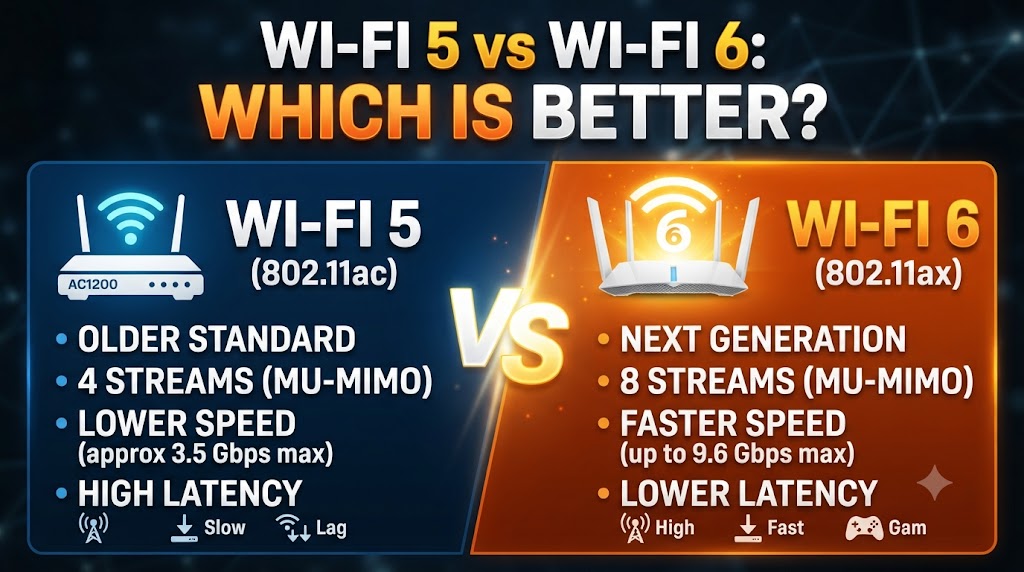
Read MoreWi-Fi 5 vs Wi-Fi 6: Which Is Better?
Wi-Fi 5 vs Wi-Fi 6 Wi-Fi 5 and Wi-Fi 6 are two generations of wireless networking technology used in routers, laptops, smartphones, smart TVs, and other connected devices. Wi-Fi 5 is based on IEEE 802.11ac and primarily operates on the 5 GHz band. Wi-Fi 6 is based on IEEE 802.11ax and can operate on both 2.4 GHz and 5 GHz bands. (Intel) The main difference is not simply speed. Wi-Fi 6 introduces technologies such as OFDMA, improved MU-MIMO support, Target Wake Time, and 1024-QAM. These features are designed to improve…
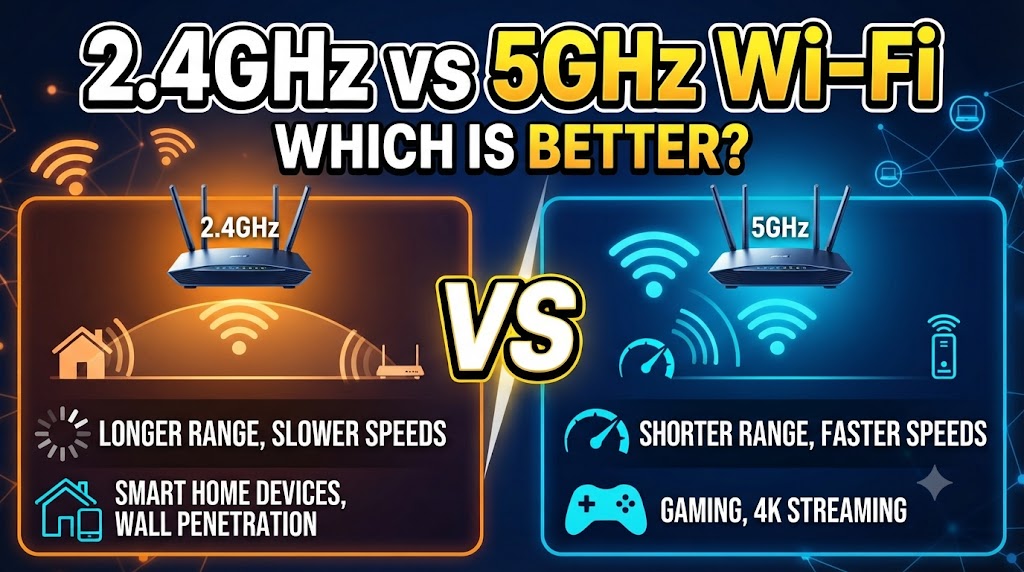
Read More2.4GHz vs 5GHz Wi-Fi: Which Is Better?
2.4GHz vs 5GHz Wi-Fi When choosing a Wi-Fi connection, you may notice two common options: 2.4GHz and 5GHz. Both are widely used by modern routers, but they are designed for different situations. The 2.4GHz band generally provides longer range, while 5GHz can provide higher speeds and more wireless capacity. (Intel) The better option depends on your distance from the router, walls and obstacles, connected devices, network congestion, and the type of activity you are doing. For example, 5GHz can be useful for high-speed activities such as streaming, gaming, and video…
Read MoreDual-Band vs Tri-Band Router: Which Is Better?
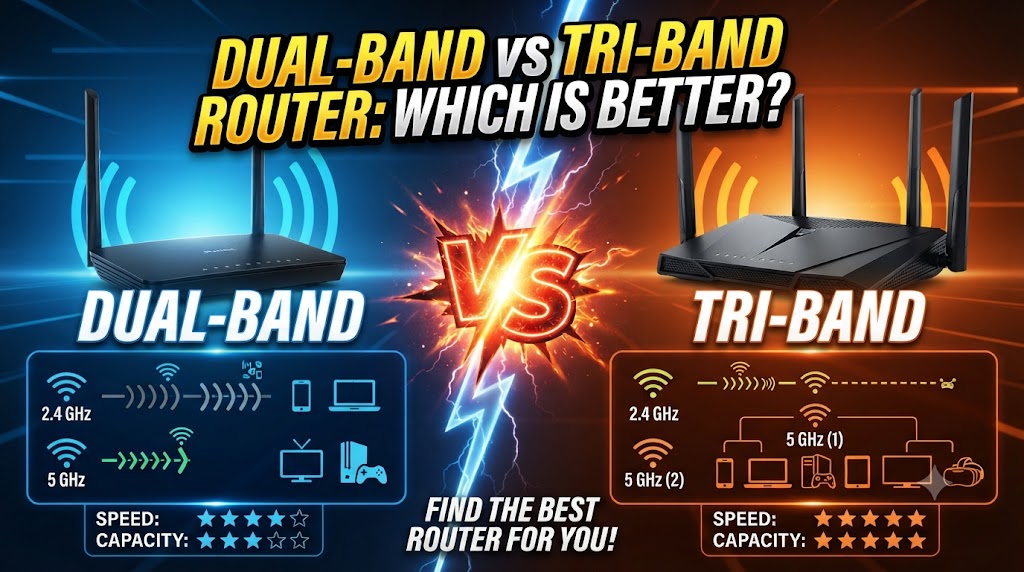
Dual-Band vs Tri-Band Router Choosing between a dual-band and tri-band router can be confusing, especially when both options support modern Wi-Fi devices. The main difference is the number of wireless bands available. A dual-band router normally uses 2.4 GHz and 5 GHz, while a tri-band router adds another wireless band. Depending on the Wi-Fi standard, that third band may be another 5 GHz band or a 6 GHz band. (Netgear Knowledge Base) The right choice depends on how many devices you connect, the type of activities you perform, and whether…
Read MoreSingle-Band vs Dual-Band Router: Which Is Better?
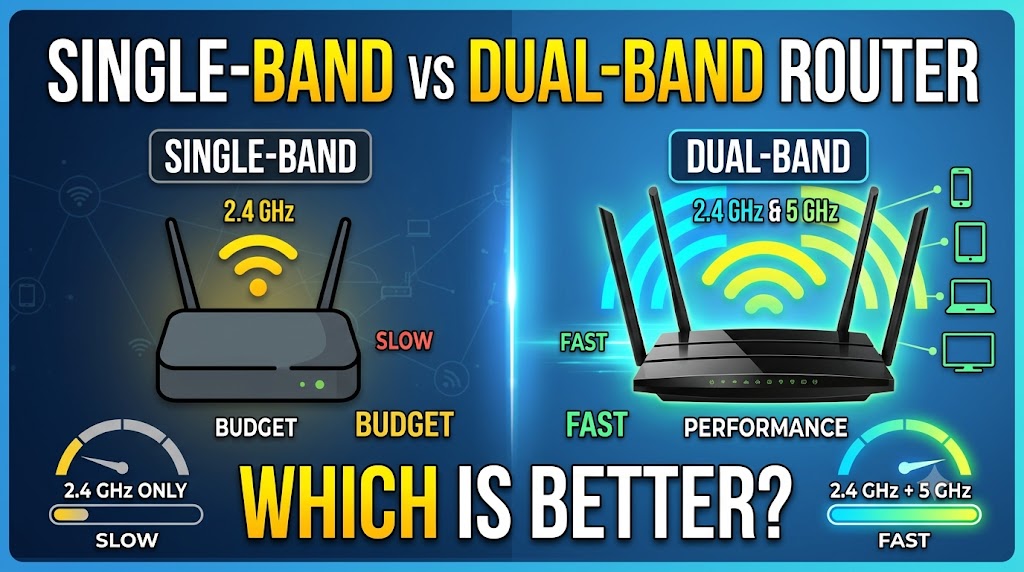
Single-Band vs Dual-Band Router Introduction A single-band router is a wireless router that operates on one Wi-Fi frequency band, traditionally the 2.4 GHz band. The 2.4 GHz band can provide useful coverage through walls and over longer distances compared with higher-frequency bands, although actual performance depends on the environment and network conditions. Single-band routers can be suitable for basic networking needs where users do not require high wireless capacity or support for many demanding devices. However, modern homes with smartphones, laptops, smart TVs, cameras, and other connected devices may benefit…
Read MoreWi-Fi Router vs Mesh Wi-Fi: Which Is Better?
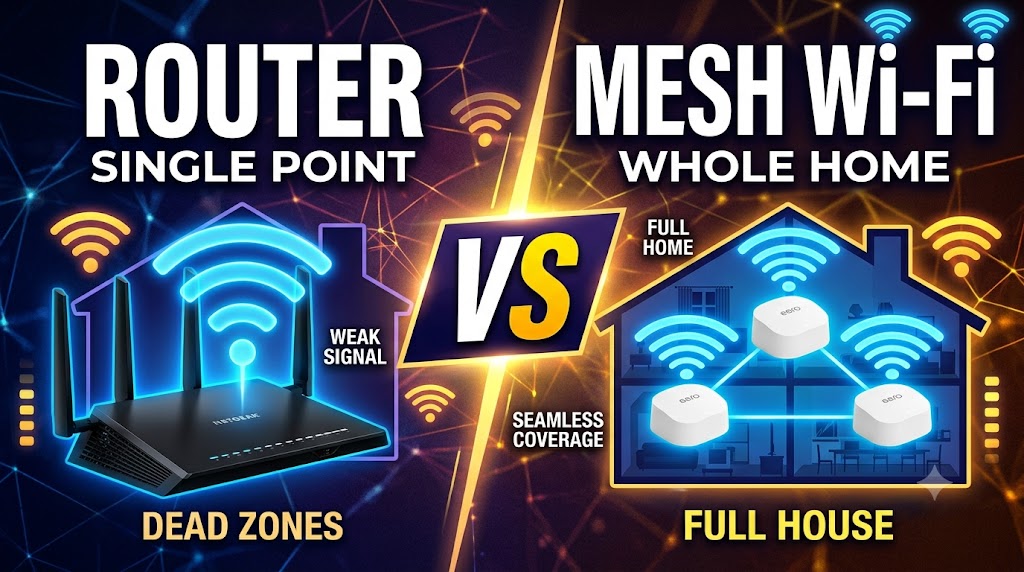
Wi-Fi Router vs Mesh Wi-Fi Introduction A Wi-Fi router is the traditional way to create a wireless network in a home, office, or small business. A single router connects to the internet service and broadcasts Wi-Fi from one location. Modern routers can support multiple Wi-Fi bands, Ethernet connections, security features, and many connected devices. For a small or medium-sized home where one centrally placed router can provide reliable coverage, a conventional Wi-Fi router can be a simple and cost-effective solution. Its performance depends on the router hardware, Wi-Fi standard, placement,…
Read MoreRouter vs Modem: What Is the Difference and Which Do You Need?
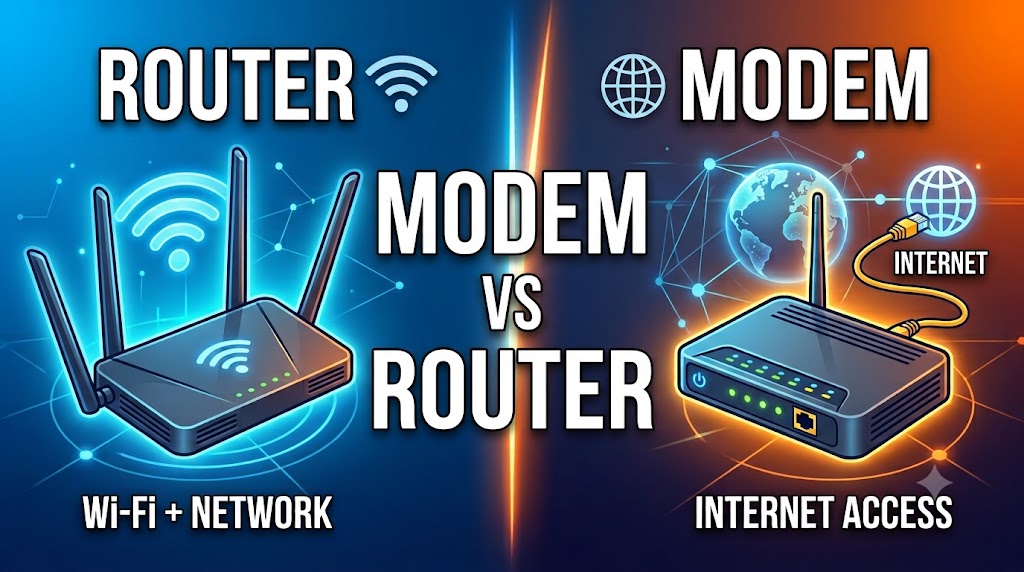
Router vs Modem Introduction: What Is a Router? A router is a networking device that connects different networks and directs IP traffic between them. In a typical home setup, the router connects your local home network to the internet connection provided through your modem or another internet access device. A router can also allow multiple devices to share the connection and, depending on the model, may provide Wi-Fi, Ethernet ports, firewall functions, and other networking features. The router’s main role is to manage communication between your local network and other…
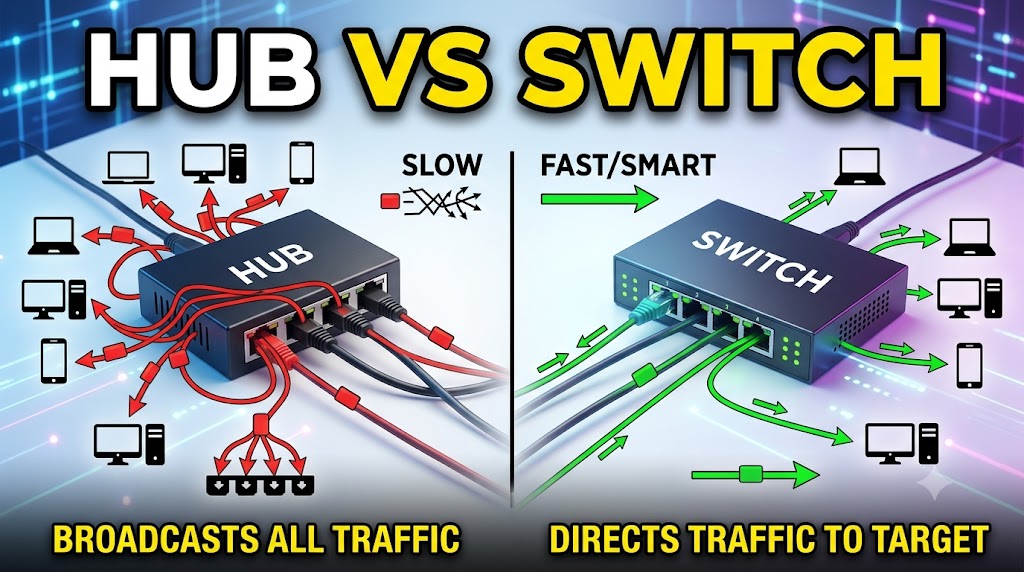
Read MoreHub vs Switch: Which Networking Device Is Better?
Hub vs Switch SEO Title: Hub vs Switch: Which Networking Device Is Better?Meta Title: Hub vs Switch: Which Networking Device Is Better?Meta Description: Compare hub vs switch to understand their differences in data transmission, speed, network efficiency, security, and practical use, and find out which networking device is better for your needs.URL Slug: hub-vs-switch-which-networking-device-is-better Introduction: What Is a Hub? A network hub is a basic networking device used to connect multiple Ethernet devices within a local area network (LAN). When a hub receives an Ethernet frame, it generally repeats the…
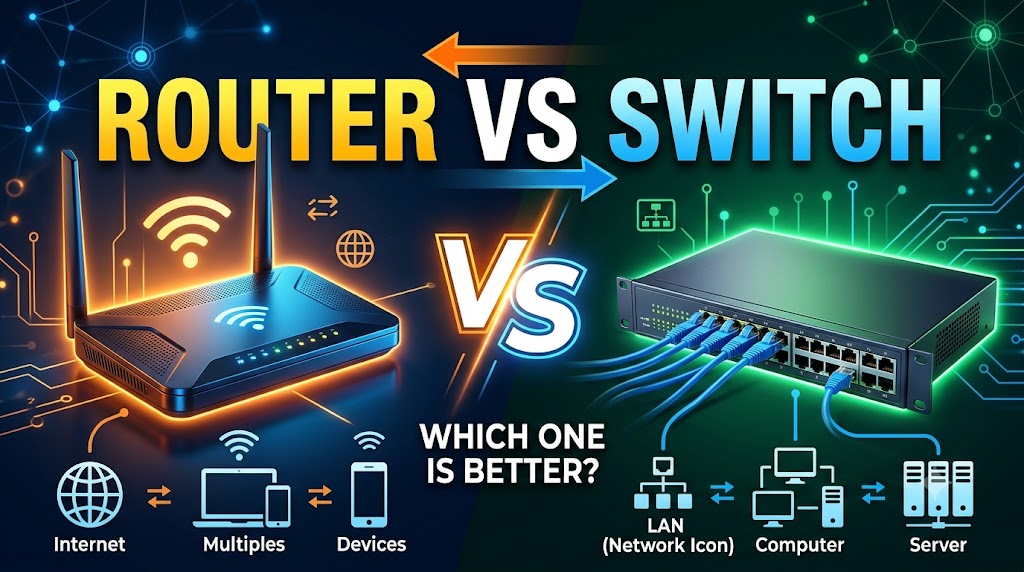
Read MoreRouter vs Switch: Which Networking Device Is Better?
Router vs Switch SEO Title: Router vs Switch: Which Networking Device Is Better?Meta Title: Router vs Switch: Which Networking Device Is Better?Meta Description: Learn the difference between a router and a switch, how each device works, where it is used, and which networking device you need for home, office, or business networks.URL Slug: router-vs-switch-which-networking-device-is-better Introduction: What Is a Router? A router is a networking device designed to connect different networks and direct data packets between them. In a typical home network, a router connects local devices to the internet and…
Read More