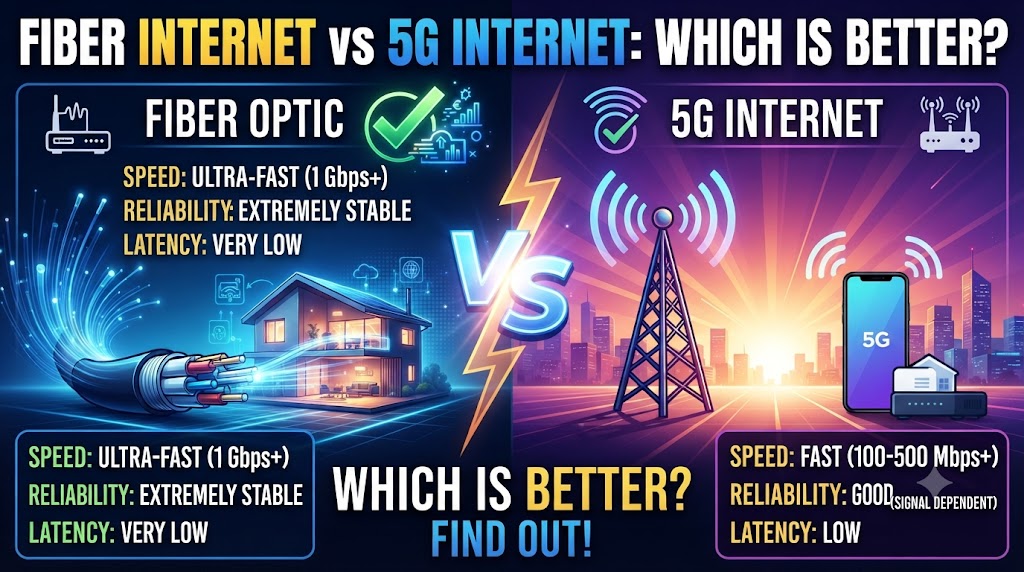
Fiber Internet vs 5G Internet Introduction Fiber Internet and 5G Internet are two modern ways to access high-speed internet, but they use very different technologies. Fiber Internet sends data through fiber-optic cables, while 5G Internet uses fifth-generation cellular wireless networks. Both can provide fast internet, but their real-world performance depends on the service provider, network infrastructure, location, congestion, and the equipment being used. The biggest difference is the connection between your home and the service provider. Fiber uses a physical cable, while 5G Internet connects wirelessly to a nearby 5G…
Read MoreCategory: Technology
Fiber Internet vs Broadband: Which Is Better?
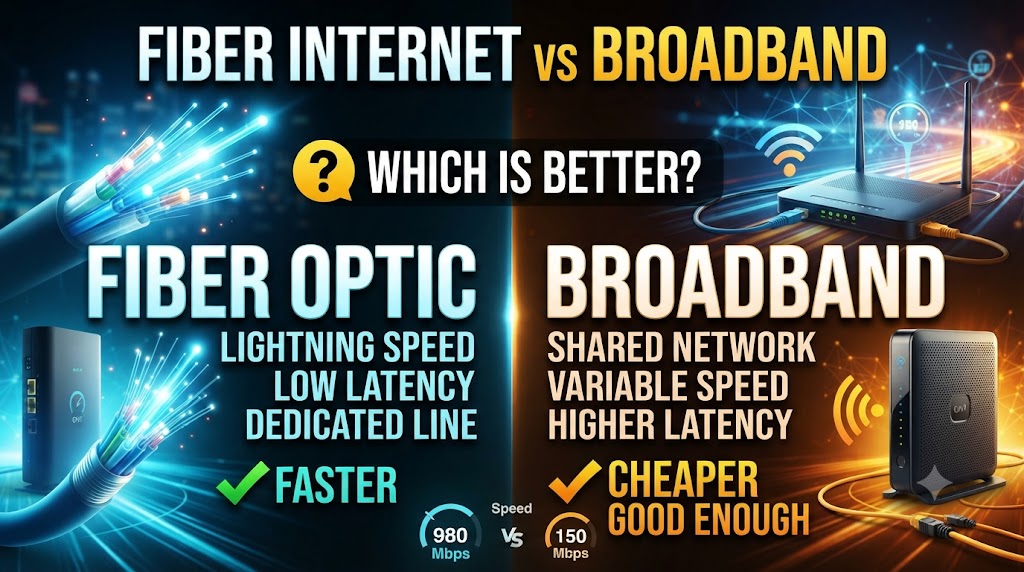
Fiber Internet vs Broadband Introduction Fiber Internet and Broadband are both used to provide internet access, but the terms do not describe exactly the same thing. Fiber Internet uses fiber-optic cables to transmit data using light, while “broadband” is a broader term for high-speed internet access that can be delivered through different technologies, including cable, DSL, fiber, fixed wireless, and other connections. This makes the comparison slightly different from comparing two completely separate technologies. For many users, the important differences are connection technology, speed, latency, reliability, upload performance, and availability.…
Read MoreDNS vs VPN: What Is the Difference and Which Is Better?
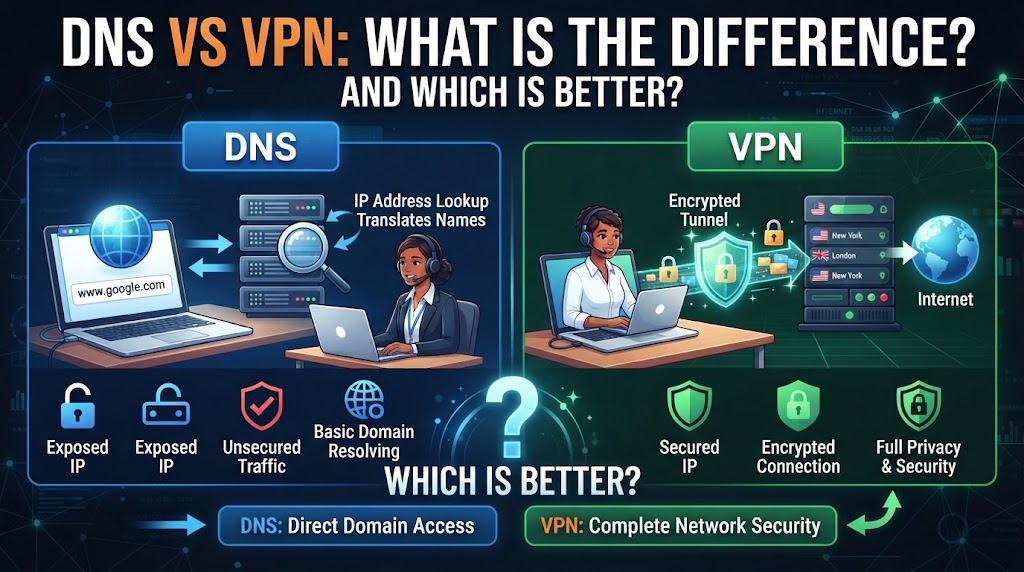
DNS vs VPN Introduction DNS and VPN are both important networking technologies, but they perform very different jobs. DNS, or Domain Name System, translates website names such as example.com into IP addresses that computers can use to connect to servers. A VPN, or Virtual Private Network, creates an encrypted connection between your device and a VPN server, helping protect network traffic from local network observers and changing the apparent internet location of your connection. Because DNS and VPN solve different problems, they should not normally be treated as direct alternatives.…
Read MorePublic IP vs Private IP: What Is the Difference?
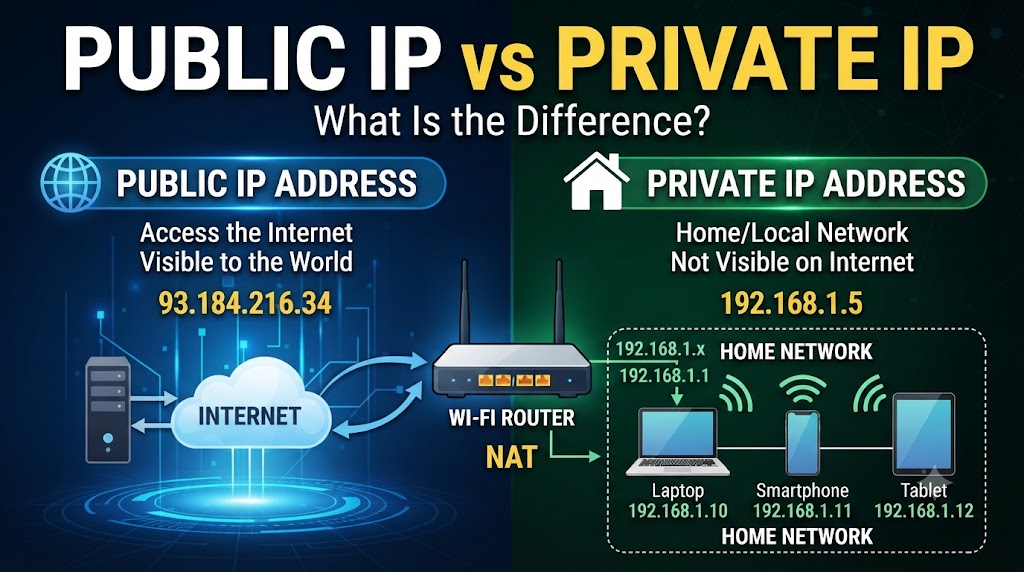
Public IP vs Private IP Introduction A Public IP and a Private IP are both used to identify devices or networks, but they work in different ways. A Public IP is used to identify a network or device on the internet, while a Private IP is used within a local network such as a home, office, or school. Understanding the difference between Public IP and Private IP can help you better understand how devices connect to the internet and communicate with each other. The main difference is where each IP…
Read MoreVPN vs Proxy: Which Is Better?
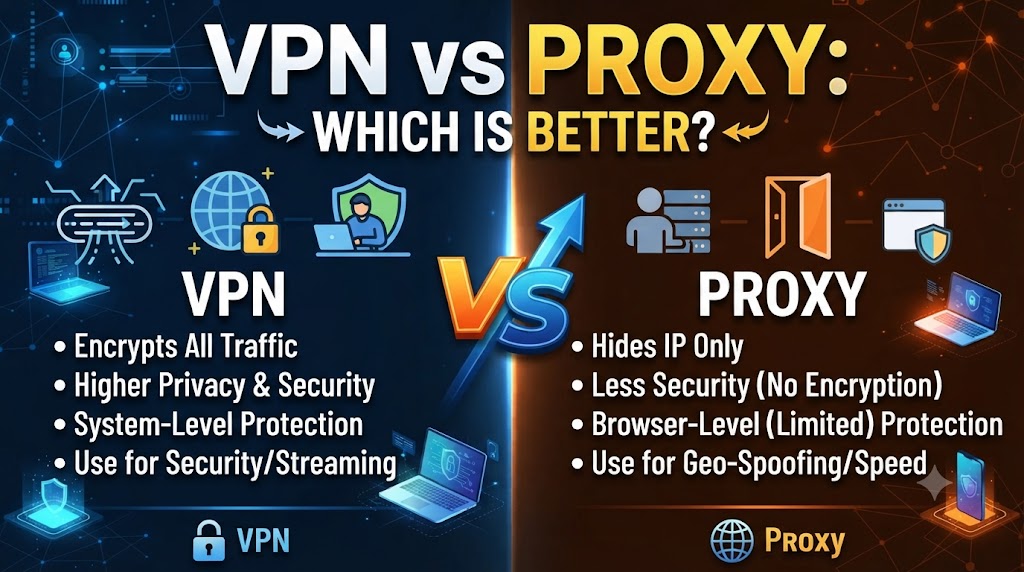
VPN vs Proxy VPNs and proxy servers can both act as intermediaries between your device and the internet, but they work differently and provide different levels of protection. A VPN (Virtual Private Network) creates an encrypted connection between your device and a VPN server, while a proxy generally forwards traffic through another server without providing the same device-wide encryption. The right choice depends on what you need. A VPN can be useful when you want broader traffic protection and privacy on untrusted networks, while a proxy can be useful for…
Read MoreIPv4 vs IPv6: Which Is Better?
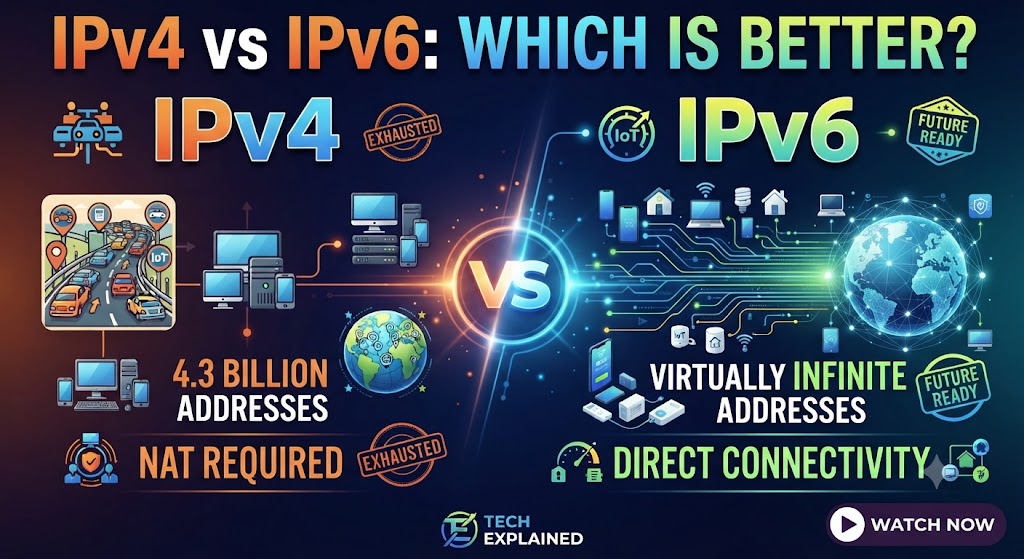
IPv4 vs IPv6 IPv4 and IPv6 are two versions of the Internet Protocol used to identify devices and deliver data across networks. IPv4 is the older and still widely used version, while IPv6 was developed to provide a much larger address space and support the continued growth of internet-connected devices. The biggest difference is the number of available IP addresses. IPv4 uses 32-bit addresses, providing about 4.3 billion possible addresses, while IPv6 uses 128-bit addresses, providing an extremely large address space. IPv6 also introduces changes to address configuration and network…
Read MoreStatic IP vs Dynamic IP: Which Is Better?
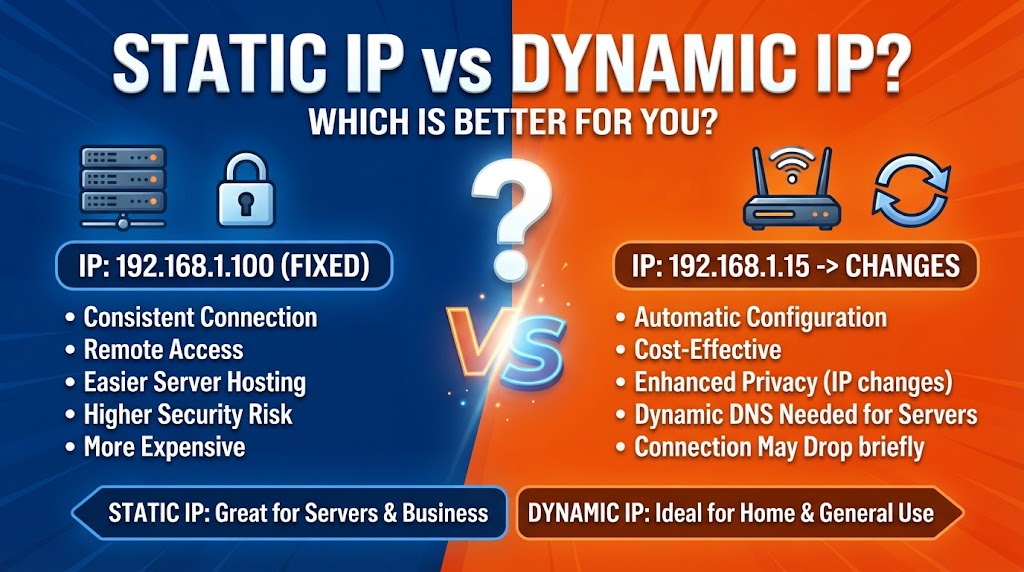
Static IP vs Dynamic IP Static IP and Dynamic IP are two common ways of assigning IP addresses to devices on a network. A static IP address remains assigned to a device until it is manually changed, while a dynamic IP address is assigned automatically and may change over time. Both approaches are useful for different networking situations. Static IP addresses can be helpful when a device needs a consistent address, such as a server, network printer, or CCTV system. Dynamic IP addresses are easier to manage and are commonly…
Read MoreGigabit Ethernet vs 2.5G Ethernet: Which Is Better?
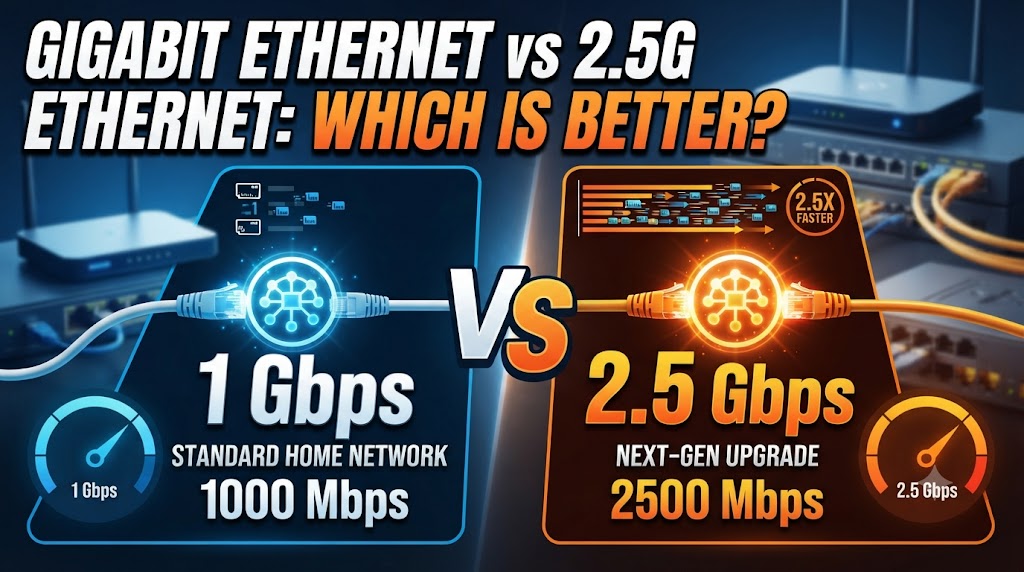
Gigabit Ethernet vs 2.5G Ethernet Gigabit Ethernet and 2.5G Ethernet are both wired networking technologies designed to provide fast network connections. Gigabit Ethernet supports speeds of up to 1 Gbps, while 2.5G Ethernet can provide speeds of up to 2.5 Gbps. This makes 2.5G Ethernet capable of delivering up to 2.5 times the link speed of Gigabit Ethernet. For everyday internet browsing and standard home networking, Gigabit Ethernet can be sufficient. However, 2.5G Ethernet can be useful when you have a high-speed internet connection, a fast NAS, multiple users transferring…
Read MoreFast Ethernet vs Gigabit Ethernet: Which Is Better?
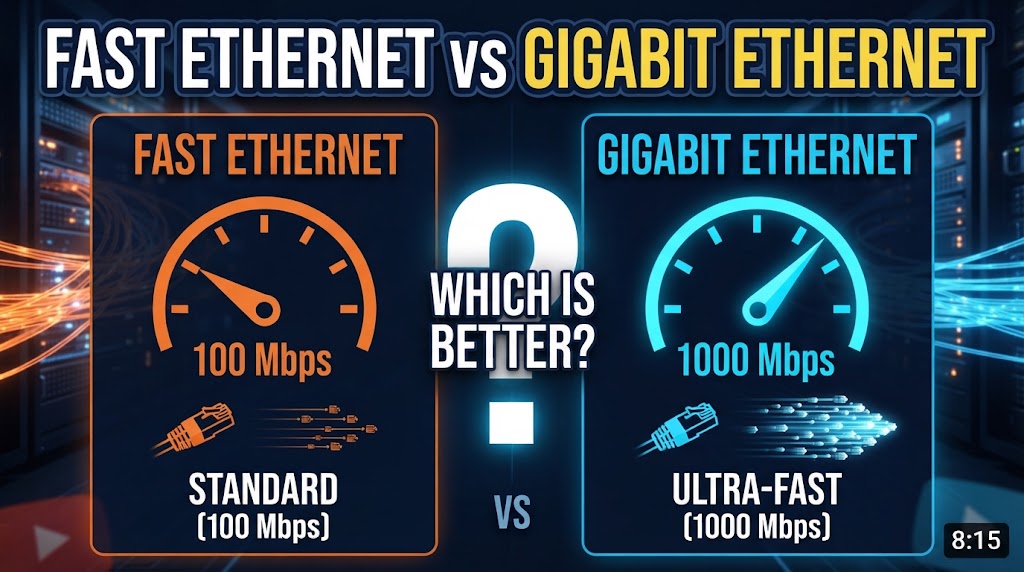
Fast Ethernet vs Gigabit Ethernet Fast Ethernet and Gigabit Ethernet are both wired networking technologies used to connect computers, routers, switches, cameras, and other network devices. The main difference is their maximum network speed. Fast Ethernet typically supports speeds up to 100 Mbps, while Gigabit Ethernet can reach up to 1 Gbps, which is ten times faster. For basic internet browsing and simple networking, Fast Ethernet can still work. However, Gigabit Ethernet offers much higher bandwidth for file transfers, high-speed internet connections, video streaming, CCTV systems, and modern home or…
Read MoreStereo vs Surround Sound: Which Offers a Better Audio Experience?
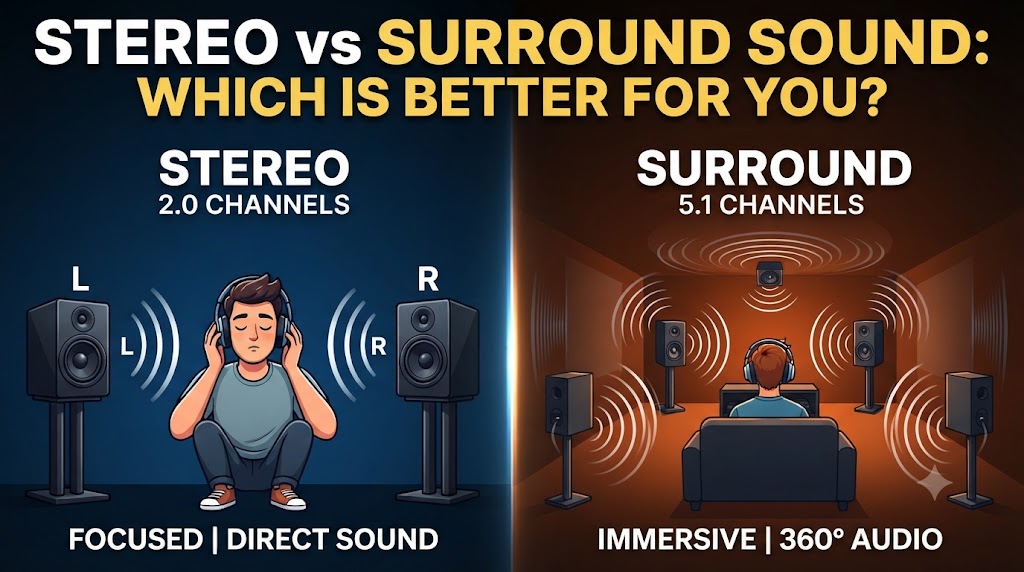
Stereo vs Surround Sound Stereo and surround sound are two different ways of creating an audio experience. Stereo sound uses two main audio channels, usually left and right, to create a sense of direction and space. Surround sound uses multiple audio channels positioned around the listener to create a more immersive environment. The better choice depends on the type of content and the equipment being used. Stereo can be simple, compatible, and effective for music and everyday listening, while surround sound can create a more immersive experience for movies, games,…
Read More