Open-Back vs Closed-Back Headphones: Which Is Better?
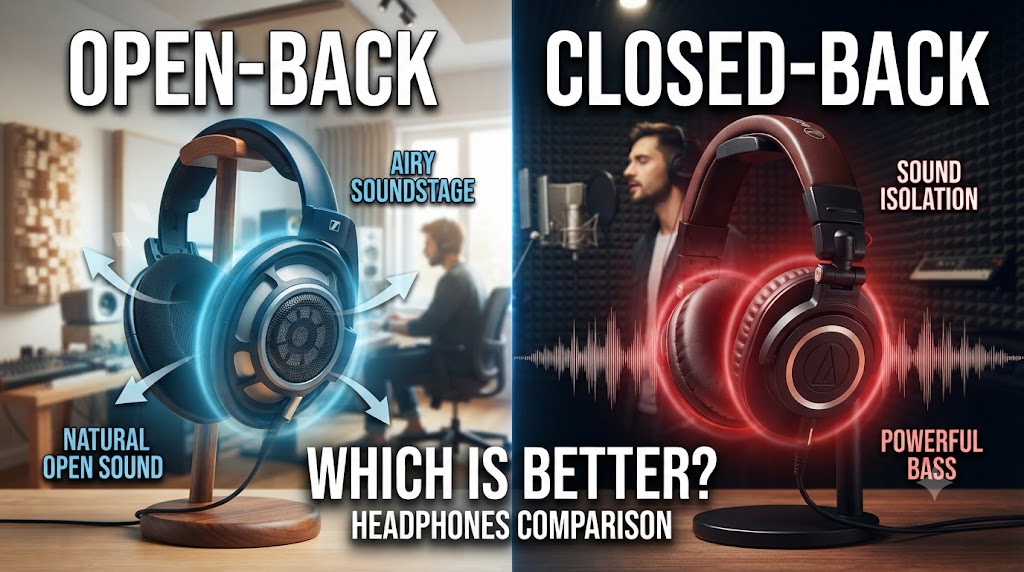
Open-back vs closed-back headphones comparison showing differences in soundstage, isolation, and sound leakage

Open-Back vs Closed-Back Headphones Open-back and closed-back headphones use different ear-cup designs that affect how sound interacts with your ears and the surrounding environment. Open-back headphones have vents or openings on the back of their ear cups, allowing some air and sound to pass through. Closed-back headphones have sealed ear cups that block much of the sound from entering or leaving. The better choice depends on where and how you listen. Open-back headphones can provide a more natural and spacious listening experience in quiet environments, while closed-back headphones are generally…

Read More

In-Ear vs Over-Ear Headphones: Which Is Better?

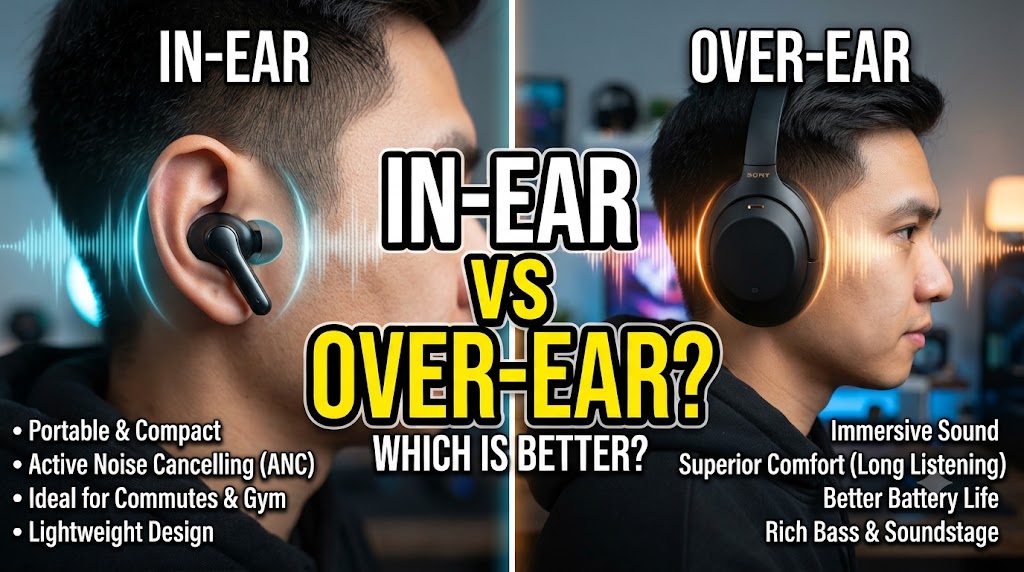
In-ear vs over-ear headphones comparison showing differences in design, portability, and comfort

In-Ear vs Over-Ear Headphones In-ear and over-ear headphones offer two very different ways to listen to music, watch videos, make calls, and enjoy other audio content. In-ear headphones sit inside or at the entrance of the ear canal, making them small and easy to carry. Over-ear headphones use larger ear cups that surround the ears and are usually designed for a more immersive listening experience. The better choice depends on how and where you plan to use them. In-ear headphones are convenient for travel, exercise, and everyday use, while over-ear…

Read More

ANC vs ENC: Which Audio Technology Is Better?

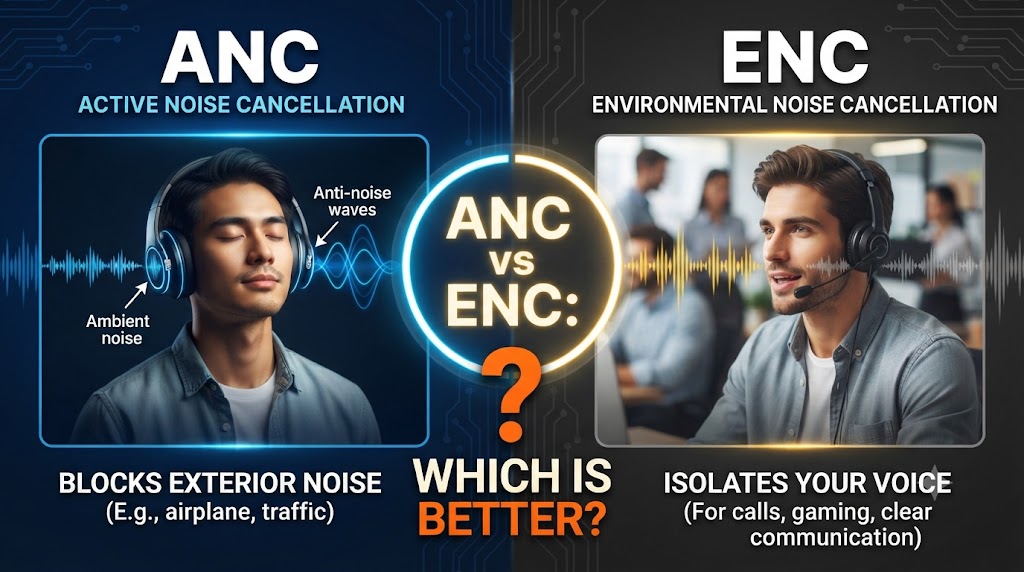
ANC vs ENC audio technology comparison showing noise cancellation for listening and voice calls

ANC vs ENC Active Noise Cancellation (ANC) and Environmental Noise Cancellation (ENC) are two common technologies found in modern headphones, earbuds, and headsets. Although both are designed to reduce unwanted noise, they work differently and are mainly intended for different situations. ANC is primarily focused on reducing surrounding sounds that the listener hears, while ENC is commonly used to improve voice clarity during calls by reducing environmental noise picked up by microphones. Choosing between ANC and ENC depends on how you use your audio device. If your main priority is…

Read More

Managed vs Unmanaged Switch: Which Is Better?

Managed vs Unmanaged switch comparison

Managed vs Unmanaged Switch Introduction Managed and unmanaged switches are both used to connect multiple Ethernet devices within a wired network. Computers, IP cameras, printers, servers, access points, and other network devices can connect through either type of switch. The main difference is the level of control available to the network administrator. An unmanaged switch is designed to work with minimal configuration, while a managed switch provides settings that can be configured and monitored according to the requirements of the network. An unmanaged switch is generally straightforward to install because…

Read More

PoE vs Non-PoE Switch: Which Is Better?

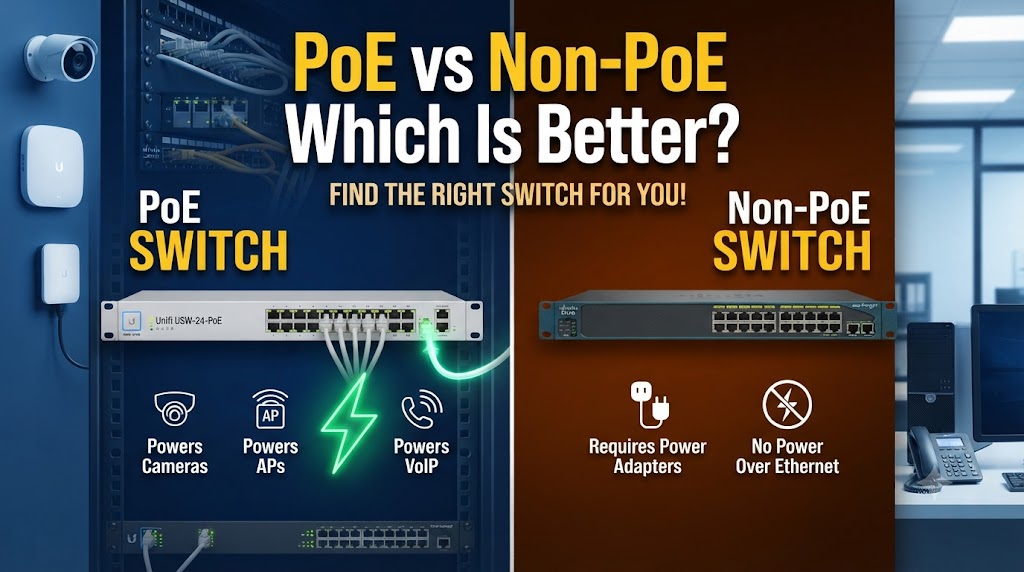
PoE vs Non-PoE switch comparison

PoE vs Non-PoE Switch Introduction PoE and Non-PoE switches are both used to connect multiple devices within a wired Ethernet network. The main difference is that a PoE (Power over Ethernet) switch can deliver both network data and electrical power through compatible Ethernet cables, while a Non-PoE switch normally provides network connectivity without supplying power to connected devices. PoE switches are particularly useful for IP cameras, wireless access points, VoIP phones, and other compatible devices because they can reduce the need for separate power adapters and electrical connections. A Non-PoE…

Read More

Cat6 vs Cat7 Cable: Which Is Better?

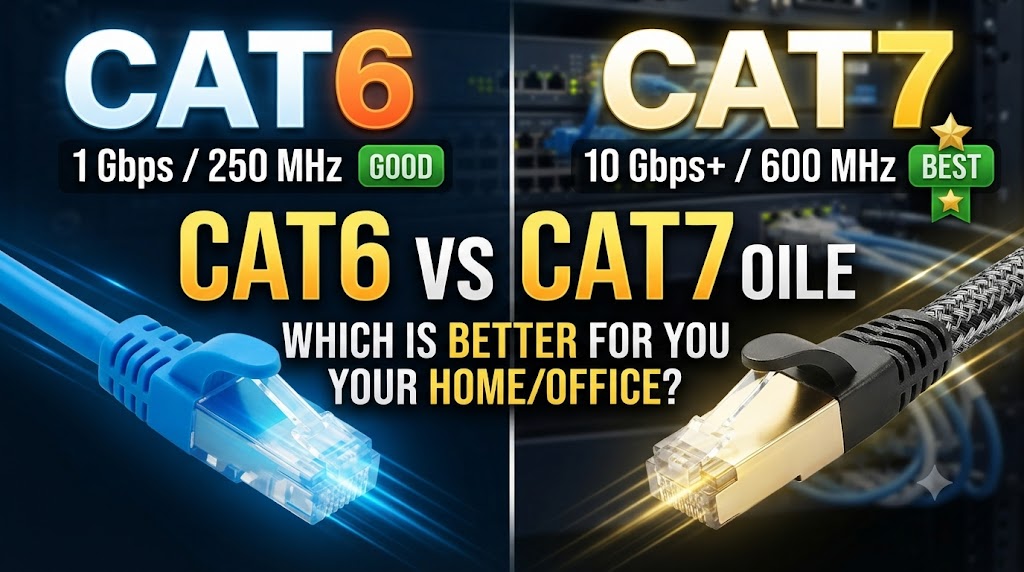
Cat6 vs Cat7 Ethernet cable comparison

Cat6 vs Cat7 Cable Introduction Cat6 and Cat7 are Ethernet cable categories used for wired networking. Both can connect computers, routers, switches, IP cameras, access points, network storage, and other Ethernet devices. Cat6 is widely used in homes and offices because it offers strong performance for Gigabit networks and can support 10 Gigabit Ethernet over shorter distances. Cat7 was designed with higher-frequency specifications and stronger shielding requirements, making it suitable for certain high-performance and electrically noisy networking environments. However, the cable category should always be considered alongside the capabilities of…

Read More

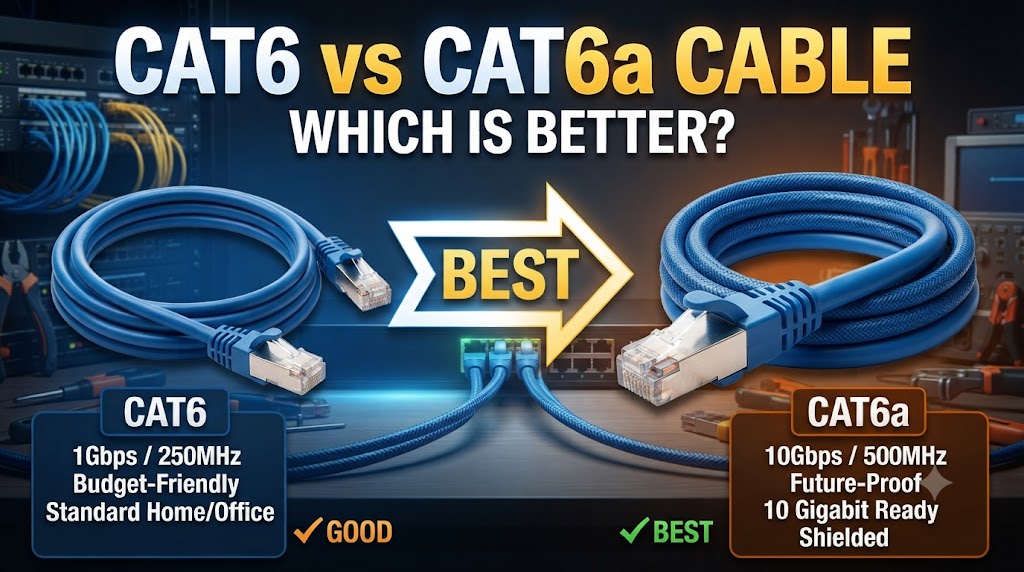
Cat6 vs Cat6a Cable: Which Is Better?

Cat6 vs Cat6a Ethernet cable comparison

Cat6 vs Cat6a Cable Introduction Cat6 and Cat6a are Ethernet cable categories designed for high-speed wired networking. Both can support Gigabit Ethernet and can be used for computers, routers, switches, IP cameras, access points, and other network devices. Cat6 is widely used for home and office networks because it offers strong performance without being unnecessarily expensive. Cat6a builds on Cat6 with higher performance specifications and is designed to support 10 Gigabit Ethernet over the full standard 100-meter channel. The main difference between Cat6 and Cat6a is their ability to maintain…

Read More

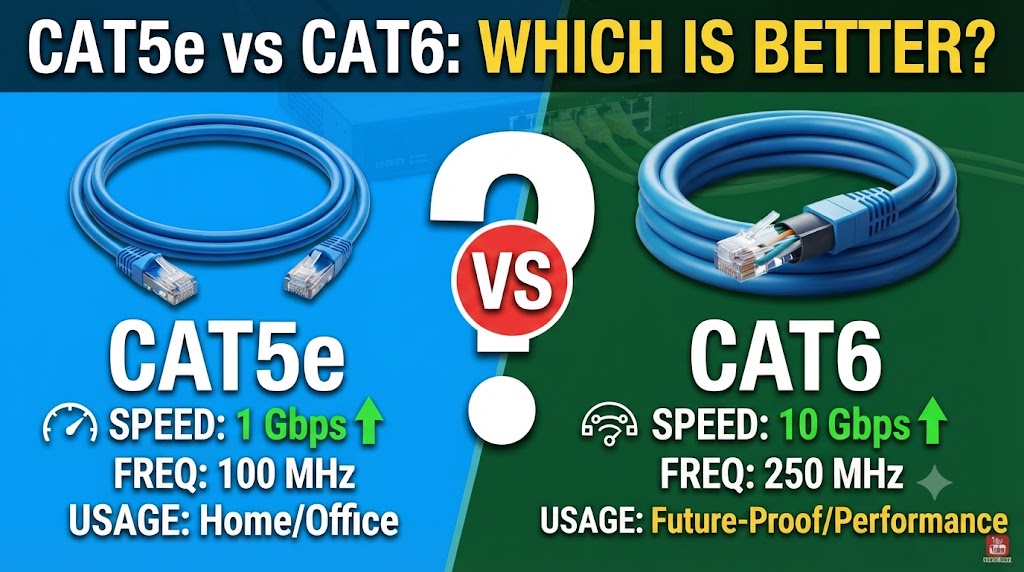
Cat5e vs Cat6 Ethernet Cable: Which Is Better?

Cat5e vs Cat6 Ethernet cable comparison

Cat5e vs Cat6 Ethernet Cable Introduction Cat5e and Cat6 are two commonly used Ethernet cable categories for wired networking. Both can connect computers, routers, switches, network cameras, access points, and other devices to a network. Cat5e is designed for Gigabit Ethernet and is often sufficient for homes and basic office networks. Cat6 is a newer cable category with improved performance specifications and better control of interference. However, the better choice depends on the network speed you need, cable installation conditions, and whether you want additional performance headroom for future upgrades.…

Read More

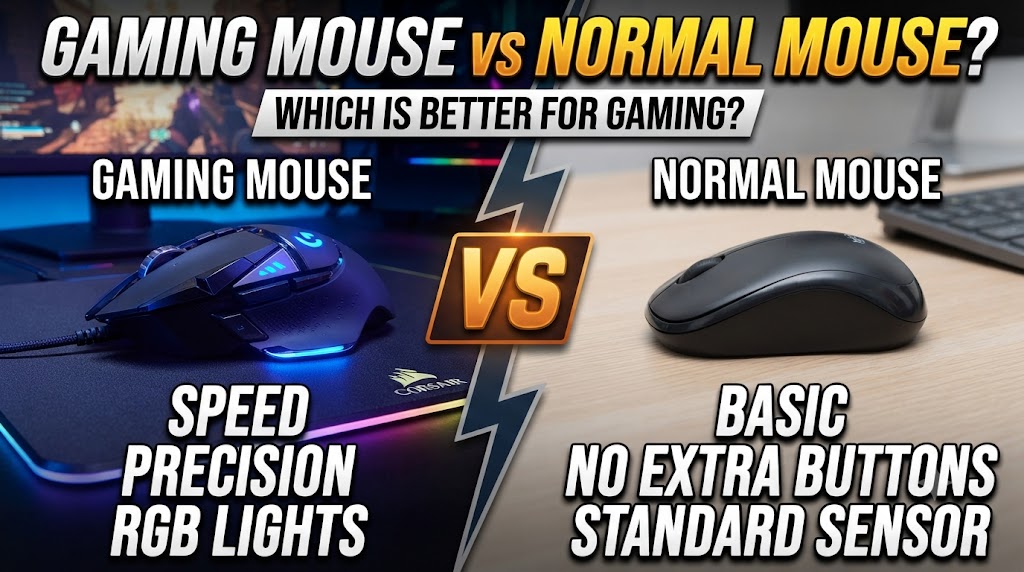
Gaming Mouse vs Normal Mouse: Which Is Better for Gaming?

Gaming mouse vs normal mouse comparison for gaming

Gaming Mouse vs Normal Mouse Introduction A gaming mouse and a normal mouse can both control a computer, but they are designed with different priorities. A gaming mouse is built specifically for gaming and commonly offers features such as adjustable DPI, programmable buttons, higher polling rates and gaming-focused sensors. A normal mouse is generally designed for everyday tasks such as browsing, office work and basic computer use. For gaming, the better choice depends on the games you play and how much you value precision, customization and responsiveness. A normal mouse…

Read More

Mechanical vs Membrane Keyboard: Which Is Better for Gaming?

Mechanical vs membrane keyboard comparison for gaming

Mechanical vs Membrane Keyboard Introduction Mechanical and membrane keyboards use different technologies to register keystrokes. A mechanical keyboard uses individual mechanical switches underneath its keys, while a membrane keyboard uses a rubber or silicone membrane to register a key press. These designs affect how the keyboard feels, responds, sounds and performs during gaming. For gaming, the choice depends on the type of games you play, how much you value fast and consistent key presses, and your budget. Mechanical keyboards are generally available with a wider variety of switches and gaming-oriented…

Read More