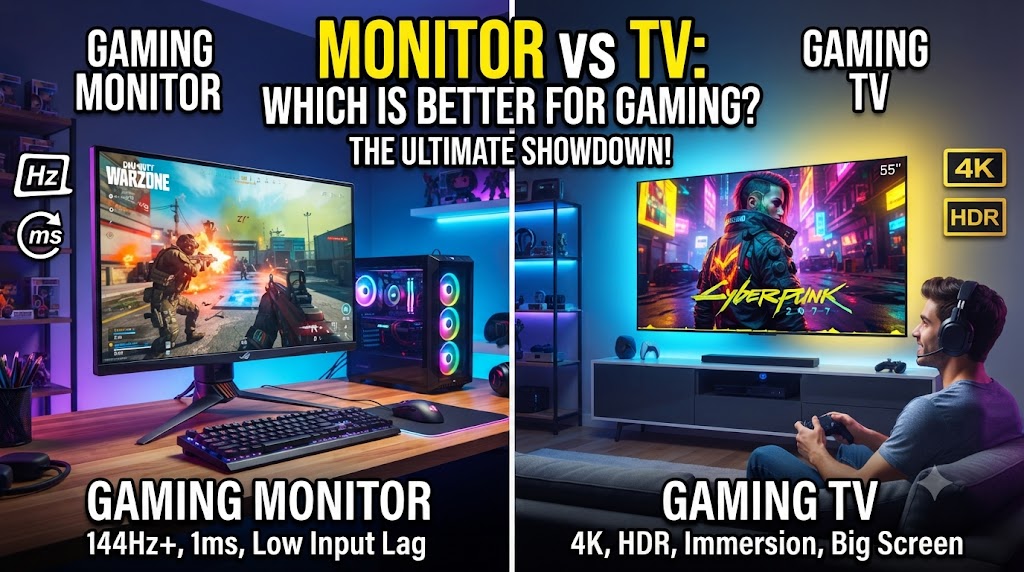
Gaming Monitor vs TV Introduction A gaming monitor and a TV can both provide an excellent gaming experience, but they are designed with different priorities. Gaming monitors generally focus on fast response times, low input lag, high refresh rates, and features designed around PC gaming. TVs, on the other hand, usually offer much larger screens and are designed for gaming as well as movies, streaming, and regular television content. (Display Ninja) The better choice depends mainly on how you play. A competitive PC gamer may benefit from a high-refresh-rate monitor,…
Read MoreCategory: Technology
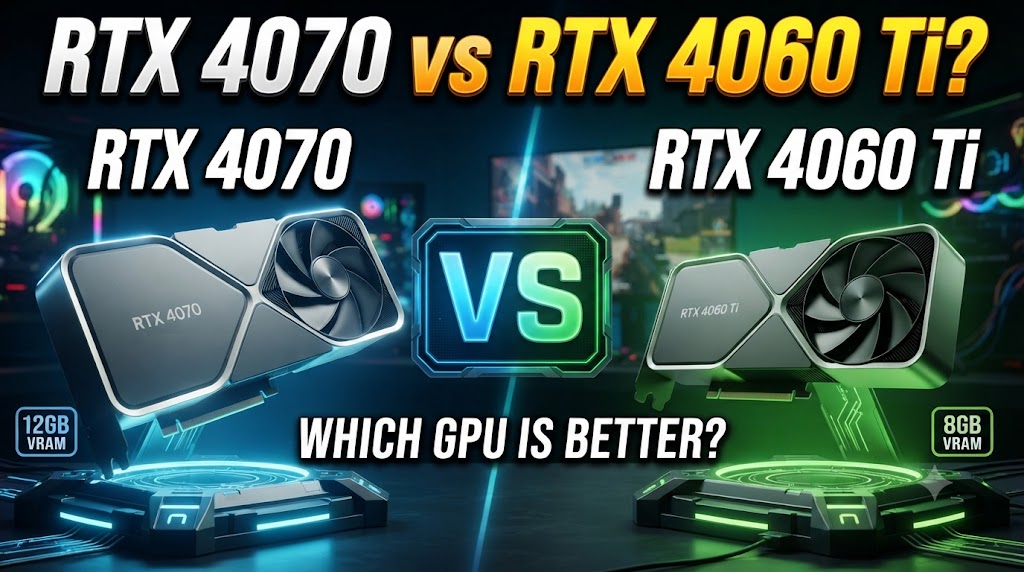
RTX 4070 vs RTX 4060 Ti: Which GPU Is Better?
RTX 4070 vs RTX 4060 Ti Introduction The NVIDIA GeForce RTX 4070 and RTX 4060 Ti are both Ada Lovelace graphics cards, but they target different levels of gaming performance. The RTX 4070 has more CUDA cores, a wider memory bus, more memory bandwidth, and 12GB of GDDR6X memory. The RTX 4060 Ti comes with 8GB or 16GB of GDDR6 memory and is designed primarily for high-quality 1080p and 1440p gaming. The RTX 4070 therefore offers substantially more raw GPU resources, while the RTX 4060 Ti can appeal to users…
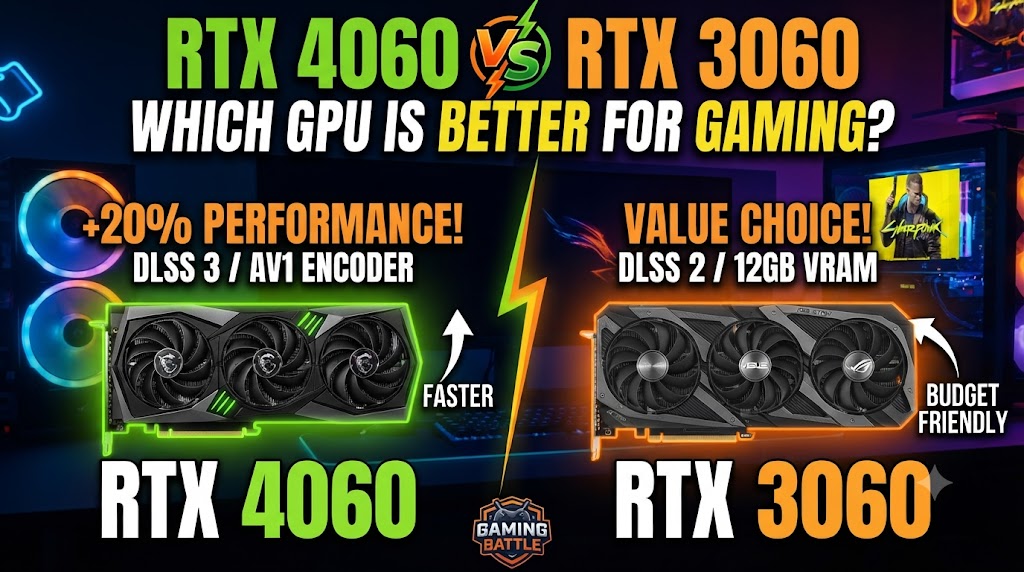
Read MoreRTX 4060 vs RTX 3060: Which GPU Is Better for Gaming?
RTX 4060 vs RTX 3060 Introduction The NVIDIA GeForce RTX 4060 and RTX 3060 are both 60-class graphics cards designed for PC gaming, but they belong to different generations. The RTX 3060 uses NVIDIA’s Ampere architecture and is available with 12GB of GDDR6 memory, while the RTX 4060 uses the newer Ada Lovelace architecture with 8GB of GDDR6 memory. (NVIDIA) The RTX 4060 focuses on higher gaming performance, better power efficiency, newer ray-tracing hardware, and features such as DLSS Frame Generation. The RTX 3060, however, has an advantage in VRAM…
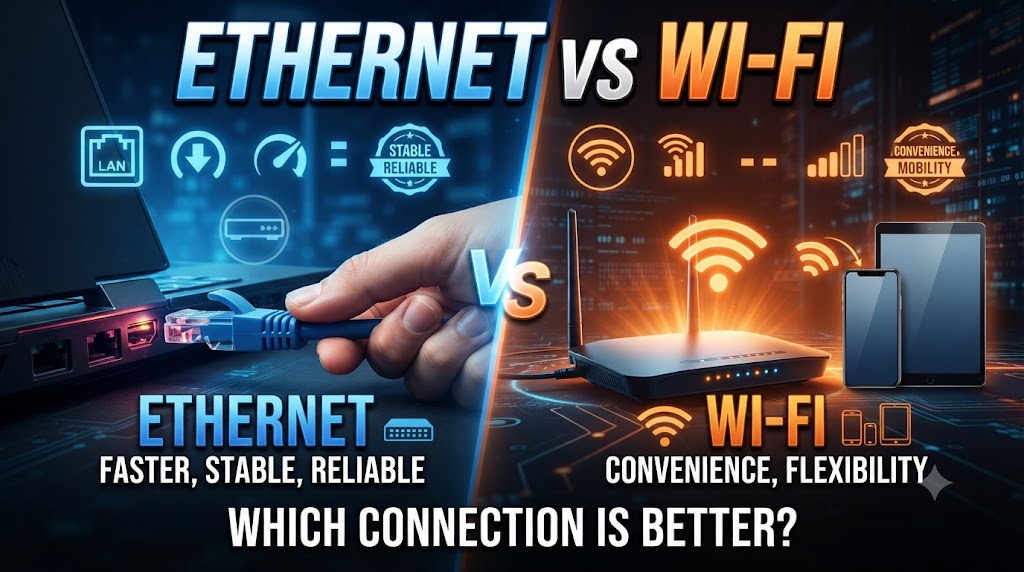
Read MoreEthernet vs Wi-Fi: Which Connection Is Better?
Ethernet vs Wi-Fi Introduction Ethernet and Wi-Fi are two common ways to connect devices to a network and the internet. Ethernet vs Wi-Fi is mainly a comparison between wired and wireless connectivity. Ethernet uses a physical network cable, while Wi-Fi connects compatible devices wirelessly through a router or access point. Both connections can provide fast and reliable networking, but they have different advantages. Ethernet is generally useful when stable performance and low latency are important, while Wi-Fi provides greater mobility and easier connection for devices without network cables. The right…
Read MoreLAN vs WAN: What Is the Difference and Which Is Better?
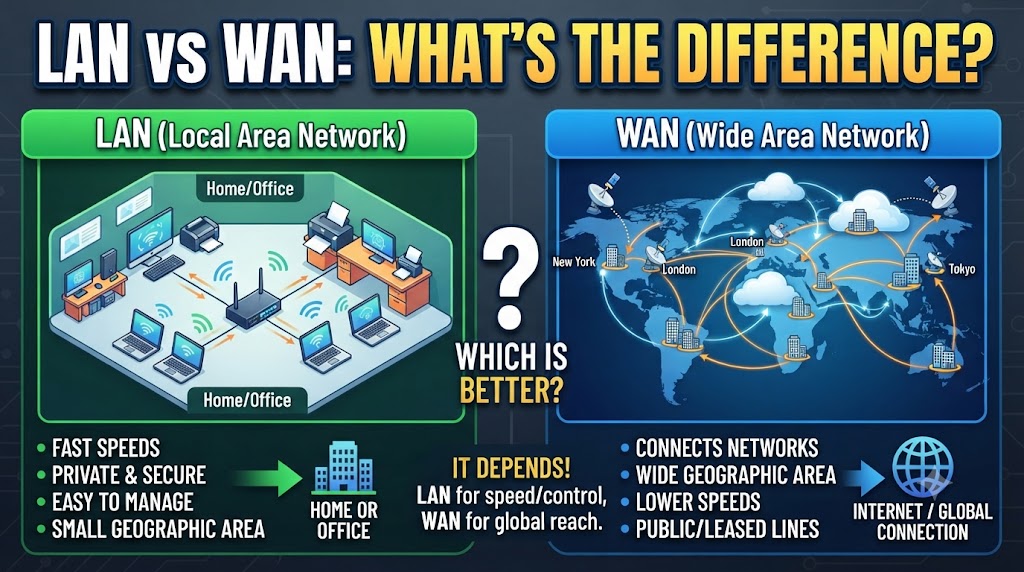
LAN vs WAN Introduction LAN and WAN are two common types of computer networks, but they are designed for different purposes. LAN vs WAN mainly depends on the area a network covers and how devices are connected. LAN is generally used within a limited location such as a home, office, school, shop, or building, while WAN connects networks across larger geographical areas. The main difference is that LAN focuses on local communication, whereas WAN is designed to connect networks over cities, countries, or even continents. Understanding the difference can help…
Read MoreWi-Fi Repeater vs Extender: What Is the Difference?
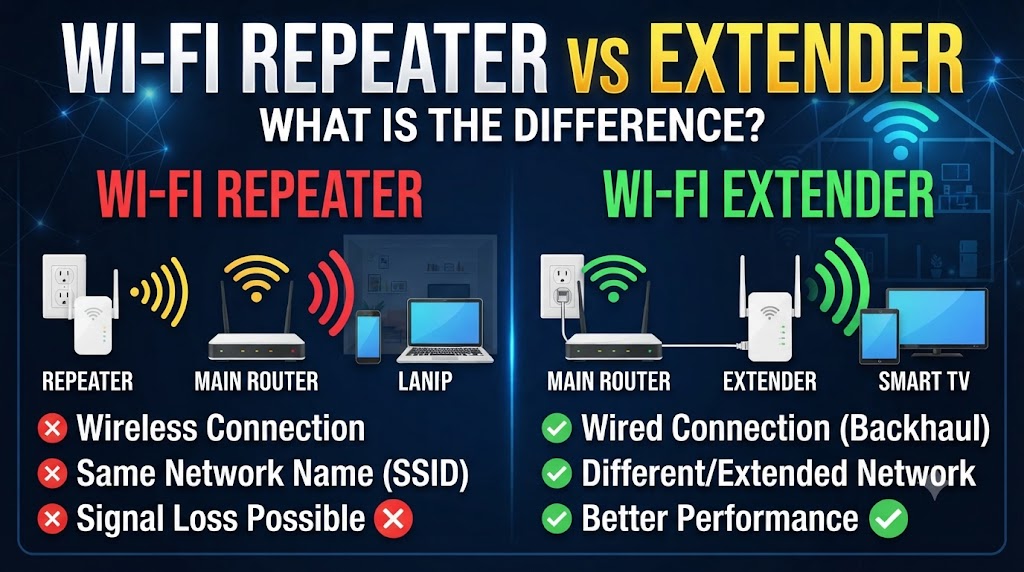
Wi-Fi Repeater vs Extender Introduction Wi-Fi Repeater vs Extender is a common comparison because these terms are often used interchangeably. Both devices are designed to help improve Wi-Fi coverage when the signal from a router does not reach a particular area effectively. However, the terminology can be confusing because many modern networking products marketed as Wi-Fi extenders also perform repeating functions. In practical use, the main difference is usually related to how the device connects to and extends the existing network. A traditional repeater receives a wireless signal and retransmits…
Read MoreWi-Fi Extender vs Mesh Wi-Fi: Which Is Better?
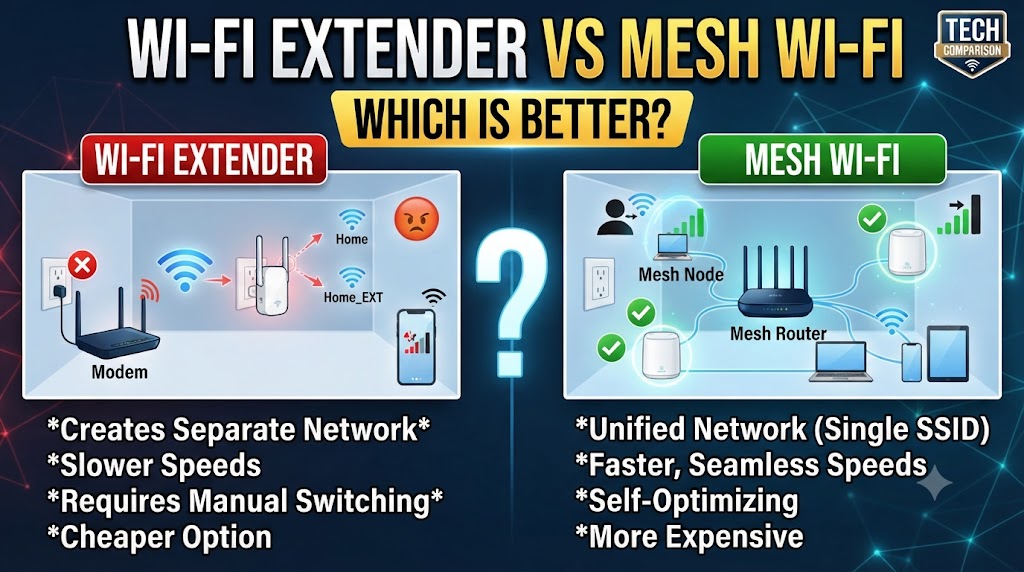
Wi-Fi Extender vs Mesh Wi-Fi Introduction When a single router cannot provide reliable Wi-Fi throughout your home or office, you may consider a Wi-Fi Extender vs Mesh Wi-Fi solution. Both can improve wireless coverage, but they work differently. A Wi-Fi extender receives an existing wireless signal and retransmits it, while a mesh Wi-Fi system uses multiple coordinated units to provide Wi-Fi across a larger area. The better option depends on the size of your property, the number of weak-signal areas, your budget, and how much performance and convenience you need.…
Read MoreAccess Point vs Wi-Fi Extender: Which Is Better?
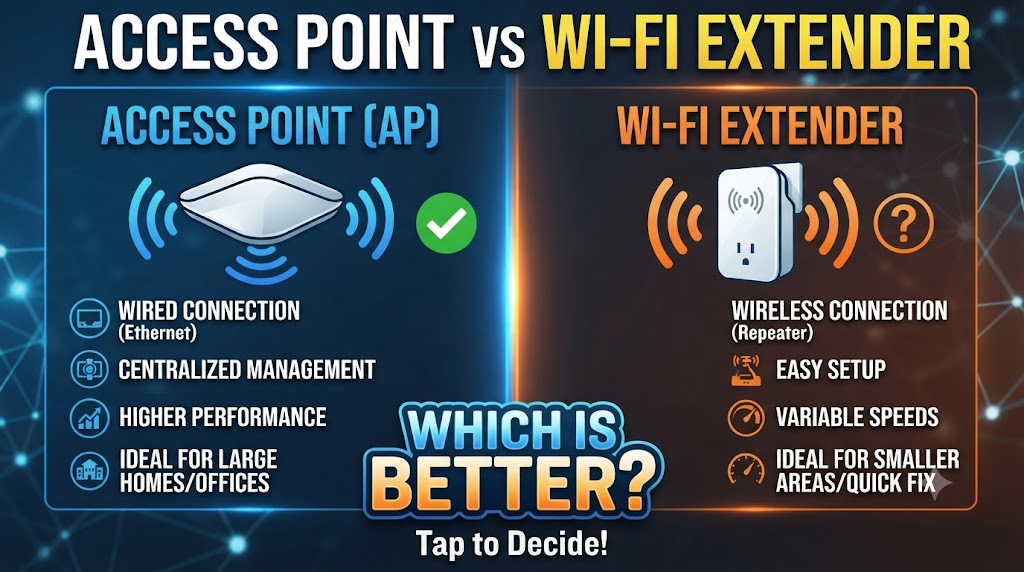
Access Point vs Wi-Fi Extender Introduction When a Wi-Fi signal does not reach every part of a home, office, shop, or other building, an Access Point vs Wi-Fi Extender comparison can help you understand which solution fits your network. Both devices can improve Wi-Fi coverage, but they work in different ways. An access point normally creates a Wi-Fi network from a wired network connection, while a Wi-Fi extender receives an existing wireless signal and extends its coverage. The right choice depends on your existing network, available cabling, required performance, and…
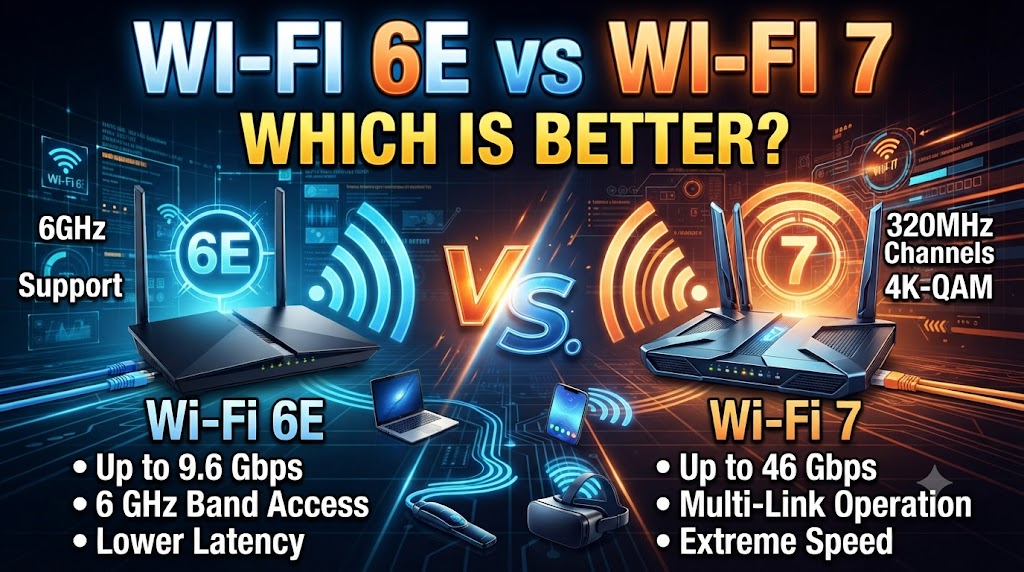
Read MoreWi-Fi 6E vs Wi-Fi 7: Which Is Better?
Wi-Fi 6E vs Wi-Fi 7 Wi-Fi 6E and Wi-Fi 7 are designed for newer wireless networks, but they represent different generations of Wi-Fi technology. Wi-Fi 6E extends Wi-Fi 6 into the 6GHz band, while Wi-Fi 7 is based on the newer 802.11be standard and introduces technologies such as Multi-Link Operation (MLO), wider 320MHz channels, and 4096-QAM. These changes are designed to improve throughput, efficiency, latency, and reliability on compatible networks. The choice between Wi-Fi 6E vs Wi-Fi 7 depends on your devices, internet connection, budget, and how demanding your wireless…
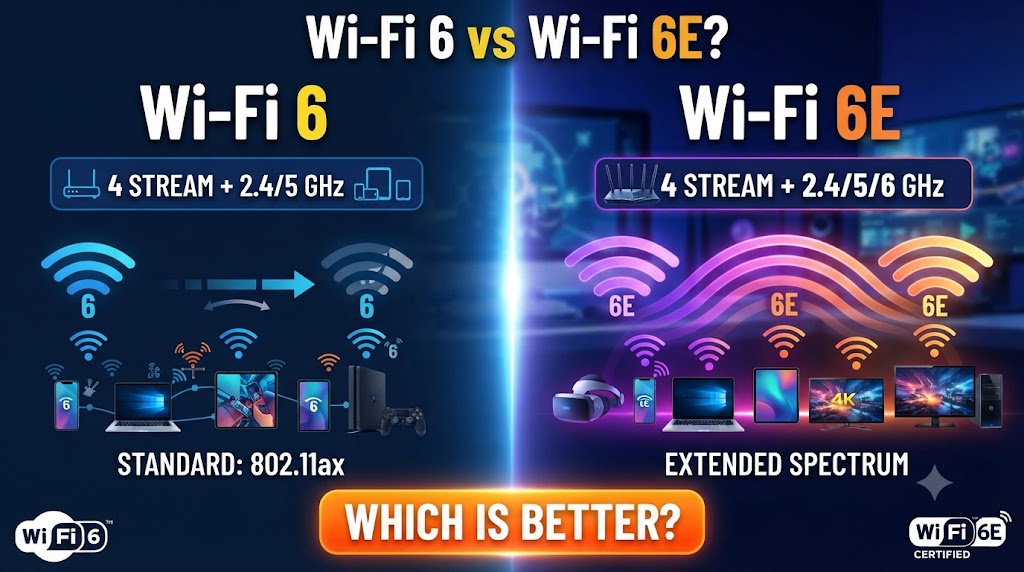
Read MoreWi-Fi 6 vs Wi-Fi 6E: Which Is Better?
Wi-Fi 6 vs Wi-Fi 6E Wi-Fi 6 and Wi-Fi 6E are based on the same 802.11ax Wi-Fi technology, but they are not exactly the same. The main difference is the frequency spectrum they can use. Wi-Fi 6 primarily operates on the 2.4GHz and 5GHz bands, while Wi-Fi 6E adds access to the 6GHz band. This additional spectrum can provide more room for compatible devices, especially in networks with heavy Wi-Fi congestion. (Intel) The choice between Wi-Fi 6 vs Wi-Fi 6E depends on your router, devices, internet connection, home size, and…
Read More