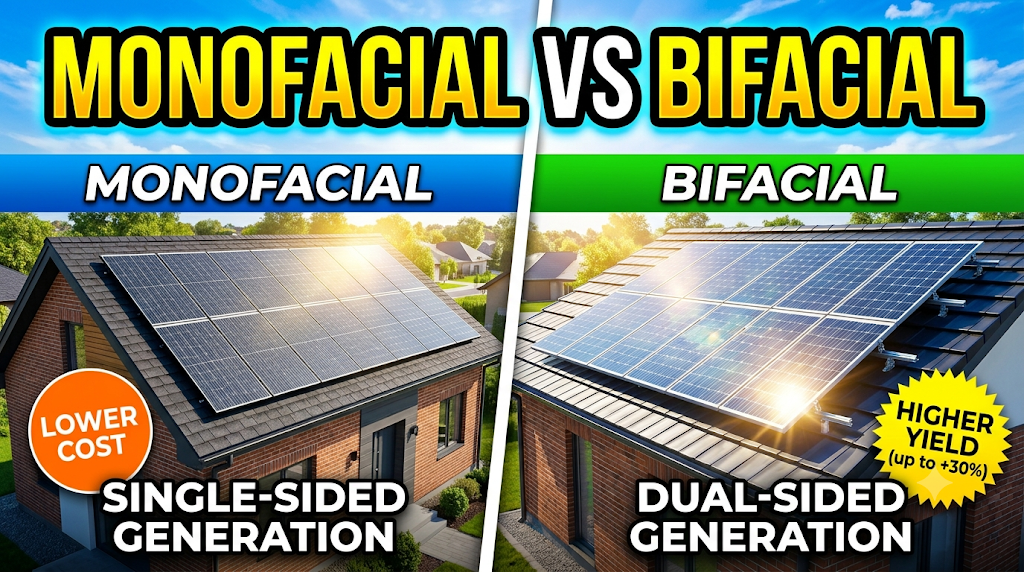
Monofacial vs Bifacial Solar Panels for Rooftops Introduction Solar panels are available in different technologies, and monofacial and bifacial panels are two important options in the solar energy market. Both convert sunlight into electricity, but they differ in how they capture solar energy. Monofacial solar panels generate electricity primarily from their front surface, while bifacial panels can generate electricity from both their front and rear surfaces. This difference can influence electricity production, installation requirements, cost and overall suitability for rooftop solar projects. Choosing between monofacial and bifacial solar panels requires…
Read MoreTag: Solar Energy
Monofacial vs Bifacial Solar Panels for Rooftops: Which Is Better?
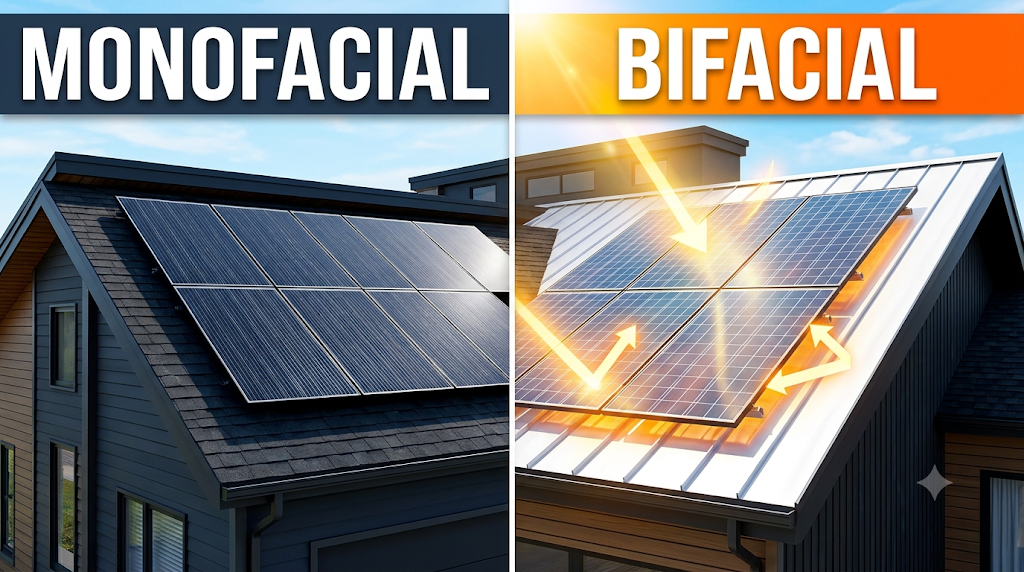
Monofacial vs Bifacial Solar Panels for Rooftops Introduction Solar panels are available in different designs, and monofacial and bifacial panels are two important options for generating electricity from sunlight. Monofacial solar panels capture sunlight mainly from their front surface, while bifacial solar panels can capture sunlight from both the front and rear surfaces. Both technologies convert sunlight into electricity, but their performance depends on installation conditions, available sunlight and the surrounding environment. Choosing between monofacial and bifacial solar panels for a rooftop installation requires considering more than just panel technology.…
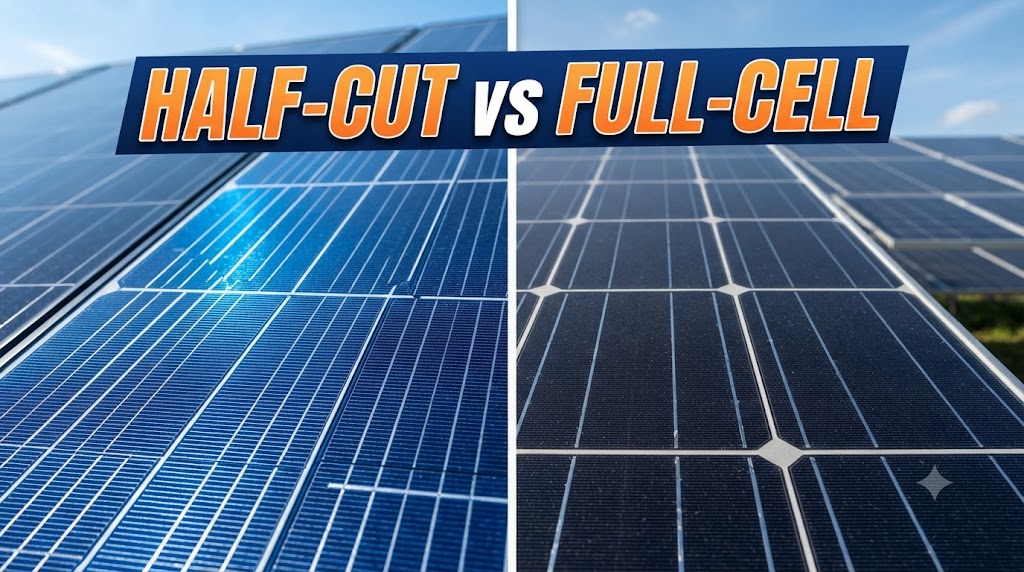
Read MoreHalf-Cut vs Full-Cell Solar Panels: Which Is Better?
Half-Cut vs Full-Cell Solar Panels Introduction Half-cut and full-cell solar panels are two different solar panel designs used in residential, commercial, and industrial solar installations. Both convert sunlight into electricity, but they differ in how their solar cells are manufactured, arranged, and connected. These design differences can affect electrical resistance, heat generation, shading performance, and overall energy output. Understanding these differences can help you choose a suitable solar panel for your rooftop or solar project. A half-cut solar panel uses solar cells that are cut into two smaller pieces, while…
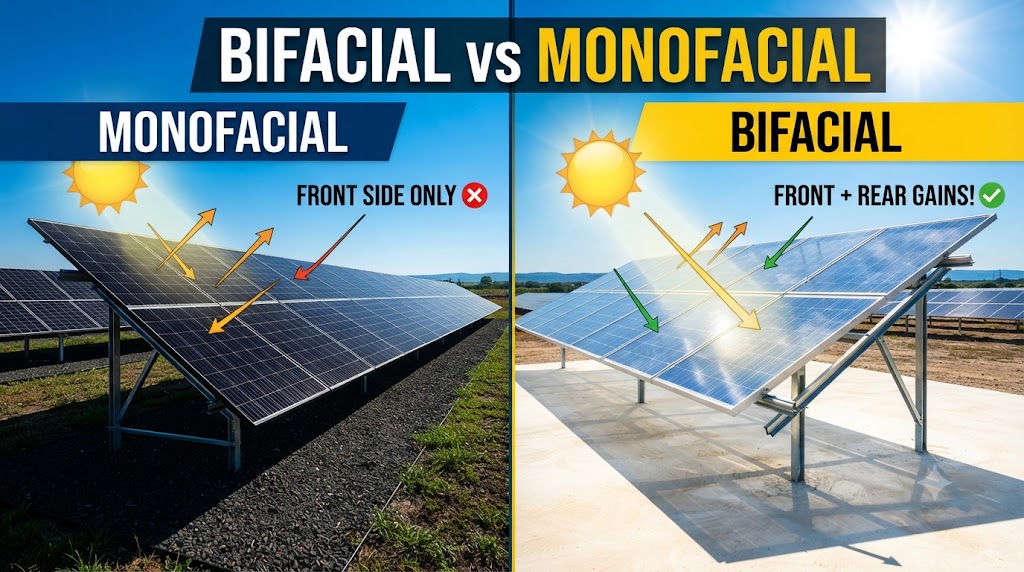
Read MoreBifacial vs Monofacial Solar Panels: Which Is Better?
Bifacial vs Monofacial Solar Panels Introduction Solar panel technology offers different ways to convert sunlight into electricity, and bifacial and monofacial panels are two important options. Both technologies use photovoltaic cells to generate electricity from sunlight, but they differ in how they capture solar energy. Monofacial panels generate electricity primarily from their front surface, while bifacial panels can generate electricity from both their front and rear surfaces. This difference can influence energy production, installation requirements, mounting arrangements and overall project costs. Choosing between bifacial and monofacial solar panels depends on…
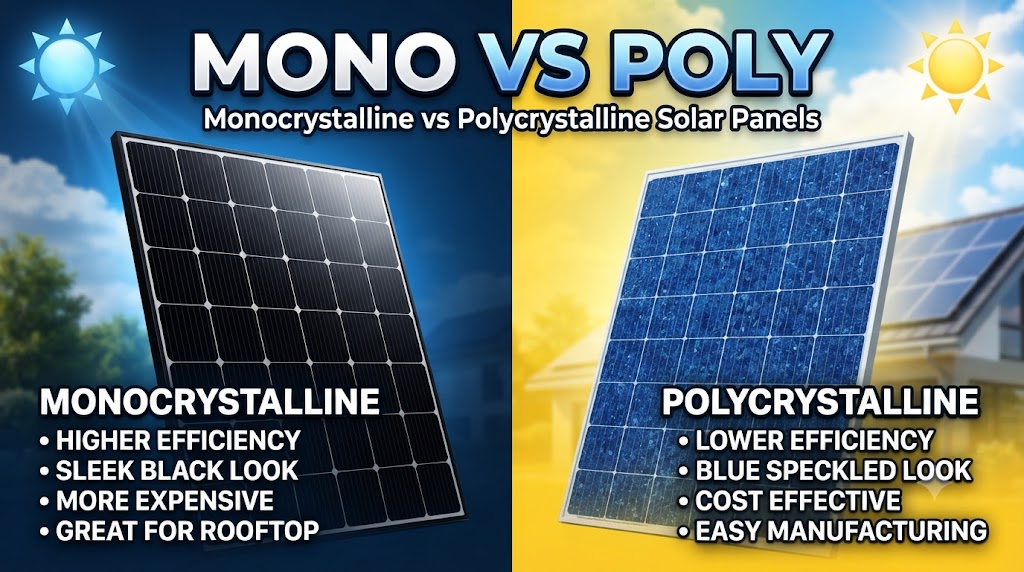
Read MoreMonocrystalline vs Polycrystalline Solar Panels: Which Is Better?
Monocrystalline vs Polycrystalline Solar Panels Introduction Solar panels are available in different technologies, and choosing the right type can affect electricity generation, installation costs and long-term performance. Monocrystalline and polycrystalline solar panels are two well-known types of photovoltaic panels. Both convert sunlight into electricity using silicon cells, but they differ in their manufacturing processes, appearance, efficiency and cost. Monocrystalline panels are made using single-crystal silicon, whereas polycrystalline panels are manufactured using multiple silicon crystal fragments melted together. Choosing between these two solar panel types depends on your budget, available rooftop…
Read MoreOn-Grid vs Hybrid Solar System: Which Is Better?
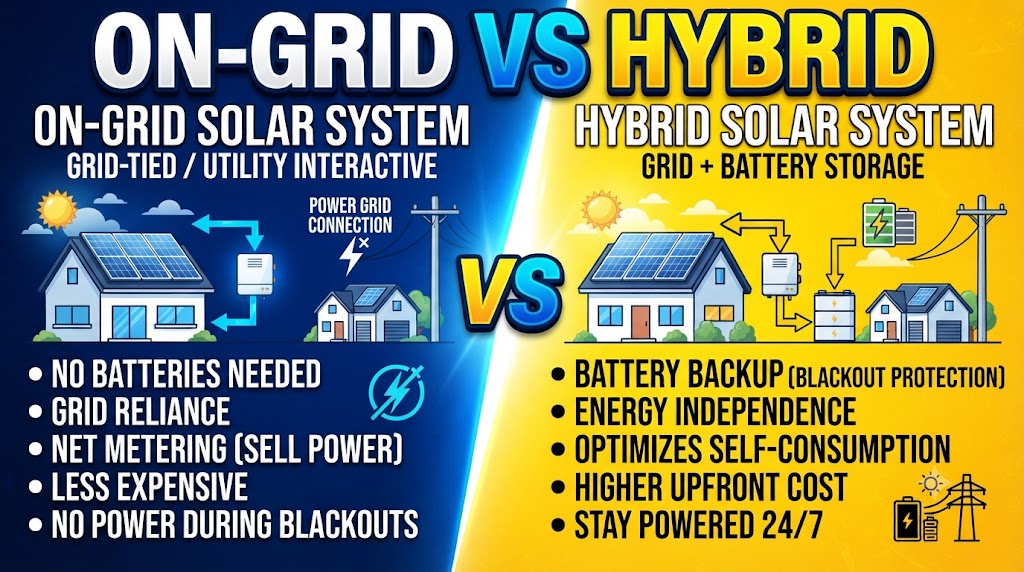
On-Grid vs Hybrid Solar System Introduction Choosing between an on-grid and a hybrid solar system depends on your electricity requirements, backup needs, available budget and reliability of the electricity supply. Both systems use solar panels to generate electricity, but they differ in how they manage excess energy and provide power during outages. An on-grid solar system connects directly to the electricity grid and generally operates without batteries. A hybrid solar system combines grid connectivity with battery storage, allowing users to store surplus solar electricity and use it when required. On-grid…
Read MoreOn-Grid vs Off-Grid Solar System: Which Is Better?
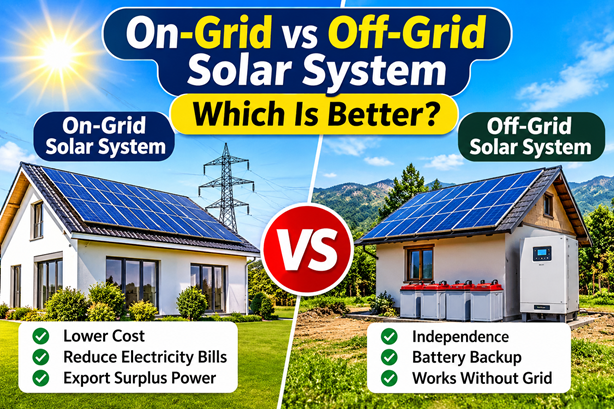
On-Grid vs Off-Grid Solar System Introduction Choosing between an on-grid and an off-grid solar system depends on your electricity requirements, availability of grid power, backup needs and installation budget. Both systems use solar panels to convert sunlight into electricity, but they differ in how they manage and supply electrical energy. An on-grid solar system connects to the electricity grid and can send surplus electricity back to the utility. An off-grid solar system operates independently and uses batteries to store electricity for later use. On-grid solar systems are commonly suitable for…
Read More