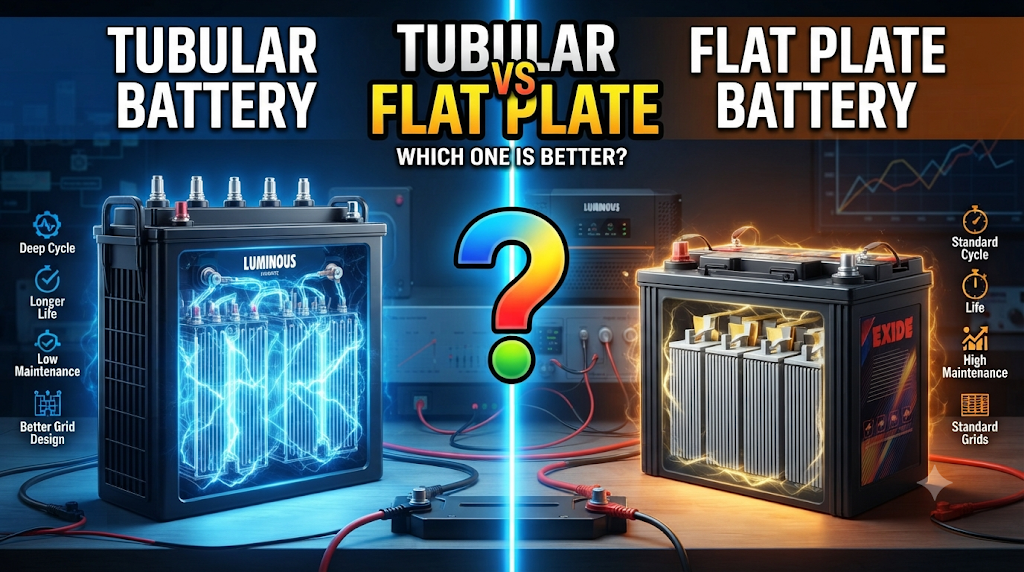
Tubular Battery vs Flat Plate Battery Introduction Choosing the right inverter or solar battery is important for maintaining a reliable electricity backup at home. Tubular and flat plate batteries are two common types of lead-acid batteries used in residential inverter systems. Both store electrical energy and provide power when the electricity supply is interrupted. However, they differ in plate construction, deep-discharge performance, battery lifespan, maintenance requirements, charging characteristics and initial purchase cost. Understanding these differences can help homeowners select a battery according to their backup requirements and electricity usage. Tubular…
Read MoreCategory: Solar & Power Solutions
LiFePO4 vs NMC Battery: Which Is Better for Solar Storage?
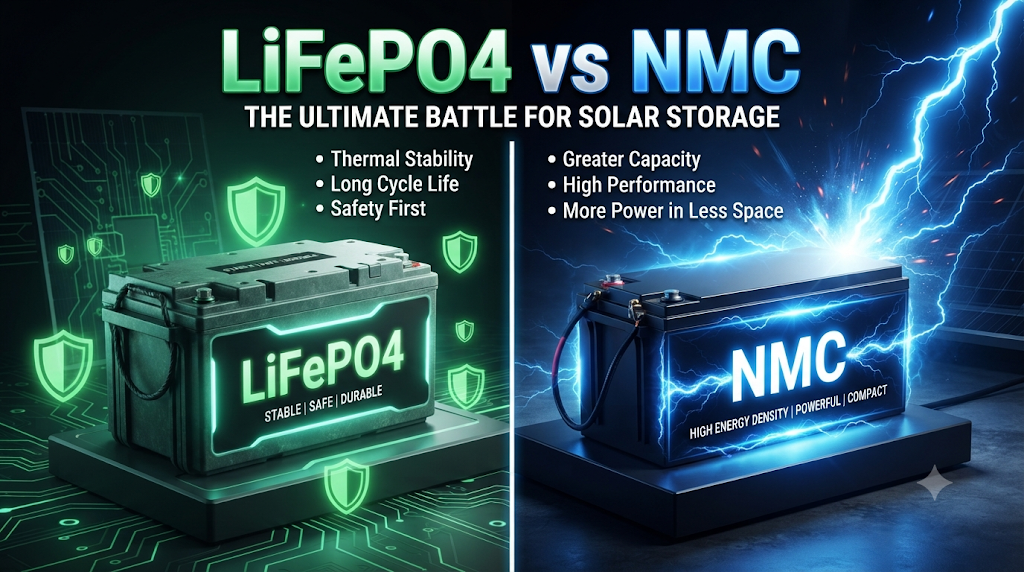
LiFePO4 vs NMC Battery Introduction Lithium-ion batteries are widely used in modern solar energy storage systems because they can store electricity generated during the day and supply power when solar panels are not producing enough energy. However, not all lithium-ion batteries use the same chemistry. Two important options are Lithium Iron Phosphate (LiFePO4 or LFP) and Nickel Manganese Cobalt (NMC). Both technologies offer rechargeable energy storage, but they differ in energy density, battery lifespan, thermal stability, charging characteristics, cost and overall suitability for residential solar applications. LiFePO4 batteries are increasingly…
Read MoreLithium-Ion vs Lead-Acid Solar Battery: Which Is Better?
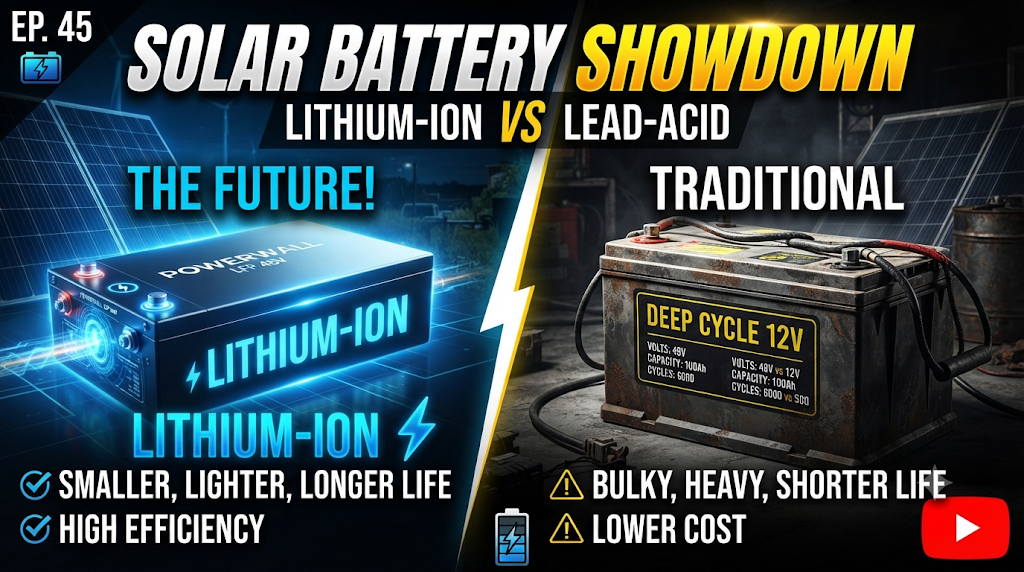
Lithium-Ion vs Lead-Acid Solar Battery Introduction Choosing the right battery is an important decision when installing a solar power system. A solar battery stores electricity generated by solar panels so that you can use it later, especially at night or during a power cut. Two commonly discussed battery technologies are lithium-ion and lead-acid. Both can store electricity for household use, but they differ in battery life, charging efficiency, usable capacity, maintenance, size and initial cost. Understanding these differences can help homeowners select a battery that matches their electricity requirements and…
Read MoreMPPT vs Hybrid Solar Inverter: What Is the Difference?
MPPT vs Hybrid Solar Inverter Introduction MPPT and hybrid solar inverters are two important terms in solar energy systems, but they perform different functions. MPPT stands for Maximum Power Point Tracking, a technology that helps solar equipment extract maximum available power from solar panels. A hybrid solar inverter is a complete inverter system designed to manage electricity from solar panels, batteries and the utility grid. Although both are associated with solar energy optimization, they are not directly competing technologies because MPPT is a power-tracking function, whereas a hybrid inverter is…
Read MorePWM vs MPPT Solar Charge Controller: Which Is Better?
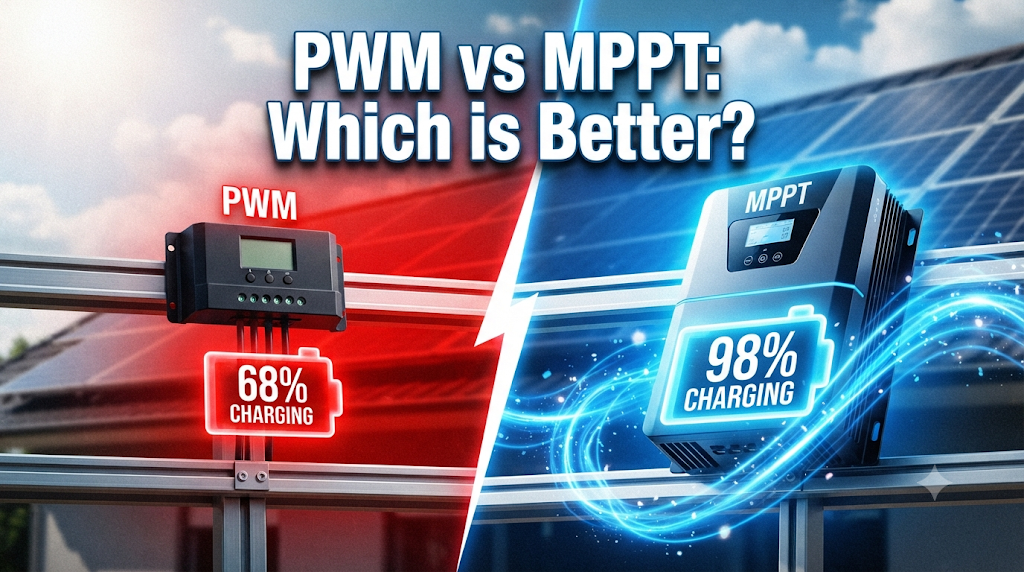
PWM vs MPPT Solar Charge Controller Introduction A solar charge controller is an important component of an off-grid solar power system. It regulates the electricity flowing from solar panels to batteries and helps prevent overcharging. Two commonly used types are PWM (Pulse Width Modulation) and MPPT (Maximum Power Point Tracking) solar charge controllers. Both perform battery charging management, but they use different technologies to handle the electricity generated by solar panels. These differences affect charging efficiency, solar panel compatibility, system design and overall performance. Choosing between a PWM and an…
Read MorePure Sine Wave vs Modified Sine Wave Inverter: Which Is Better?
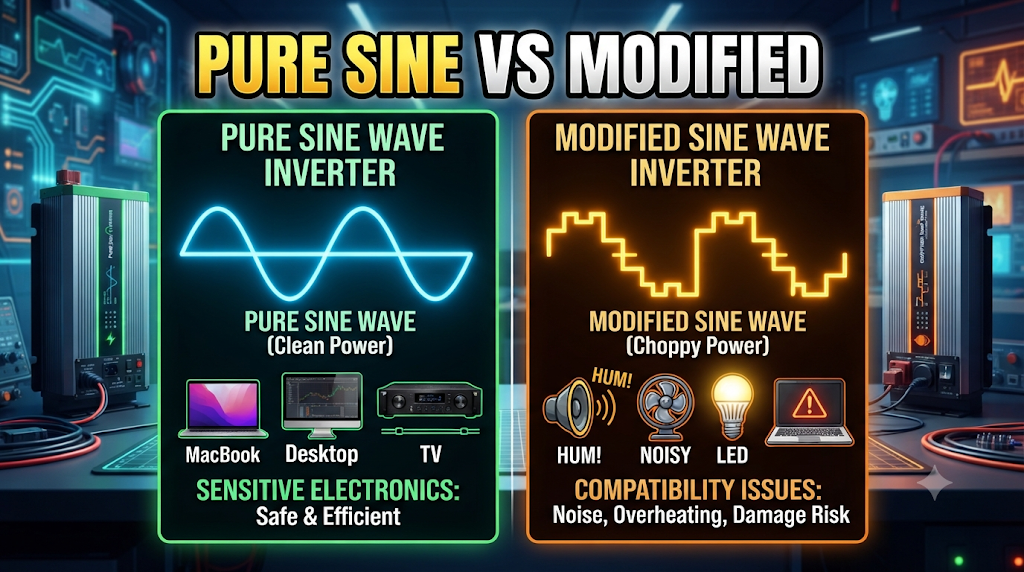
Pure Sine Wave vs Modified Sine Wave Inverter Introduction Pure sine wave and modified sine wave inverters are two common types of inverters used to convert DC electricity from batteries into AC electricity for household appliances. Although both perform the same basic function, they produce different types of AC waveforms. A pure sine wave inverter produces a smooth waveform similar to the electricity supplied by the utility grid, while a modified sine wave inverter produces a stepped waveform. This difference can affect appliance compatibility, operating noise, efficiency and overall performance.…
Read MoreSolar Inverter vs Normal Home Inverter: Which Is Better?
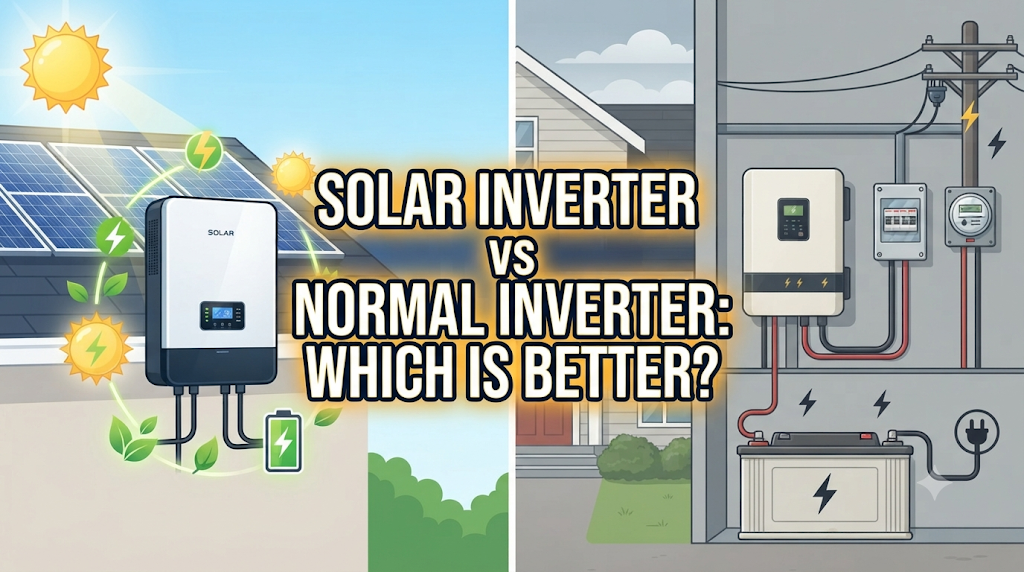
Solar Inverter vs Normal Home Inverter Introduction A solar inverter and a normal home inverter both help provide electricity to households, but they are designed for different purposes. A solar inverter converts the DC electricity generated by solar panels into AC electricity that can be used by household appliances. A normal home inverter primarily uses electricity stored in batteries to provide backup power during electricity outages. Although both systems can supply electricity to lights, fans, televisions and other appliances, their working methods, charging arrangements and solar compatibility are different. Choosing…
Read MoreSolar Microinverter vs Power Optimizer: Which Is Better?
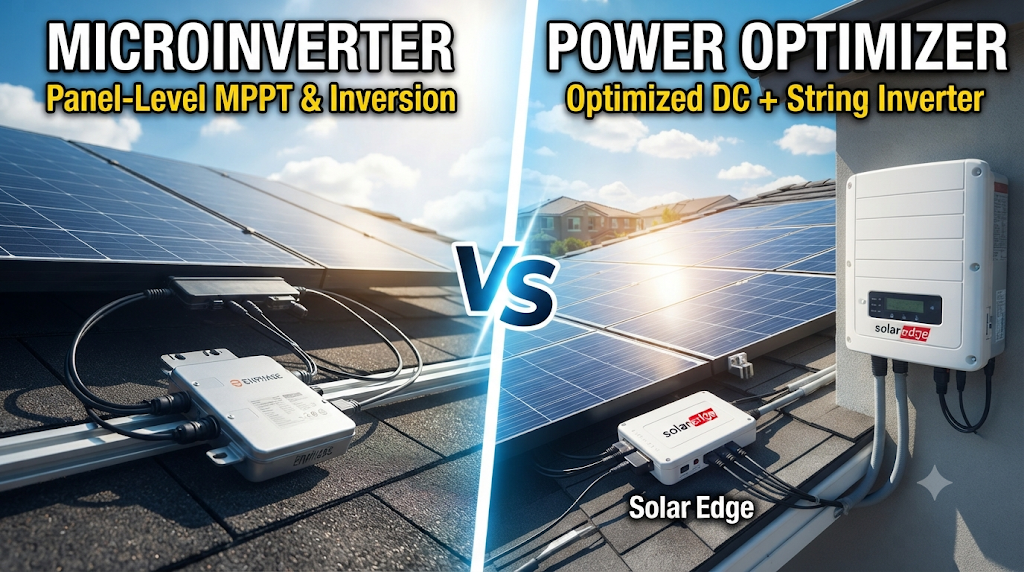
Solar Microinverter vs Power Optimizer Introduction Solar microinverters and power optimizers are two technologies designed to improve the performance of solar panel systems. Both work at the individual solar panel level, helping reduce the impact of partial shading, different panel orientations and variations in panel performance. However, they use different methods to manage electricity. A microinverter converts DC electricity into AC electricity directly at the solar panel, while a power optimizer adjusts the panel’s DC output before sending it to a central solar inverter. Choosing between a solar microinverter and…
Read MoreString Inverter vs Hybrid Inverter: Which Is Better?
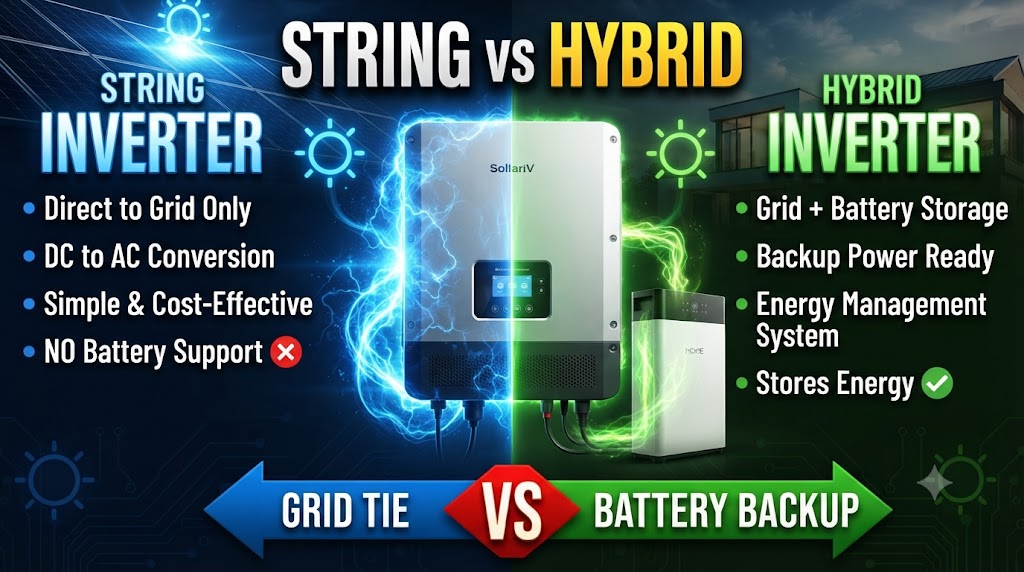
String Inverter vs Hybrid Inverter Introduction A string inverter and a hybrid inverter are two types of solar inverters used in residential and commercial solar power systems. Both convert the DC electricity generated by solar panels into AC electricity that can power household appliances and electrical equipment. However, their capabilities are different. A conventional string inverter mainly manages solar electricity conversion, while a hybrid inverter can also manage energy storage through compatible batteries. Choosing between these inverter types depends on how you plan to use solar electricity. If you want…
Read MoreSolar String Inverter vs Microinverter: Which Is Better?
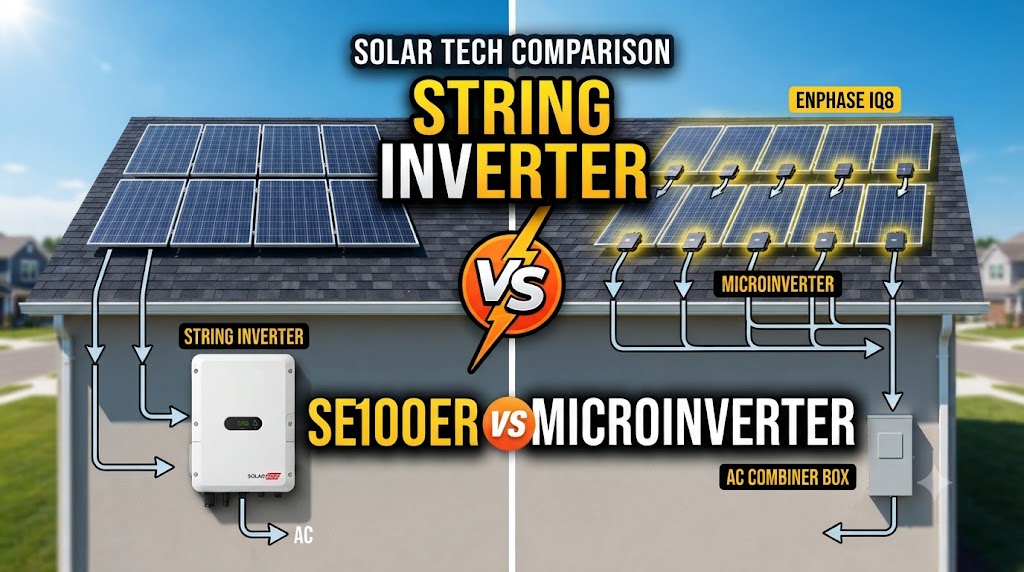
Solar String Inverter vs Microinverter Introduction A solar inverter is an important part of a solar power system because it converts the direct current (DC) electricity produced by solar panels into alternating current (AC) electricity used by household appliances and electrical equipment. Solar string inverters and microinverters perform this function differently. A string inverter connects multiple solar panels into one or more groups, while microinverters are installed separately on individual panels. The choice between these two inverter types can affect system design, monitoring, installation cost, maintenance, and performance under partial…
Read More