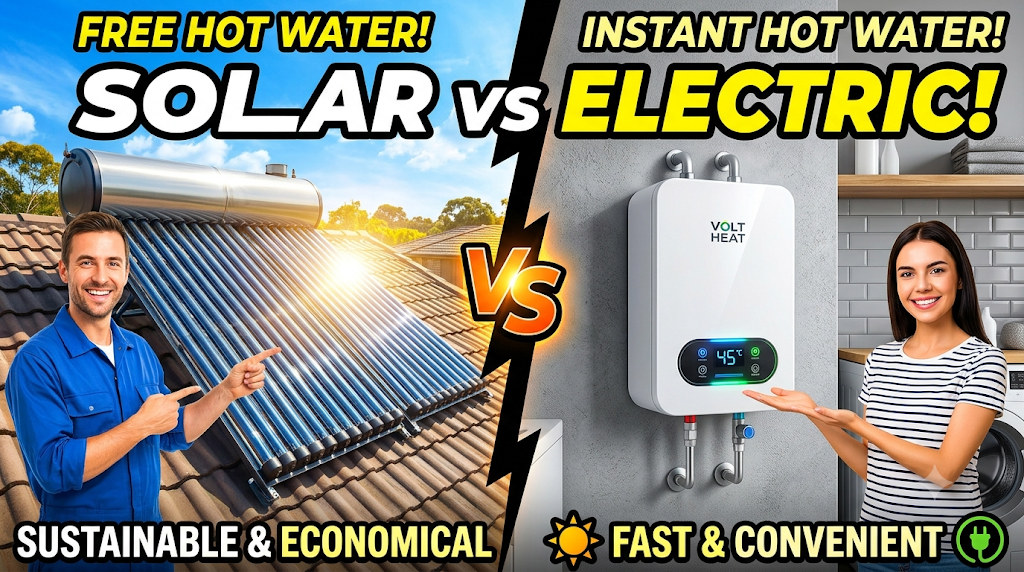
Solar Water Heater vs Electric Water Heater Introduction Water heating is an important household requirement, especially during winter when hot water is needed for bathing, washing, and other daily activities. Two commonly used options are solar water heaters and electric water heaters. A solar water heater uses energy from sunlight to heat water, while an electric water heater uses electricity to operate a heating element. Both systems provide hot water, but they differ in operating costs, installation requirements, heating performance, maintenance, and dependence on weather conditions. Choosing between a solar…
Read MoreCategory: Solar & Power Solutions
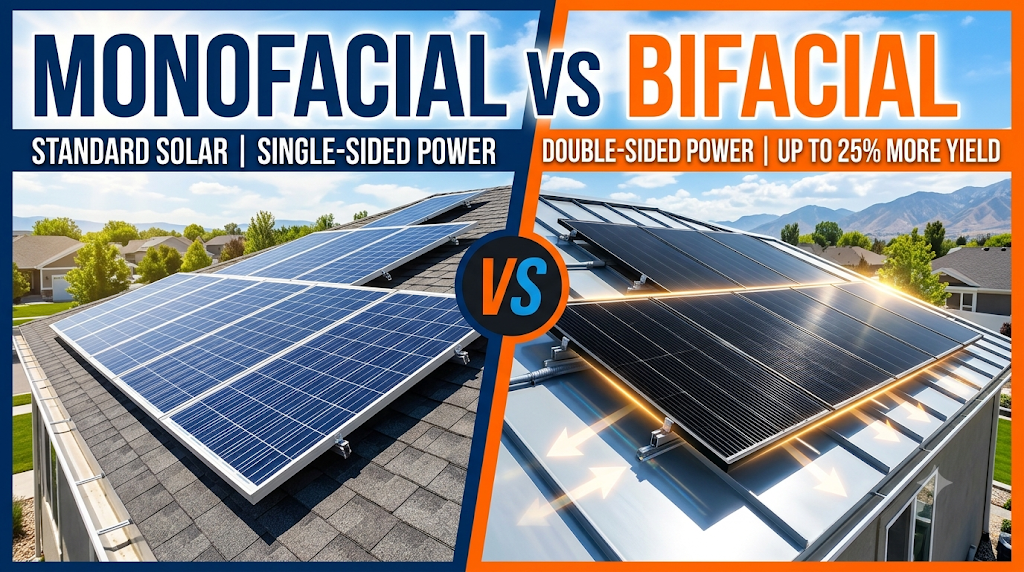
Monofacial vs Bifacial Solar Panels for Rooftops: Which Is Better?
Monofacial vs Bifacial Solar Panels for Rooftops Introduction Solar panels are available in different technologies, and monofacial and bifacial panels are two important options for generating electricity from sunlight. Monofacial solar panels generate electricity primarily from sunlight reaching their front surface, while bifacial solar panels can generate electricity from both their front and rear surfaces. Both technologies use photovoltaic cells to convert sunlight into electricity, but their performance depends on installation conditions, available sunlight, roof design, and mounting arrangements. Choosing between monofacial and bifacial solar panels for a rooftop installation…
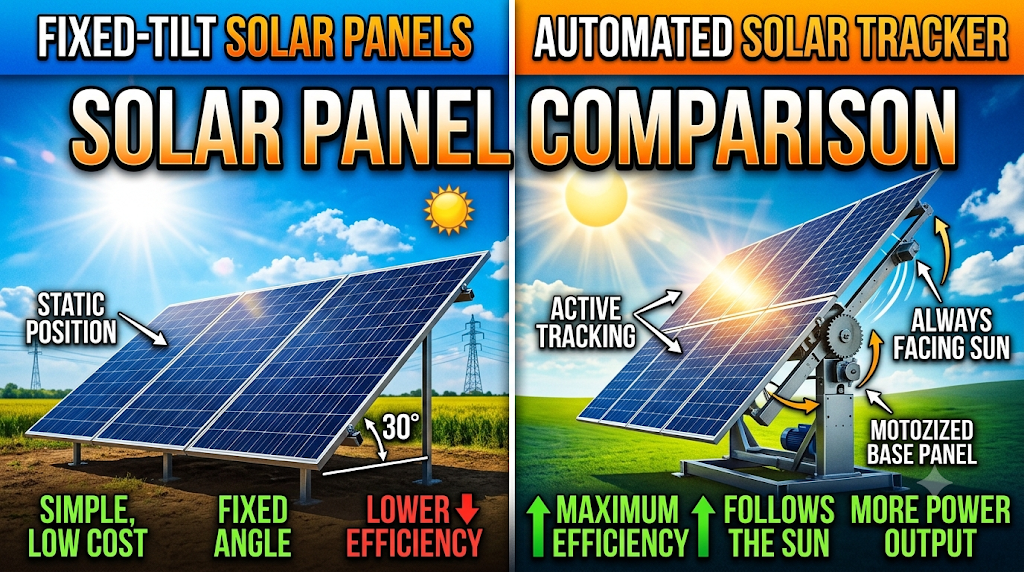
Read MoreFixed-Tilt vs Solar Tracking System: Which Is Better?
Fixed-Tilt vs Solar Tracking System Introduction Solar panel mounting systems play an important role in determining how much electricity a solar installation can generate. Two common options are fixed-tilt mounting systems and solar tracking systems. A fixed-tilt system keeps solar panels at a predetermined angle throughout the day, while a tracking system automatically changes the panel position to follow the sun. Both systems are designed to capture sunlight, but they differ in electricity generation, installation costs, maintenance requirements, and suitability for different locations. Choosing between fixed-tilt and solar tracking systems…
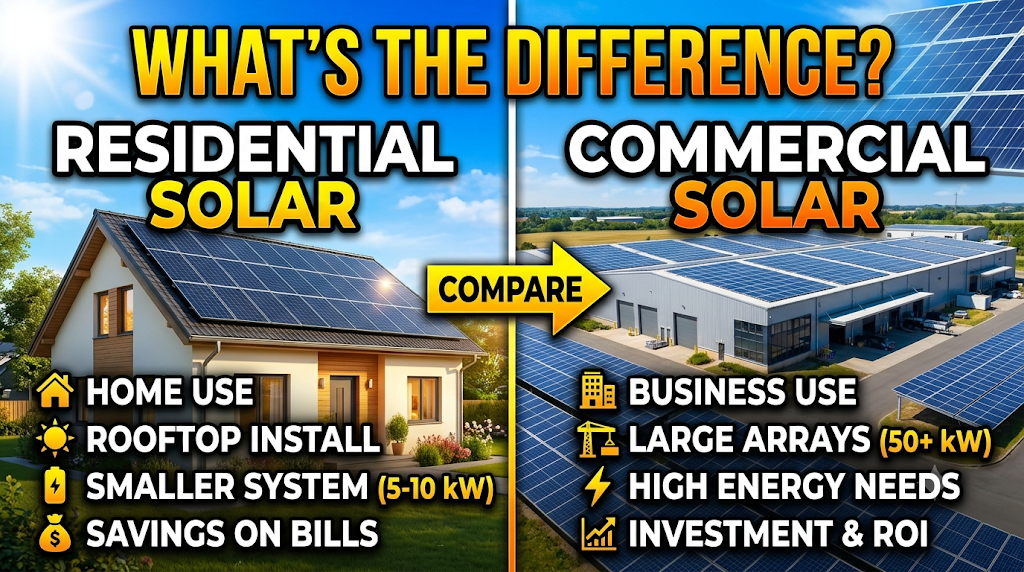
Read MoreResidential Solar vs Commercial Solar: What Is the Difference?
Residential Solar vs Commercial Solar Introduction Residential solar and commercial solar systems both use solar panels to convert sunlight into electricity. However, they are designed for different types of electricity consumers. Residential solar is installed to meet the power requirements of homes, apartments and other domestic properties. Commercial solar is designed for businesses such as offices, shops, hotels, factories, hospitals and warehouses. The main differences are usually system capacity, electricity consumption patterns, installation requirements, project costs and applicable electricity regulations. Although both systems use similar solar technologies, their planning and…
Read MoreRooftop Solar vs Ground-Mounted Solar: Which Is Better?
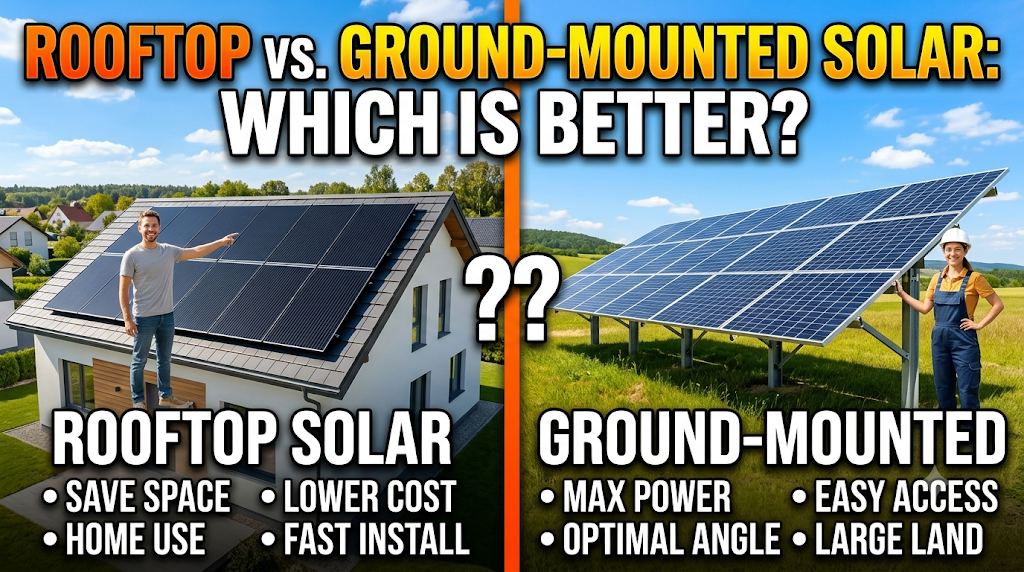
Rooftop Solar vs Ground-Mounted Solar: Which Is Better? Introduction Rooftop solar and ground-mounted solar are two popular ways to install solar panels and generate electricity for homes, businesses and other properties. Both systems use photovoltaic (PV) panels to convert sunlight into electricity, but they differ in installation location, available space, mounting structures and maintenance requirements. Rooftop solar panels are installed on existing building roofs, while ground-mounted solar panels are installed on specially designed structures placed directly on the land. The choice between these systems depends on property size, roof condition,…
Read MoreSolar Lease vs Buying Solar Panels: Which Is Better?
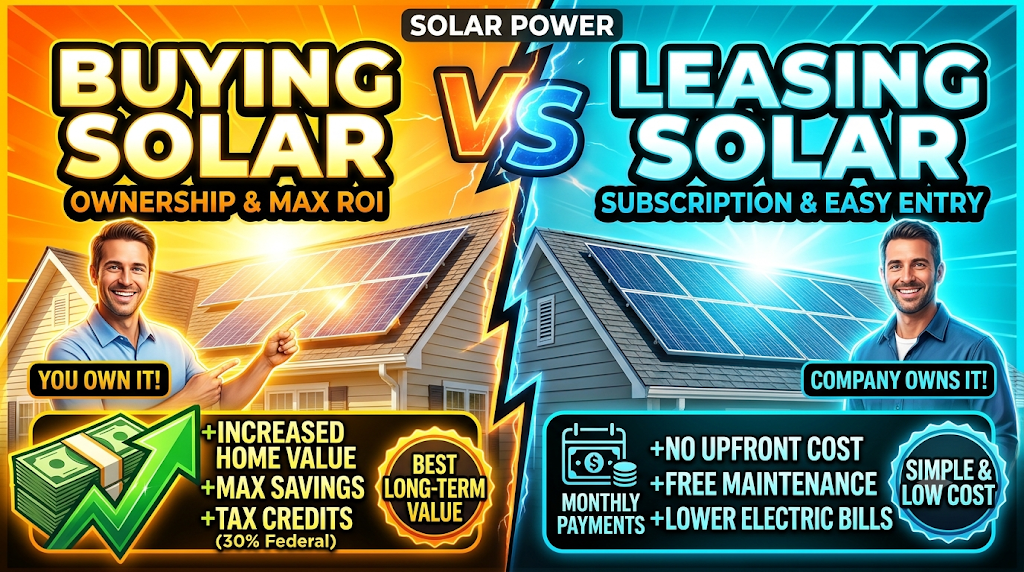
Solar Lease vs Buying Solar Panels Introduction Solar leasing and buying solar panels are two different ways to install and use solar energy at a home or business. Both options allow consumers to benefit from electricity generated by solar panels, but they differ in ownership, upfront investment, monthly payments and maintenance responsibilities. Under a solar lease, a solar company generally owns the equipment and allows the consumer to use the installed system in exchange for regular payments. When buying solar panels, the consumer purchases the equipment and becomes its owner.…
Read MoreSolar PPA vs Solar System Purchase: Which Is Better?
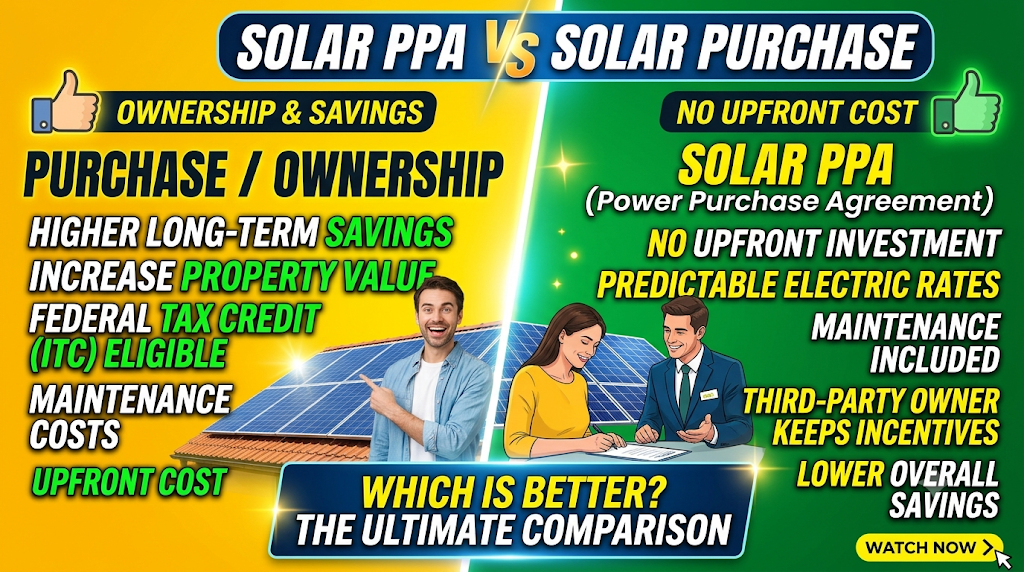
Solar PPA vs Solar System Purchase Introduction A Solar Power Purchase Agreement (PPA) and a direct solar system purchase are two different ways to install and benefit from solar energy. Both options allow homeowners and businesses to generate electricity using solar panels, but they differ in ownership, upfront investment, maintenance responsibilities and long-term financial benefits. Under a solar PPA, a third-party developer generally installs and owns the solar system, while the consumer pays for the electricity it generates. With a direct purchase, the consumer buys the complete solar installation and…
Read MoreNet Metering vs Gross Metering: What Is the Difference?
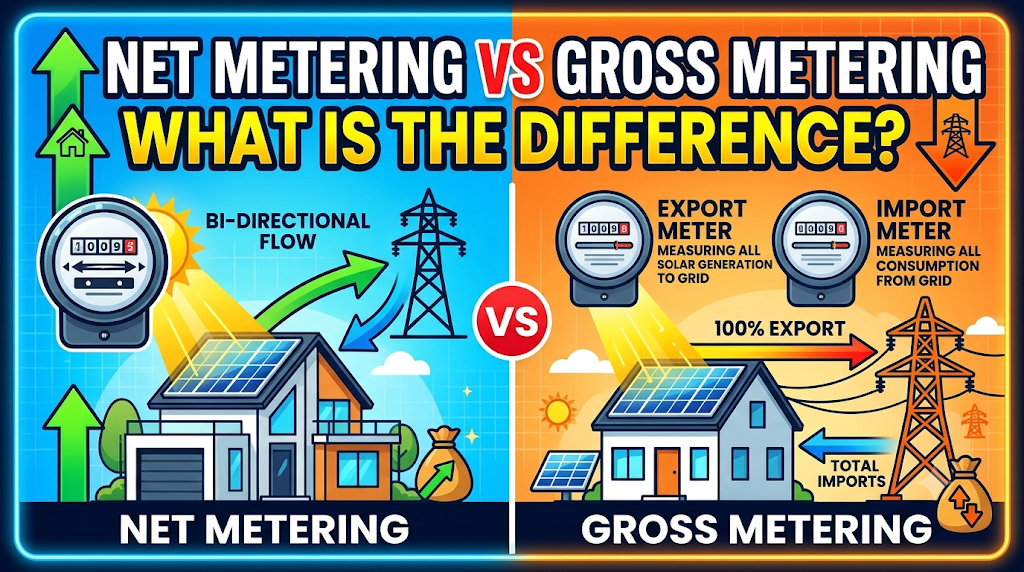
Net Metering vs Gross Metering Introduction Net metering and gross metering are two different methods of measuring and billing electricity generated by a rooftop solar system. Both arrangements allow solar power to be connected to the electricity grid, but they handle generated electricity differently. Under net metering, the electricity produced by solar panels is first used to meet the property’s electricity demand, while surplus power can be exported to the grid. Under gross metering, the entire solar electricity generation is supplied to the grid and accounted for separately from the…
Read MoreSolar Battery Storage vs Net Metering: Which Is Better?
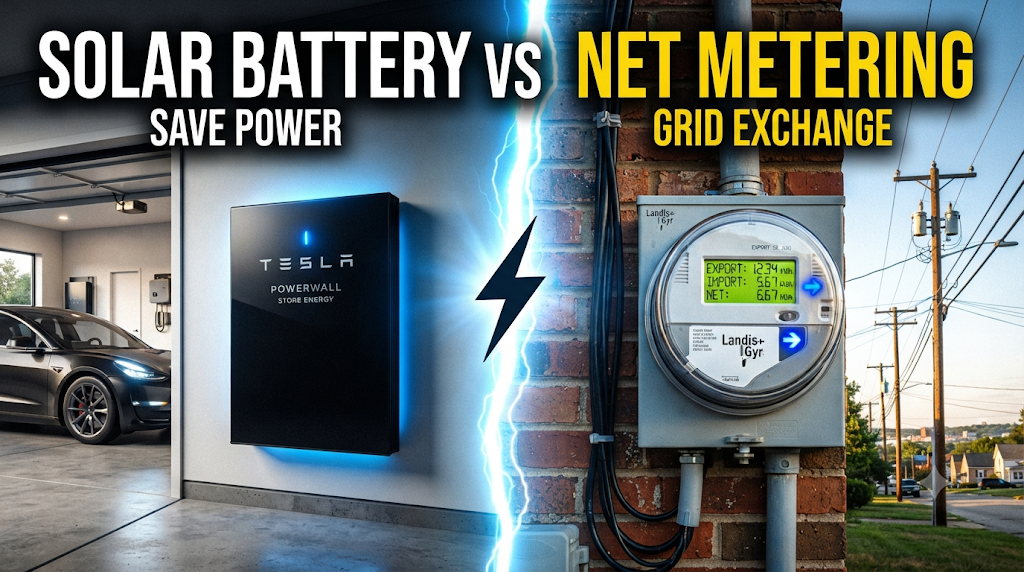
Solar Battery Storage vs Net Metering Introduction Solar battery storage and net metering are two different ways to make better use of electricity generated by rooftop solar panels. Battery storage allows homeowners to save surplus solar electricity in batteries and use it later, such as at night or during a power cut when the system supports backup operation. Net metering, on the other hand, allows a grid-connected solar system to export surplus electricity to the electricity grid and receive energy credits according to the applicable electricity regulations. Both approaches can…
Read MoreSolar Battery vs Home Inverter Battery: Which Is Better?
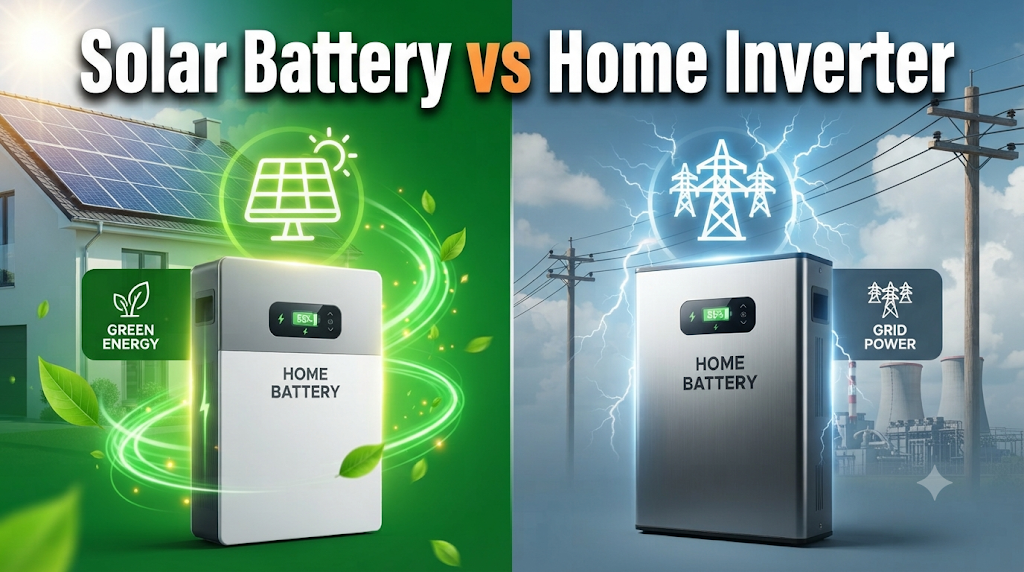
Solar Battery vs Home Inverter Battery Introduction Batteries play an important role in providing electricity backup and storing energy for household use. However, solar batteries and home inverter batteries are designed with different usage requirements in mind. A solar battery is generally intended to store electricity generated by solar panels and support regular charging and discharging. A conventional home inverter battery is primarily designed to provide backup electricity during power cuts. Although both can store electrical energy, their charging requirements, cycle-life expectations, construction and suitability for daily solar use can…
Read More