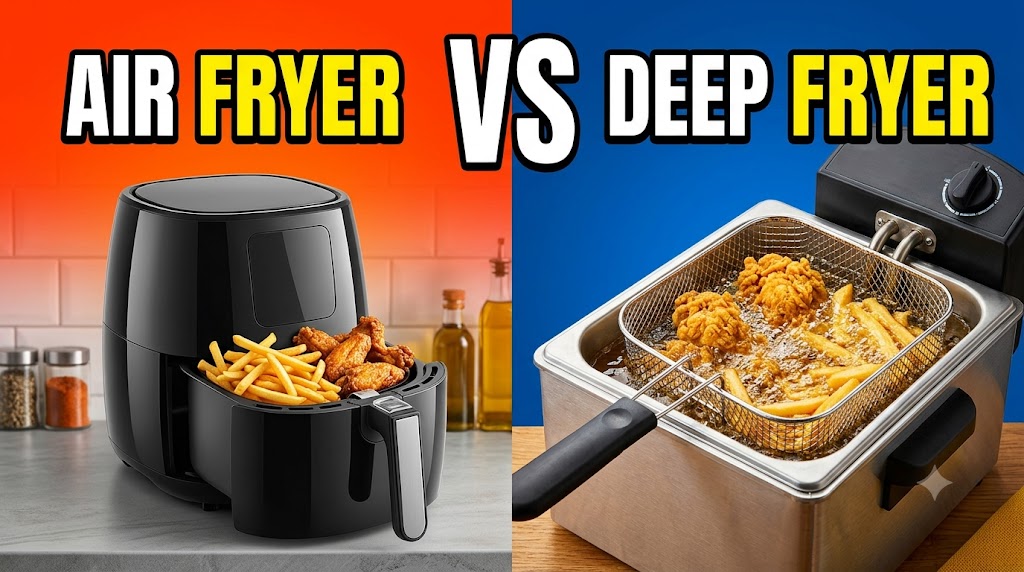
Air Fryer vs Deep Fryer Introduction An air fryer and a deep fryer are kitchen appliances used to prepare foods such as fries, snacks, and other fried-style dishes, but they use different cooking methods. An air fryer circulates hot air around food to cook and brown its surface, often using little or no added oil. A deep fryer cooks food by immersing it in hot oil, producing the familiar texture and taste of traditionally deep-fried foods. Both appliances can be useful in a home kitchen, but the results, cooking process,…
Read MoreAuthor: Parkhu
29. Air Fryer vs Convection Oven: Which Is Better?
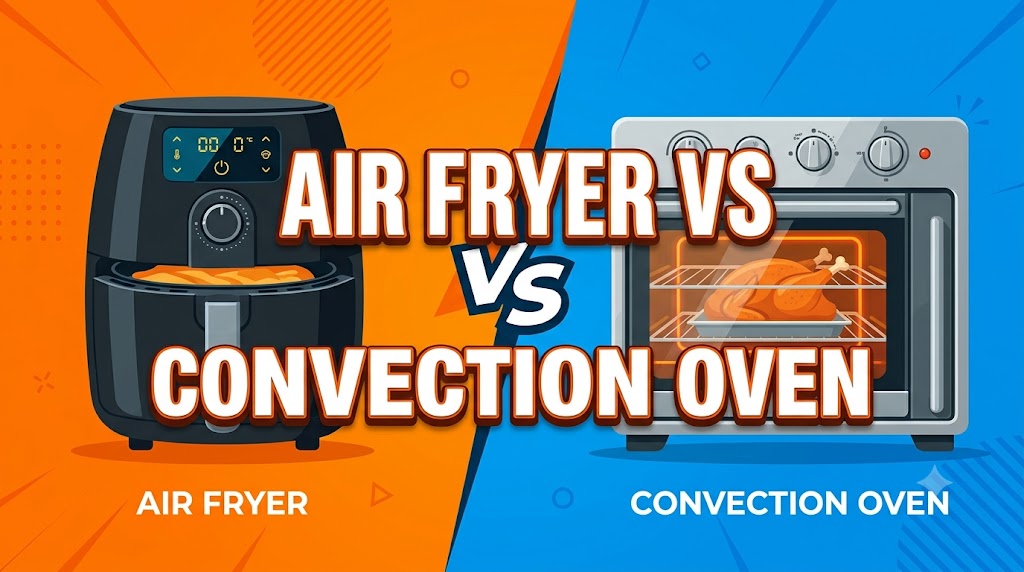
29. Air Fryer vs Convection Oven Introduction An air fryer and a convection oven are popular kitchen appliances that use circulating hot air to cook food, but they differ in size, design, and everyday convenience. An air fryer typically has a compact cooking chamber and a fan that circulates hot air around the food. A convection oven uses a fan to distribute heat inside a larger oven cavity. Both appliances can cook foods such as vegetables, potatoes, and roasted dishes, depending on their features and capacity. The better choice depends…
Read MoreConvection Microwave vs Solo Microwave: Which Is Better?
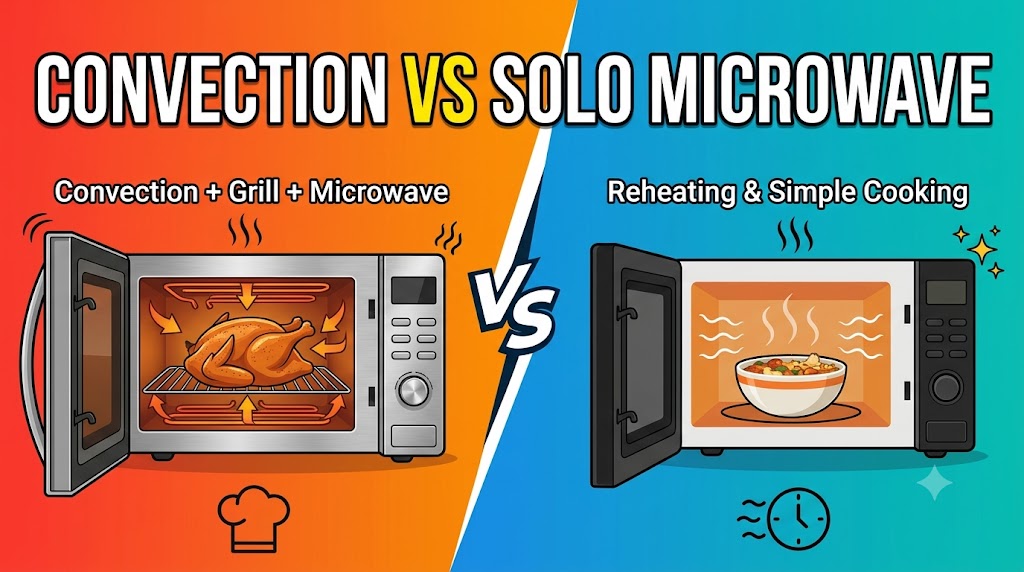
Convection Microwave vs Solo Microwave Introduction A convection microwave and a solo microwave are both useful kitchen appliances, but they offer different cooking capabilities. A solo microwave uses microwave energy to heat, reheat, defrost, and cook suitable foods quickly. A convection microwave combines microwave heating with a convection heating system, allowing it to perform additional tasks such as baking and roasting. The main difference is that a convection model offers greater cooking flexibility, while a solo model focuses on basic microwave functions. Your choice depends on your cooking habits, budget,…
Read MoreOTG vs Microwave Oven: Which Is Better?
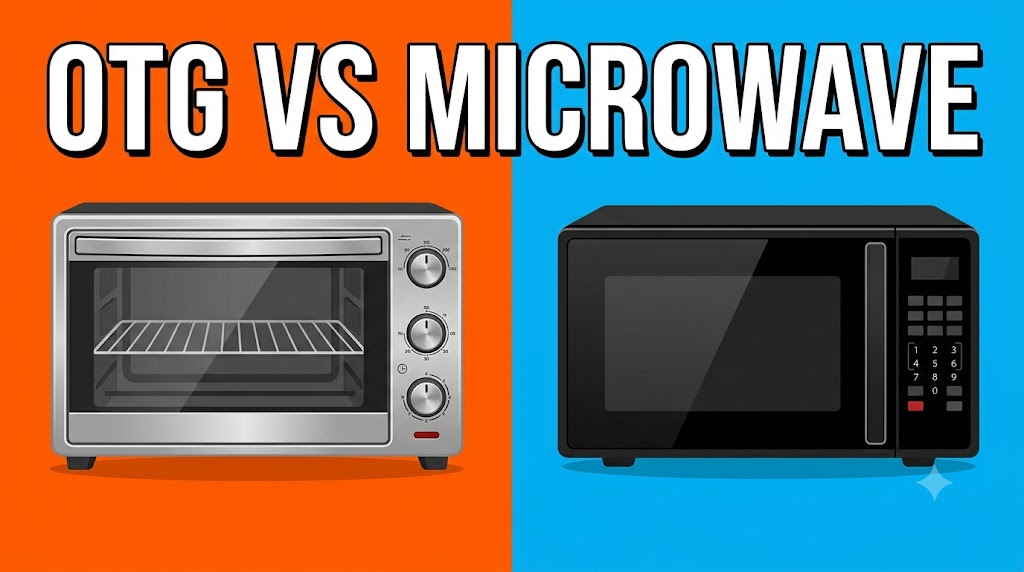
OTG vs Microwave Oven Introduction An OTG (Oven, Toaster, and Griller) and a microwave oven are both useful kitchen appliances, but they work differently and serve different cooking needs. An OTG uses heating elements to cook food through radiant heat, making it suitable for baking cakes, cookies, bread, and grilling certain foods. A microwave oven primarily uses electromagnetic waves to heat food quickly, making it convenient for reheating meals, defrosting frozen ingredients, and everyday cooking. Choosing between them depends on the dishes you prepare most often, the cooking results you…
Read MoreBuilt-In Hob vs Freestanding Gas Stove: Which Is Better?
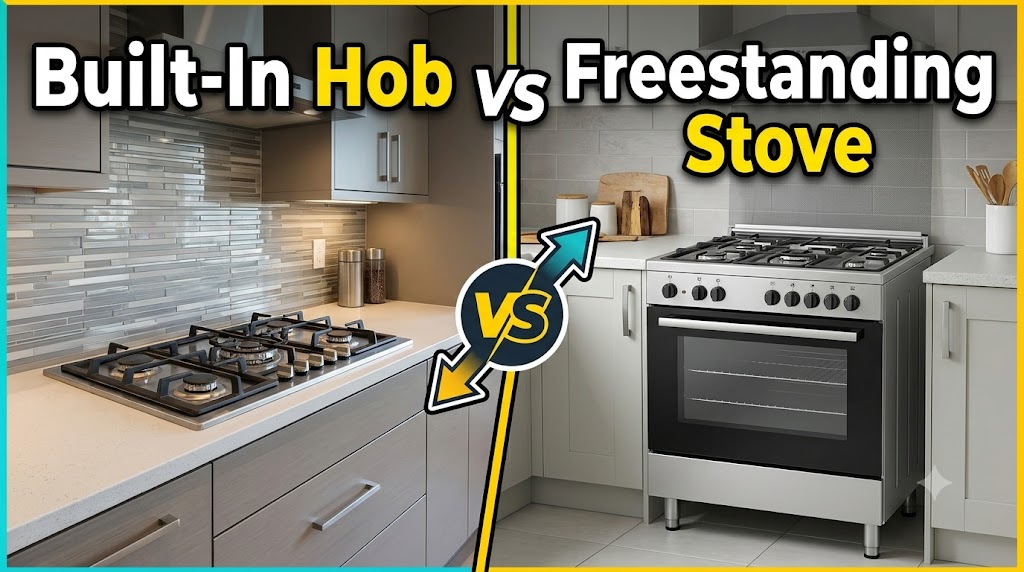
Built-In Hob vs Freestanding Gas Stove Introduction A built-in hob and a freestanding gas stove are two popular choices for home kitchens, but they differ in installation, design, cleaning, and flexibility. A built-in hob is fitted into a countertop, creating a streamlined appearance that works well in modular kitchens. A freestanding gas stove is a separate appliance that can generally be placed on a suitable counter or kitchen platform without cutting an opening into it. Both can provide effective gas cooking, but the right choice depends on your kitchen layout,…
Read MoreInduction Cooktop vs Infrared Cooktop: Which Is Better?
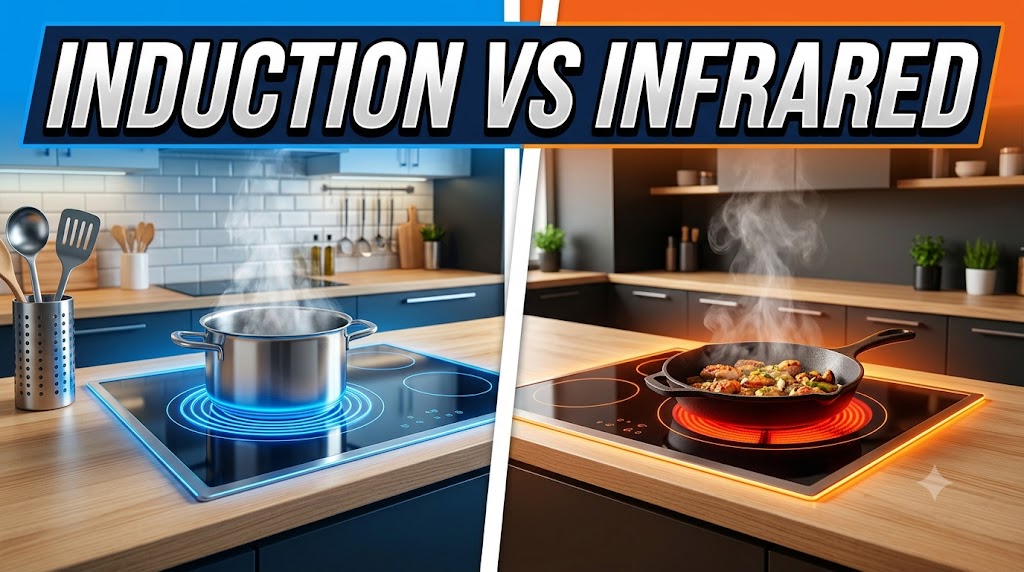
Induction Cooktop vs Infrared Cooktop Introduction Induction cooktops and infrared cooktops are popular alternatives to gas stoves, offering electric cooking without an open gas flame. However, they use different heating technologies. An induction cooktop uses electromagnetic energy to heat compatible cookware directly, while an infrared cooktop typically uses an electric heating element beneath a heat-resistant glass surface. These differences affect heating speed, energy efficiency, cookware compatibility, surface temperature, and cleaning. Understanding how both appliances work can help you choose the right option for your kitchen, cooking habits, electricity supply, and…
Read MoreInduction Cooktop vs Gas Stove: Which Is Better?
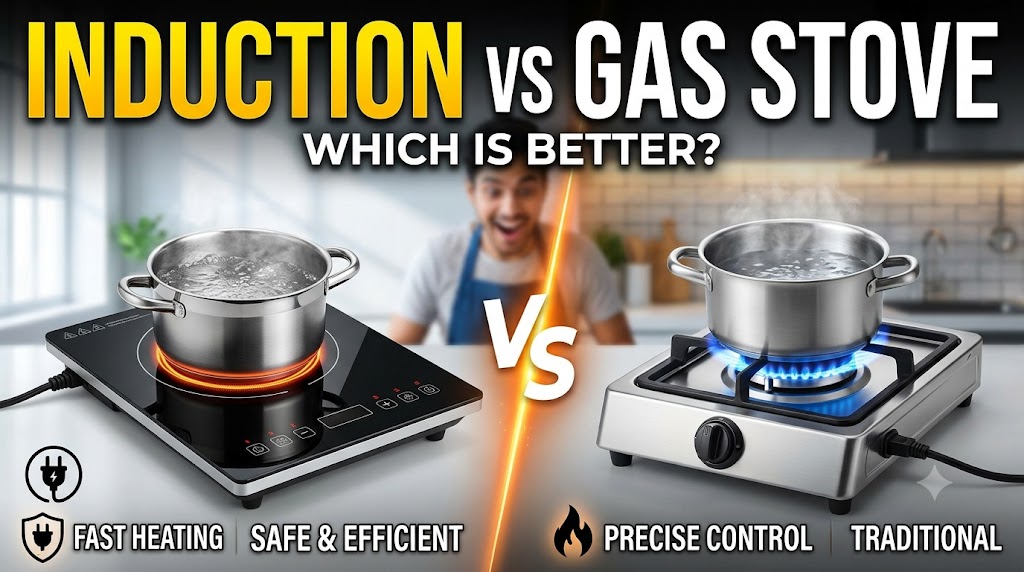
Induction Cooktop vs Gas Stove Introduction An induction cooktop and a gas stove are two popular options for cooking at home, but they use different methods to produce heat. An induction cooktop uses electromagnetic energy to heat compatible cookware directly, while a gas stove burns fuel to produce a flame that heats the cooking vessel. These differences affect cooking speed, energy efficiency, safety, cleaning, and installation requirements. Choosing between them depends on your cooking habits, electricity and gas costs, cookware, budget, and the reliability of your household’s power supply. An…
Read MoreCeiling Fan vs Wall Fan: Which Is Better?
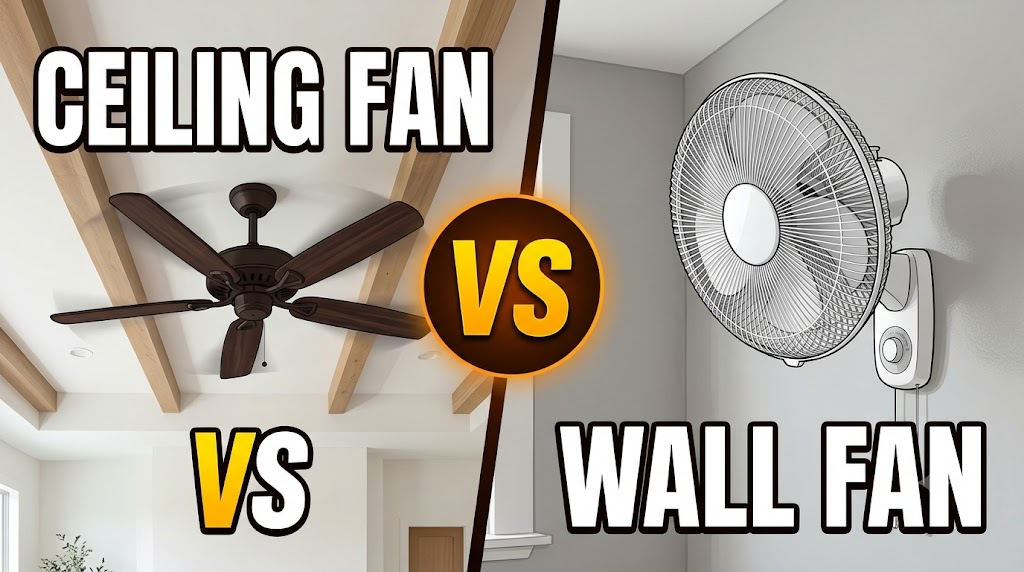
Ceiling Fan vs Wall Fan Introduction Ceiling fans and wall fans are both used to improve air circulation and make indoor spaces more comfortable. However, they differ in installation, airflow direction, space requirements, and suitability for different rooms. A ceiling fan is mounted overhead and circulates air across a relatively broad area, while a wall fan is attached to a wall and directs airflow toward a particular part of the room. Choosing between them depends on room layout, ceiling height, furniture placement, ventilation needs, and how you prefer air to…
Read MoreBLDC Fan vs Normal Ceiling Fan: Which Is Better?
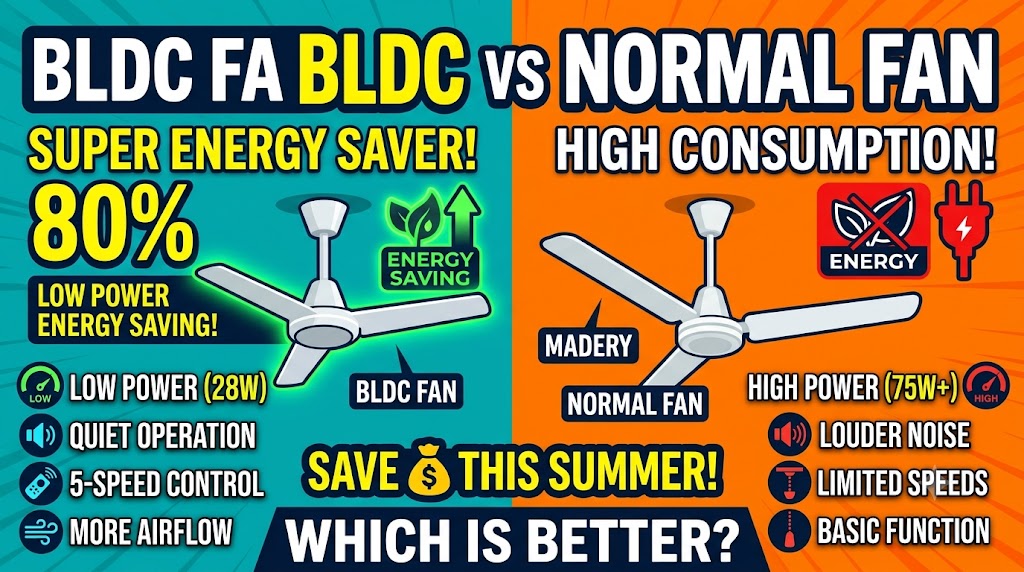
BLDC Fan vs Normal Ceiling Fan Introduction Choosing between a BLDC fan and a normal ceiling fan can affect your home’s electricity consumption, operating cost, and everyday comfort. Both types circulate air to help keep a room comfortable, but they differ in motor technology, energy efficiency, controls, and purchase price. A BLDC fan generally uses a brushless direct-current motor and electronic controls, while a normal ceiling fan commonly uses an AC induction motor. Understanding these differences can help you select a fan that suits your room, usage pattern, budget, and…
Read MoreTower Fan vs Pedestal Fan: Which Is Better?
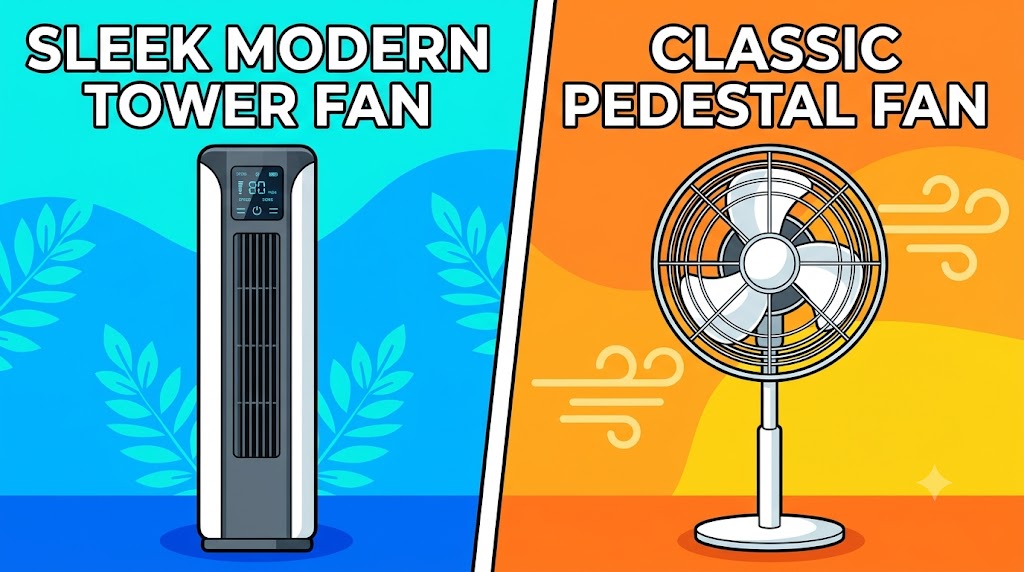
Tower Fan vs Pedestal Fan Introduction A tower fan and a pedestal fan are both designed to circulate air and improve comfort in homes, offices, and other indoor spaces. However, they differ in design, airflow, space requirements, and everyday usability. A tower fan has a tall, slim body that usually fits neatly into corners or beside furniture, while a pedestal fan has a larger exposed fan head mounted on an adjustable stand. Choosing between them depends on your room size, available space, cooling preferences, budget, and the features you need.…
Read More