Air Cooler vs Air Conditioner: Which Is Better?
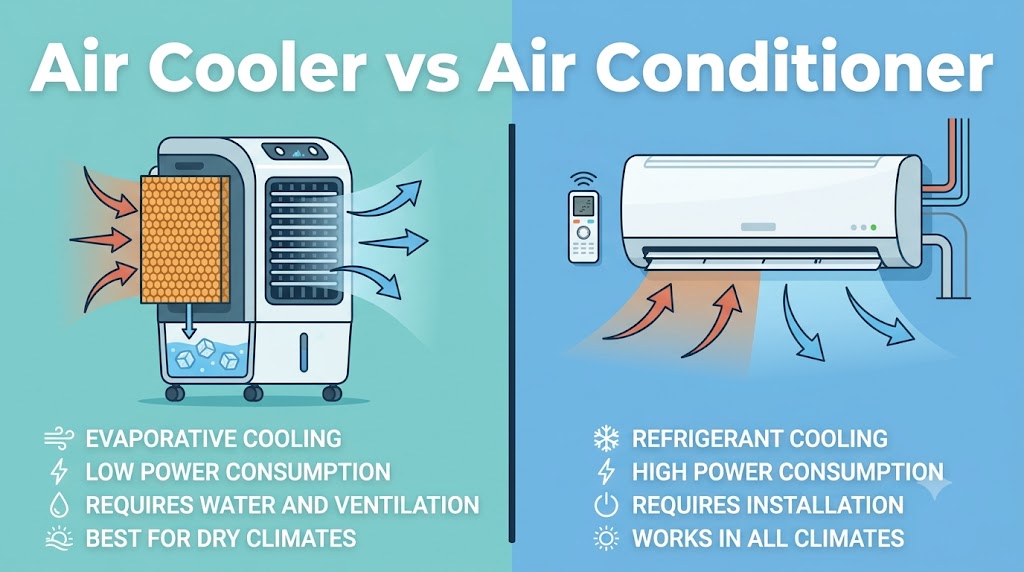
Air cooler vs air conditioner comparison showing cooling performance, electricity consumption, humidity, and cost.

Air Cooler vs Air Conditioner Introduction An air cooler and an air conditioner both help people stay comfortable during hot weather, but they work in different ways. An air cooler uses water evaporation to cool incoming air, while an air conditioner uses a refrigeration system to remove heat from indoor air. This difference affects cooling performance, electricity consumption, humidity, and the conditions in which each appliance works best. An air cooler generally costs less to buy and operate, whereas an AC offers more consistent temperature control and can remove excess…

Read More

Portable AC vs Split AC: Which Is Better?

Portable AC vs split AC comparison showing installation, cooling performance, noise, and energy efficiency.

Portable AC vs Split AC Introduction A portable air conditioner and a split air conditioner can both cool a room, but they are designed for different needs. A portable AC is a single unit that can be moved between suitable spaces and usually uses an exhaust hose to release hot air outdoors. A split AC has separate indoor and outdoor units and requires professional installation. The main differences involve cooling efficiency, noise, installation requirements, mobility, and running costs. Understanding these differences can help you choose an AC that suits your…

Read More

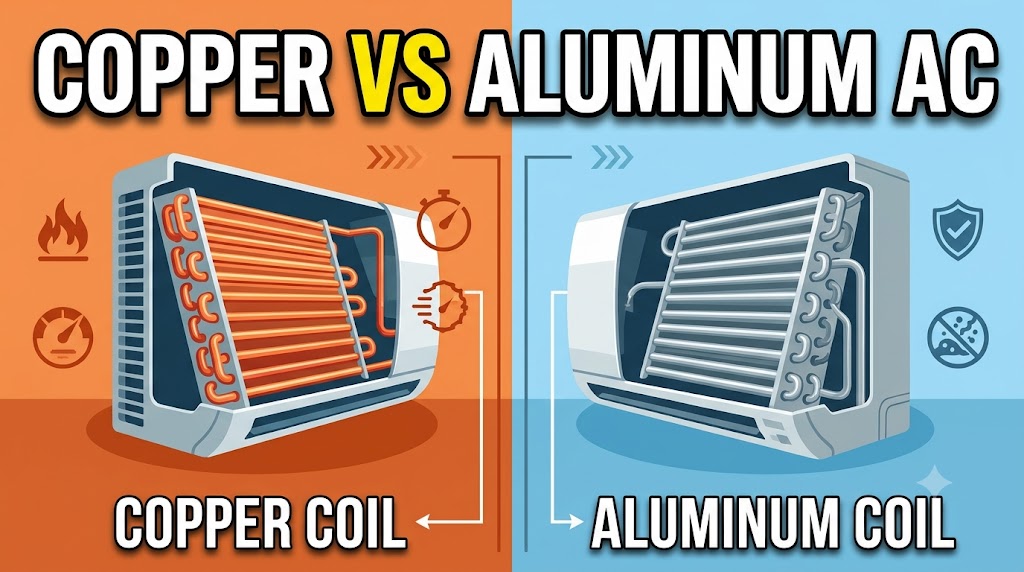
Copper Coil vs Aluminum Coil AC: Which Is Better?

Copper coil vs aluminium coil AC comparison showing heat transfer, durability, repairability, and cost.

Copper Coil vs Aluminum Coil AC Introduction When buying an air conditioner, the coil material is an important factor to consider because it affects heat transfer, durability, maintenance, and repair options. Copper coil ACs use copper tubing in their heat exchangers, while aluminium coil ACs use aluminium-based tubing or heat-exchanger designs. Both materials can be used to build effective air conditioners, but their properties and repair requirements differ. Choosing the right option requires more than comparing the metal alone. You should also consider the AC’s design, protective coating, warranty, service…

Read More

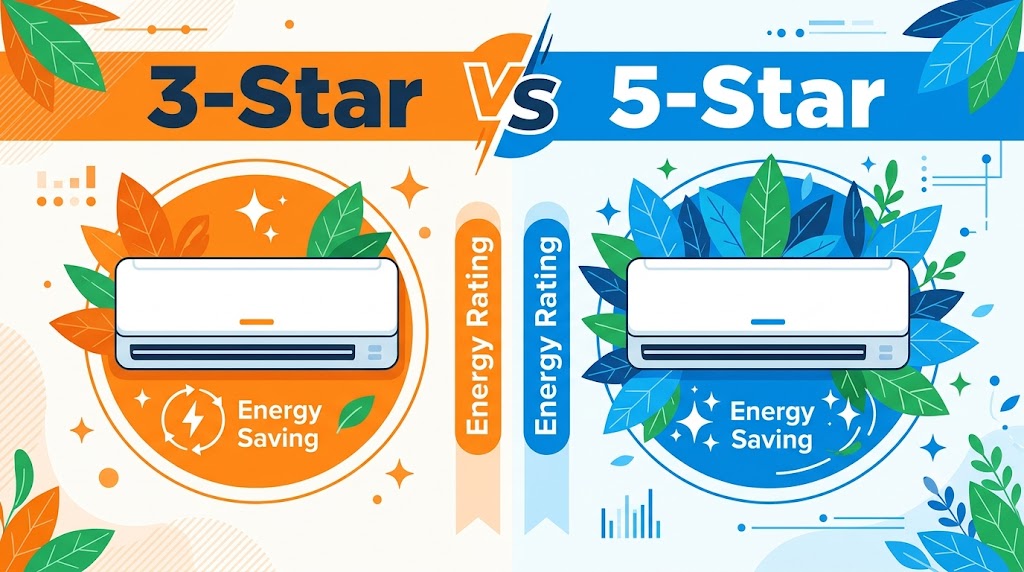
3-Star vs 5-Star AC: Which Is Better for Home?

3-star vs 5-star AC comparison showing energy efficiency, electricity consumption, and home cooling.

3-Star vs 5-Star AC Introduction Choosing between a 3-star and a 5-star air conditioner depends on your budget, daily usage, electricity costs, and how long you plan to keep the AC. Both options can cool a room, but they differ in energy efficiency and potentially in their purchase prices. In India, the Bureau of Energy Efficiency (BEE) uses star ratings to help consumers compare the energy performance of appliances. A higher star rating indicates better energy efficiency within the applicable rating system, but the actual savings depend on the specific…

Read More

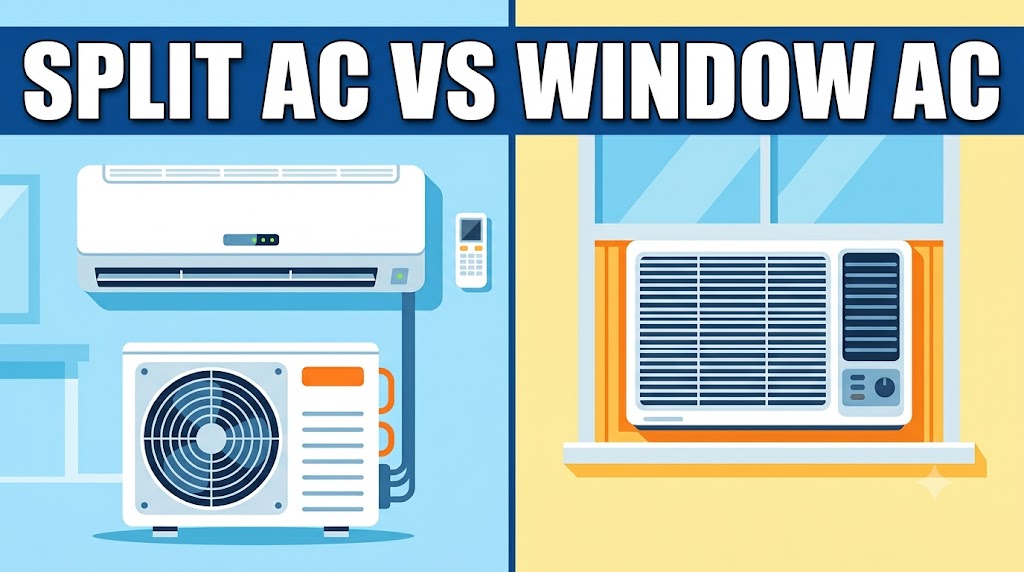
Split AC vs Window AC: Which Is Better?

Split AC vs Window AC comparison showing indoor and outdoor split units alongside an integrated window air conditioner

Split AC vs Window AC Introduction Choosing between a split AC and a window AC depends on your room size, installation options, budget, noise preferences, and cooling requirements. Both types can provide effective cooling, but their designs and installation methods are different. A split AC has separate indoor and outdoor units connected by refrigerant piping, while a window AC houses its main components in a single unit installed in a suitable window or wall opening. Understanding these differences can help you select an air conditioner that fits your room and…

Read More

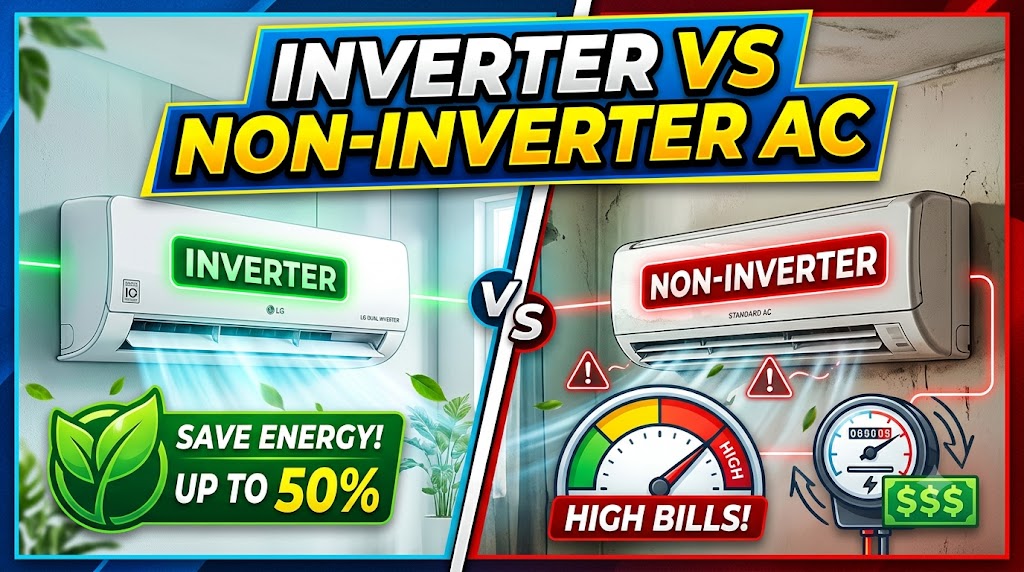
Inverter AC vs Non-Inverter AC: Which Is Better?

Inverter AC vs Non-Inverter AC comparison showing compressor operation and cooling technology

Inverter AC vs Non-Inverter AC Introduction Choosing between an inverter AC and a non-inverter AC depends on your cooling requirements, electricity budget, purchase budget, and daily usage. Both types are designed to cool indoor spaces, but they operate their compressors differently. An inverter AC adjusts compressor speed according to cooling demand, while a conventional non-inverter AC generally runs its compressor at a fixed speed and switches it on or off to maintain the selected temperature. Understanding this difference helps you compare electricity consumption, temperature control, noise, price, and long-term value…

Read More

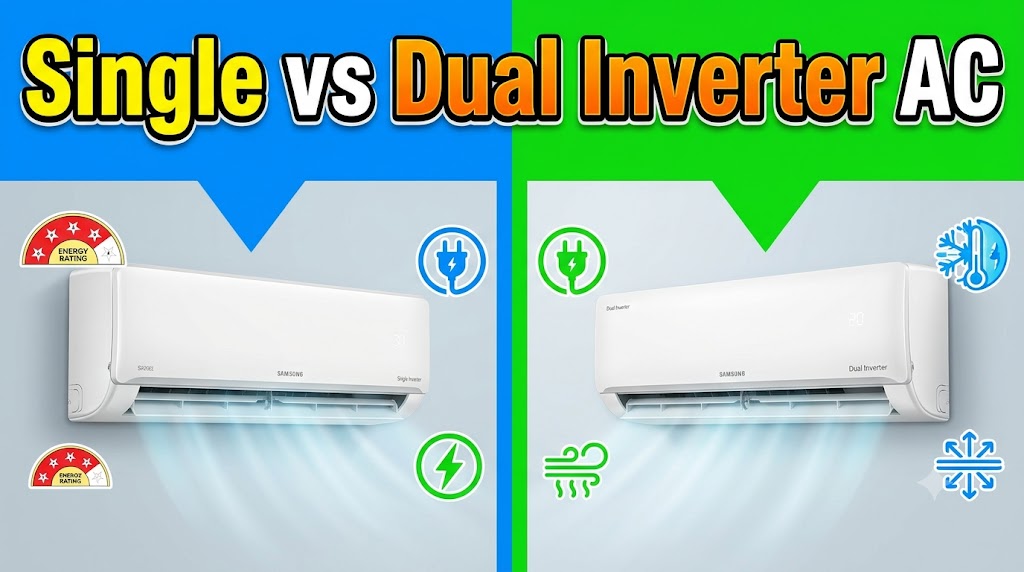
Single Inverter AC vs Dual Inverter AC: Which Is Better?

Single Inverter AC vs Dual Inverter AC comparison showing differences in compressor technology and energy efficiency

Single Inverter AC vs Dual Inverter AC Introduction Choosing between a single inverter AC and a dual inverter AC can be confusing because both use inverter technology to adjust compressor operation according to cooling demand. The main difference is in the compressor design and how the manufacturer implements variable-speed operation. A single inverter AC typically uses a conventional inverter compressor design, while a dual inverter AC uses a different compressor mechanism designed to provide variable-speed operation with its own performance characteristics. The actual benefits depend on the brand, model, room…

Read More

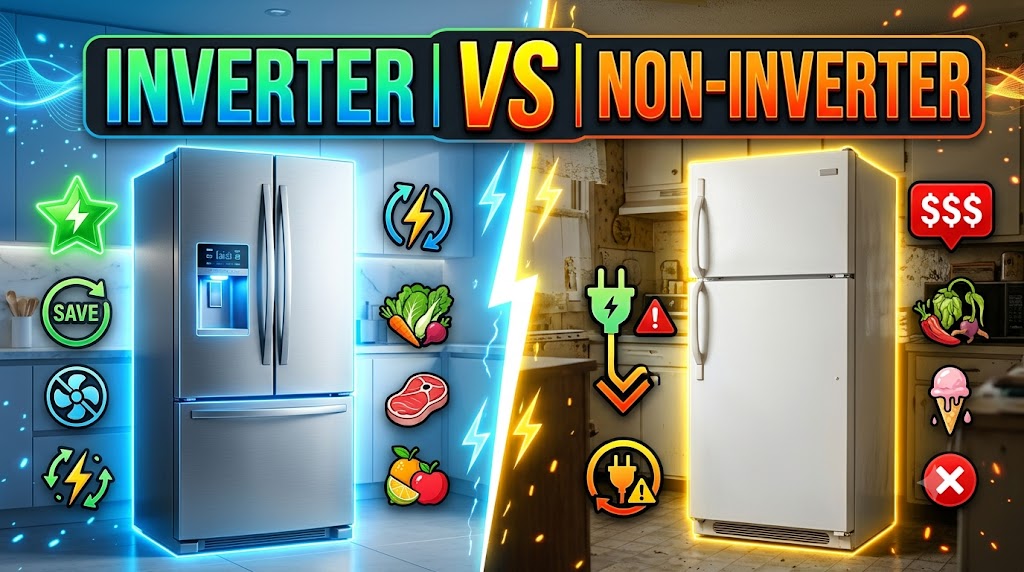
Inverter Refrigerator vs Non-Inverter Refrigerator: Which Is Better?

Inverter Refrigerator vs Non-Inverter Refrigerator comparison showing compressor technology and cooling differences

Inverter Refrigerator vs Non-Inverter Refrigerator Introduction Choosing between an inverter refrigerator and a non-inverter refrigerator depends on your electricity budget, household requirements, cooling preferences, and purchase budget. Both types keep food refrigerated, but they differ in how their compressors operate. An inverter refrigerator can adjust compressor speed according to cooling demand, while a conventional non-inverter refrigerator generally switches its compressor on and off to maintain the required temperature. Understanding this difference helps you compare electricity consumption, noise, temperature control, price, and long-term suitability before purchasing a refrigerator for your home.…

Read More

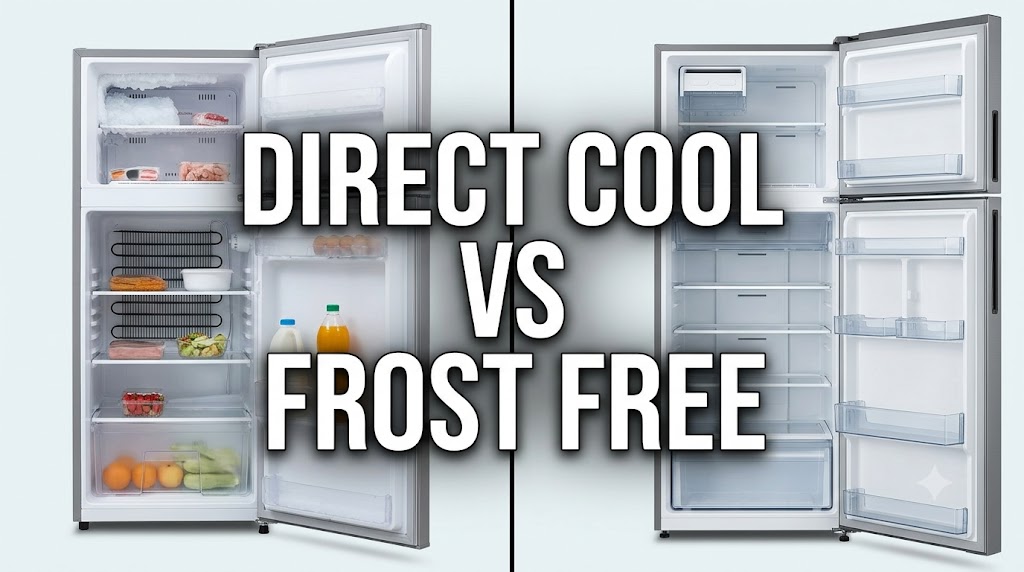
Direct Cool vs Frost Free Refrigerator: Which Is Better?

Direct Cool vs Frost Free Refrigerator comparison showing cooling systems and freezer design

Direct Cool vs Frost Free Refrigerator Introduction Choosing between a direct cool and a frost free refrigerator depends on your household size, food storage needs, budget, and willingness to perform regular maintenance. Both types are designed to keep food fresh, but they use different cooling methods. A direct cool refrigerator generally relies on natural convection to distribute cold air, while a frost free refrigerator uses a fan-assisted cooling system to circulate cold air throughout the compartment. Understanding these differences can help you select a refrigerator that suits your daily routine…

Read More

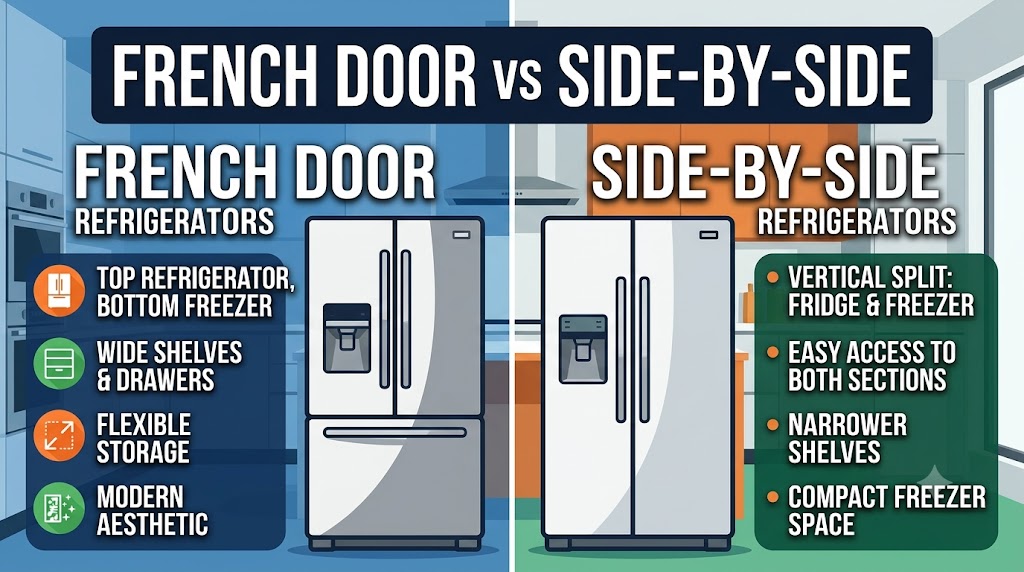
French Door vs Side-by-Side Refrigerator: Which Is Better?

French Door vs Side-by-Side Refrigerator Comparison

French Door vs Side-by-Side Refrigerator Introduction Choosing between a French door and a side-by-side refrigerator depends on your food storage needs, kitchen layout, budget, and preferred design. A French door refrigerator typically has two doors across the upper fresh-food compartment and a freezer drawer underneath. A side-by-side refrigerator has two tall vertical doors, with the fresh-food compartment on one side and the freezer on the other. Both designs can provide substantial storage, but their shelf arrangements, freezer access, and space requirements differ. A French door refrigerator may be suitable for…

Read More